%20(1).png?width=3690&height=2079&name=Jetset%20Seeker%20Logo%20(Banner)%20(1).png)
Rome is one of the most visited cities in the world. Yet, some of its most fascinating sights remain off the lists of the top things to do in Rome. Beyond the Colosseum, the Vatican Museums, and the Trevi Fountain, there is a quieter, more interesting side of the city shaped by noble families, ruins, overlooked museums, and artistic masterpieces that never seem to make it into most itineraries.
This guide to my favorite hidden gems in Rome highlights a curated mix of underrated churches, historic palaces, uncrowded museums, and unexpected corners that reward travelers willing to slow down, explore deeper, and look a little closer at all that Rome has to offer. If you are looking for additional help planning your trip to Rome, including restaurant recommendations, some of our favorite things to do, and practical travel tips, you can also explore our Rome travel blog for a better look at experiencing all that the Eternal City has to offer. Now, without further ado, let's dive into my favorite hidden gems in Rome.
Table of Contents:
Disclaimer: This blog post contains affiliate links. That means we may earn a small commission or receive compensation if you click on a link and make a purchase or take action - at no additional cost to you. These partnerships help support the content we create and maintain this website.
Hidden Churches & Religious Curiosities in Rome
Scattered throughout the city, Rome’s churches offer some of the most rewarding, and least crowded, experiences. These lesser-known basilicas reveal layers of history, art, and tradition that many visitors miss entirely. While there are tons of churches in the city to explore, these are among my favorite hidden gems in Rome.
Skull of St. Valentine at Santa Maria in Cosmedin
Tucked inside the Basilica of Santa Maria in Cosmedin is one of Rome’s most unexpected and eerie relics: the skull of Saint Valentine, the patron saint of engaged couples, happy marriages, love, and lovers, among other causes. His feast day is celebrated on February 14, and he is the reason Valentine’s Day exists.
The Church & Its History
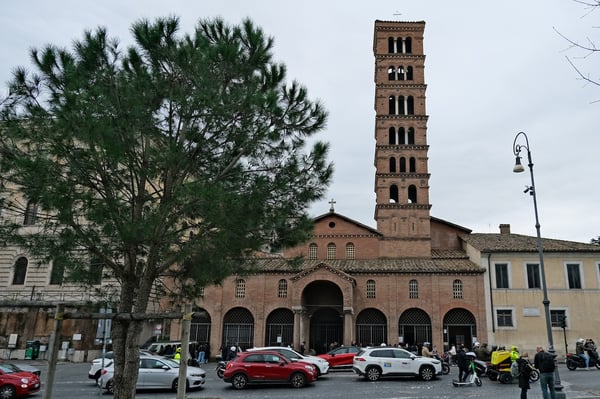
Most visitors add the Basilica of Santa Maria in Cosmedin to their Rome itinerary to see the Mouth of Truth (Bocca della Verità). The Mouth of Truth was popularized in the Audrey Hepburn classic, Roman Holiday, and has attracted large swaths of tourists ever since. Tourists will often wait in long lines outside the basilica to snap a quick photo, but never step inside the church itself. That is a shame, since the basilica is well worth visiting on its own merit. The current church largely dates to the 8th century, though its history reaches back to around 550 AD, when the site was first established as a place of worship.
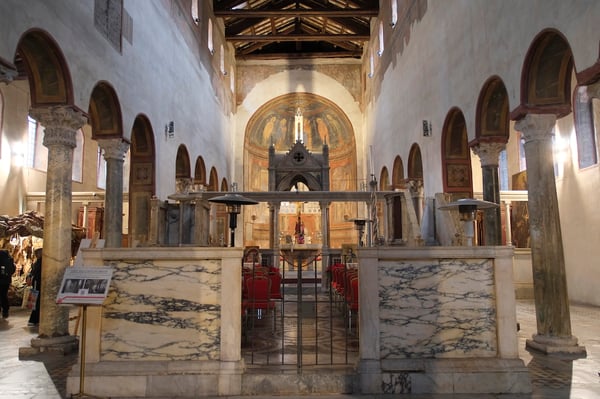
The Skull of St. Valentine
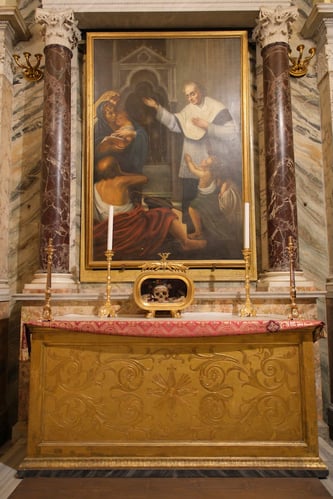
Inside, the skull of Saint Valentine is displayed in a reliquary (a fancy glass box) on an altar in a chapel on the left side of the basilica, crowned with flowers. It is a detail that feels both reverent and quietly unsettling.
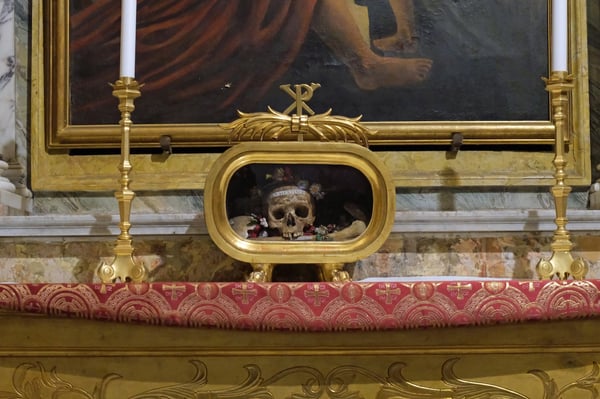
Saint Valentine was a third-century martyr, and while multiple relics are associated with him across Europe, the one housed here is among the most well-known. It is also a tangible reminder of Rome’s deep relationship with saints, martyrs, and the traditions that continue to shape the city.
A Quick Note About Catholic Relics
For visitors unfamiliar with Catholic tradition, relics like this may seem a bit odd or even morbid. In Catholicism, relics are physical remains or objects associated with saints, venerated not as artifacts but as tangible connections to individuals whose lives were considered exemplary expressions of faith. In a city like Rome, long a center of early Christianity, these relics offer a direct link to the people and beliefs that helped shape the city’s religious and cultural identity.
What makes a visit to the Basilica of Santa Maria in Cosmedin especially rewarding is how easy it is to visit. Entry to the basilica is free, the interior is calm compared to the crowds outside, and the experience takes just a few minutes. Yet, it is memorable enough to stand out among far larger sights. The church is also conveniently located near the Circus Maximus and Roman Forum, making it an easy addition if you are already sightseeing in the area.
Michelangelo's Moses at San Pietro in Vincoli
Tucked away on a quiet hill near the Colosseum, the Basilica of San Pietro in Vincoli is easy to overlook, especially compared to Rome’s more famous basilicas. From the outside, the church feels understated, even plain, which is precisely why so many visitors miss what is inside.
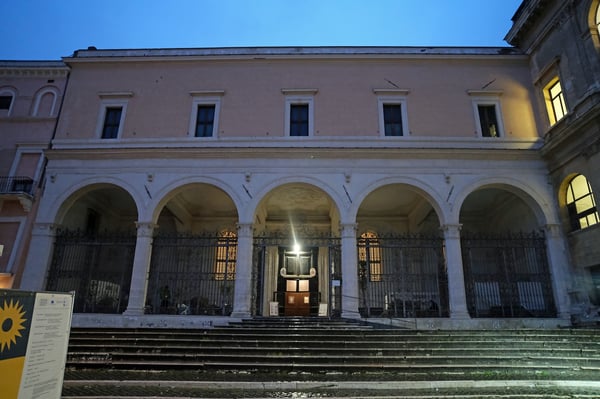
The Church and Its History
San Pietro in Vincoli, which translates to Saint Peter in Chains, dates back to the 5th century and was built to house a relic believed to be the chains that bound Saint Peter during his imprisonment in Rome.
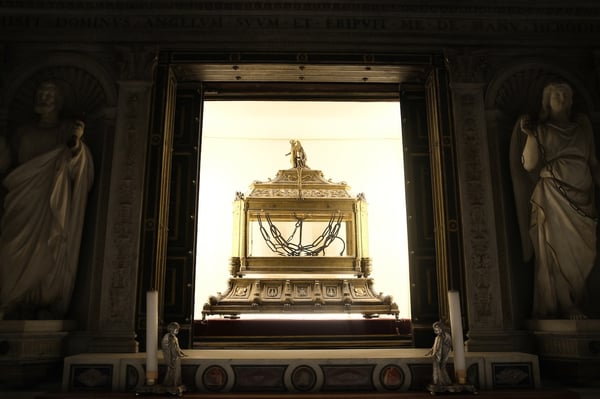
Over time, the church became an important but unassuming place of worship, never drawing the same crowds as Rome’s grander basilicas despite its deep historical significance.
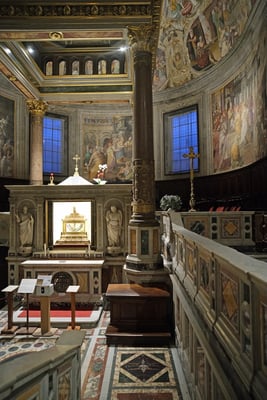
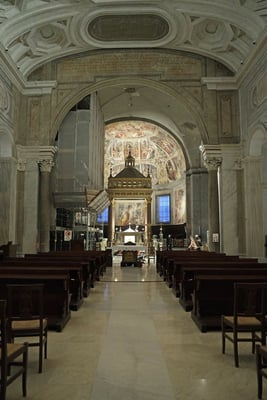
Its modest appearance makes it a perfect example of one of the best hidden gems in Rome: a site whose importance is not immediately obvious until you step inside.
Michelangelo’s Moses
The real reason to visit San Pietro in Vincoli is to see Michelangelo’s Moses, part of the tomb of Pope Julius II. The sculpture is widely considered one of Michelangelo’s greatest works, yet it is rarely crowded enough to prevent you from standing quietly in front of it.
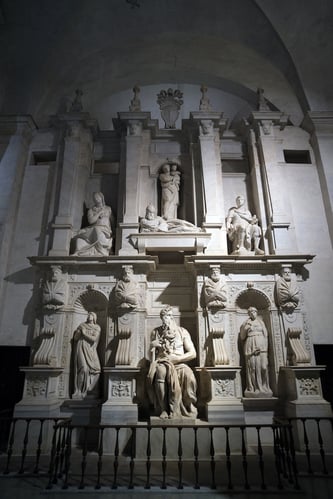
Carved with extraordinary intensity and detail, Moses is depicted mid-motion, muscles tense and expression fierce. According to legend, Michelangelo was so struck by the realism of his creation that he struck the statue’s knee and yelled "Parla!", demanding the statue to speak. Whether or not the story is true, the power of the sculpture is undeniable, and seeing any work by Michelangelo without crowds is a rare gift in Rome.
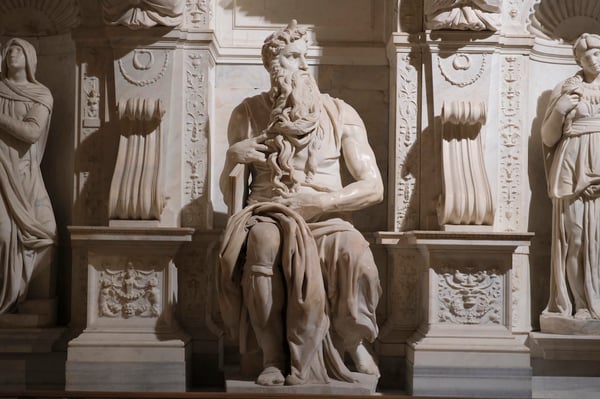
Jetset Seeker Fun Fact: You may notice that Moses appears to have horns. This was not a creative flourish, but the result of a mistranslation from Hebrew to Latin, where a word meant to describe "rays of light" was instead translated as "horns." The detail stuck, and it has become one of the sculpture’s most intriguing features.
What makes this stop especially appealing is how accessible it is. Entry to the church is free, the visit is short, and the experience feels intimate compared to museums. Thanks to its location near the Colosseum and Roman Forum, the Basilica of San Pietro in Vincoli is easy to work into a day of sightseeing focused on Ancient Rome, offering a quieter, but no less memorable, counterpoint to the far more famous ruins outside.
Incredible Mosaics at Santi Cosma e Damiano
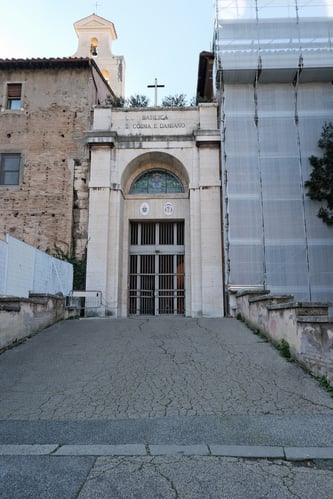
One of the most overlooked hidden gems in Rome sits in plain sight along Via dei Fori Imperiali, the grand avenue leading directly to the Colosseum. With attention focused on the Colosseum, the Forum ruins, and nearby viewpoints, this unassuming basilica is often reduced to background scenery, if it is noticed at all. Tour groups stream past, cameras raised toward the Colosseum, while one of Rome’s most impressive early Christian interiors quietly waits just steps away inside at the Basilica of Santi Cosma e Damiano.
The Church and Its Setting
What many visitors do not realize is that this basilica was established by converting two much older Roman structures: the Temple of Romulus and part of the ancient library of the Forum of Peace. This transformation, carried out in the 6th century, makes Santi Cosma e Damiano a striking example of how early Christian Rome quite literally built itself on top of the imperial past.
Thanks to this layered construction, the basilica occupies a fascinating in-between space where classical Rome and early Christianity physically overlap. From the street, especially along Via dei Fori Imperiali, it barely registers as a church at all, which is why so many people miss it entirely.
That subtlety, however, is exactly what makes the basilica such a compelling stop. Step inside, and the atmosphere shifts immediately, from selfie sticks and tour groups to a calm, enclosed space that feels worlds away from the crowds just outside.
One of Rome’s Finest Early Christian Mosaics
The highlight of Santi Cosma e Damiano is its 6th-century apse mosaic, widely considered one of the best preserved examples of early Christian art in Rome. Set against a luminous gold background, the mosaic depicts Christ flanked by Saints Cosmas and Damian - twin brothers and physicians - along with other symbolic figures rendered with striking detail.
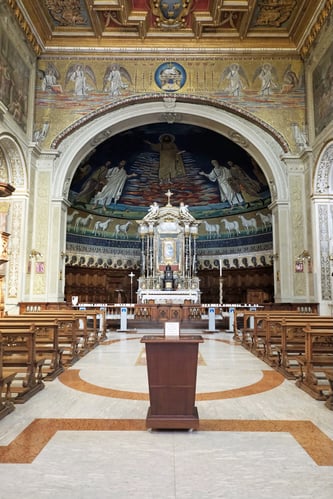
Unlike many famous artworks in Rome, there is no bottleneck here, no rush to move along. You can stand quietly, take in the scale and symbolism, and actually absorb what you are looking at, a rare luxury in the tourist core of Rome.
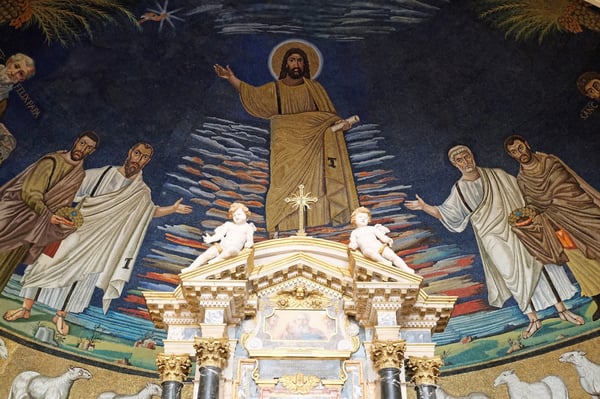
What makes this hidden gem in Rome especially rewarding to visit is how effortlessly it fits into a sightseeing day. Entry is free, a visit can be short, and its location makes it an easy pause while exploring Ancient Rome. For travelers willing to look beyond the obvious, Santi Cosma e Damiano offers one of the city’s most overlooked, and quietly impressive, artistic experiences.
Gothic Architecture at Santa Maria sopra Minerva
Just steps from the Pantheon, the Basilica of Santa Maria sopra Minerva is one of Rome’s most surprising churches, and one that many visitors pass without fully realizing what makes it special. Surrounded by some of the city’s busiest streets and landmarks, it is often overshadowed by the constant pull of nearby attractions.
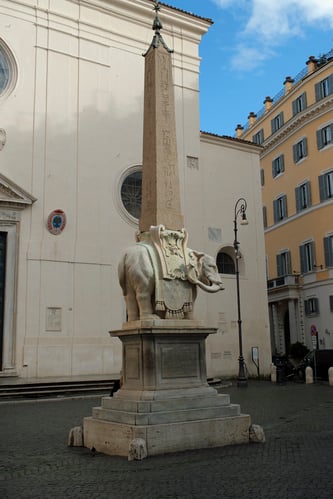
The church is best identified outside by one of Rome’s most curious sculptures: the Elephant and Obelisk, designed by Gian Lorenzo Bernini. The small elephant balancing an ancient Egyptian obelisk on its back often draws quick photos, but few people realize it marks the entrance to one of Rome’s most unusual churches, making it both a landmark and a subtle clue that there is more here than meets the eye.
The Church and Its Unusual Design
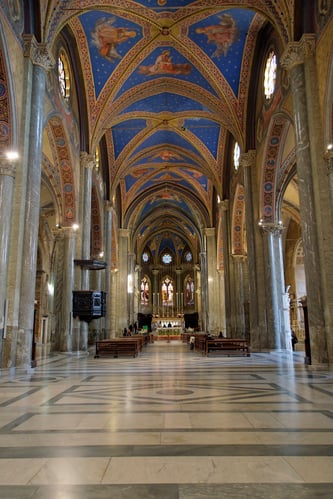
Unlike most churches in Rome, Santa Maria sopra Minerva was built in a Gothic style, a rarity in a city dominated by Baroque and Renaissance architecture. Its relatively plain exterior gives little hint of what is inside, but stepping through the doors reveals soaring ribbed vaults, beautiful frescos, and a distinctly different atmosphere from Rome’s more ornate basilicas.
Art, Tombs, and a Central Yet Overlooked Stop
Inside, the basilica is home to important works of art and notable tombs, including Michelangelo’s Christ Carrying the Cross, located to the left of the high altar. The basilica's high altar is also the final resting place of Saint Catherine of Siena, one of the most influential female figures in Catholic history and a Doctor of the Church. Her tomb adds a layer of spiritual and historical significance that many visitors miss entirely as they move quickly between nearby landmarks.
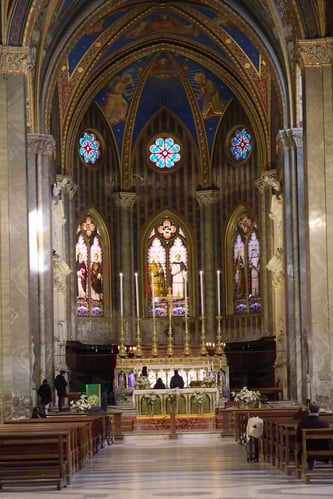
Despite its central location so close to the Pantheon, Santa Maria sopra Minerva often feels calm and contemplative, offering a welcome pause from the crowds just outside.
Jetset Seeker Fun Fact: The basilica's name comes from a long-standing medieval belief that it was built over a temple dedicated to the Roman goddess Minerva. Modern scholarship, however, suggests the ancient temple was more likely associated with Isis, the Egyptian goddess whose cult was enormously popular in Ancient Rome.
Palaces, Museums, and More Hidden Gems in Rome
Rome’s hidden gems are not limited to churches. Some of the city’s most rewarding experiences are found inside quiet museums, aristocratic palaces, and overlooked historic buildings that rarely feel crowded, even when Rome is at its busiest. These stops offer context, beauty, and breathing room, especially if you are looking to balance out Rome’s more overwhelming attractions.
Ancient Frescoes and Sculpture at Museo Nazionale Romano - Palazzo Massimo
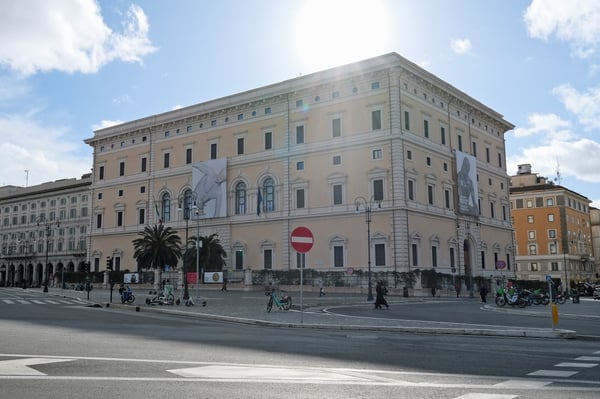
Just steps from Roma Termini Station, the Museo Nazionale Romano - Palazzo Massimo is one of the most overlooked museums in Rome, and one of the most impressive. A branch of the National Roman Museum (Museo Nazionale Romano), it is often skipped in favor of the Vatican Museums or Capitoline Museums, despite housing some of the finest surviving examples of Roman art anywhere in the world.
What You'll See Inside
Inside, the focus is on ancient sculpture, mosaics, and - most remarkably - vividly preserved frescoes from ancient Roman villas. Entire rooms have been reconstructed with their original wall paintings intact, offering an unusually intimate glimpse into how Rome’s elite once lived. The colors, details, and storytelling feel astonishingly modern, especially given their age.
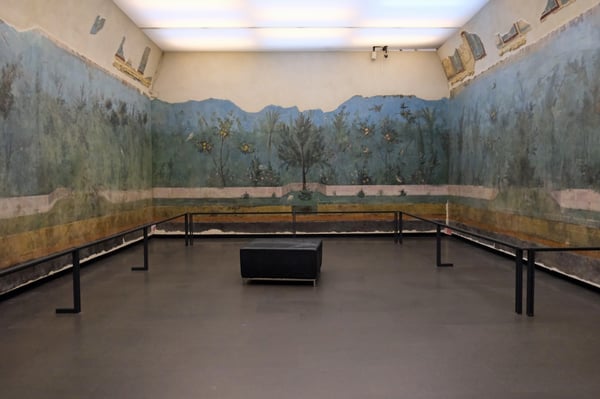
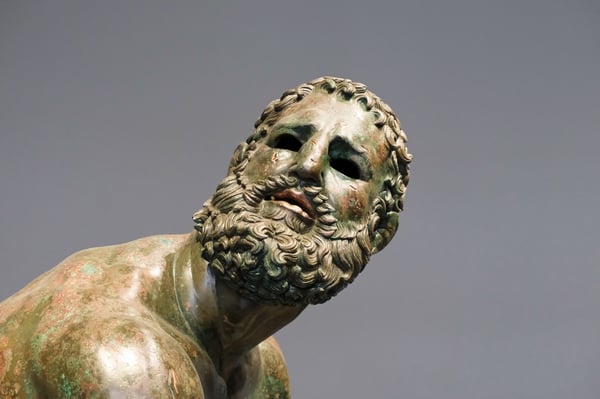
Palazzo Massimo is also home to several standout works, including the Discobolus (Discus Thrower), the Hellenistic Prince, and the haunting Boxer at Rest, whose battered face and expressive posture make it one of the most emotionally powerful sculptures in Rome. In addition, the museum houses an extensive ancient coin collection, providing valuable insight into Rome’s economic, political, and imperial history.
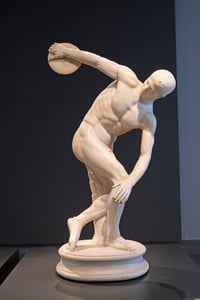
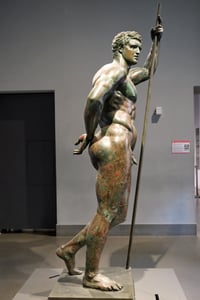
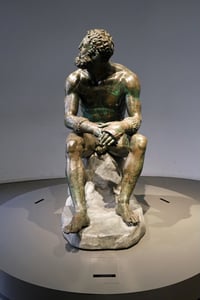
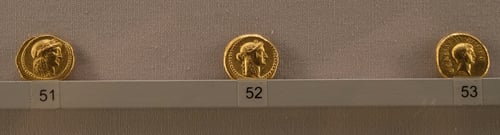
As an added bonus, the museum offers clear, well-written English descriptions that make the collections approachable for first-time visitors.
Why Palazzo Massimo Is a Hidden Gem in Rome
What makes Palazzo Massimo a true hidden gem is how quiet it feels. The galleries are spacious, well curated, and rarely crowded, allowing you to linger and truly enjoy the collection without the need to dodge large tour groups.
Another bonus: your ticket to Palazzo Massimo is also valid for several other branches of the National Roman Museum, making it easy to extend your visit across multiple sites (with the exception of the Crypta Balbi). Combined with its convenient location near Roma Termini, Palazzo Massimo is an easy, and highly rewarding, addition to almost any Rome itinerary.
Aristocratic Rome at Palazzo Colonna
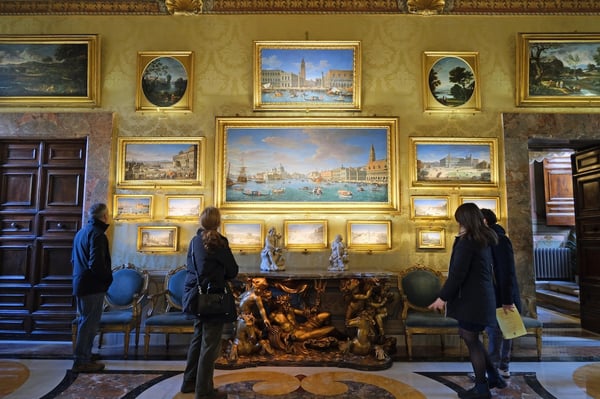
Just off Via del Corso, Palazzo Colonna is one of Rome’s most extraordinary historic residences, and one that surprisingly few visitors ever step inside. While shoppers and sightseers rush past outside, a world of frescoed ceilings, gilded halls, and centuries of family history quietly unfolds behind its doors.
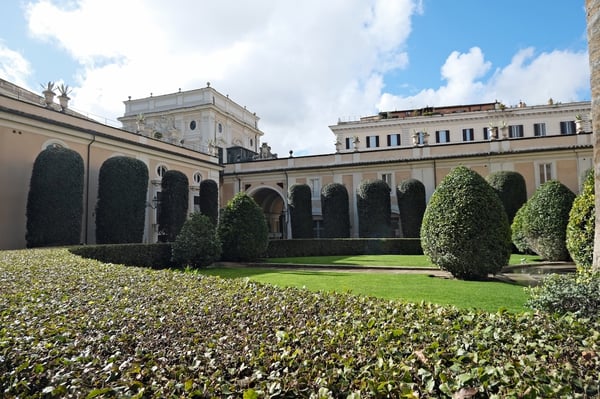
A Palace Still Owned by Italian Nobility
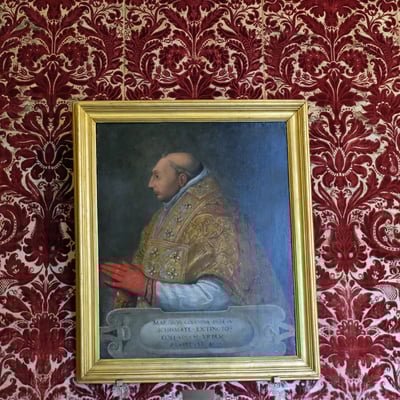
Palazzo Colonna has been home to the Colonna family for over 800 years, making it one of the oldest continuously inhabited palaces in Rome. Over the centuries, the palace also served as a papal residence in the 15th century when Pope Martin V, a member of the Colonna family, elected to live here during his papacy, further cementing its role in Rome’s political and religious history. Unlike many former noble residences that now function solely as museums, the palace remains privately owned and used by the family today.
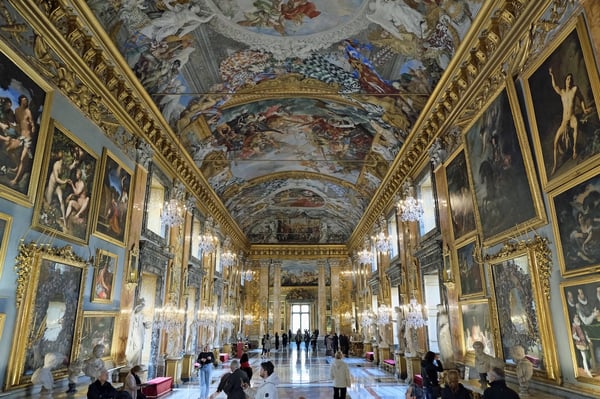
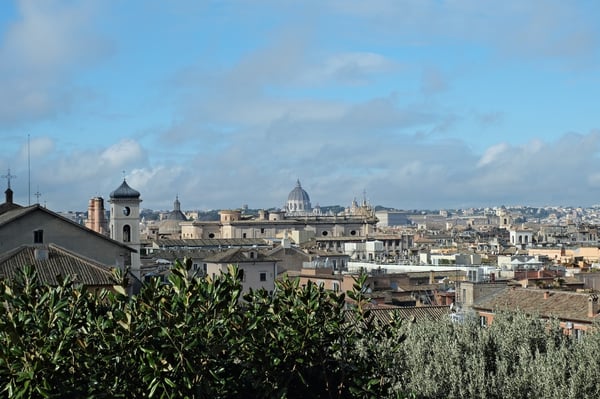
One highlight is the Great Hall, a long, light-filled hall easily compared to the Hall of Mirrors at Versailles. The room is overwhelmingly grand and lavishly decorated with mirrors, chandeliers, and paintings from the family’s vast art collection. The terraced gardens are another highlight, offering incredible views of the city.
Why Palazzo Colonna Is a Hidden Gem
Part of what keeps Palazzo Colonna under the radar is its limited public access. The palace is only open to visitors twice a week, on Fridays (by guided tour only) and Saturday mornings (self-guided), which means far fewer crowds than you will find at Rome’s major museums. That limited schedule also makes planning ahead especially important.
If you are hoping to visit on a Friday, booking a guided tour in advance is required and can be arranged via the TOSC website. Otherwise, I recommend reserving tickets ahead of time for Saturdays through our trusted partner, GetYourGuide, which allows you to secure your spot in advance and avoid waiting in line at the ticket office.
What makes Palazzo Colonna especially rewarding is the contrast it provides. After exploring ancient ruins and monumental churches, Palazzo Colonna reveals another layer of Rome’s history, one shaped not exclusively by emperors and popes, but by powerful noble families whose legacy largely shaped the city that we see today.
Classical Sculpture in an Industrial Setting at Centrale Montemartini
At first glance, Centrale Montemartini does not look like a place you would expect to find ancient Roman masterpieces. Housed inside a former power plant in the Ostiense neighborhood (near the Garbatella Metro station, servicing Line B), this striking museum pairs marble statues and classical sculptures with massive turbines, boilers, and industrial machinery, creating one of the most unexpected museum experiences in Rome.
A Capitoline Museum You Probably Haven’t Heard Of
Centrale Montemartini is actually a branch of the Capitoline Museums (Musei Capitolini), home to part of their permanent collection. When the Capitoline Museums closed for renovations in 1997, many sculptures in the collection were temporarily moved here. The contrast between ancient art and early 20th-century industrial architecture proved to be so compelling and popular, that the site became an official branch of the museum in 2001.
Today, statues of gods, emperors, and mythological figures are displayed against a backdrop of steel, pipes, and engines, offering a completely different way to experience Roman art. The juxtaposition is bold, unexpected, and surprisingly harmonious.
Why Centrale Montemartini Is a Hidden Gem
Despite the caliber of its collection, Centrale Montemartini remains largely overlooked by visitors who spend the bulk of their time in Rome’s historic center. As a result, the galleries are quiet and uncrowded.
What makes this stop especially rewarding is how it reframes familiar art. Seeing classical sculpture outside a traditional museum gallery highlights just how timeless these works are, and how adaptable Rome’s history continues to be. For travelers who enjoy museums but want something genuinely different, Centrale Montemartini is one of Rome’s most memorable hidden gems.
Underground Rome at Vicus Caprarius
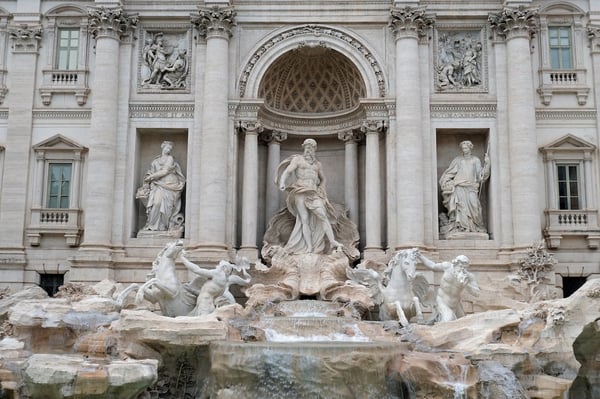
Hidden just steps from the Trevi Fountain, Vicus Caprarius, also known as the City of Water, is one of Rome’s most intriguing underground archaeological sites. While millions of visitors crowd above ground to toss coins into the iconic fountain, an entirely different layer of the city quietly exists below the surface.
An Overlooked Layer Beneath Trevi
Vicus Caprarius preserves the remains of an ancient Roman residential complex, complete with an apartment building and water systems that were once part of Rome’s vast aqueduct network. The site offers a fascinating glimpse into everyday life in ancient Rome.
Why Vicus Caprarius Is Still on Our Rome List
We tried to visit Vicus Caprarius on a trip to Rome in 2023; however, tickets were unfortunately sold out. Since then, it has remained high on our Rome to-do list, and it is a site we hope to experience firsthand on a future visit to Rome in the not-so-distant future.
Since entry is controlled and visitor numbers are kept small, Vicus Caprarius is often praised for being calm and uncrowded, offering a far more intimate experience than the chaos surrounding the Trevi Fountain above. It is exactly the kind of place that rewards planning ahead, and curiosity.
Good to Know: Entry is ticketed and capacity is limited, so booking in advance is strongly recommended, especially on weekends and during peak travel seasons. Tickets can be booked by reaching out to Vicus Caprarius on Whatsapp or by phone. For more information, please visit the Vicus Caprarius website.
Tips for Visiting Rome's Hidden Gems
One of the greatest advantages of seeking out Rome’s hidden gems is that they shine when the city’s most popular sights are at their busiest. With a bit of planning, and the right expectations, these lesser-known stops can fit seamlessly into your Rome itinerary.
Visit Hidden Gems Midday
Many of Rome’s hidden gems are ideal midday stops, especially when places like the Colosseum, Vatican Museums, and Trevi Fountain are at peak capacity. Smaller churches, palaces, and museums tend to feel calmer during these hours, making them perfect alternatives when the main attractions feel overwhelming.
Be Mindful of Church Dress Codes
Several of the hidden gems in Rome featured here are active churches. Modest dress is required, meaning knees and shoulders should be covered. Shorts, sleeveless tops, and short skirts/dresses will result in denied entry. It is also best to avoid visiting during Mass and to respect any signage requesting that photography be limited or avoided.
Watch for Monday Museum Closures
If your Rome itinerary includes museums, keep in mind that most museums in Rome are closed on Mondays. Always check official hours in advance, especially for smaller or lesser-known sites, which may have more limited schedules than major institutions.
Plan Around Limited Access
Some hidden gems on this list, particularly the Palazzo Colonna, are only open to the public on specific days or through guided tours. Checking opening days and booking ahead when possible can save time and prevent disappointment.
Leave Room for Flexibility
These hidden gems in Rome work best when you allow yourself time to slow down and explore the city. Many of these places are easy to pop into on a whim, especially if you are exploring nearby neighborhoods. Leaving space in your schedule makes it easier to take advantage of these quieter, more intimate experiences.
Map of These Hidden Gems in Rome
To make planning easier, I mapped out all of the hidden gems featured in this guide so you can see how they fit into your Rome itinerary and group nearby sights together.
Final Thoughts: Experiencing a Different Side of Rome
Rome is a city that rewards exploration. While its most famous landmarks deserve their place on any itinerary, some of the most memorable moments come from stepping just slightly off the main path, into a quiet church, an overlooked museum, or a palace most people walk past without realizing what is inside.
The hidden gems in this guide offer a more layered way to experience the Eternal City. They are places that add context and depth, especially when Rome’s biggest sights feel too crowded or overwhelming. Whether you are visiting Rome for the first time or returning with a desire to see something new, these lesser-known stops reveal just how much history, art, and atmosphere still waits beyond the standard tourist stops.
Rome is never short on things to see and do, but adding in a few of these hidden gems to your time in the city can make your visit feel more enjoyable, more personal, and less like you are simply checking off a list of the top sights in Rome.
Discover More of Rome
Have a favorite hidden gem in Rome that didn’t make this list? Or one that you are eager to see? We would love to hear about it! Share it in the comments below. ⬇️
And, if you are still planning your trip, do not forget to explore our Rome travel blog for restaurant recommendations, itinerary ideas, and more tips to help you experience the city beyond the obvious sights. Happy travels, or as they say in Italian, buon viaggio!