%20(1).png?width=3690&height=2079&name=Jetset%20Seeker%20Logo%20(Banner)%20(1).png)

November is one of the most underrated times of the year to visit Vienna. As the city transitions...
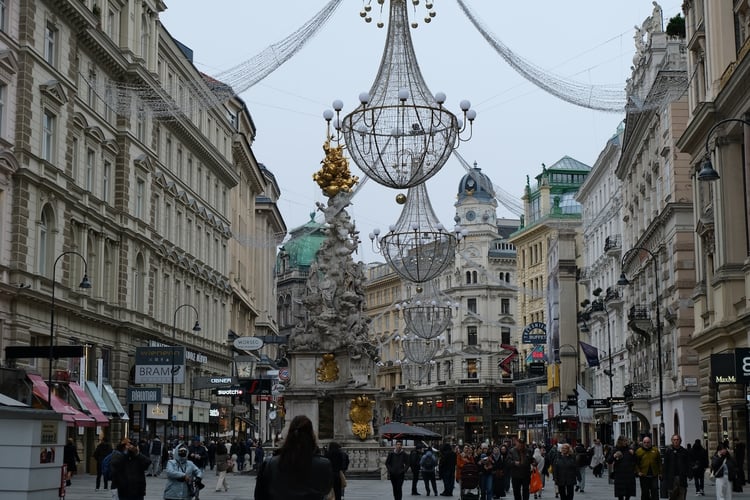
Planning a trip to Vienna? This Vienna travel blog covers the best things to do, museums, cafés, and honest tips based on our experience exploring the city. If it’s your first time visiting, this guide will help you plan what’s actually worth your time.
Planning a trip to Vienna? You're in the right place. This Vienna travel blog covers the best things to do, where to stay, what to eat, and how to make the most of your visit.
Vienna is a city defined by its imperial history, grand architecture, and world-class cultural scene. From the opulence of the Habsburg Empire to its modern-day café culture, the city blends old-world elegance with a vibrant, contemporary energy.
As you explore Vienna, you’ll find Baroque palaces, grand boulevards, and some of Europe’s most impressive museums all within a compact, walkable center. The historic Innere Stadt, a UNESCO World Heritage Site, is home to landmarks like St. Stephen’s Cathedral, the Hofburg Palace, and the Vienna State Opera. It is one of the most visually striking city centers in Europe.
Vienna is also known as the “City of Music,” shaped by composers like Mozart, Beethoven, and Strauss. That legacy continues today through its renowned concert halls and opera performances, which remain a central part of the city’s identity.
In this Vienna travel blog, we cover the best things to do in Vienna, where to stay, what to eat, and how to plan your trip, along with honest insights from our own experience visiting the city.
Vienna stands out for its combination of history, culture, and tradition. Here are a few things that make the city especially unique:
There is no shortage of the top things to do in Vienna, from grand imperial landmarks to world-class museums and opulent cafés. Below is a quick look at the highlights we think are most worth your time, with more detailed recommendations throughout the rest of this Vienna Travel Blog. A '♡' marks our personal favorites!
Vienna is home to some of the most iconic landmarks in Europe, and exploring these is a key part of any Vienna travel itinerary. From historic buildings along the Ringstraße to famous cultural sites, these are the top Vienna landmarks worth adding to your list of things to do in Vienna.
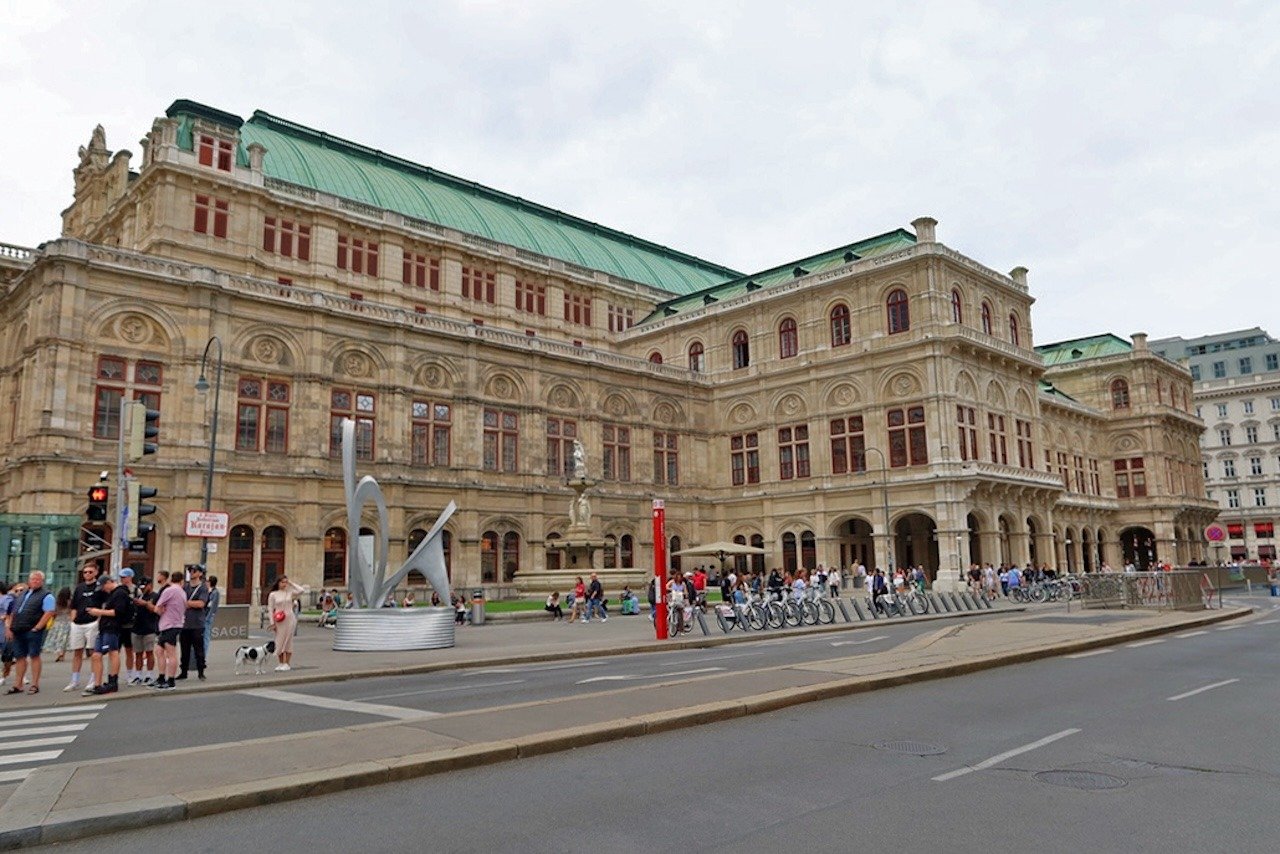
The Vienna State Opera (Wiener Staatsoper) is one of the most renowned opera houses in the world and one of Vienna’s most important cultural landmarks. Located along the Ringstraße in the heart of the city, it was completed in 1869 and was the first major building constructed on this grand boulevard.
Designed in the Neo-Renaissance style, the opera house is known for its grand façade and lavish interior. Inside, visitors will find an impressive auditorium with plush red seating, gold detailing, and a large chandelier, along with elegant foyers and a striking staircase decorated with marble statues and frescoes.
The Vienna State Opera remains a central part of the city’s musical identity, hosting more than 350 performances each year, including opera, ballet, and classical concerts. It regularly attracts leading singers, conductors, and musicians from around the world, which is part of what makes it such a significant stop in Vienna for anyone interested in music, performance, or architecture.
If you want to experience the opera house beyond seeing it from the outside, attending a performance here can be a memorable addition to your Vienna itinerary, though it’s worth checking schedules and booking tickets in advance for popular productions. Guided tours are also available and offer a behind-the-scenes look at the opera house’s ornate rooms, backstage areas, and stage machinery.
Even if you don't go inside, the Vienna State Opera House is still worth seeing while exploring central Vienna, especially since it sits in such a prominent location along one of the city’s most important historic streets.
For individuals eager to experience a live performance at the Vienna State Opera House, details on forthcoming shows and ticket options are available on the Vienna State Opera website.
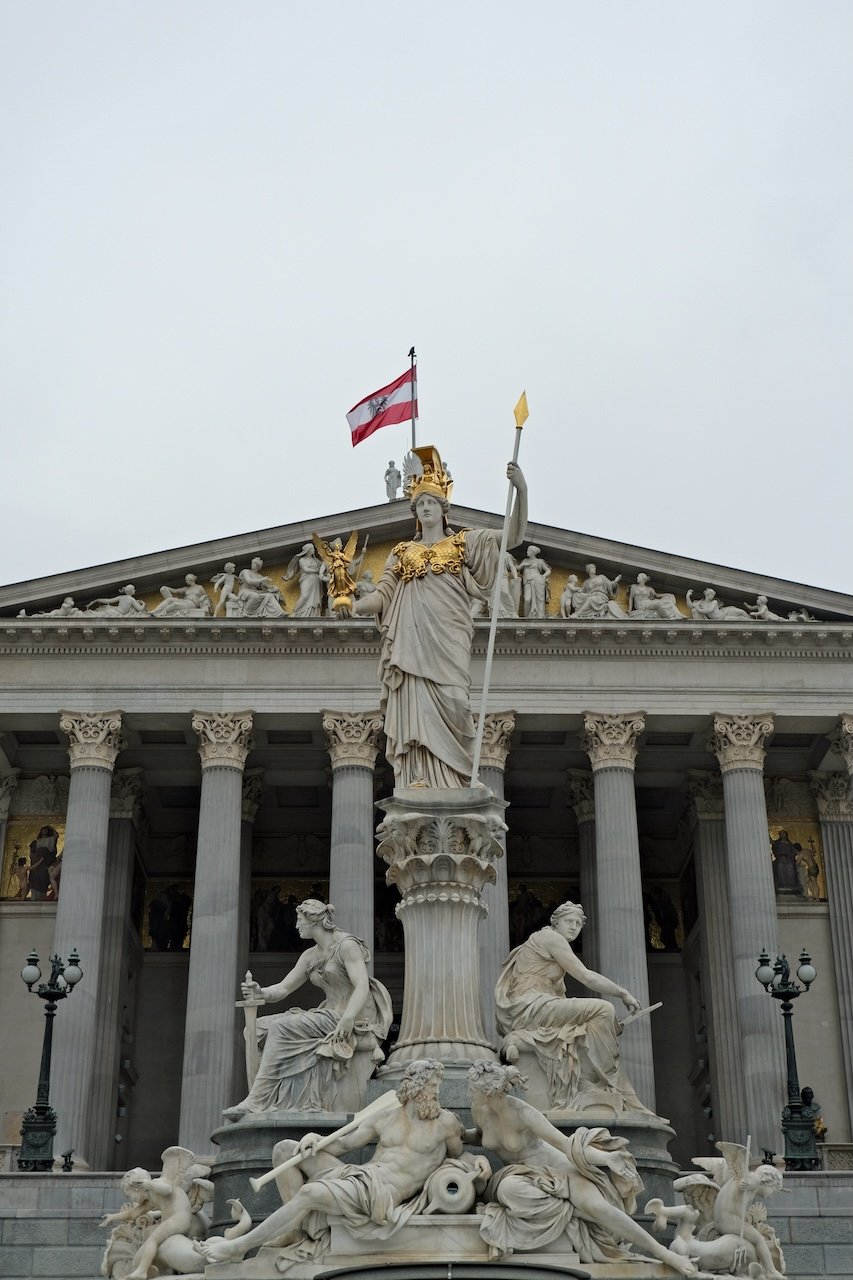
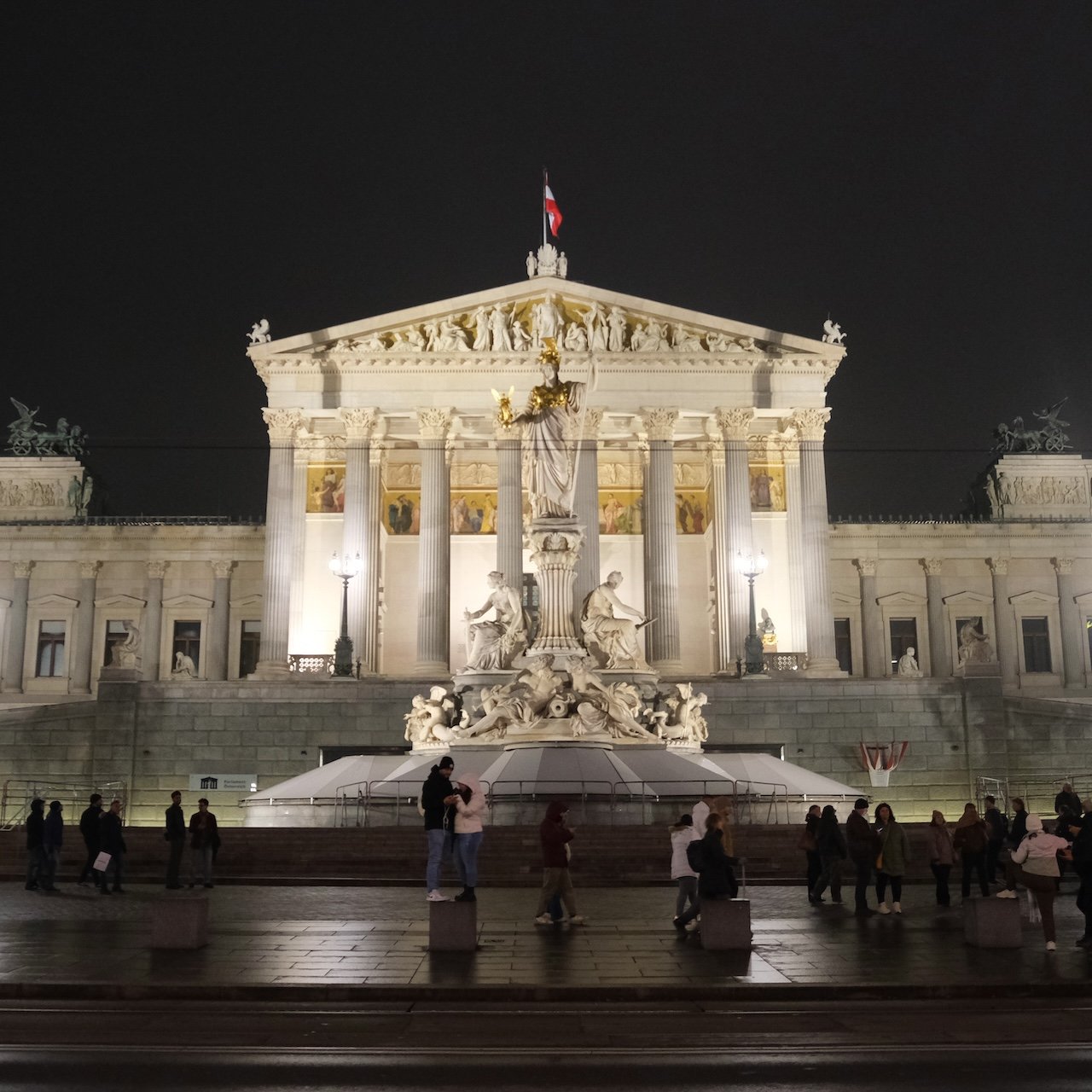
The Austrian Parliament Building is one of the most striking landmarks along Vienna’s Ringstraße, known for its grand neoclassical architecture inspired by ancient Greece. Completed in 1883, the building features impressive columns, statues, and the iconic Pallas Athena fountain at its front.
Visitors can also explore the interior through guided tours, or stop by the rooftop restaurant, which offers views over Vienna. Located near the Hofburg and Rathaus, it’s easy to pass by as you explore the city center and is especially beautiful when illuminated at night.
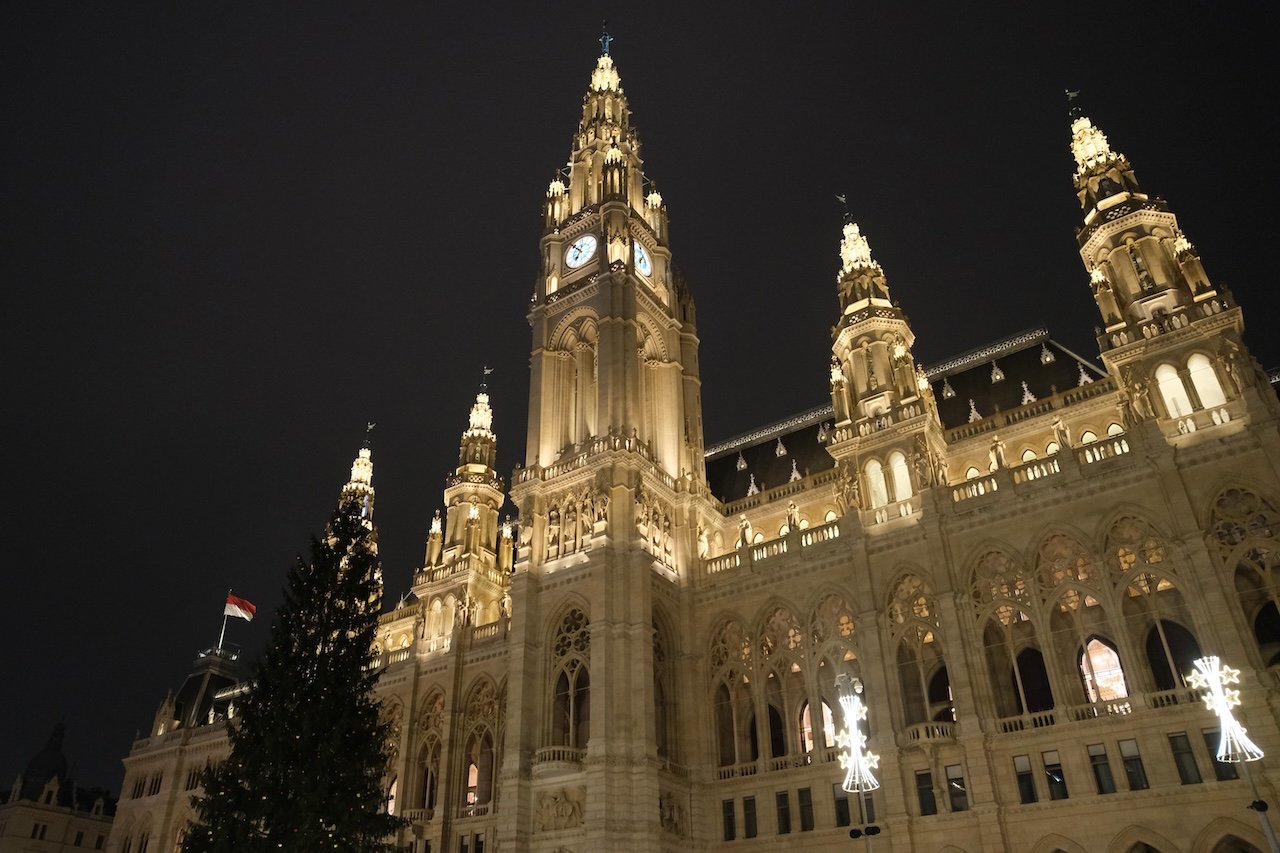
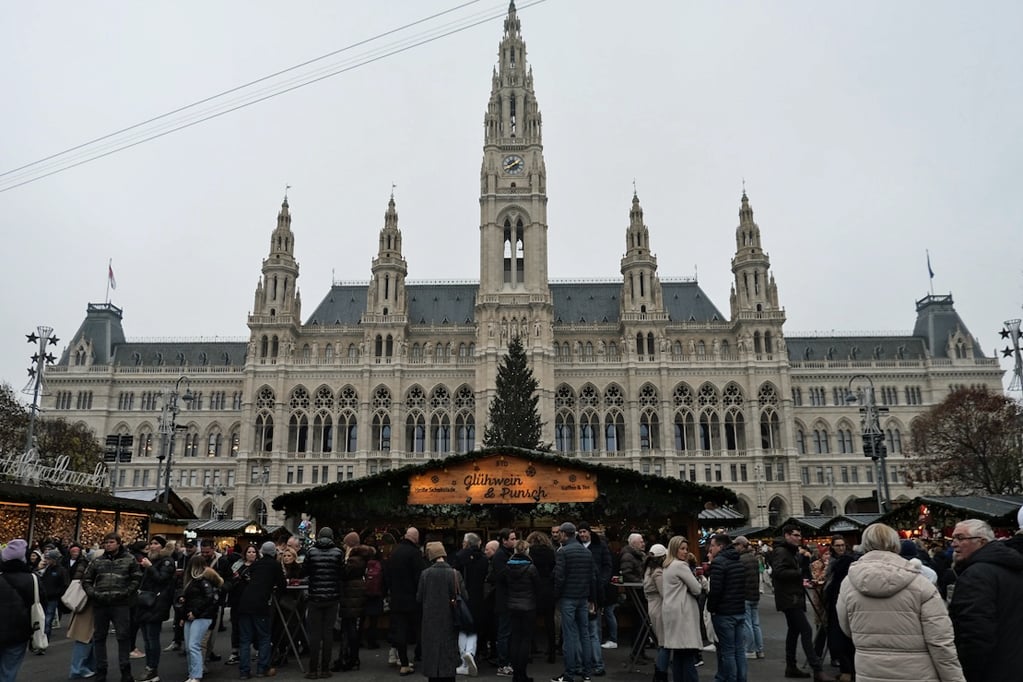
Vienna’s Rathaus (City Hall) is a striking neo-Gothic building located along the Ringstraße, known for its ornate façade and tall central tower. The large square in front of the Rathaus is one of the city’s main gathering spaces and hosts major events throughout the year.
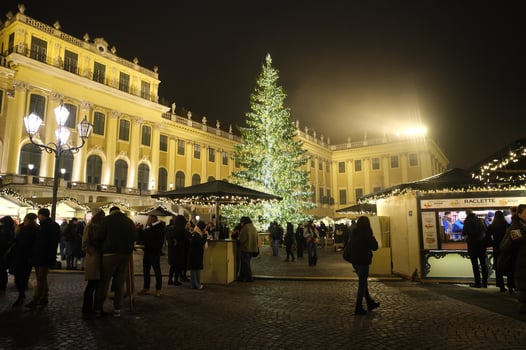
During Christmas in Vienna, this square transforms into one of the city’s most popular spots, hosting its largest and most famous Christmas market.
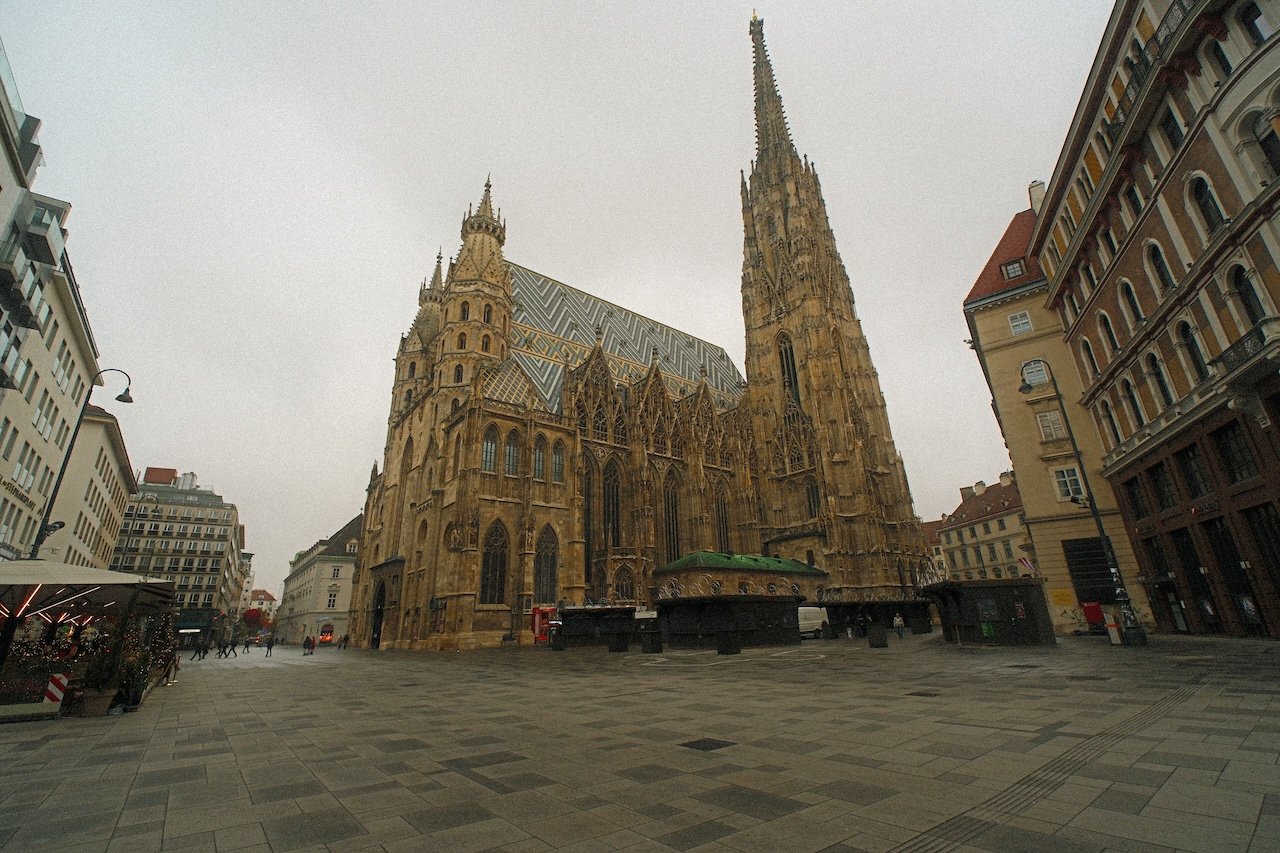
Stephansplatz is the central square in Vienna and the heart of the city’s historic center. It is dominated by St. Stephen’s Cathedral, a Gothic masterpiece and one of the most recognizable landmarks in Vienna.
The square is a busy, lively area filled with shops, cafés, and street performers, making it a natural hub for both visitors and locals throughout the day. It also serves as a major transportation hub, with the Stephansplatz U-Bahn station, located directly beneath the square, making it a convenient starting point for exploring Vienna’s main attractions.
If you’re visiting Vienna in November or December, Stephansplatz is also home to one of the city’s Christmas markets, adding to the atmosphere with festive stalls, lights, and seasonal food and drinks.
Minoritenplatz is a historic square in Vienna located near the Hofburg Palace in the city’s Innere Stadt. It’s known for its elegant architecture and the presence of several government buildings, which give the area a more formal, understated feel.
The square takes its name from the Minorite Church (Minoritenkirche), a Gothic church dating back to the 14th century and one of the oldest in Vienna.
Compared to the busier Stephansplatz, Minoritenplatz is much quieter, making it a good place to slow down and take in the surroundings without the crowds.
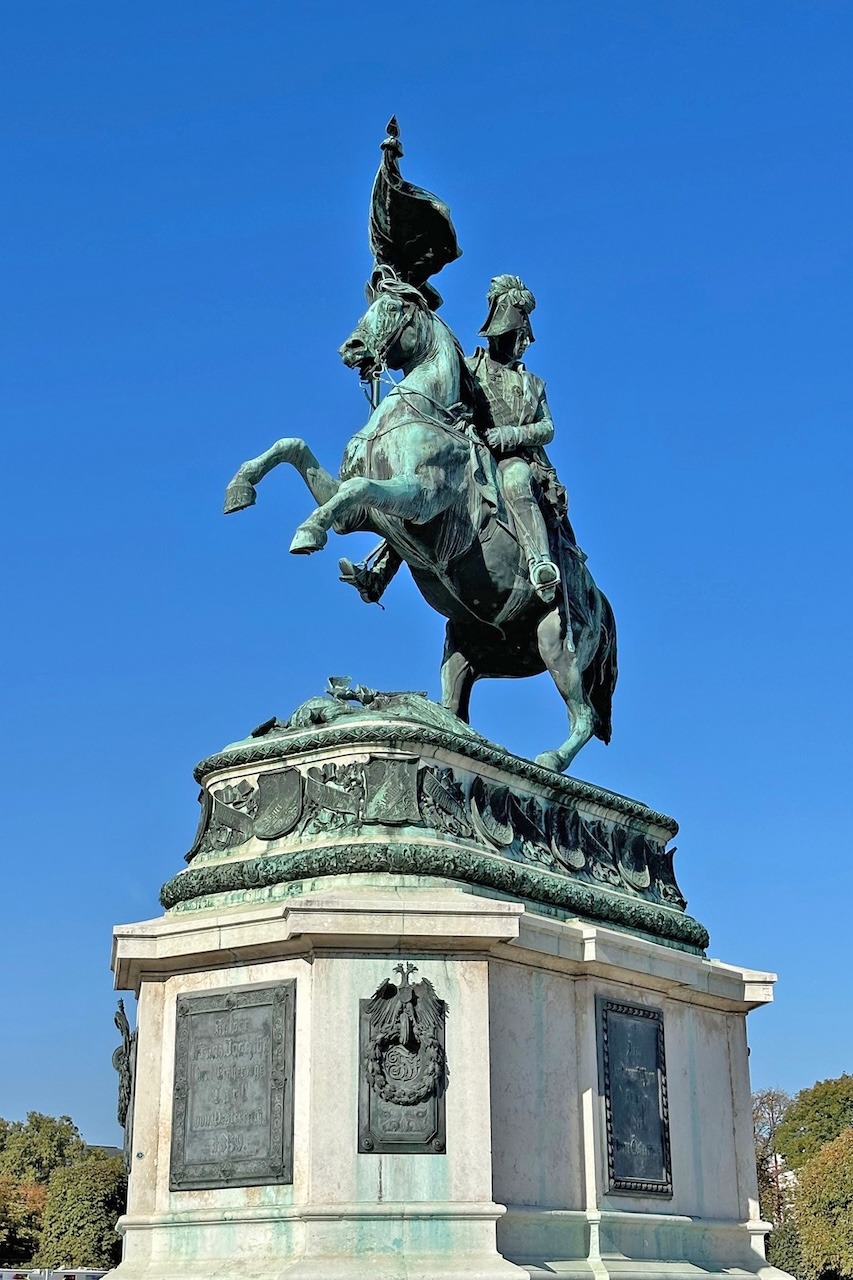
Heldenplatz (Heroes’ Square) is a large public square in Vienna located directly in front of the Hofburg Palace, making it one of the most historically significant spaces in the city.
The square is known for its monumental scale and the two equestrian statues of Archduke Charles of Austria and Prince Eugene of Savoy, both celebrated military leaders who played key roles in Austrian history.
Heldenplatz has also been the site of major historical events, most notably Adolf Hitler’s 1938 speech announcing Austria’s annexation into Nazi Germany, which remains an important and sobering part of the square’s history.
Today, Heldenplatz is a popular area for visitors, offering open views of the Hofburg Palace and easy access to nearby sights like the Volksgarten and the Ringstraße, making it a natural stop while exploring this part of Vienna.
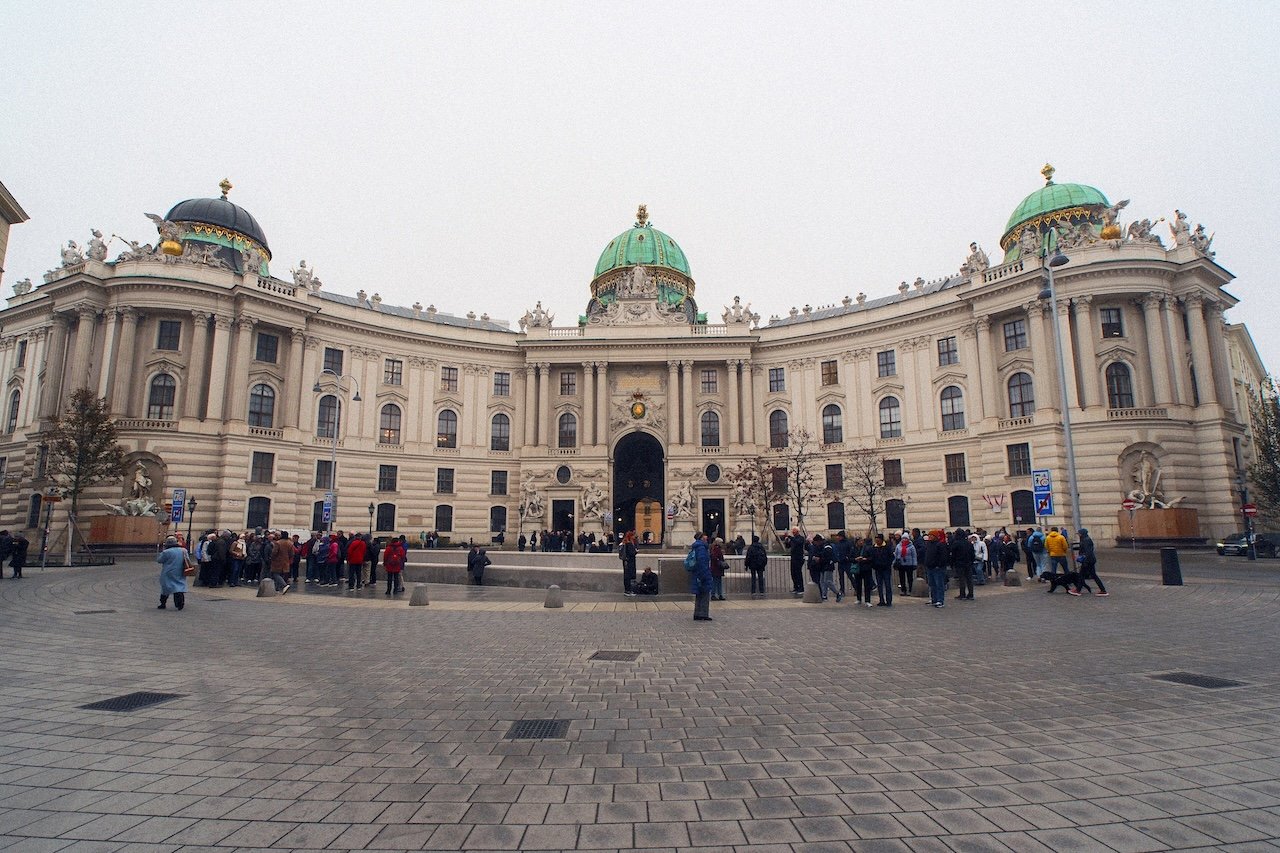
Michaelerplatz is a historic square in Vienna located at one of the main entrances to the Hofburg Palace, making it a natural starting point when exploring this part of the city.
The square is named after St. Michael’s Church (Michaelerkirche), a Gothic church dating back to the 13th century, and is also framed by the Michaelertrakt, an elegant wing of the Hofburg Palace known for its distinctive dome.
One of the most interesting features of Michaelerplatz is the archaeological excavation site in the center of the square, where you can see the remains of Roman Vienna, adding a visible layer of history that sets it apart from many of the city’s other squares.
Vienna is home to some of the most iconic landmarks in Europe, and exploring these is a key part of any Vienna travel itinerary. From historic buildings along the Ringstraße to famous cultural sites, these are the top Vienna landmarks worth adding to your list of things to do in Vienna.
The Vienna State Opera (Wiener Staatsoper) is one of the most renowned opera houses in the world and one of Vienna’s most important cultural landmarks. Located along the Ringstraße in the heart of the city, it was completed in 1869 and was the first major building constructed on this grand boulevard.
Designed in the Neo-Renaissance style, the opera house is known for its grand façade and lavish interior. Inside, visitors will find an impressive auditorium with plush red seating, gold detailing, and a large chandelier, along with elegant foyers and a striking staircase decorated with marble statues and frescoes.
The Vienna State Opera remains a central part of the city’s musical identity, hosting more than 350 performances each year, including opera, ballet, and classical concerts. It regularly attracts leading singers, conductors, and musicians from around the world, which is part of what makes it such a significant stop in Vienna for anyone interested in music, performance, or architecture.
If you want to experience the opera house beyond seeing it from the outside, attending a performance here can be a memorable addition to your Vienna itinerary, though it’s worth checking schedules and booking tickets in advance for popular productions. Guided tours are also available and offer a behind-the-scenes look at the opera house’s ornate rooms, backstage areas, and stage machinery.
Even if you don't go inside, the Vienna State Opera House is still worth seeing while exploring central Vienna, especially since it sits in such a prominent location along one of the city’s most important historic streets.
For individuals eager to experience a live performance at the Vienna State Opera House, details on forthcoming shows and ticket options are available on the Vienna State Opera website.
The Austrian Parliament Building is one of the most striking landmarks along Vienna’s Ringstraße, known for its grand neoclassical architecture inspired by ancient Greece. Completed in 1883, the building features impressive columns, statues, and the iconic Pallas Athena fountain at its front.
Visitors can also explore the interior through guided tours, or stop by the rooftop restaurant, which offers views over Vienna. Located near the Hofburg and Rathaus, it’s easy to pass by as you explore the city center and is especially beautiful when illuminated at night.
Vienna’s Rathaus (City Hall) is a striking neo-Gothic building located along the Ringstraße, known for its ornate façade and tall central tower. The large square in front of the Rathaus is one of the city’s main gathering spaces and hosts major events throughout the year.
During Christmas in Vienna, this square transforms into one of the city’s most popular spots, hosting its largest and most famous Christmas market.
Stephansplatz is the central square in Vienna and the heart of the city’s historic center. It is dominated by St. Stephen’s Cathedral, a Gothic masterpiece and one of the most recognizable landmarks in Vienna.
The square is a busy, lively area filled with shops, cafés, and street performers, making it a natural hub for both visitors and locals throughout the day. It also serves as a major transportation hub, with the Stephansplatz U-Bahn station, located directly beneath the square, making it a convenient starting point for exploring Vienna’s main attractions.
If you’re visiting Vienna in November or December, Stephansplatz is also home to one of the city’s Christmas markets, adding to the atmosphere with festive stalls, lights, and seasonal food and drinks.
Minoritenplatz is a historic square in Vienna located near the Hofburg Palace in the city’s Innere Stadt. It’s known for its elegant architecture and the presence of several government buildings, which give the area a more formal, understated feel.
The square takes its name from the Minorite Church (Minoritenkirche), a Gothic church dating back to the 14th century and one of the oldest in Vienna.
Compared to the busier Stephansplatz, Minoritenplatz is much quieter, making it a good place to slow down and take in the surroundings without the crowds.
Heldenplatz (Heroes’ Square) is a large public square in Vienna located directly in front of the Hofburg Palace, making it one of the most historically significant spaces in the city.
The square is known for its monumental scale and the two equestrian statues of Archduke Charles of Austria and Prince Eugene of Savoy, both celebrated military leaders who played key roles in Austrian history.
Heldenplatz has also been the site of major historical events, most notably Adolf Hitler’s 1938 speech announcing Austria’s annexation into Nazi Germany, which remains an important and sobering part of the square’s history.
Today, Heldenplatz is a popular area for visitors, offering open views of the Hofburg Palace and easy access to nearby sights like the Volksgarten and the Ringstraße, making it a natural stop while exploring this part of Vienna.
Michaelerplatz is a historic square in Vienna located at one of the main entrances to the Hofburg Palace, making it a natural starting point when exploring this part of the city.
The square is named after St. Michael’s Church (Michaelerkirche), a Gothic church dating back to the 13th century, and is also framed by the Michaelertrakt, an elegant wing of the Hofburg Palace known for its distinctive dome.
One of the most interesting features of Michaelerplatz is the archaeological excavation site in the center of the square, where you can see the remains of Roman Vienna, adding a visible layer of history that sets it apart from many of the city’s other squares.
Make the most of your time in Vienna with the flexible and convenient Vienna City Pass from MegaPass. This all-in-one sightseeing pass includes admission to must-see attractions like Schönbrunn Palace, 24-hour unlimited public transportation, a walking tour of Vienna's city center, internet data via eSIM, and audio guides. You can also upgrade your pass to add extra Vienna attractions to suit your interests and itinerary. It is one of the best ways to save time and money while discovering the best things to do in Vienna!
Vienna is home to some of the best museums in Europe, ranging from world-class art collections to historic palaces that offer a deeper look into the city’s imperial past. If it’s your first visit to Vienna, it’s best to focus on just a few key highlights, as many of these museums are large and can easily take several hours to explore. A '♡' marks our personal favorites!
If it’s your first time in Vienna, these are the museums and palaces worth prioritizing. They represent the city’s most iconic art, history, and architecture, and are the best places to start when building your Vienna itinerary.
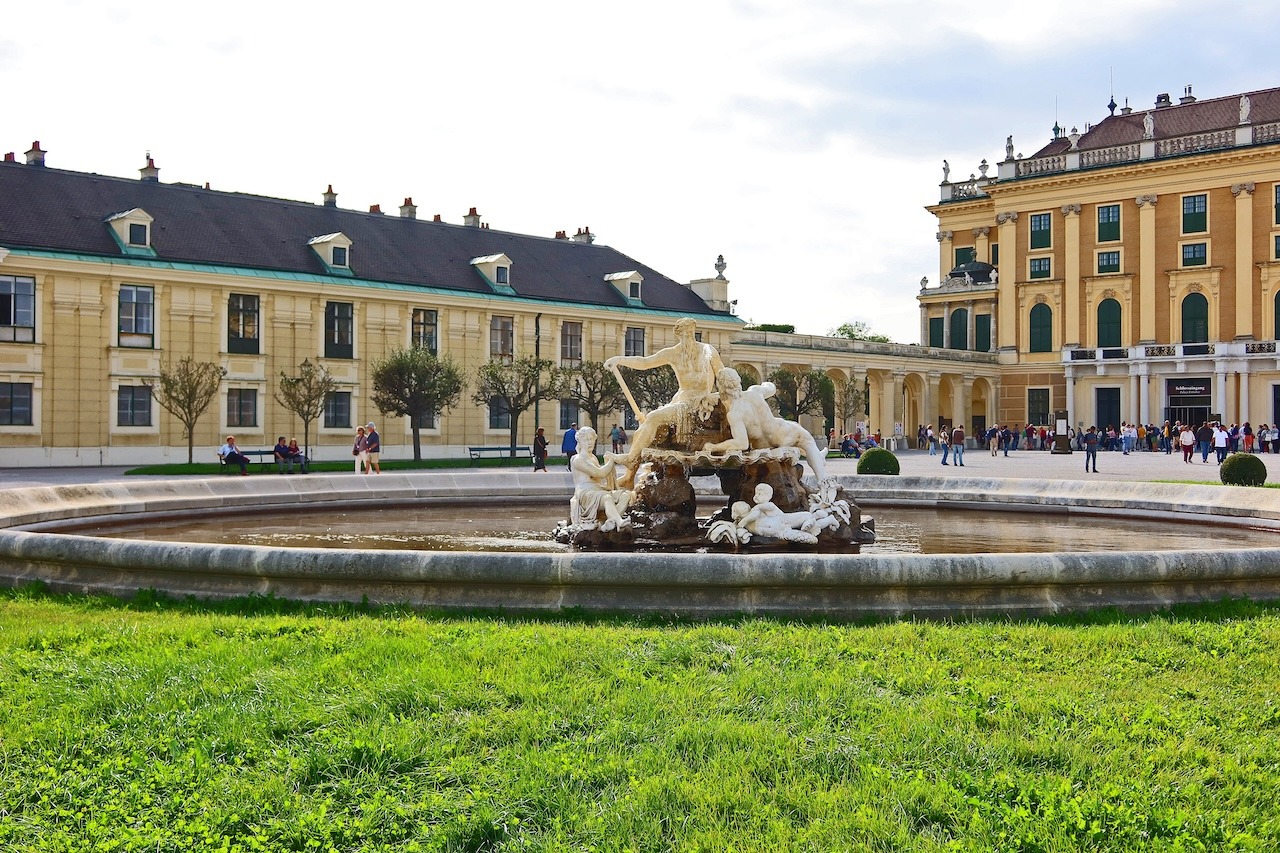
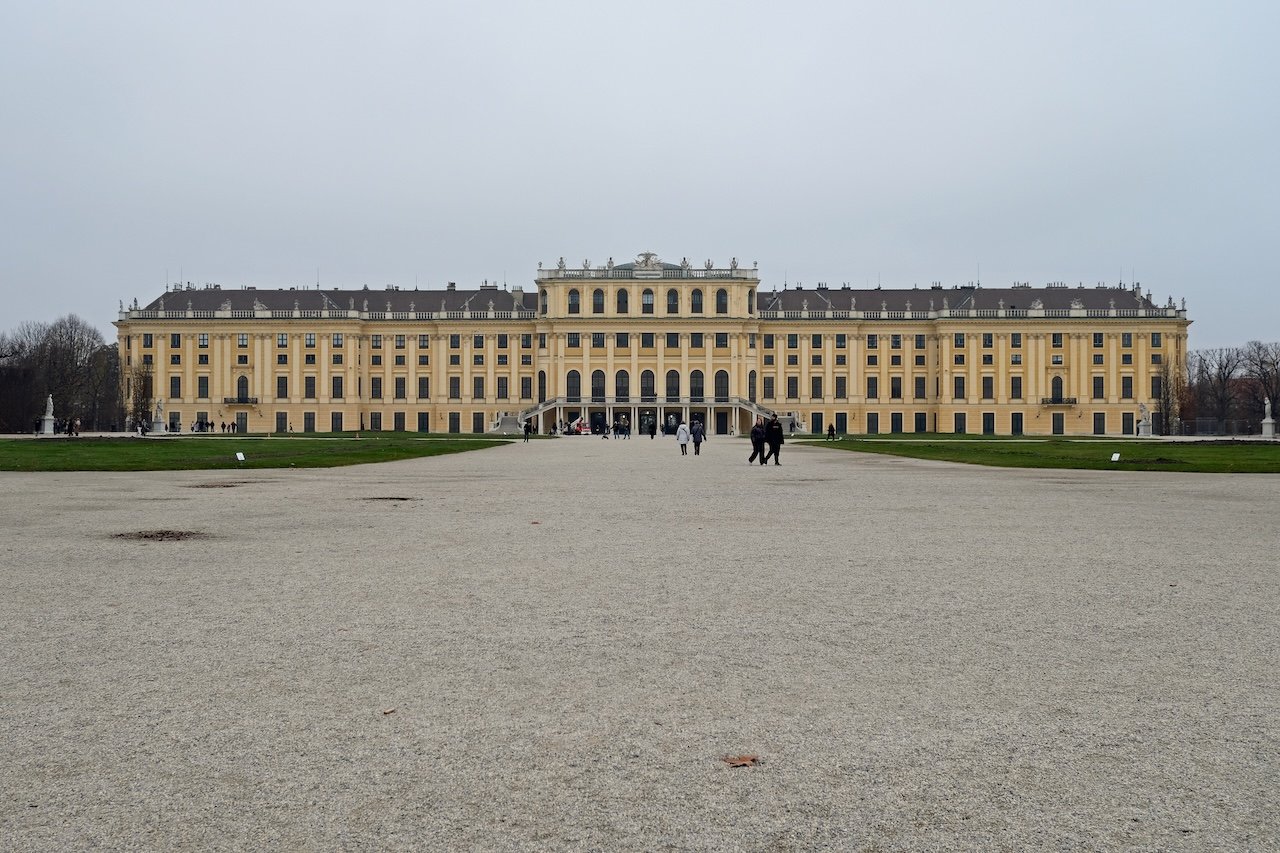
Schönbrunn Palace is one of Vienna’s most iconic landmarks and a UNESCO World Heritage Site. Located in the Hietzing district, this grand baroque palace served as the summer residence of the Habsburg emperors and remains one of the most important places to understand Vienna’s imperial history.
Originally built as a hunting lodge in the late 16th century, the palace was later expanded under Emperor Leopold I. Empress Maria Theresa transformed it into the magnificent residence seen today, shaping much of its design and role as a center of imperial life.
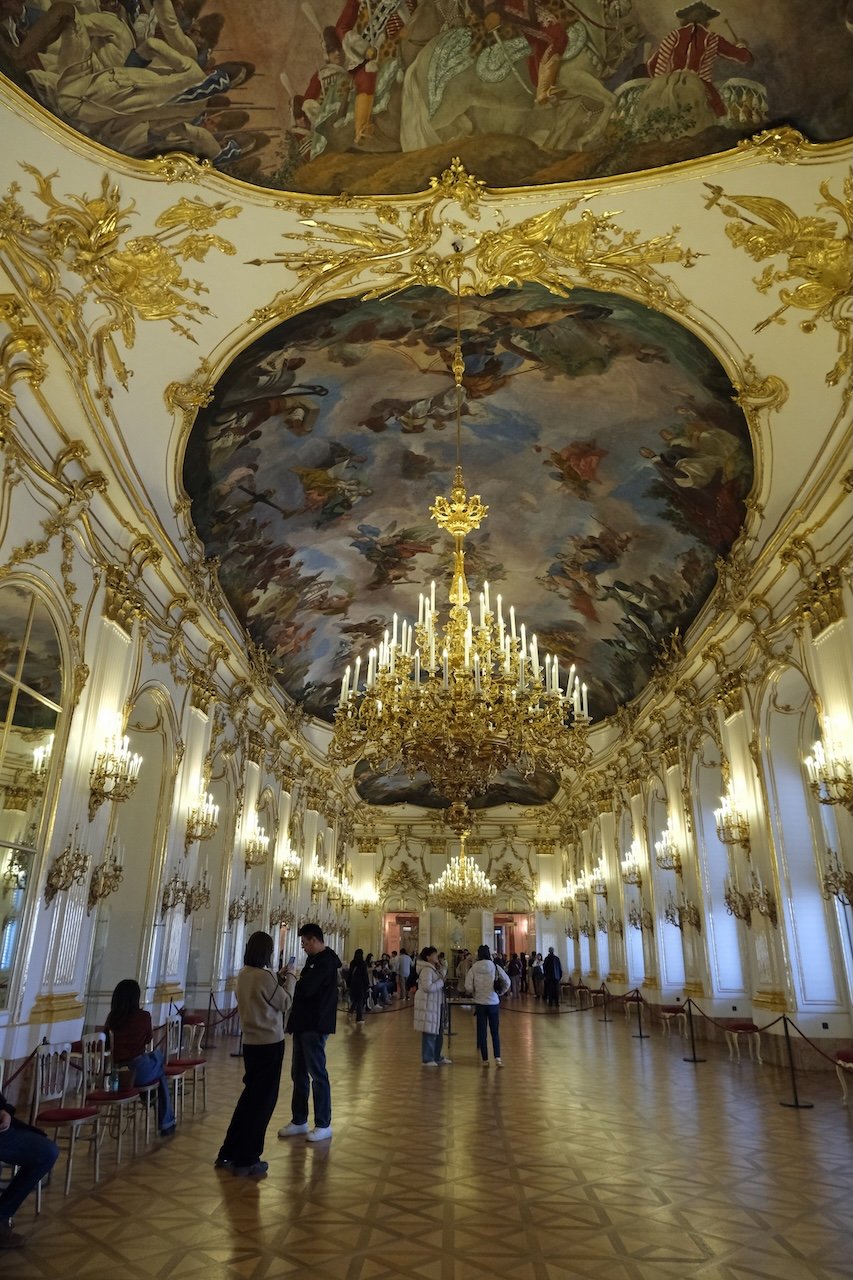
The palace contains over 1,400 rooms, including state apartments, private quarters, and ceremonial halls that reflect the scale and formality of the Habsburg court. Some of the most notable rooms include:
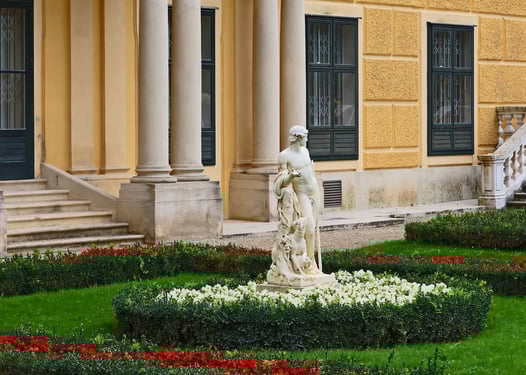
The gardens are just as impressive as the palace itself, designed in a formal French style with long, symmetrical pathways, fountains, and landscaped views. In addition to touring the palace interiors and surrounding gardens, visitors can visit the zoo or attend concerts in the Schönbrunn Orangery.
Located within the Hofburg Palace in central Vienna, the Hofburg Imperial Apartments were the official residence of the Habsburg emperors and offer a detailed look into court life during the reign of Emperor Franz Joseph I and Empress Elisabeth.
Visitors can walk through a series of rooms, including the audience chamber, conference room, and private living quarters, all decorated with period furnishings, tapestries, and chandeliers that reflect the formality and structure of imperial life.
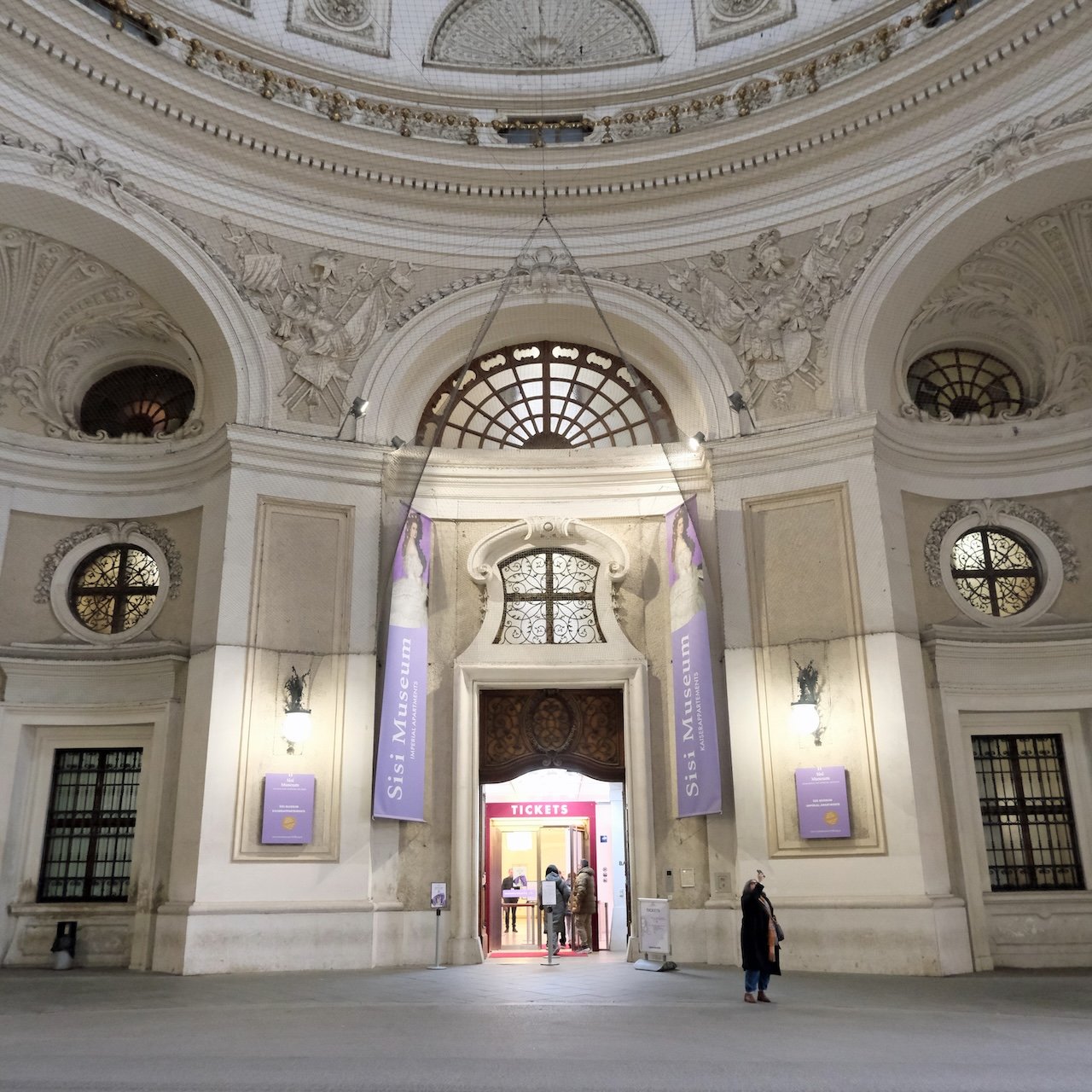
Adjacent to the apartments, the Sisi Museum focuses on the life of Empress Elisabeth, one of Austria’s most well-known historical figures. Known for her beauty, independence, and tragic life, Sisi remains a central figure in Vienna’s imperial history.
The museum displays a range of personal items, including dresses, parasols, gloves, and beauty products, alongside letters and poetry that offer a more personal look at her life. It traces her story from her early years as a Bavarian duchess through her marriage to Franz Joseph, her struggles with court life, and the personal tragedies she experienced, including the death of her son, Crown Prince Rudolf, and her assassination in 1898.
Together, the Imperial Apartments and Sisi Museum provide a more personal and intimate perspective on the Habsburg dynasty, making this a worthwhile stop if you’re interested in the people behind Vienna’s imperial history.
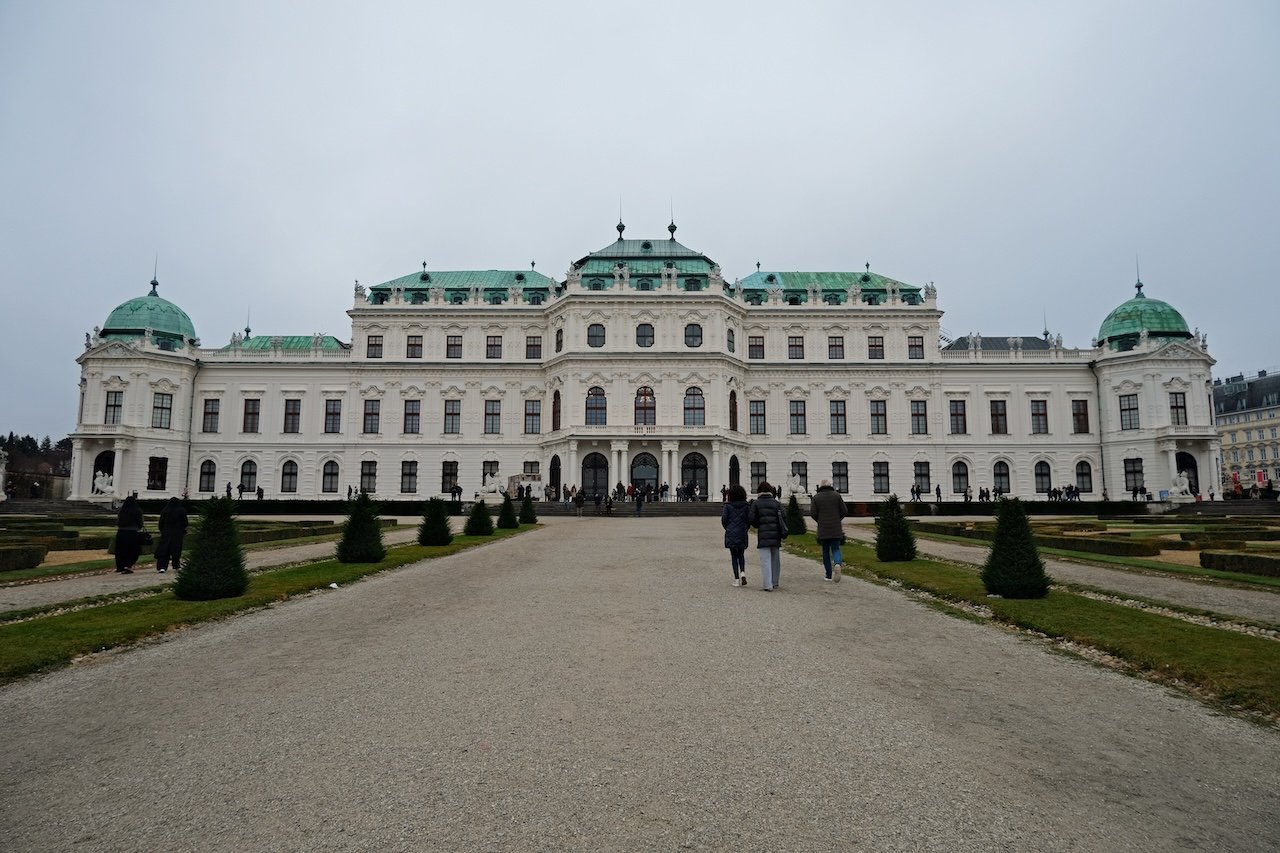
Belvedere Palace is one of Vienna’s most iconic landmarks, known for its baroque architecture, formal gardens, and as the home of Gustav Klimt’s The Kiss. Built in the early 18th century as a summer residence for Prince Eugene of Savoy, the complex consists of the Upper and Lower Belvedere connected by landscaped gardens.
Beyond its art collection, Schloss Belvedere is also historically important. The Upper Belvedere served as the home of the Archduke Franz Ferdinand before his assassination in 1914. The Upper Belvedere’s Marble Hall is also where Austria’s State Treaty was signed in 1955, formally restoring the country’s independence after World War II.
Highlights of the Collection
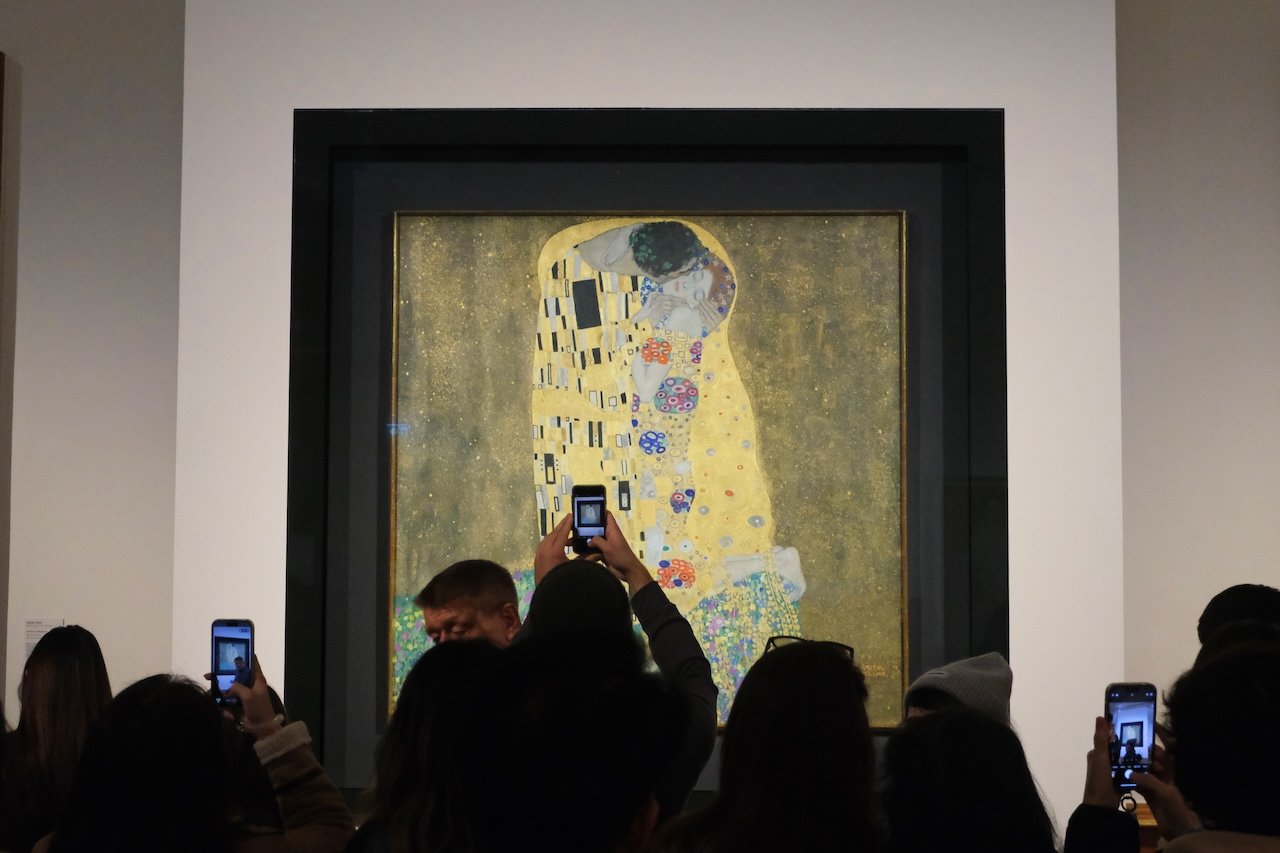
The Upper Belvedere houses one of Austria’s most important art collections, with a strong focus on Austrian artists. The most famous work here is Klimt’s The Kiss, which is one of the most visited paintings in Vienna.
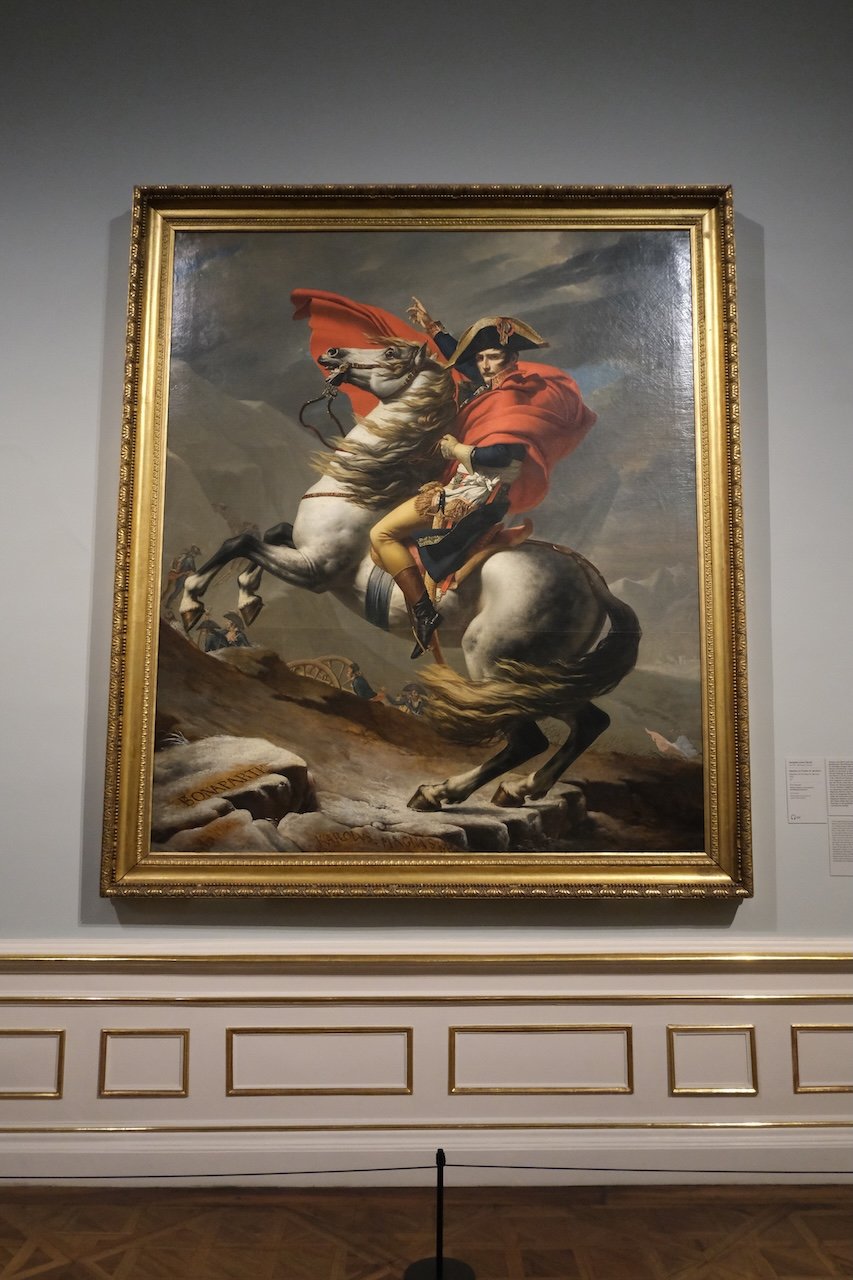
In addition to Klimt, the collection includes works by Egon Schiele and Ferdinand Georg Waldmüller, as well as Jacques-Louis David’s Napoleon at the Great St. Bernard, offering a mix of Austrian and European masterpieces.
Upper vs. Lower Belvedere
The Upper Belvedere is the main attraction and where the permanent collection is displayed.
The Lower Belvedere, which once served as Prince Eugene’s residence, now hosts temporary exhibitions and includes ornate historic rooms such as the Marble Gallery and the Hall of Grotesques.
The Gardens
The gardens between the Upper and Lower Belvedere are a highlight in their own right. Designed in a formal French style, they feature symmetrical pathways, fountains, and sculptures, and offer some of the best views of the palace.
What to Know Before You Go
The Upper Belvedere is the main attraction and home to Klimt’s The Kiss, so if you’re short on time, it’s best to focus your visit there. A combination ticket is available if you’re interested in seeing both the Upper and Lower Belvedere, but most visitors will find the Upper alone is enough. The gardens are free to enter, and it’s worth booking tickets in advance during peak seasons.
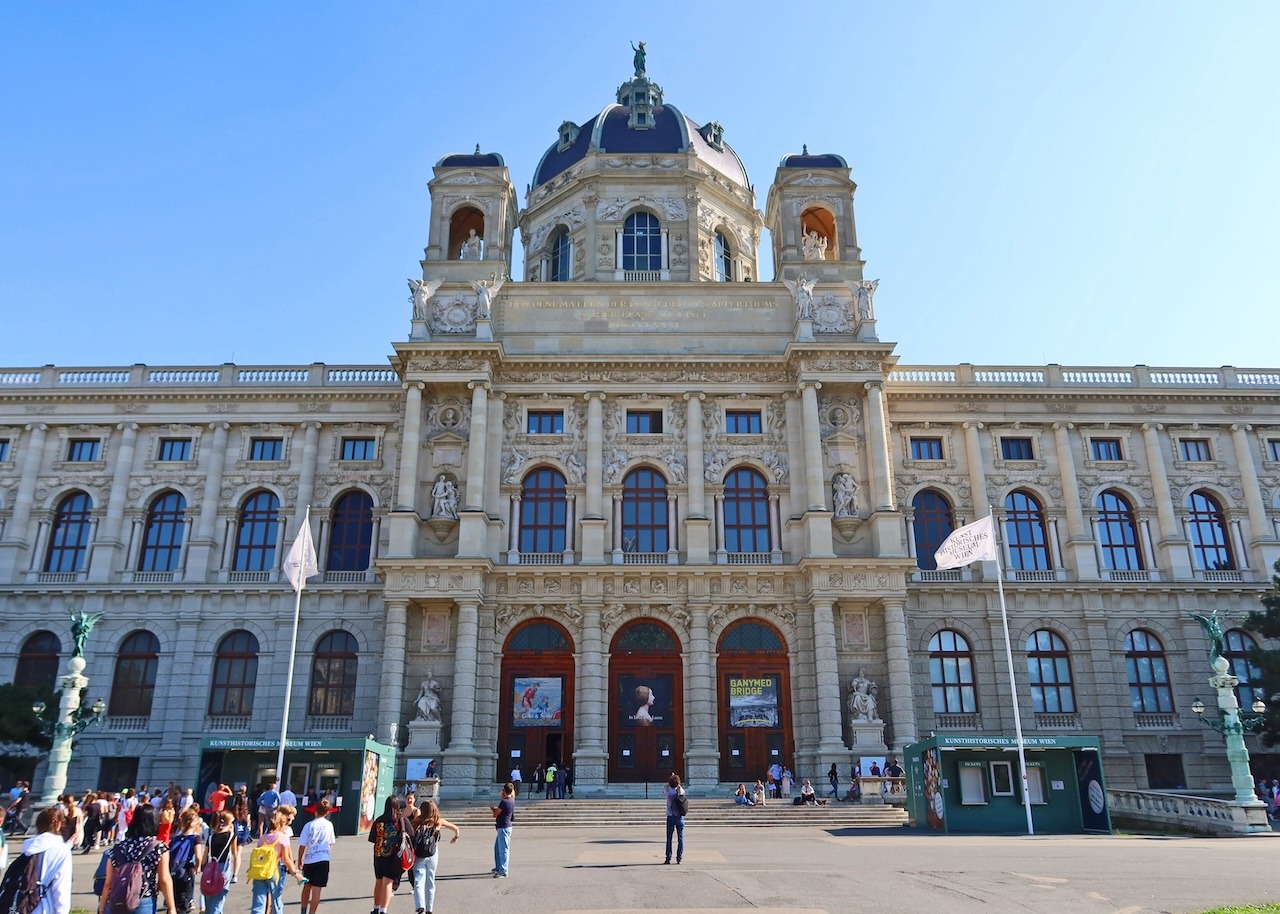
The Kunsthistorisches Museum is one of Vienna’s most important art museums, located near the Hofburg Palace and housed in a grand 19th-century building commissioned by Emperor Franz Joseph I. The museum is best known for its collection of European paintings from the Renaissance through the Baroque period, with works by artists like Diego Velázquez, Pieter Bruegel the Elder, and Peter Paul Rubens.
Highlights from the Collection
The museum holds several notable works by Velázquez, including Infanta Margarita Teresa in a Blue Dress, which reflects the close relationship between the Spanish royal family and the Habsburgs. Portraits were often exchanged between courts, reflecting both political alliances and family ties.
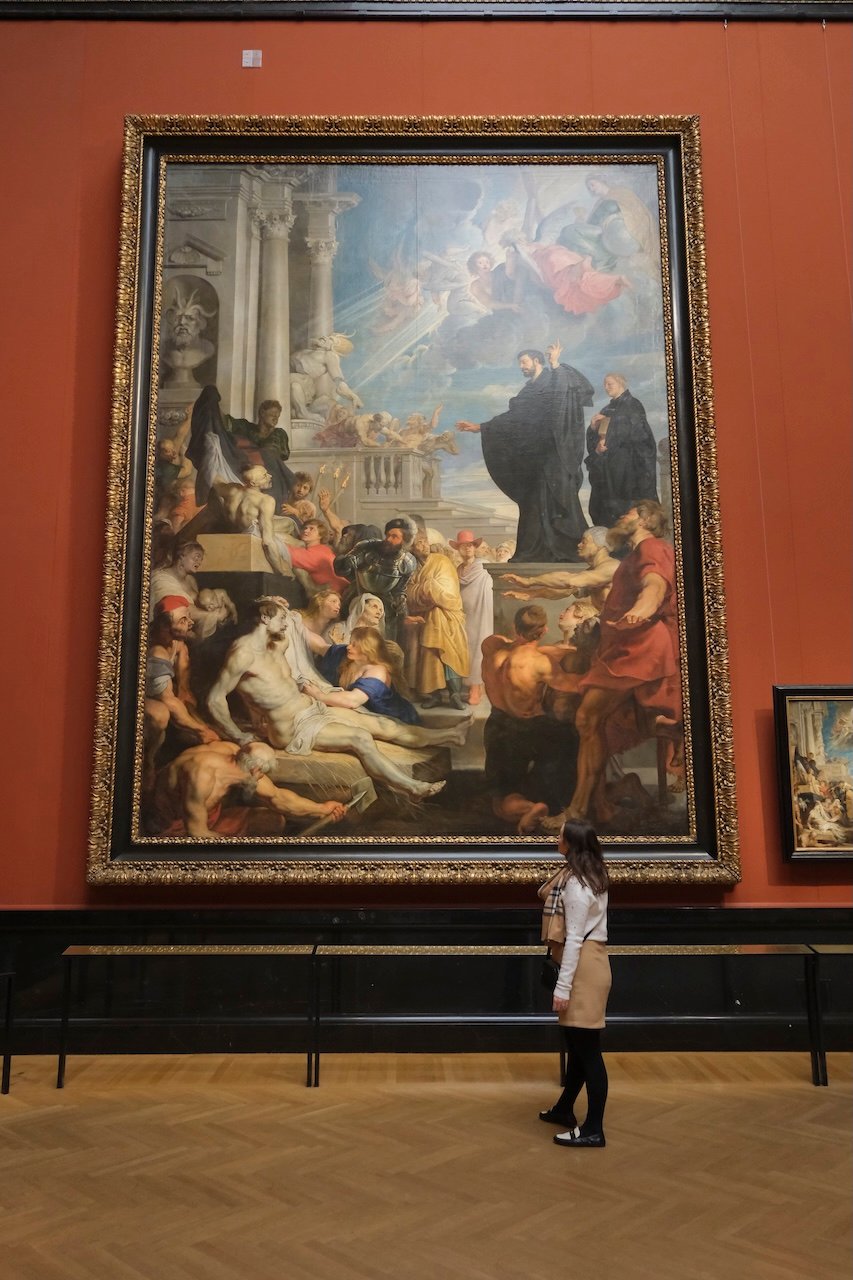
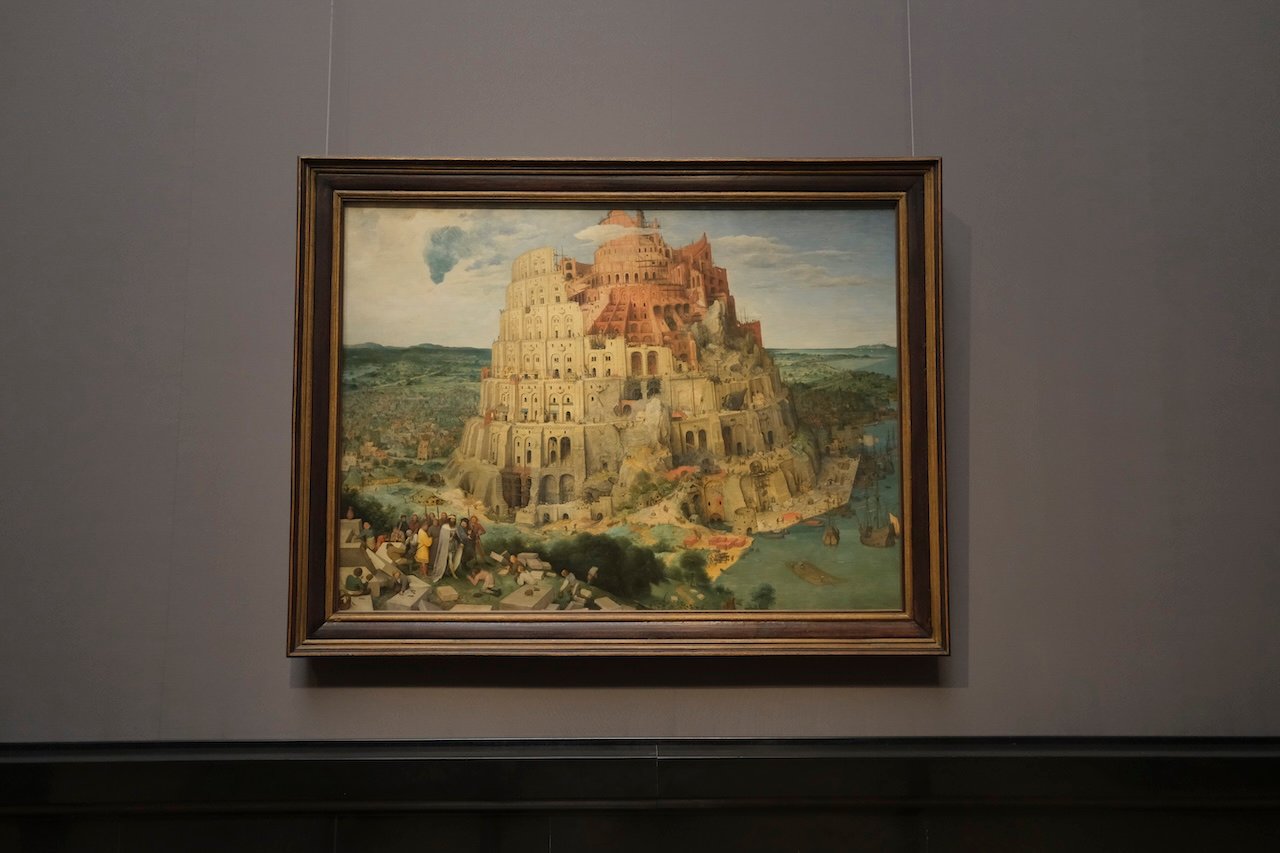
You’ll also find an extensive collection of paintings by Bruegel, including The Tower of Babel and The Hunters in the Snow, along with major works by Rubens such as The Four Continents.
Another standout is the portrait of Marie Antoinette by Élisabeth Louise Vigée Le Brun, one of the most prominent female artists of her time. Born an Austrian archduchess before becoming Queen of France, she personified the reach of the Habsburg dynasty across Europe.
What to Know Before You Go: Kunsthistorisches Museum
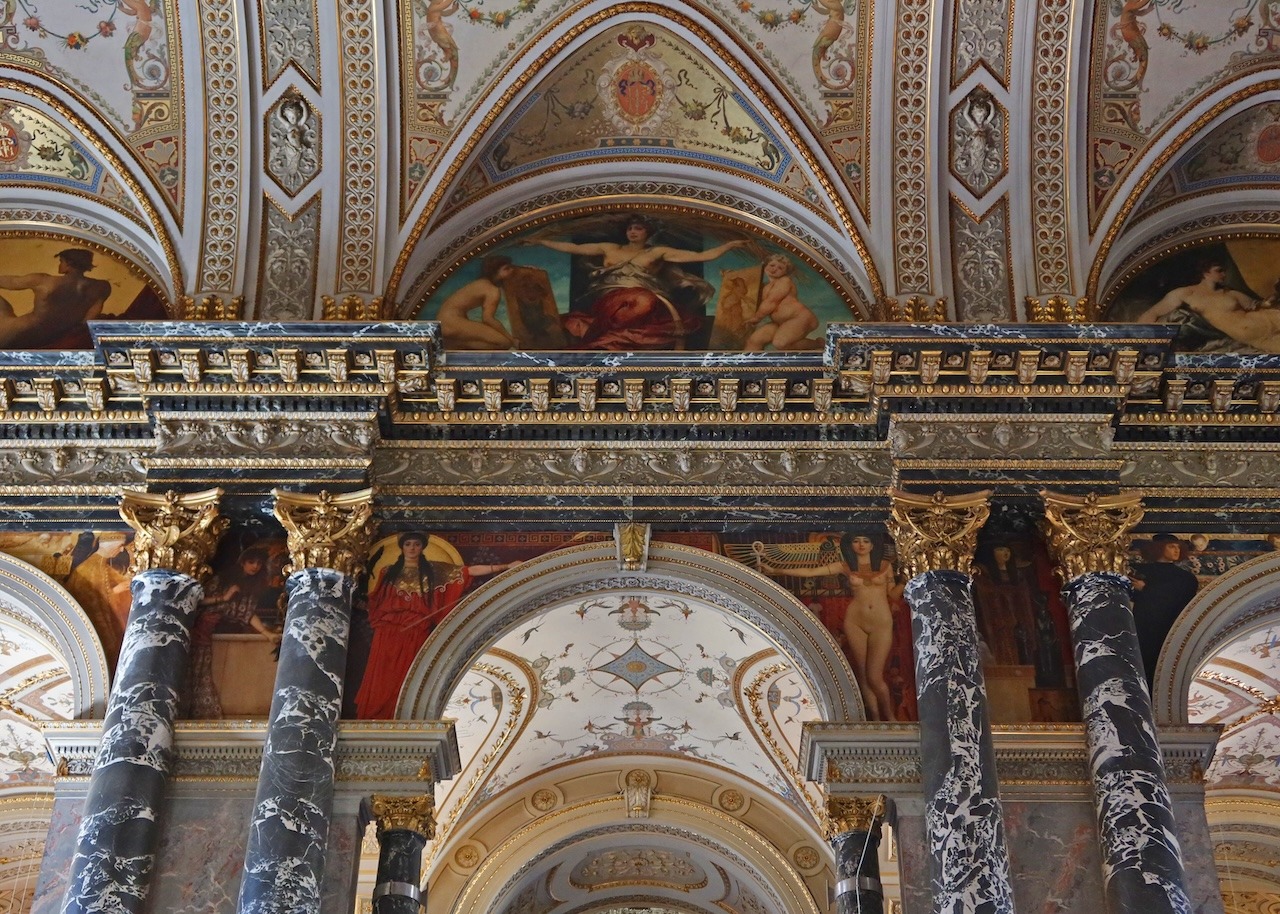
The museum itself is worth seeing beyond the collection, with an ornate interior and a grand staircase decorated with frescoes by Gustav Klimt.
The Kunsthistorisches Museum is closed on Mondays. You can buy tickets in advance on the museum’s official website, where prices are lower than at the on-site ticket office.
If you also plan to visit the Imperial Treasury Vienna, you can purchase a combination ticket that includes admission to both the Imperial Treasury and the Kunsthistorisches Museum are available.
Beyond the must-see highlights, Vienna has several other notable museums that are well worth visiting, especially if you have more time.
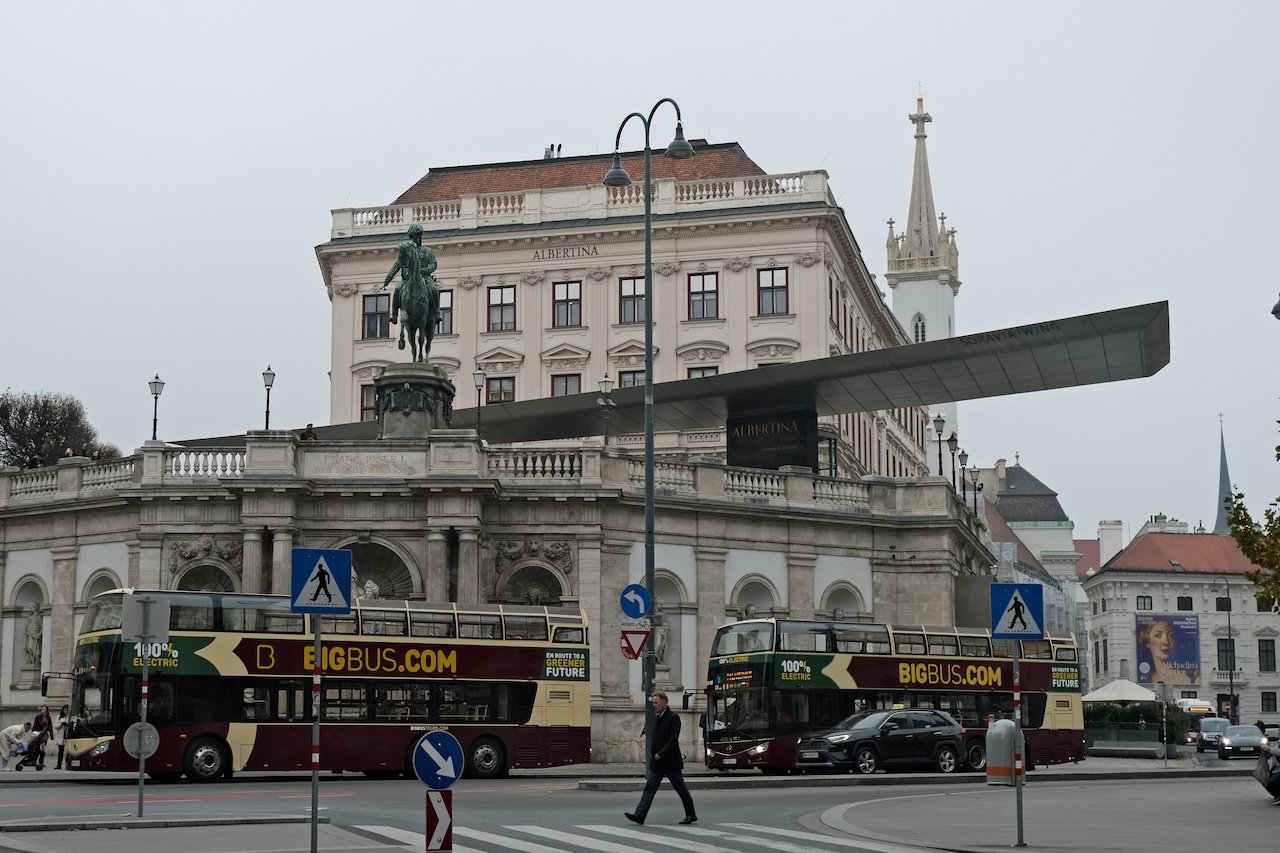
Set within a former Habsburg palace in the Innere Stadt, the Albertina Museum is one of the city’s premier cultural institutions, renowned for its extensive collection of graphic art, photography, and modern art.
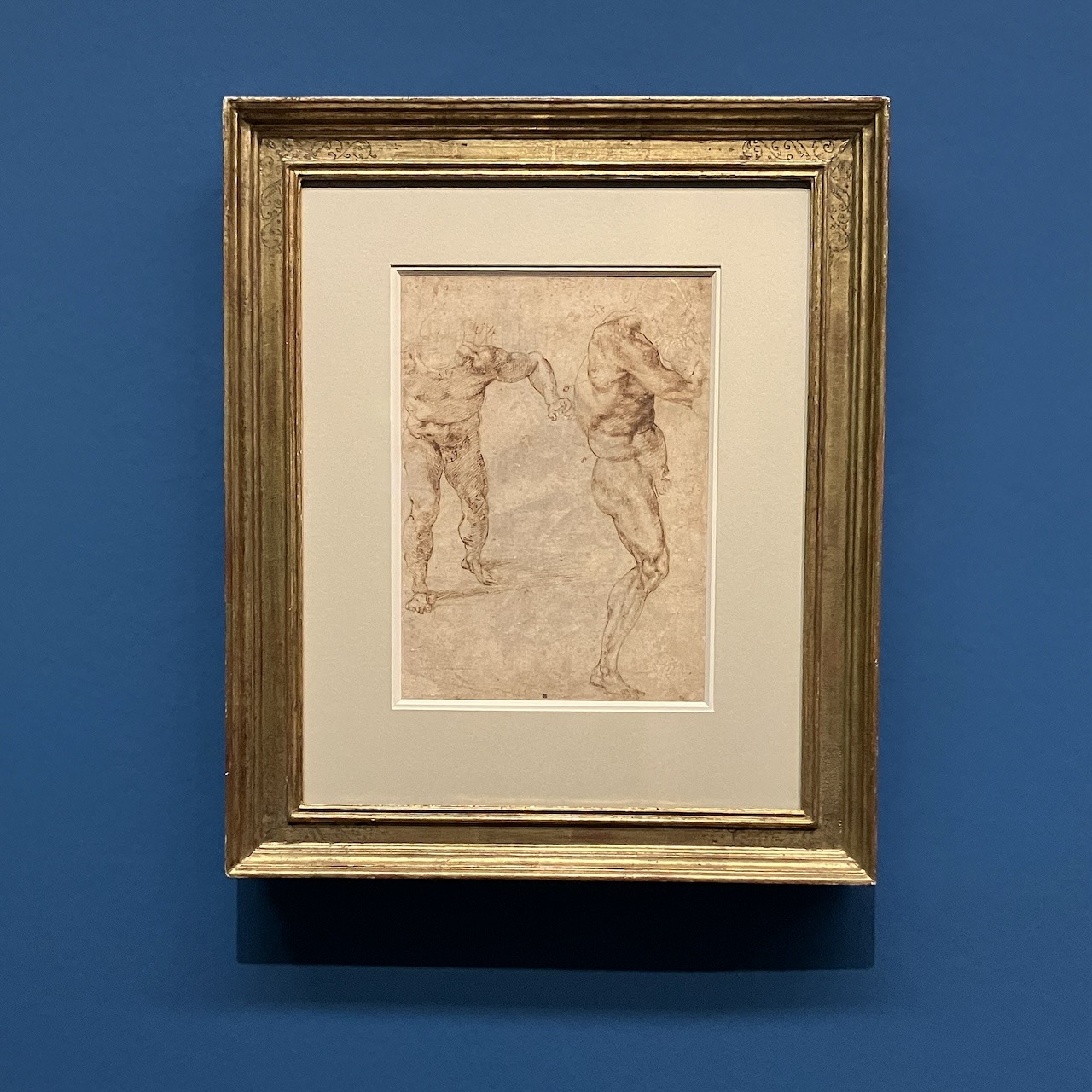
The museum's collection includes over a million prints and tens of thousands of drawings, including works by artists such as Albrecht Dürer, Raphael, and Michelangelo Buonarroti. One of the most well-known pieces in the collection is Dürer’s Hare, a detailed watercolor that remains one of the museum’s highlights. In addition to its historical works, the Albertina also houses the Batliner Collection, which focuses on Impressionist and early modern art. Here, you’ll find paintings by artists like Claude Monet and Edgar Degas, alongside modern works by Pablo Picasso and René Magritte, offering a broader view of artistic development across different periods.
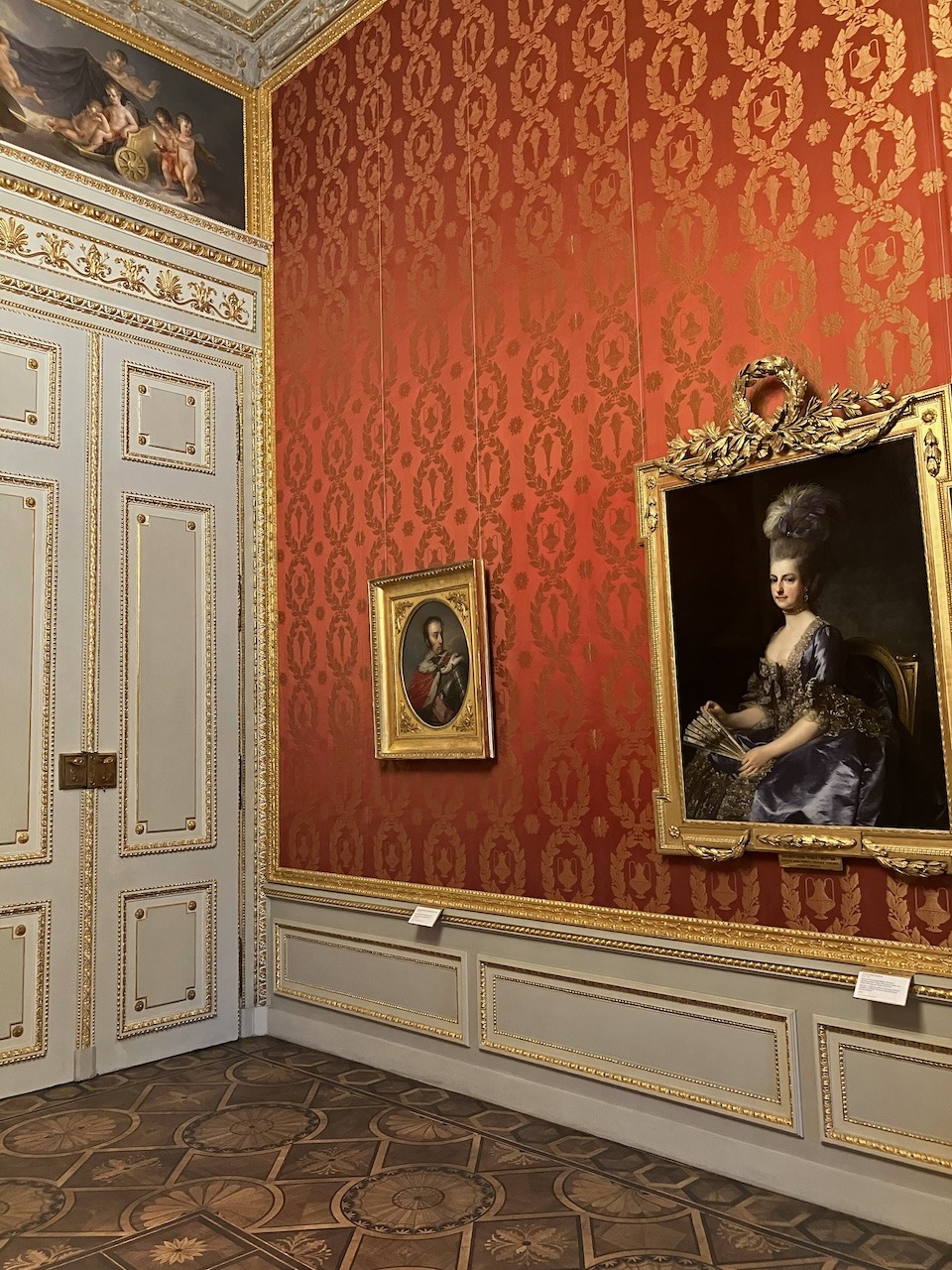
One of the most unique aspects of visiting the Albertina is the opportunity to explore the State Rooms, which were once used by Habsburg archdukes and archduchesses. These restored palace interiors provide a glimpse into aristocratic life and are often less crowded than similar spaces at Schönbrunn Palace or the Hofburg, making them a worthwhile part of the visit.
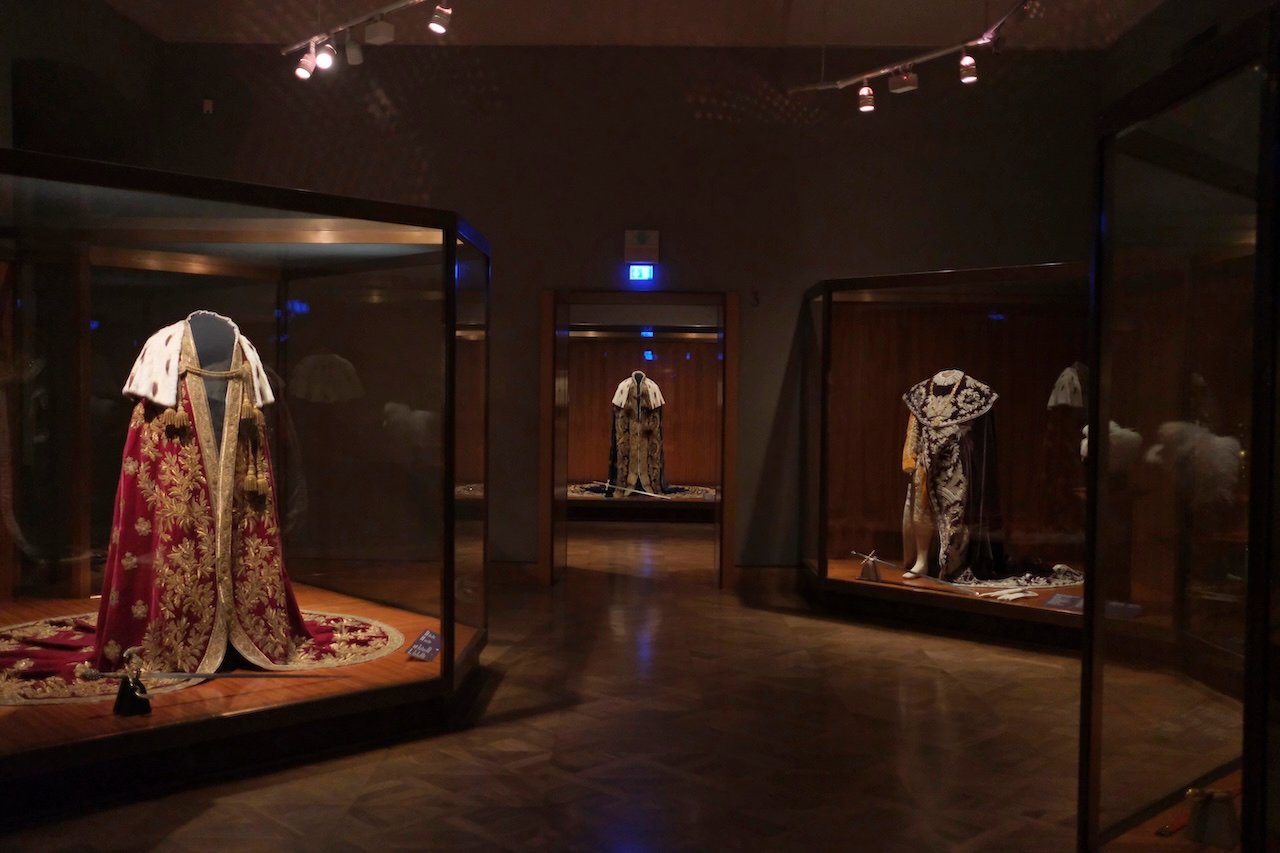
Located within the Hofburg Palace complex, the Imperial Treasury Vienna houses one of the most significant collections of royal regalia in Europe, offering a direct look at the power and legacy of the Habsburg dynasty.
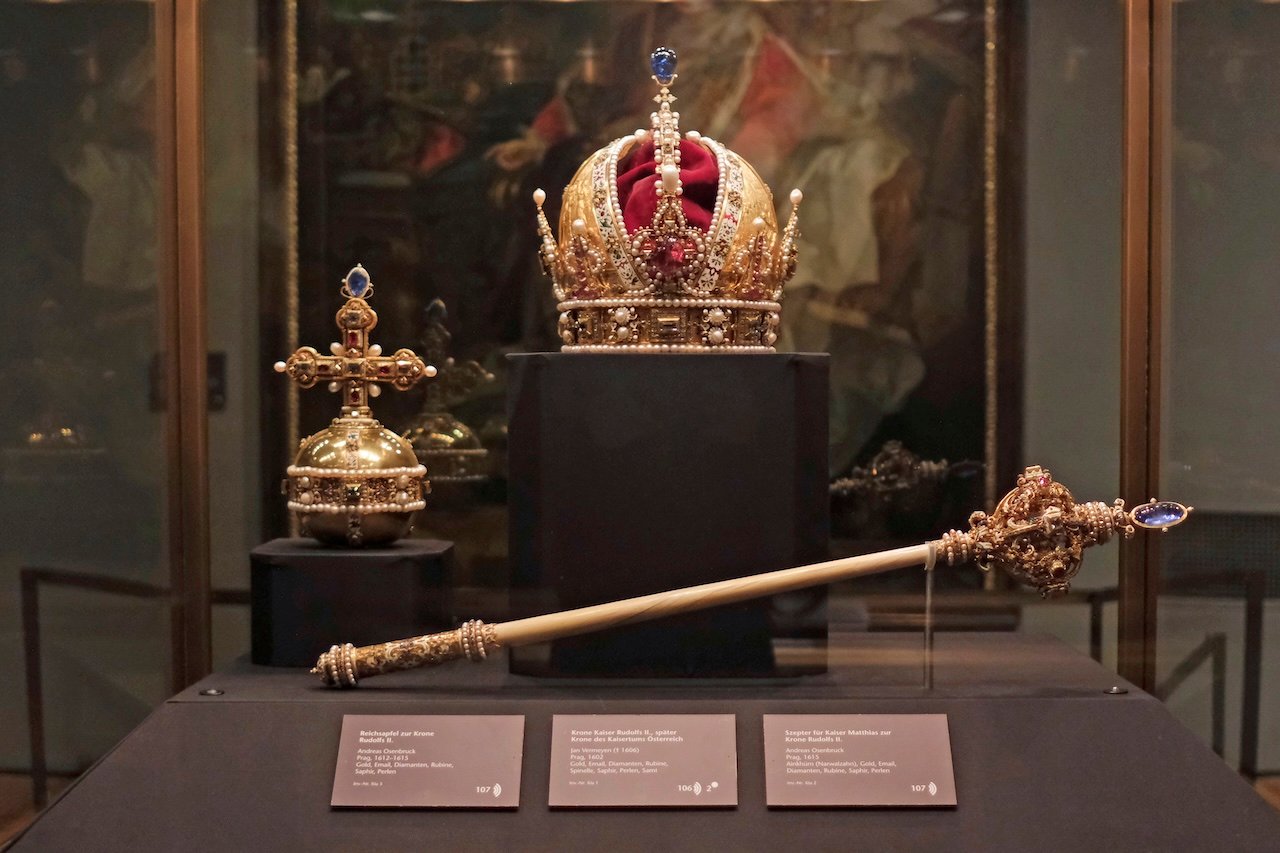
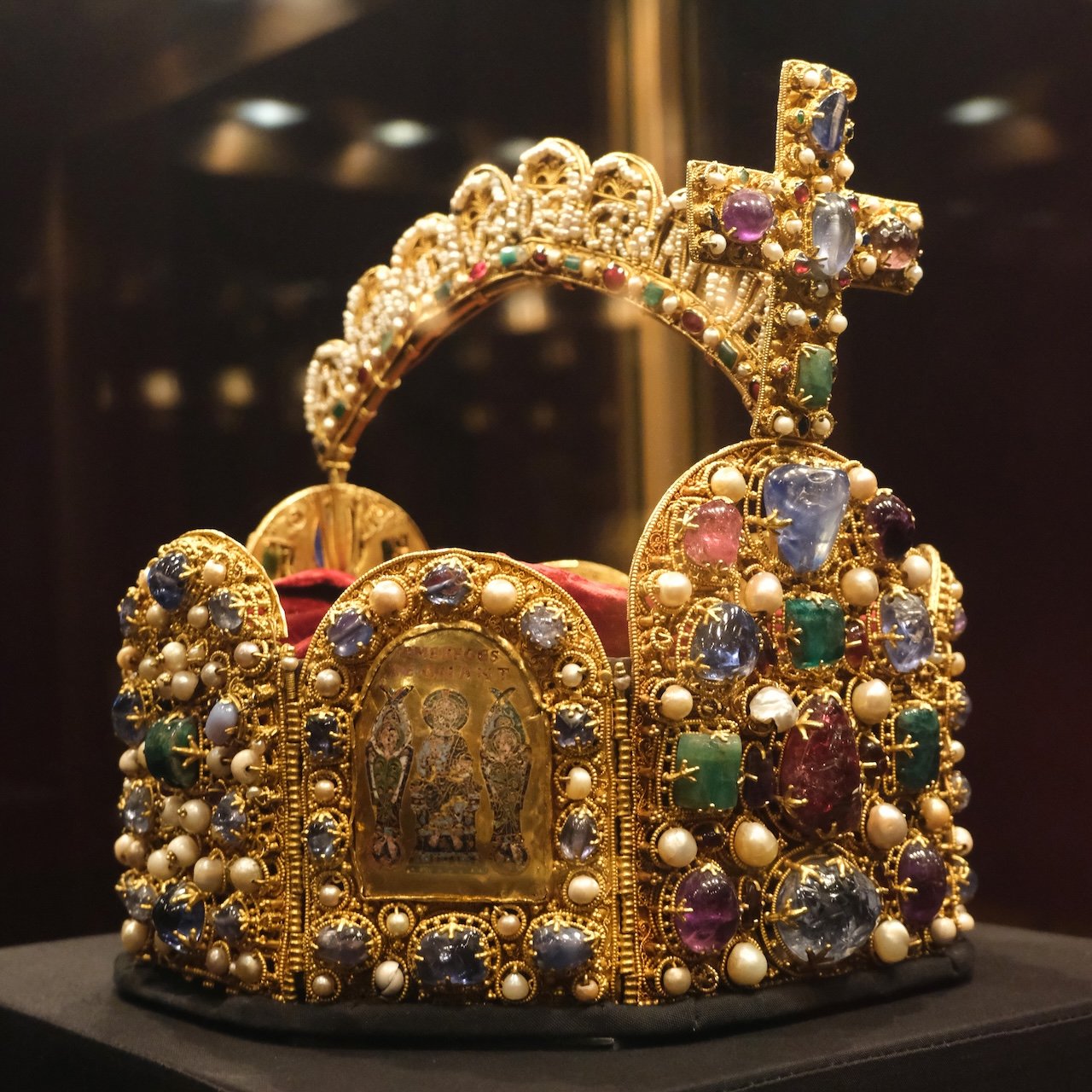
The collection spans over a thousand years of history and includes some of the most important imperial symbols in Europe, such as the Imperial Crown of the Holy Roman Empire, the Austrian Imperial Crown, and the Orb and Sceptre. These objects were not only ceremonial but represented the authority of rulers across the continent. Other highlights include the Burgundian Treasure, a collection of medieval jewels and ceremonial objects, as well as the Holy Lance, a relic long believed to have pierced the side of Christ. In addition to these pieces, the treasury features intricately crafted swords, ceremonial garments, and detailed works of goldsmithing and enameling, all reflecting the wealth and influence of the Habsburgs.
This is one of the most worthwhile stops if you’re interested in imperial history, as it provides a more tangible and focused look at the Habsburg dynasty than many of Vienna’s larger museums.
The Imperial Treasury is closed on Tuesdays. Tickets can be booked online via the official Kaiserliche Schatzkammer website, in advance of your visit, for a reduced cost.
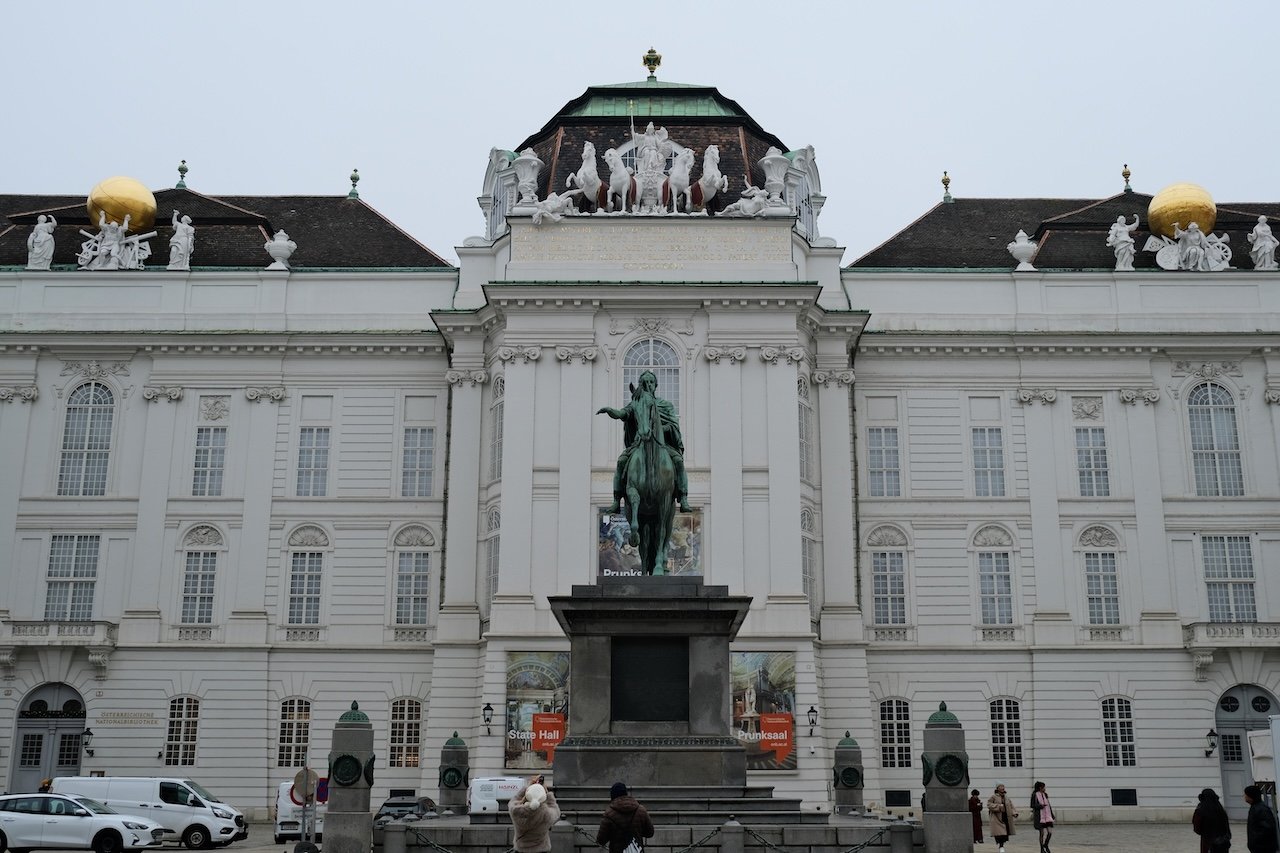
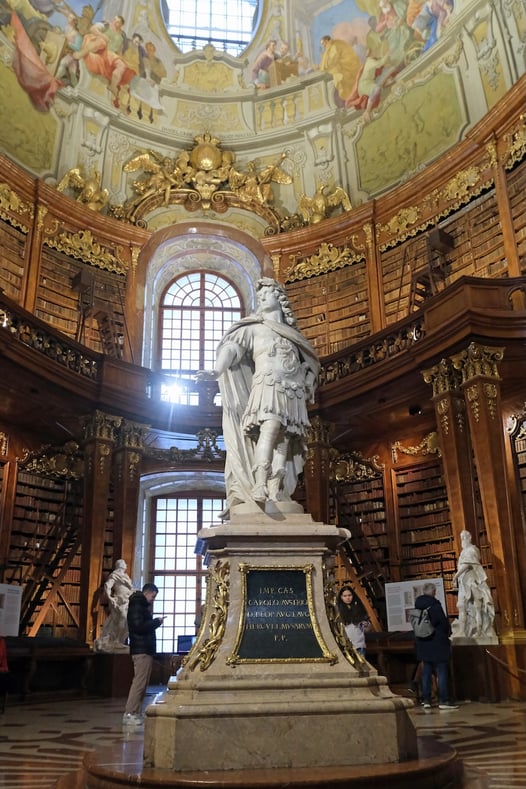
The State Hall (Prunksaal) at the Austrian National Library, located within the Hofburg Palace complex, is one of the most visually stunning interiors in Vienna. While it is often featured on social media, it truly lives up to the hype.
The State Hall features soaring vaulted ceilings, richly decorated frescoes, and floor-to-ceiling wooden bookshelves lined with historic volumes. Massive baroque globes are displayed throughout the space, adding to its grandeur and making it feel more like a museum than a traditional library.
The library complex also includes several additional museums, such as the Papyrus Museum and the Globe Museum, which require separate admission.
The State Hall is closed on Mondays from October through May. Tickets can be purchased both in-person and online at the official Austrian National Library website. Guided tours are available in English and should be booked online, in advance.
Located within Vienna’s MuseumsQuartier, the Leopold Museum focuses on modern Austrian art, with a particular emphasis on the Vienna Secession and early 20th-century artists. Built around the private collection of Rudolf and Elisabeth Leopold, it is best known for its extensive holdings of Egon Schiele’s work, alongside pieces by Gustav Klimt, Oskar Kokoschka, Richard Gerstl, and Koloman Moser, offering a strong overview of Austrian modernism. Highlights include Klimt’s Death and Life, making this a must-visit if you’re especially interested in Austrian artists and early modern art.
The Leopold Museum is closed on Tuesdays. Tickets for the Leopold Museum can be purchased online via the official Leopold Museum website.
Located within the grounds of Schönbrunn Palace, the Imperial Carriage Museum showcases over 170 historic carriages, sleighs, and ceremonial vehicles used by the Habsburgs, offering a unique look at imperial life beyond palace interiors. Highlights include the gilded Imperial Coach used for coronations, the ornate carriage of Empress Maria Theresa, and several personal carriages belonging to Empress Elisabeth (Sisi), including her funeral hearse, making this a worthwhile stop if you’re particularly interested in royal history or looking to add something more niche to your visit.
Discounted tickets for the Imperial Carriage Museum can be purchased from the official Kaiserliche Wagenburg Wien website, in advance of your visit.
Beyond the most well-known museums in Vienna, there are several others that focus on design, contemporary art, and more specialized interests. These are great options if you’re looking to explore a different side of the city’s creative and cultural scene.
Set within the MuseumsQuartier, MUMOK stands out for both its striking dark basalt exterior and its focus on international modern and contemporary art. Its collection spans the 20th and 21st centuries, featuring works by artists such as Pablo Picasso, Andy Warhol, and Jackson Pollock alongside Austrian figures like Maria Lassnig, and covers a wide range of media from painting and sculpture to video and installations. With exhibitions often exploring social and cultural themes, MUMOK offers a more contemporary and conceptual experience, making it a strong choice if you’re interested in modern art beyond Vienna’s more traditional museums.
MUMOK is closed on Mondays, and tickets can be purchased in advance of your visit via the official MUMOK website. Combined tickets are available if you are also interested in visiting the Leopold Museum. Combined tickets can only be purchased on-site at MUMOK.
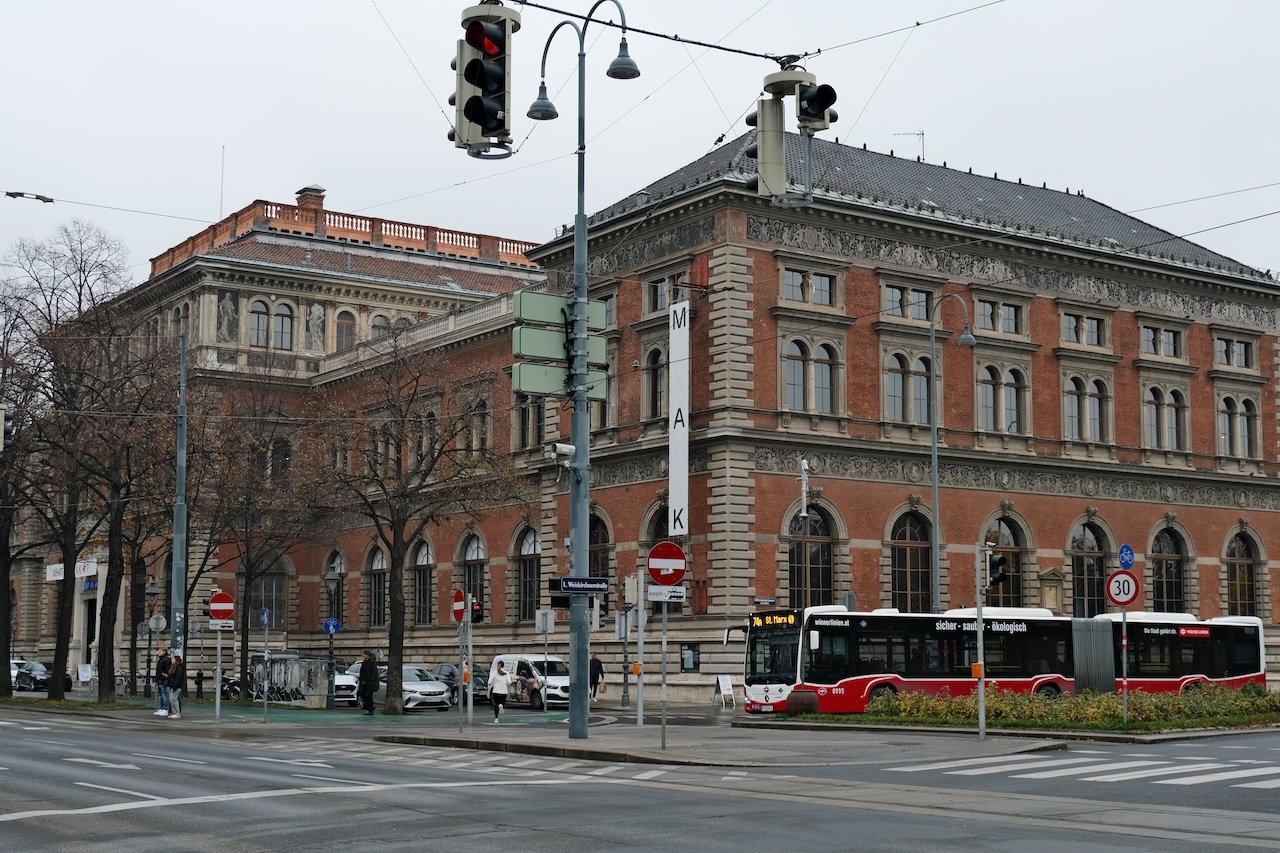
Focused on design, craftsmanship, and modern creativity, the MAK offers a different experience from Vienna’s more traditional art museums. Located along the Ringstraße near Stadtpark, its collection spans everything from furniture and textiles to ceramics and graphic design, showing how everyday objects have evolved from the Middle Ages to today, while also placing a strong emphasis on contemporary design through rotating exhibitions. One of its standout features is the MAK Design Lab, an interactive space exploring experimental design and how it shapes the modern world, making this a great stop if you’re interested in design, architecture, or modern creative trends.
MAK is closed on Mondays, and tickets for MAK can be purchased in advance of your visit through the official MAK website.
Part of the Belvedere museum complex, Belvedere 21 focuses on contemporary Austrian art, with an emphasis on post-war to present-day work. The building itself has an interesting history, originally designed as the Austrian pavilion for the 1958 Brussels World’s Fair before being relocated to Vienna, giving it a more modern, open feel compared to many of the city’s historic museums. Today, the museum serves as a space for rotating exhibitions and contemporary programming, showcasing works by artists such as Maria Lassnig, Günter Brus, and other international contributors.
Belvedere 21 is closed on Mondays. Combination tickets are also available via the Belvedere Museum website if you plan to visit it alongside the Upper and Lower Belvedere.
Dedicated to the work of Austrian artist and architect Friedensreich Hundertwasser, Museum Hundertwasser im KunstHausWien offers one of the most visually distinctive experiences in Vienna. Housed in a former factory re-designed by Hundertwasser himself, the building is as much a highlight as the artwork inside. It features uneven floors, organic shapes, bold colors, and a rooftop garden, all reflecting his philosophy of rejecting straight lines and creating harmony with nature.
Inside, the museum’s permanent collection showcases a wide range of Hundertwasser’s work, including paintings, graphic art, architectural concepts, and tapestries, giving a deeper look into both his artistic style and his broader ideas about design and the environment.
If you’re visiting Vienna with kids, there are several museums and experiences that are especially engaging, with interactive exhibits, hands-on activities, and more visual displays that appeal to a wider range of ages.
Located along the Ringstraße, directly opposite the Kunsthistorisches Museum, the Naturhistorisches Museum is one of Vienna’s most impressive and family-friendly museums, known for its vast collection of natural history exhibits.
With over 30 million objects, the collection covers everything from dinosaurs and early human history to minerals and biodiversity. Some of the most popular highlights include the Venus of Willendorf, a 29,500-year-old figurine, the dinosaur hall with life-sized skeletons of species like Allosaurus and Iguanodon, and the extensive gem and meteorite collection. The museum also features exhibits on human evolution and the natural world, making it both educational and engaging for a wide range of visitors.
The Naturhistorisches Museum is closed on Tuesdays. Admission is free for children under the age of 19.
Located within the grounds of Schönbrunn Palace, Schönbrunn Zoo is one of the oldest zoos in the world and one of Vienna’s most popular family-friendly attractions. Originally established in 1752 as an imperial menagerie, the zoo has evolved into a modern institution focused on conservation, education, and research, while still retaining its historic setting.
Today, the zoo is home to a wide range of animal species from around the world, with habitats designed to reflect their natural environments. Some of the most popular areas include the Panda Garden, where you can see giant pandas, the Polarium with polar bears and penguins, and the Rainforest House, which recreates a tropical ecosystem.
Set within the palace grounds, the zoo is easy to combine with a visit to Schönbrunn itself and offers a more relaxed, outdoor experience compared to many of Vienna’s indoor museums. This is one of the best options if you’re traveling to Vienna with kids or looking for a break from art and history-focused sightseeing.
Haus der Musik is an interactive museum dedicated to sound and music, offering a modern, immersive experience for visitors of all ages. Highlights include hands-on exhibits exploring how sound works, composer-focused displays featuring figures like Mozart, Strauss, and Beethoven, and a virtual conductor experience where you can lead your own orchestra, making it both educational and entertaining, especially for families.
Vienna is home to some of the best museums in Europe, ranging from world-class art collections to historic palaces that offer a deeper look into the city’s imperial past. If it’s your first visit to Vienna, it’s best to focus on just a few key highlights, as many of these museums are large and can easily take several hours to explore. A '♡' marks our personal favorites!
If it’s your first time in Vienna, these are the museums and palaces worth prioritizing. They represent the city’s most iconic art, history, and architecture, and are the best places to start when building your Vienna itinerary.
Schönbrunn Palace is one of Vienna’s most iconic landmarks and a UNESCO World Heritage Site. Located in the Hietzing district, this grand baroque palace served as the summer residence of the Habsburg emperors and remains one of the most important places to understand Vienna’s imperial history.
Originally built as a hunting lodge in the late 16th century, the palace was later expanded under Emperor Leopold I. Empress Maria Theresa transformed it into the magnificent residence seen today, shaping much of its design and role as a center of imperial life.
The palace contains over 1,400 rooms, including state apartments, private quarters, and ceremonial halls that reflect the scale and formality of the Habsburg court. Some of the most notable rooms include:
The gardens are just as impressive as the palace itself, designed in a formal French style with long, symmetrical pathways, fountains, and landscaped views. In addition to touring the palace interiors and surrounding gardens, visitors can visit the zoo or attend concerts in the Schönbrunn Orangery.
Located within the Hofburg Palace in central Vienna, the Hofburg Imperial Apartments were the official residence of the Habsburg emperors and offer a detailed look into court life during the reign of Emperor Franz Joseph I and Empress Elisabeth.
Visitors can walk through a series of rooms, including the audience chamber, conference room, and private living quarters, all decorated with period furnishings, tapestries, and chandeliers that reflect the formality and structure of imperial life.
Adjacent to the apartments, the Sisi Museum focuses on the life of Empress Elisabeth, one of Austria’s most well-known historical figures. Known for her beauty, independence, and tragic life, Sisi remains a central figure in Vienna’s imperial history.
The museum displays a range of personal items, including dresses, parasols, gloves, and beauty products, alongside letters and poetry that offer a more personal look at her life. It traces her story from her early years as a Bavarian duchess through her marriage to Franz Joseph, her struggles with court life, and the personal tragedies she experienced, including the death of her son, Crown Prince Rudolf, and her assassination in 1898.
Together, the Imperial Apartments and Sisi Museum provide a more personal and intimate perspective on the Habsburg dynasty, making this a worthwhile stop if you’re interested in the people behind Vienna’s imperial history.
Belvedere Palace is one of Vienna’s most iconic landmarks, known for its baroque architecture, formal gardens, and as the home of Gustav Klimt’s The Kiss. Built in the early 18th century as a summer residence for Prince Eugene of Savoy, the complex consists of the Upper and Lower Belvedere connected by landscaped gardens.
Beyond its art collection, Schloss Belvedere is also historically important. The Upper Belvedere served as the home of the Archduke Franz Ferdinand before his assassination in 1914. The Upper Belvedere’s Marble Hall is also where Austria’s State Treaty was signed in 1955, formally restoring the country’s independence after World War II.
Highlights of the Collection
The Upper Belvedere houses one of Austria’s most important art collections, with a strong focus on Austrian artists. The most famous work here is Klimt’s The Kiss, which is one of the most visited paintings in Vienna.
In addition to Klimt, the collection includes works by Egon Schiele and Ferdinand Georg Waldmüller, as well as Jacques-Louis David’s Napoleon at the Great St. Bernard, offering a mix of Austrian and European masterpieces.
Upper vs. Lower Belvedere
The Upper Belvedere is the main attraction and where the permanent collection is displayed.
The Lower Belvedere, which once served as Prince Eugene’s residence, now hosts temporary exhibitions and includes ornate historic rooms such as the Marble Gallery and the Hall of Grotesques.
The Gardens
The gardens between the Upper and Lower Belvedere are a highlight in their own right. Designed in a formal French style, they feature symmetrical pathways, fountains, and sculptures, and offer some of the best views of the palace.
What to Know Before You Go
The Upper Belvedere is the main attraction and home to Klimt’s The Kiss, so if you’re short on time, it’s best to focus your visit there. A combination ticket is available if you’re interested in seeing both the Upper and Lower Belvedere, but most visitors will find the Upper alone is enough. The gardens are free to enter, and it’s worth booking tickets in advance during peak seasons.
The Kunsthistorisches Museum is one of Vienna’s most important art museums, located near the Hofburg Palace and housed in a grand 19th-century building commissioned by Emperor Franz Joseph I. The museum is best known for its collection of European paintings from the Renaissance through the Baroque period, with works by artists like Diego Velázquez, Pieter Bruegel the Elder, and Peter Paul Rubens.
Highlights from the Collection
The museum holds several notable works by Velázquez, including Infanta Margarita Teresa in a Blue Dress, which reflects the close relationship between the Spanish royal family and the Habsburgs. Portraits were often exchanged between courts, reflecting both political alliances and family ties.
You’ll also find an extensive collection of paintings by Bruegel, including The Tower of Babel and The Hunters in the Snow, along with major works by Rubens such as The Four Continents.
Another standout is the portrait of Marie Antoinette by Élisabeth Louise Vigée Le Brun, one of the most prominent female artists of her time. Born an Austrian archduchess before becoming Queen of France, she personified the reach of the Habsburg dynasty across Europe.
What to Know Before You Go: Kunsthistorisches Museum
The museum itself is worth seeing beyond the collection, with an ornate interior and a grand staircase decorated with frescoes by Gustav Klimt.
The Kunsthistorisches Museum is closed on Mondays. You can buy tickets in advance on the museum’s official website, where prices are lower than at the on-site ticket office.
If you also plan to visit the Imperial Treasury Vienna, you can purchase a combination ticket that includes admission to both the Imperial Treasury and the Kunsthistorisches Museum are available.
Beyond the must-see highlights, Vienna has several other notable museums that are well worth visiting, especially if you have more time.
Set within a former Habsburg palace in the Innere Stadt, the Albertina Museum is one of the city’s premier cultural institutions, renowned for its extensive collection of graphic art, photography, and modern art.
The museum's collection includes over a million prints and tens of thousands of drawings, including works by artists such as Albrecht Dürer, Raphael, and Michelangelo Buonarroti. One of the most well-known pieces in the collection is Dürer’s Hare, a detailed watercolor that remains one of the museum’s highlights. In addition to its historical works, the Albertina also houses the Batliner Collection, which focuses on Impressionist and early modern art. Here, you’ll find paintings by artists like Claude Monet and Edgar Degas, alongside modern works by Pablo Picasso and René Magritte, offering a broader view of artistic development across different periods.
One of the most unique aspects of visiting the Albertina is the opportunity to explore the State Rooms, which were once used by Habsburg archdukes and archduchesses. These restored palace interiors provide a glimpse into aristocratic life and are often less crowded than similar spaces at Schönbrunn Palace or the Hofburg, making them a worthwhile part of the visit.
Located within the Hofburg Palace complex, the Imperial Treasury Vienna houses one of the most significant collections of royal regalia in Europe, offering a direct look at the power and legacy of the Habsburg dynasty.
The collection spans over a thousand years of history and includes some of the most important imperial symbols in Europe, such as the Imperial Crown of the Holy Roman Empire, the Austrian Imperial Crown, and the Orb and Sceptre. These objects were not only ceremonial but represented the authority of rulers across the continent. Other highlights include the Burgundian Treasure, a collection of medieval jewels and ceremonial objects, as well as the Holy Lance, a relic long believed to have pierced the side of Christ. In addition to these pieces, the treasury features intricately crafted swords, ceremonial garments, and detailed works of goldsmithing and enameling, all reflecting the wealth and influence of the Habsburgs.
This is one of the most worthwhile stops if you’re interested in imperial history, as it provides a more tangible and focused look at the Habsburg dynasty than many of Vienna’s larger museums.
The Imperial Treasury is closed on Tuesdays. Tickets can be booked online via the official Kaiserliche Schatzkammer website, in advance of your visit, for a reduced cost.
The State Hall (Prunksaal) at the Austrian National Library, located within the Hofburg Palace complex, is one of the most visually stunning interiors in Vienna. While it is often featured on social media, it truly lives up to the hype.
The State Hall features soaring vaulted ceilings, richly decorated frescoes, and floor-to-ceiling wooden bookshelves lined with historic volumes. Massive baroque globes are displayed throughout the space, adding to its grandeur and making it feel more like a museum than a traditional library.
The library complex also includes several additional museums, such as the Papyrus Museum and the Globe Museum, which require separate admission.
The State Hall is closed on Mondays from October through May. Tickets can be purchased both in-person and online at the official Austrian National Library website. Guided tours are available in English and should be booked online, in advance.
Located within Vienna’s MuseumsQuartier, the Leopold Museum focuses on modern Austrian art, with a particular emphasis on the Vienna Secession and early 20th-century artists. Built around the private collection of Rudolf and Elisabeth Leopold, it is best known for its extensive holdings of Egon Schiele’s work, alongside pieces by Gustav Klimt, Oskar Kokoschka, Richard Gerstl, and Koloman Moser, offering a strong overview of Austrian modernism. Highlights include Klimt’s Death and Life, making this a must-visit if you’re especially interested in Austrian artists and early modern art.
The Leopold Museum is closed on Tuesdays. Tickets for the Leopold Museum can be purchased online via the official Leopold Museum website.
Located within the grounds of Schönbrunn Palace, the Imperial Carriage Museum showcases over 170 historic carriages, sleighs, and ceremonial vehicles used by the Habsburgs, offering a unique look at imperial life beyond palace interiors. Highlights include the gilded Imperial Coach used for coronations, the ornate carriage of Empress Maria Theresa, and several personal carriages belonging to Empress Elisabeth (Sisi), including her funeral hearse, making this a worthwhile stop if you’re particularly interested in royal history or looking to add something more niche to your visit.
Discounted tickets for the Imperial Carriage Museum can be purchased from the official Kaiserliche Wagenburg Wien website, in advance of your visit.
Beyond the most well-known museums in Vienna, there are several others that focus on design, contemporary art, and more specialized interests. These are great options if you’re looking to explore a different side of the city’s creative and cultural scene.
Set within the MuseumsQuartier, MUMOK stands out for both its striking dark basalt exterior and its focus on international modern and contemporary art. Its collection spans the 20th and 21st centuries, featuring works by artists such as Pablo Picasso, Andy Warhol, and Jackson Pollock alongside Austrian figures like Maria Lassnig, and covers a wide range of media from painting and sculpture to video and installations. With exhibitions often exploring social and cultural themes, MUMOK offers a more contemporary and conceptual experience, making it a strong choice if you’re interested in modern art beyond Vienna’s more traditional museums.
MUMOK is closed on Mondays, and tickets can be purchased in advance of your visit via the official MUMOK website. Combined tickets are available if you are also interested in visiting the Leopold Museum. Combined tickets can only be purchased on-site at MUMOK.
Focused on design, craftsmanship, and modern creativity, the MAK offers a different experience from Vienna’s more traditional art museums. Located along the Ringstraße near Stadtpark, its collection spans everything from furniture and textiles to ceramics and graphic design, showing how everyday objects have evolved from the Middle Ages to today, while also placing a strong emphasis on contemporary design through rotating exhibitions. One of its standout features is the MAK Design Lab, an interactive space exploring experimental design and how it shapes the modern world, making this a great stop if you’re interested in design, architecture, or modern creative trends.
MAK is closed on Mondays, and tickets for MAK can be purchased in advance of your visit through the official MAK website.
Part of the Belvedere museum complex, Belvedere 21 focuses on contemporary Austrian art, with an emphasis on post-war to present-day work. The building itself has an interesting history, originally designed as the Austrian pavilion for the 1958 Brussels World’s Fair before being relocated to Vienna, giving it a more modern, open feel compared to many of the city’s historic museums. Today, the museum serves as a space for rotating exhibitions and contemporary programming, showcasing works by artists such as Maria Lassnig, Günter Brus, and other international contributors.
Belvedere 21 is closed on Mondays. Combination tickets are also available via the Belvedere Museum website if you plan to visit it alongside the Upper and Lower Belvedere.
Dedicated to the work of Austrian artist and architect Friedensreich Hundertwasser, Museum Hundertwasser im KunstHausWien offers one of the most visually distinctive experiences in Vienna. Housed in a former factory re-designed by Hundertwasser himself, the building is as much a highlight as the artwork inside. It features uneven floors, organic shapes, bold colors, and a rooftop garden, all reflecting his philosophy of rejecting straight lines and creating harmony with nature.
Inside, the museum’s permanent collection showcases a wide range of Hundertwasser’s work, including paintings, graphic art, architectural concepts, and tapestries, giving a deeper look into both his artistic style and his broader ideas about design and the environment.
If you’re visiting Vienna with kids, there are several museums and experiences that are especially engaging, with interactive exhibits, hands-on activities, and more visual displays that appeal to a wider range of ages.
Located along the Ringstraße, directly opposite the Kunsthistorisches Museum, the Naturhistorisches Museum is one of Vienna’s most impressive and family-friendly museums, known for its vast collection of natural history exhibits.
With over 30 million objects, the collection covers everything from dinosaurs and early human history to minerals and biodiversity. Some of the most popular highlights include the Venus of Willendorf, a 29,500-year-old figurine, the dinosaur hall with life-sized skeletons of species like Allosaurus and Iguanodon, and the extensive gem and meteorite collection. The museum also features exhibits on human evolution and the natural world, making it both educational and engaging for a wide range of visitors.
The Naturhistorisches Museum is closed on Tuesdays. Admission is free for children under the age of 19.
Located within the grounds of Schönbrunn Palace, Schönbrunn Zoo is one of the oldest zoos in the world and one of Vienna’s most popular family-friendly attractions. Originally established in 1752 as an imperial menagerie, the zoo has evolved into a modern institution focused on conservation, education, and research, while still retaining its historic setting.
Today, the zoo is home to a wide range of animal species from around the world, with habitats designed to reflect their natural environments. Some of the most popular areas include the Panda Garden, where you can see giant pandas, the Polarium with polar bears and penguins, and the Rainforest House, which recreates a tropical ecosystem.
Set within the palace grounds, the zoo is easy to combine with a visit to Schönbrunn itself and offers a more relaxed, outdoor experience compared to many of Vienna’s indoor museums. This is one of the best options if you’re traveling to Vienna with kids or looking for a break from art and history-focused sightseeing.
Haus der Musik is an interactive museum dedicated to sound and music, offering a modern, immersive experience for visitors of all ages. Highlights include hands-on exhibits exploring how sound works, composer-focused displays featuring figures like Mozart, Strauss, and Beethoven, and a virtual conductor experience where you can lead your own orchestra, making it both educational and entertaining, especially for families.
Vienna is home to some of the most beautiful churches in Europe, ranging from Gothic cathedrals to ornate Baroque interiors. Many are located in the historic city center and are easy to visit as you explore Vienna’s main attractions.
If you’re looking for a more in-depth guide, we’ve also rounded up a full list of the Vienna churches worth visiting, including a few additional spots not covered here.
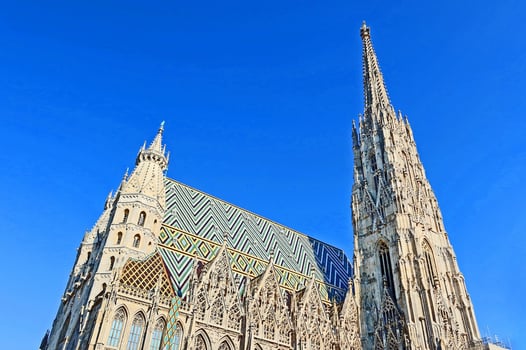
St. Stephen's Cathedral is not only Vienna's most famous landmark but it is also a symbol of the city's enduring cultural and historical significance. Initially constructed in 1137, the cathedral has been a focal point of Vienna's religious life for nearly a millennium. The current Gothic structure, completed in the 15th century, stands on the foundations of two earlier churches, incorporating Romanesque and Gothic elements.
The cathedral's exterior is dominated by its towering South Tower, known as the "Steffl," which reaches a height of 446 feet (136 meters) and offers a panoramic view of Vienna. The North Tower, although shorter, houses the Pummerin, one of the largest free-swinging bells in Europe, cast from the remains of cannons captured from the Ottoman Turks in 1683.
Visitors can ascend to the top of the South Tower via 343 steps or take an elevator to the viewing platform of the North Tower. Both vantage points offer fantastic views of Vienna's historic center and beyond, making the climb well worth the effort.
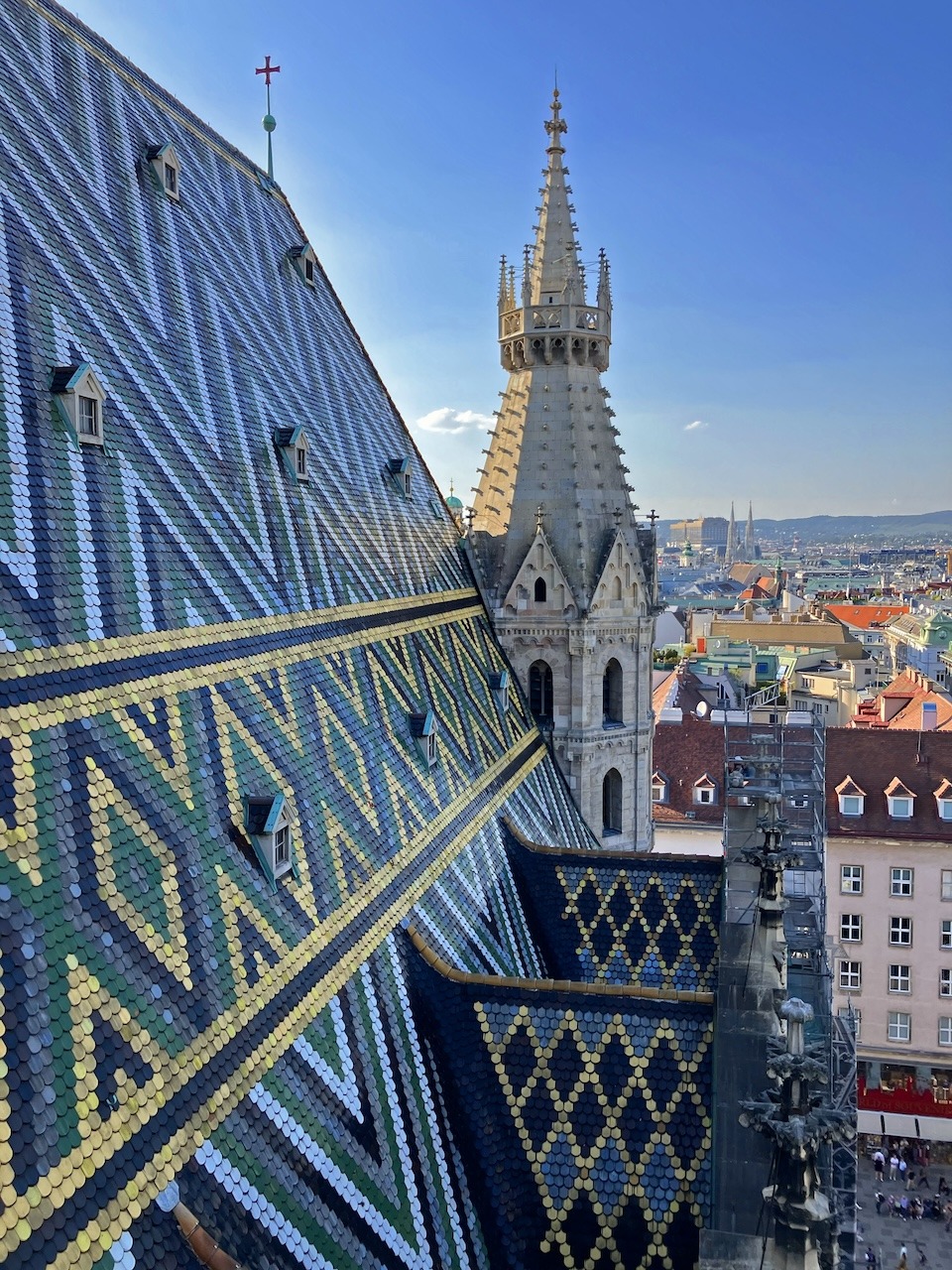
One of the most remarkable features of St. Stephen's Cathedral in Vienna is its roof, adorned with 230,000 colorful glazed tiles. These tiles create striking geometric patterns, including the iconic double-headed eagle, the symbol of the Habsburg dynasty, and the coats of arms of Vienna and Austria. This vibrant roof is visible from various vantage points across the city and adds to the cathedral's distinctive silhouette.
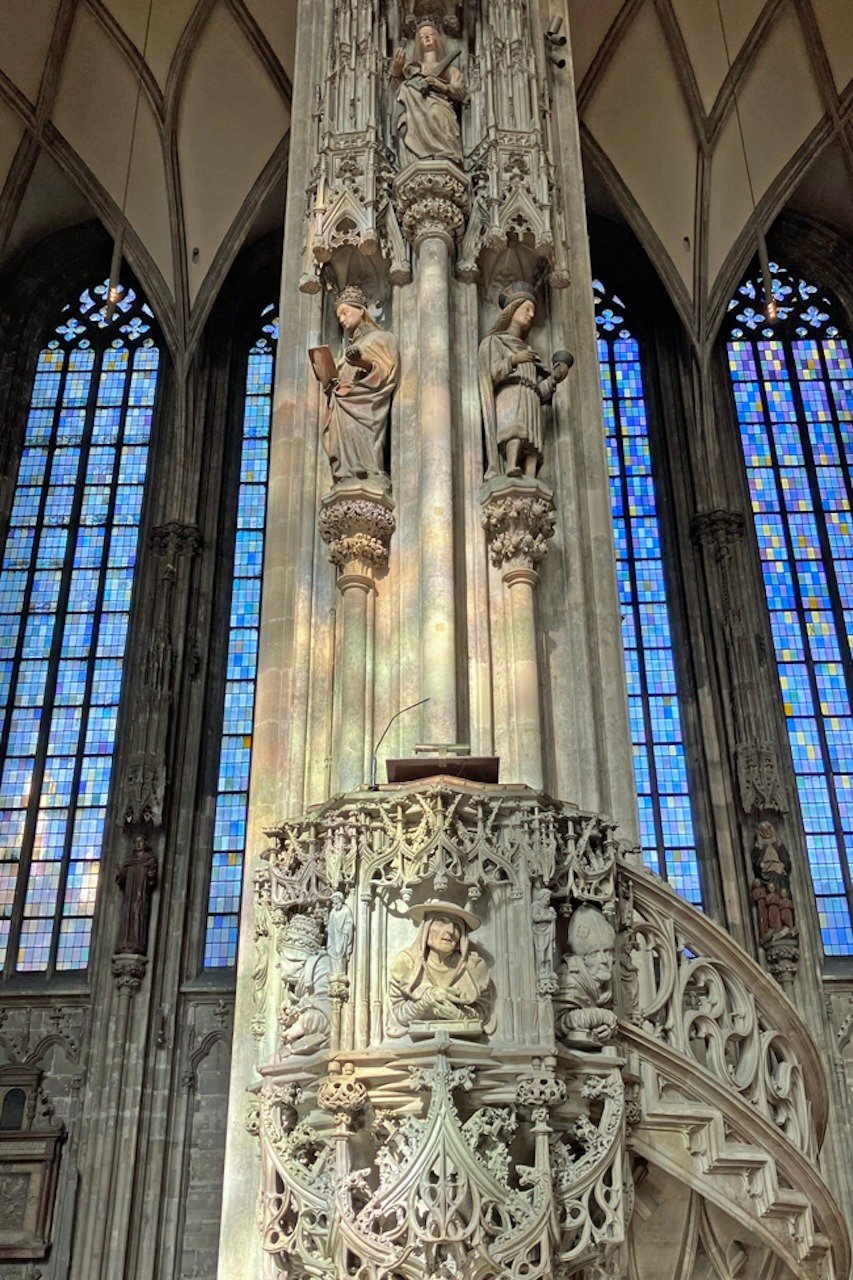
Inside, the cathedral is home to a number of notable features, including the High Altar, which depicts the stoning of St. Stephen, and the intricately carved Pilgram Pulpit.
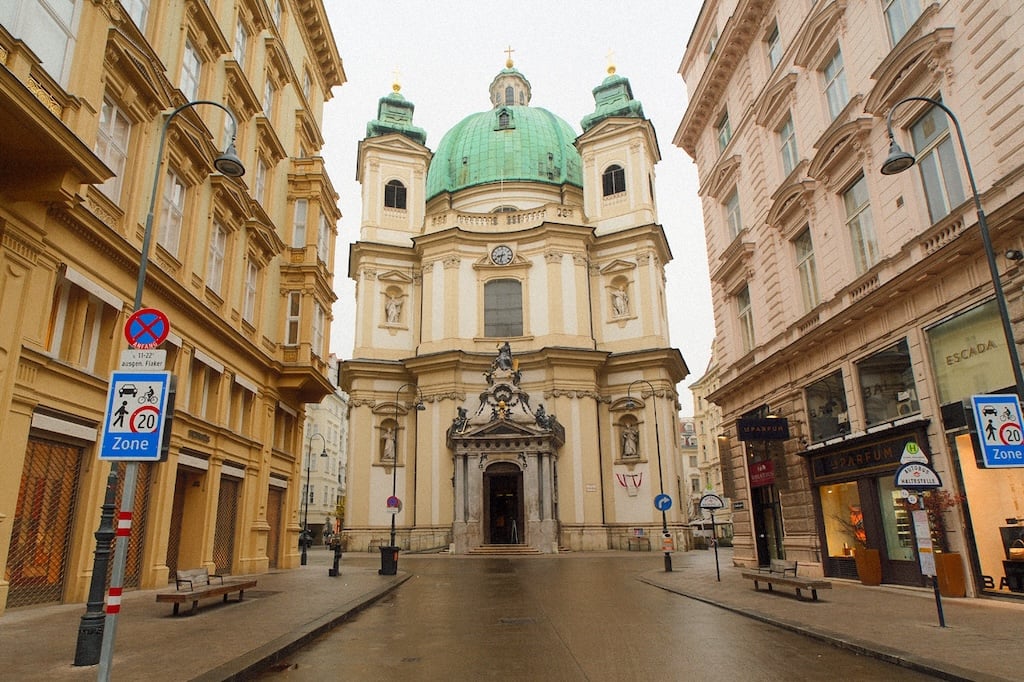
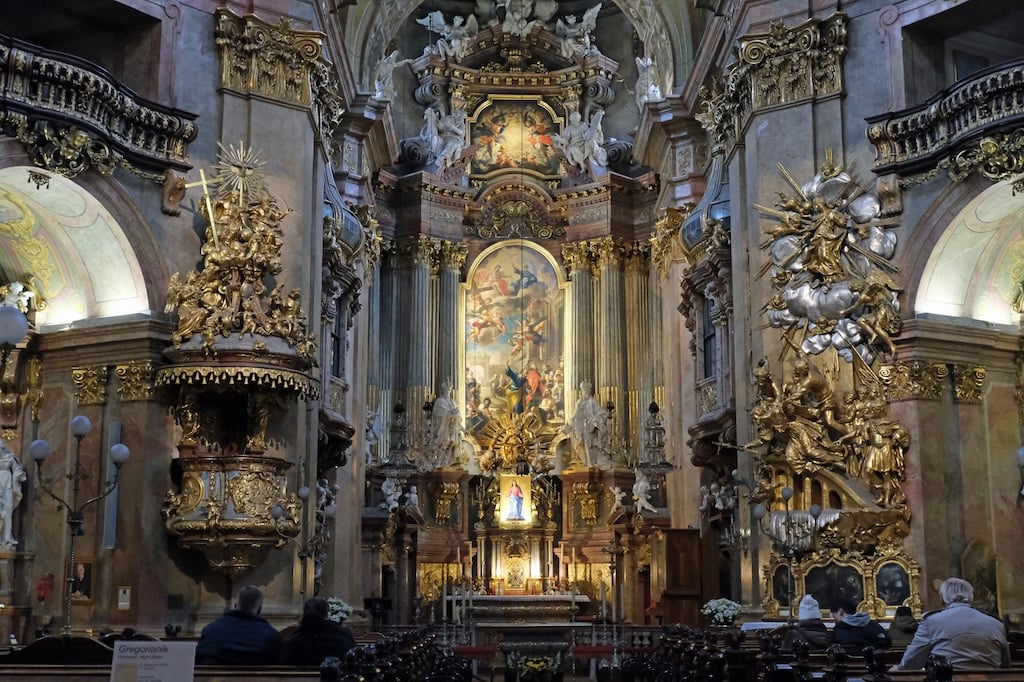
St. Peter's Church in Vienna is a stunning Baroque church located in the heart of the city near Graben Street. Built in the early 18th century, it is renowned for its ornate interior, featuring elaborate frescoes, gilded stucco work, and a magnificent turreted dome. The church’s rich decoration and striking design make it one of the most beautiful church interiors in Vienna.
Classical music concerts, performed by the Classic Ensemble Vienna, are regularly held at St. Peter’s Church, offering a unique way to experience Vienna’s musical heritage in an intimate setting.
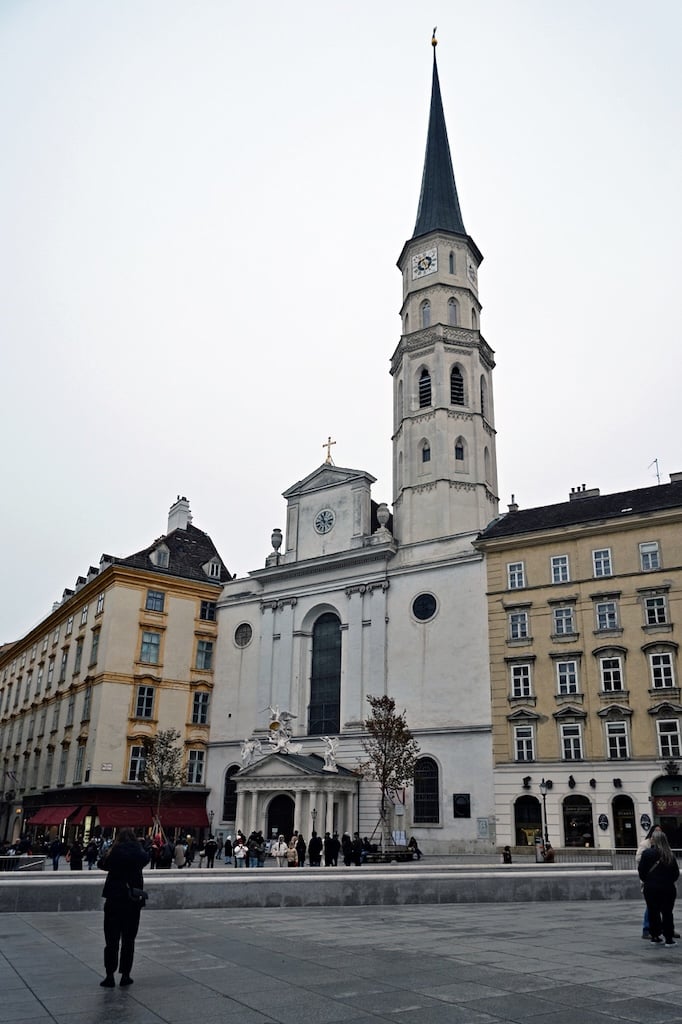
The Church of St. Augustine, is a historic Gothic church located near the Hofburg Palace and closely tied to the Habsburg dynasty, having hosted many royal weddings and ceremonies. Inside, you’ll find notable works such as the monument to Archduchess Maria Christina by Antonio Canova.
Each Sunday morning at 11:00 AM, the Church of St. Augustine celebrates mass with live music, including a magnificent choir and orchestra. If you plan to attend, arrive early. There is no charge to visit the Church of St. Augustine for mass, but donations are appreciated.
The Jesuit Church in Vienna is a Baroque church located in Vienna’s old university quarter, known for its dramatic interior and illusionistic design. Its ceiling frescoes and trompe-l'œil artwork create the illusion of architectural depth, making it one of the more visually striking churches in Vienna. The richly decorated high altar and detailed interior make it a worthwhile stop if you’re exploring this part of the city.
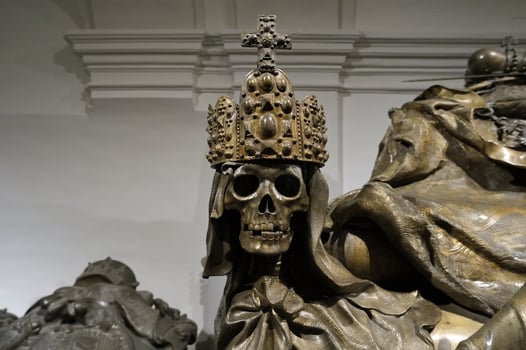
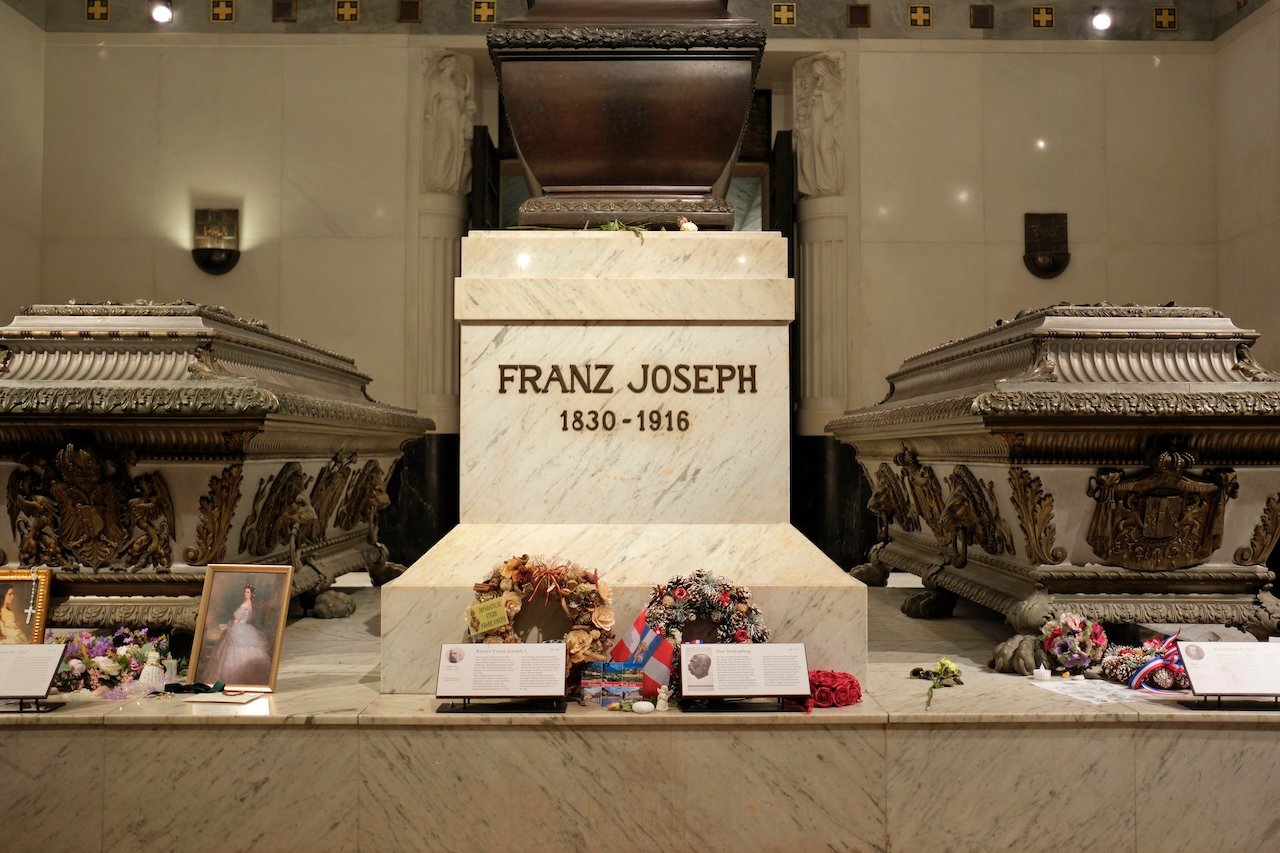
The Kapuzinergruft, or Imperial Crypt, is located beneath the Capuchin Church and serves as the final resting place of the Habsburg dynasty. Established in 1618, it houses the tombs of emperors, empresses, and other members of the imperial family, including Maria Theresa and Franz Joseph I.
The elaborate sarcophagi reflect Baroque and Rococo styles, making this a must-visit if you’re interested in Vienna’s imperial history.
Dominikanerkirche, also known as the Dominican Church or the Church of St. Maria Rotunda, is a Baroque church located in the Innere Stadt, known for its striking façade and richly decorated interior. The ceiling frescoes, which depict scenes from the life of the Virgin Mary, are a highlight, along with the ornate high altar.
It’s a quieter stop compared to some of Vienna’s more famous churches, making it a nice addition as you explore the city center.
Vienna is home to some of the most beautiful churches in Europe, ranging from Gothic cathedrals to ornate Baroque interiors. Many are located in the historic city center and are easy to visit as you explore Vienna’s main attractions.
If you’re looking for a more in-depth guide, we’ve also rounded up a full list of the Vienna churches worth visiting, including a few additional spots not covered here.
St. Stephen's Cathedral is not only Vienna's most famous landmark but it is also a symbol of the city's enduring cultural and historical significance. Initially constructed in 1137, the cathedral has been a focal point of Vienna's religious life for nearly a millennium. The current Gothic structure, completed in the 15th century, stands on the foundations of two earlier churches, incorporating Romanesque and Gothic elements.
The cathedral's exterior is dominated by its towering South Tower, known as the "Steffl," which reaches a height of 446 feet (136 meters) and offers a panoramic view of Vienna. The North Tower, although shorter, houses the Pummerin, one of the largest free-swinging bells in Europe, cast from the remains of cannons captured from the Ottoman Turks in 1683.
Visitors can ascend to the top of the South Tower via 343 steps or take an elevator to the viewing platform of the North Tower. Both vantage points offer fantastic views of Vienna's historic center and beyond, making the climb well worth the effort.
One of the most remarkable features of St. Stephen's Cathedral in Vienna is its roof, adorned with 230,000 colorful glazed tiles. These tiles create striking geometric patterns, including the iconic double-headed eagle, the symbol of the Habsburg dynasty, and the coats of arms of Vienna and Austria. This vibrant roof is visible from various vantage points across the city and adds to the cathedral's distinctive silhouette.
Inside, the cathedral is home to a number of notable features, including the High Altar, which depicts the stoning of St. Stephen, and the intricately carved Pilgram Pulpit.
St. Peter's Church in Vienna is a stunning Baroque church located in the heart of the city near Graben Street. Built in the early 18th century, it is renowned for its ornate interior, featuring elaborate frescoes, gilded stucco work, and a magnificent turreted dome. The church’s rich decoration and striking design make it one of the most beautiful church interiors in Vienna.
Classical music concerts, performed by the Classic Ensemble Vienna, are regularly held at St. Peter’s Church, offering a unique way to experience Vienna’s musical heritage in an intimate setting.
The Church of St. Augustine, is a historic Gothic church located near the Hofburg Palace and closely tied to the Habsburg dynasty, having hosted many royal weddings and ceremonies. Inside, you’ll find notable works such as the monument to Archduchess Maria Christina by Antonio Canova.
Each Sunday morning at 11:00 AM, the Church of St. Augustine celebrates mass with live music, including a magnificent choir and orchestra. If you plan to attend, arrive early. There is no charge to visit the Church of St. Augustine for mass, but donations are appreciated.
The Jesuit Church in Vienna is a Baroque church located in Vienna’s old university quarter, known for its dramatic interior and illusionistic design. Its ceiling frescoes and trompe-l'œil artwork create the illusion of architectural depth, making it one of the more visually striking churches in Vienna. The richly decorated high altar and detailed interior make it a worthwhile stop if you’re exploring this part of the city.
The Kapuzinergruft, or Imperial Crypt, is located beneath the Capuchin Church and serves as the final resting place of the Habsburg dynasty. Established in 1618, it houses the tombs of emperors, empresses, and other members of the imperial family, including Maria Theresa and Franz Joseph I.
The elaborate sarcophagi reflect Baroque and Rococo styles, making this a must-visit if you’re interested in Vienna’s imperial history.
Dominikanerkirche, also known as the Dominican Church or the Church of St. Maria Rotunda, is a Baroque church located in the Innere Stadt, known for its striking façade and richly decorated interior. The ceiling frescoes, which depict scenes from the life of the Virgin Mary, are a highlight, along with the ornate high altar.
It’s a quieter stop compared to some of Vienna’s more famous churches, making it a nice addition as you explore the city center.
Looking for parks, and gardens in Vienna? In this Vienna travel blog, we’re highlighting the best green spaces and gardens in Vienna, from formal palace grounds to relaxed city parks, perfect for a walk, picnic, or a break from sightseeing.
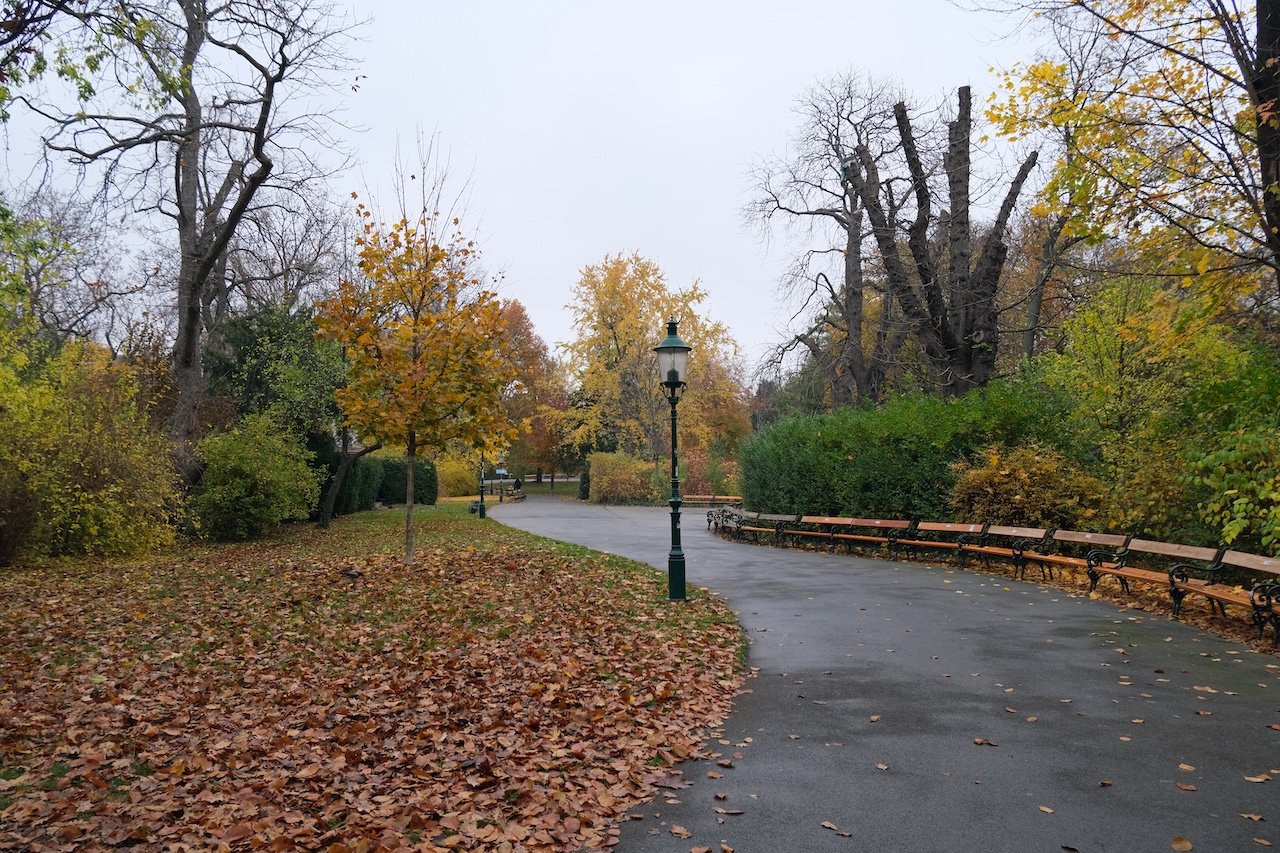
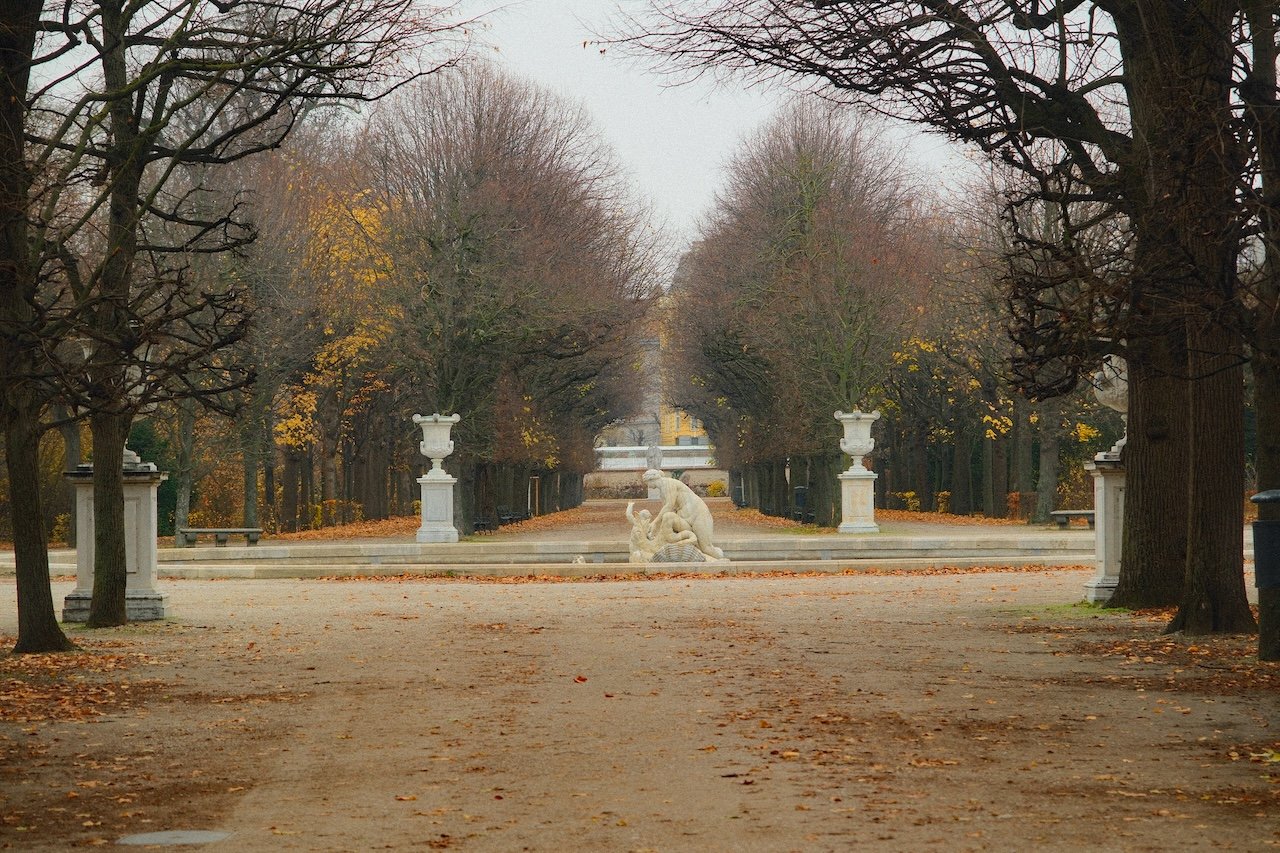
If you’re visiting Vienna in autumn, especially from late October through early-to-mid November, this is one of the best times to explore the city’s parks, when the fall colors are at their peak. Stadtpark is one of our favorite spots to experience fall foliage in Vienna.
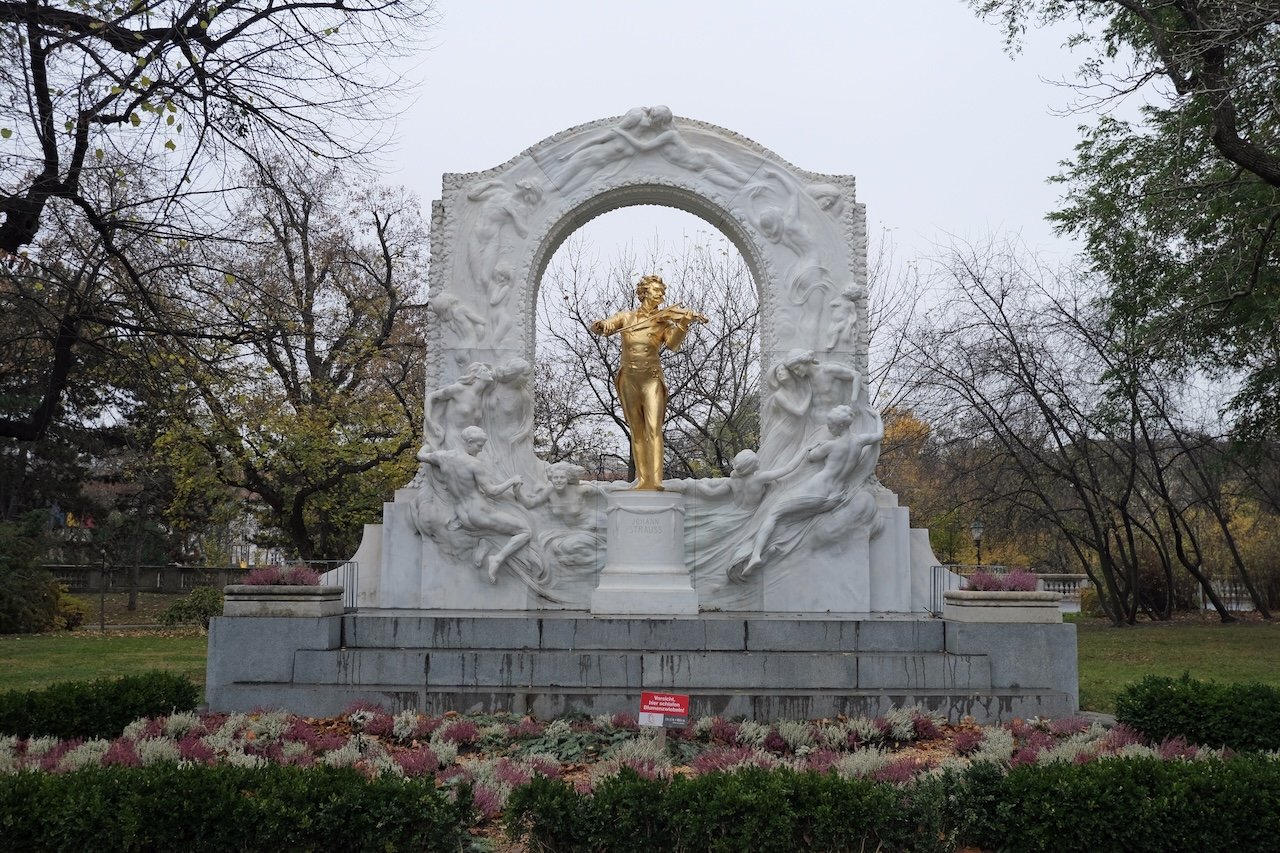
Stadtpark in Vienna is one of the city's most beloved and picturesque parks, located in the heart of the city. Established in 1862 as Vienna’s first public park, it spans over 16 acres (65,000 square meters) and features a blend of English landscape design and formal gardens, with lush greenery, flower beds, and serene ponds throughout.
One of the park's most famous landmarks is the gilded bronze statue of Johann Strauss II, the "Waltz King." In addition to this iconic monument, Stadtpark is home to several other statues and memorials dedicated to notable Viennese artists, composers, and writers.
With winding paths, expansive lawns, and shaded areas, the park offers a peaceful retreat from the city. It also features a children’s playground and the historic Kursalon, where classical music concerts and events are regularly held.
Volksgarten is a beautifully landscaped park located in Vienna’s Innere Stadt, just next to the Hofburg Palace. Established in 1823 and designed in the French Baroque style, it is known for its formal gardens, manicured lawns, and relaxed atmosphere.
The park is especially famous for its rose garden, which features over 3,000 rose bushes in bloom during the spring and summer months. A prominent feature of the Volksgarten is the Theseus Temple, a neoclassical structure inspired by ancient Greek architecture.
Volksgarten also includes several statues and monuments, including the Empress Elisabeth Memorial, dedicated to Empress Sisi. The park's elegant pathways, shaded benches, and well-kept flower beds make it a popular spot for both locals and tourists seeking a peaceful retreat in the heart of Vienna.
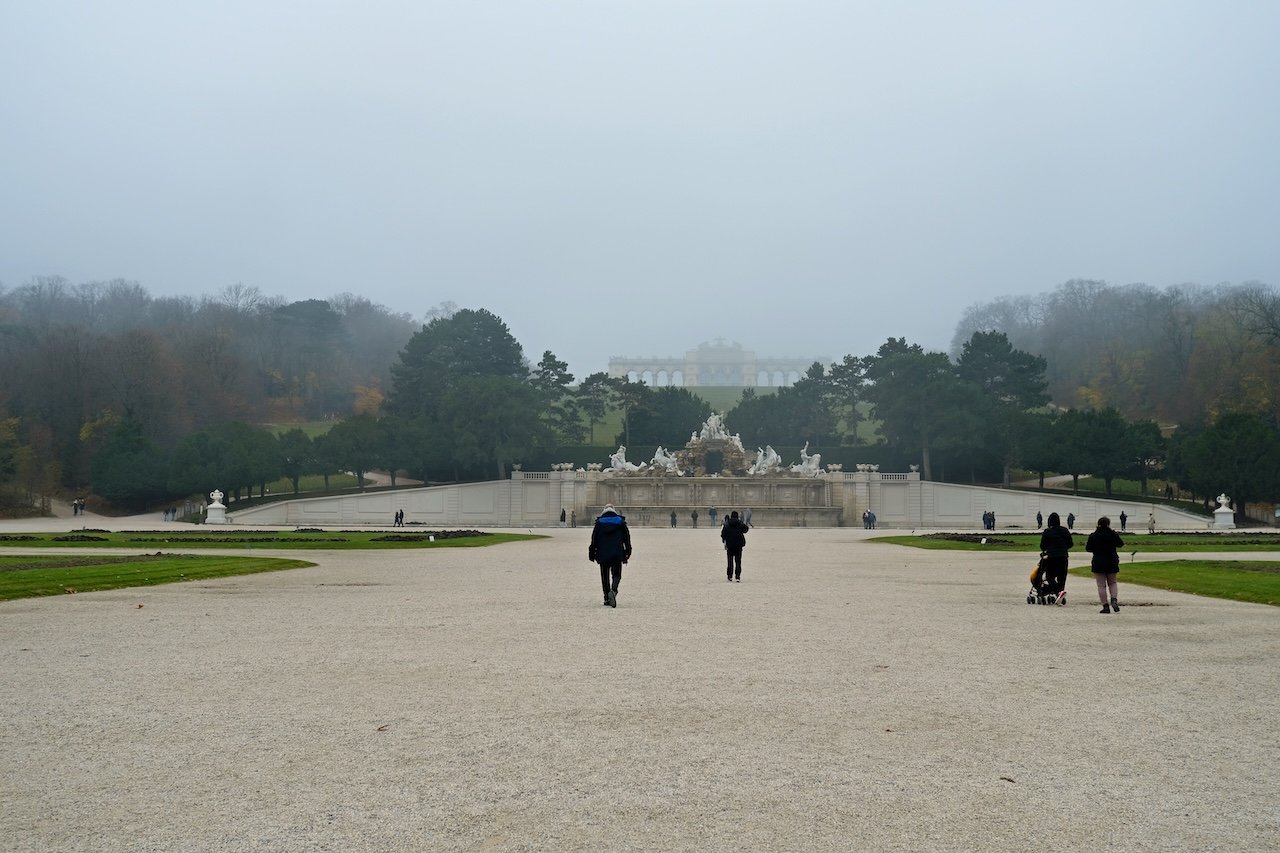
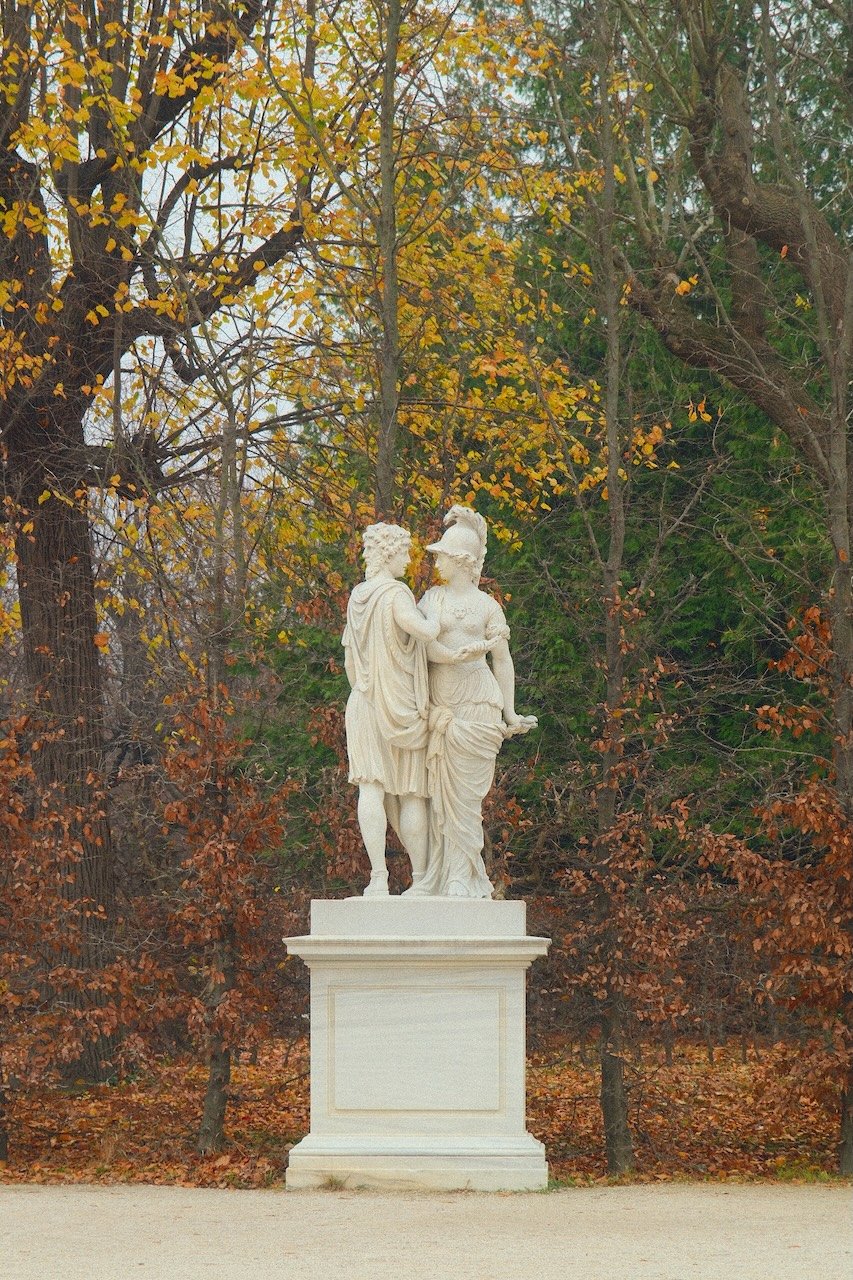
Schönbrunn Palace Park is a sprawling and meticulously landscaped garden surrounding Schönbrunn Palace, and one of the most impressive green spaces in Vienna. Designed in the Baroque style, the park covers over 160 acres and features formal flower beds, ornamental sculptures, and cascading fountains, including the iconic Neptune Fountain.
One of the highlights of the park is the Gloriette, a grand colonnaded structure set on a hill that offers panoramic views of the palace and the city skyline. Visitors can also explore themed areas such as the Privy Garden, Maze Garden, and Orangery Garden.
The park also includes the Schönbrunn Zoo, located within the grounds.
While the main Schönbrunn Palace Park is free to explore and open to the public, certain areas such as the Privy Garden, Maze, and Schönbrunn Zoo require a ticket, as does entry to Schönbrunn Palace itself.
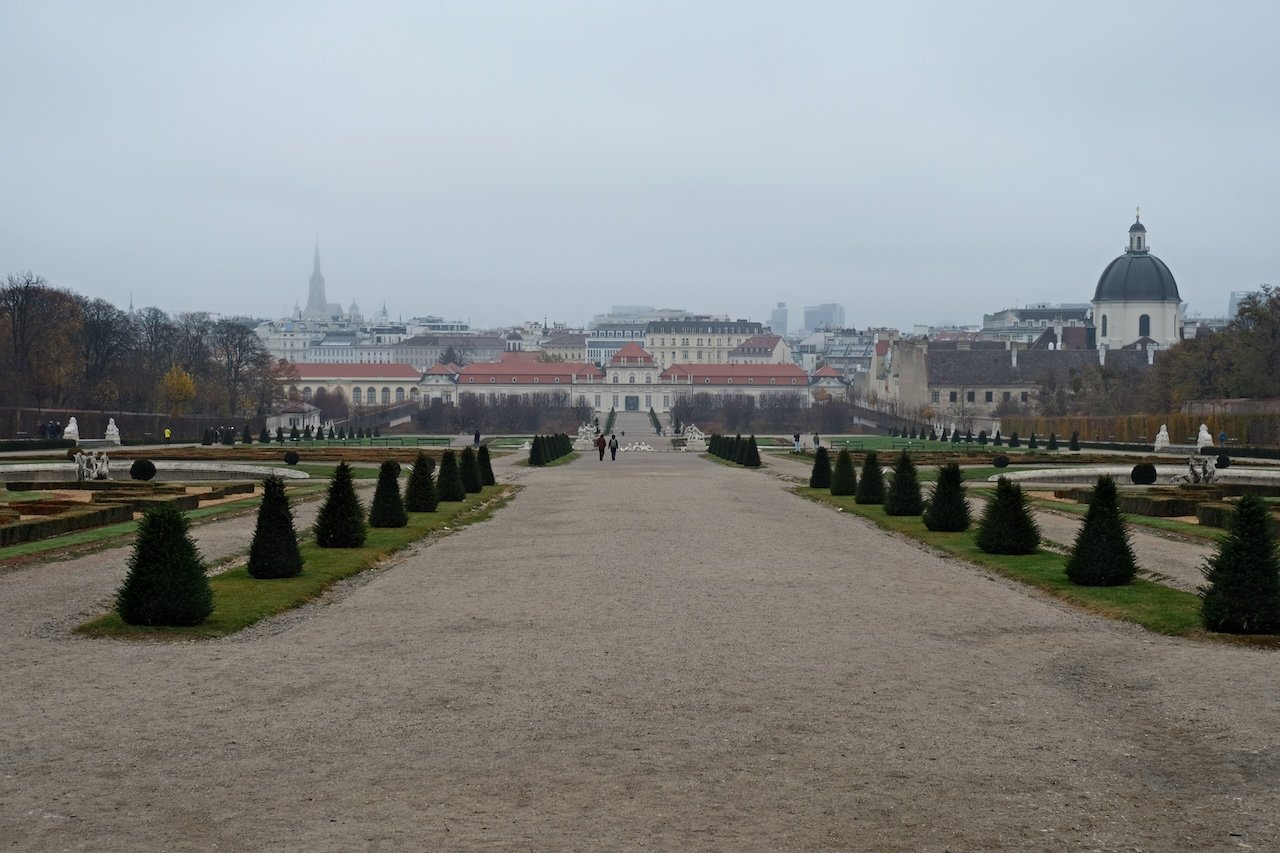
The Belvedere Palace Gardens are an exceptional example of Baroque landscape design, connecting the Upper and Lower Belvedere Palaces. Designed in the early 18th century, the gardens feature symmetrical pathways, manicured lawns, geometric flower beds, and ornamental fountains.
A central cascading fountain runs between the two palaces, creating a dramatic focal point as water flows from the Upper to the Lower Belvedere. The gardens are also filled with statues and sculptures, including allegorical and mythological figures that add to their artistic and historical character.
With their structured layout and elevated viewpoints, the Belvedere Gardens are among the most photogenic green spaces in Vienna. Admission to the Belvedere Palace Gardens is free, though tickets are required to enter the Upper and Lower Belvedere palaces.
Danube Island offers a different kind of green space in Vienna, with a more relaxed and recreational atmosphere compared to the city’s formal gardens. Located between the Danube River and the Old Danube, this long, narrow island stretches over 13 miles (21 kilometers) and is a popular spot for both locals and visitors.
In the warmer months, it’s ideal for cycling, walking, swimming, or simply relaxing along the water, with beaches, cafés, and open spaces throughout. If you’re looking to experience a more laid-back side of Vienna or take a break from sightseeing, this is a great place to unwind outdoors.
Looking for parks, and gardens in Vienna? In this Vienna travel blog, we’re highlighting the best green spaces and gardens in Vienna, from formal palace grounds to relaxed city parks, perfect for a walk, picnic, or a break from sightseeing.
If you’re visiting Vienna in autumn, especially from late October through early-to-mid November, this is one of the best times to explore the city’s parks, when the fall colors are at their peak. Stadtpark is one of our favorite spots to experience fall foliage in Vienna.
Stadtpark in Vienna is one of the city's most beloved and picturesque parks, located in the heart of the city. Established in 1862 as Vienna’s first public park, it spans over 16 acres (65,000 square meters) and features a blend of English landscape design and formal gardens, with lush greenery, flower beds, and serene ponds throughout.
One of the park's most famous landmarks is the gilded bronze statue of Johann Strauss II, the "Waltz King." In addition to this iconic monument, Stadtpark is home to several other statues and memorials dedicated to notable Viennese artists, composers, and writers.
With winding paths, expansive lawns, and shaded areas, the park offers a peaceful retreat from the city. It also features a children’s playground and the historic Kursalon, where classical music concerts and events are regularly held.
Volksgarten is a beautifully landscaped park located in Vienna’s Innere Stadt, just next to the Hofburg Palace. Established in 1823 and designed in the French Baroque style, it is known for its formal gardens, manicured lawns, and relaxed atmosphere.
The park is especially famous for its rose garden, which features over 3,000 rose bushes in bloom during the spring and summer months. A prominent feature of the Volksgarten is the Theseus Temple, a neoclassical structure inspired by ancient Greek architecture.
Volksgarten also includes several statues and monuments, including the Empress Elisabeth Memorial, dedicated to Empress Sisi. The park's elegant pathways, shaded benches, and well-kept flower beds make it a popular spot for both locals and tourists seeking a peaceful retreat in the heart of Vienna.
Schönbrunn Palace Park is a sprawling and meticulously landscaped garden surrounding Schönbrunn Palace, and one of the most impressive green spaces in Vienna. Designed in the Baroque style, the park covers over 160 acres and features formal flower beds, ornamental sculptures, and cascading fountains, including the iconic Neptune Fountain.
One of the highlights of the park is the Gloriette, a grand colonnaded structure set on a hill that offers panoramic views of the palace and the city skyline. Visitors can also explore themed areas such as the Privy Garden, Maze Garden, and Orangery Garden.
The park also includes the Schönbrunn Zoo, located within the grounds.
While the main Schönbrunn Palace Park is free to explore and open to the public, certain areas such as the Privy Garden, Maze, and Schönbrunn Zoo require a ticket, as does entry to Schönbrunn Palace itself.
The Belvedere Palace Gardens are an exceptional example of Baroque landscape design, connecting the Upper and Lower Belvedere Palaces. Designed in the early 18th century, the gardens feature symmetrical pathways, manicured lawns, geometric flower beds, and ornamental fountains.
A central cascading fountain runs between the two palaces, creating a dramatic focal point as water flows from the Upper to the Lower Belvedere. The gardens are also filled with statues and sculptures, including allegorical and mythological figures that add to their artistic and historical character.
With their structured layout and elevated viewpoints, the Belvedere Gardens are among the most photogenic green spaces in Vienna. Admission to the Belvedere Palace Gardens is free, though tickets are required to enter the Upper and Lower Belvedere palaces.
Danube Island offers a different kind of green space in Vienna, with a more relaxed and recreational atmosphere compared to the city’s formal gardens. Located between the Danube River and the Old Danube, this long, narrow island stretches over 13 miles (21 kilometers) and is a popular spot for both locals and visitors.
In the warmer months, it’s ideal for cycling, walking, swimming, or simply relaxing along the water, with beaches, cafés, and open spaces throughout. If you’re looking to experience a more laid-back side of Vienna or take a break from sightseeing, this is a great place to unwind outdoors.
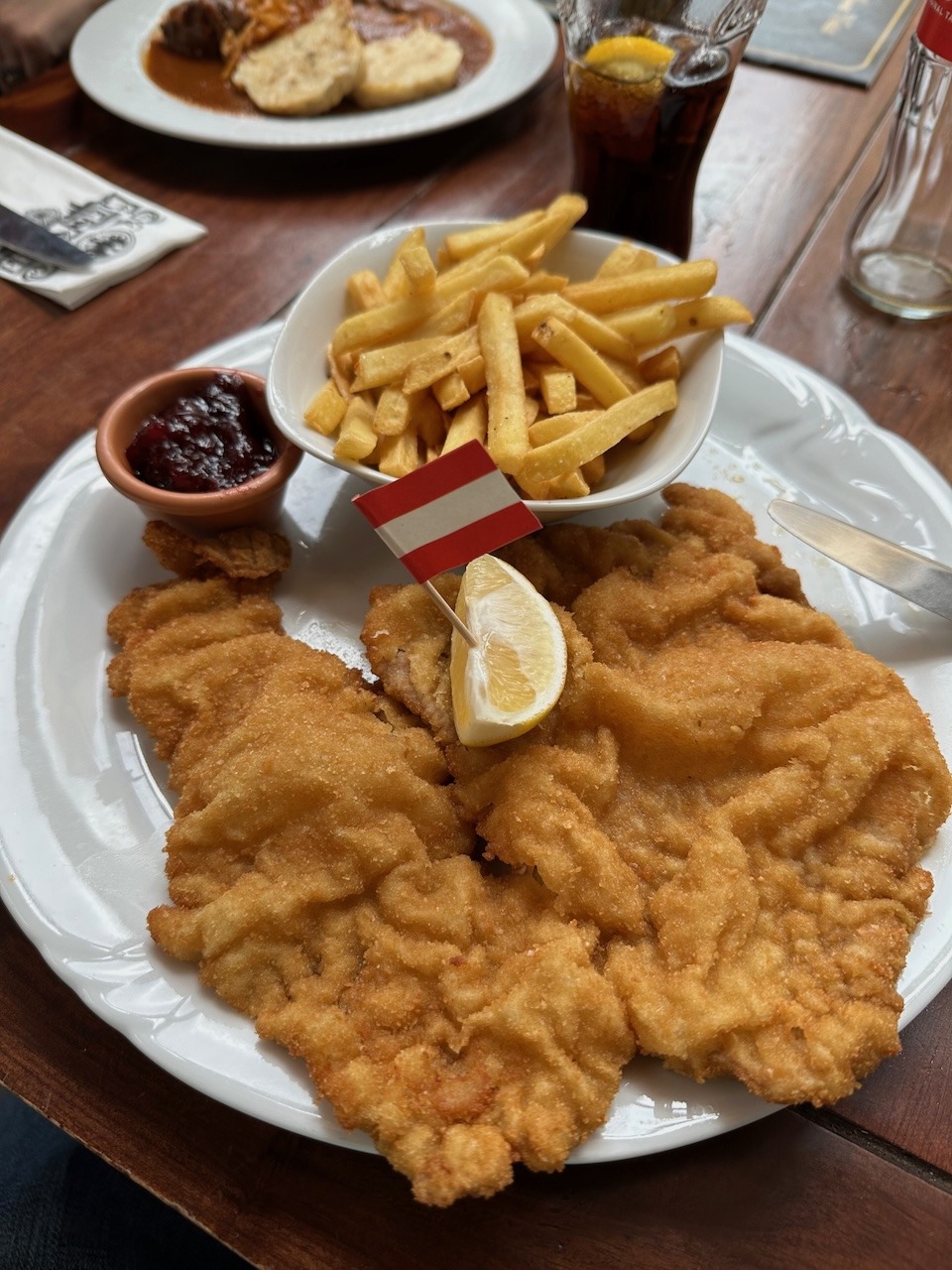
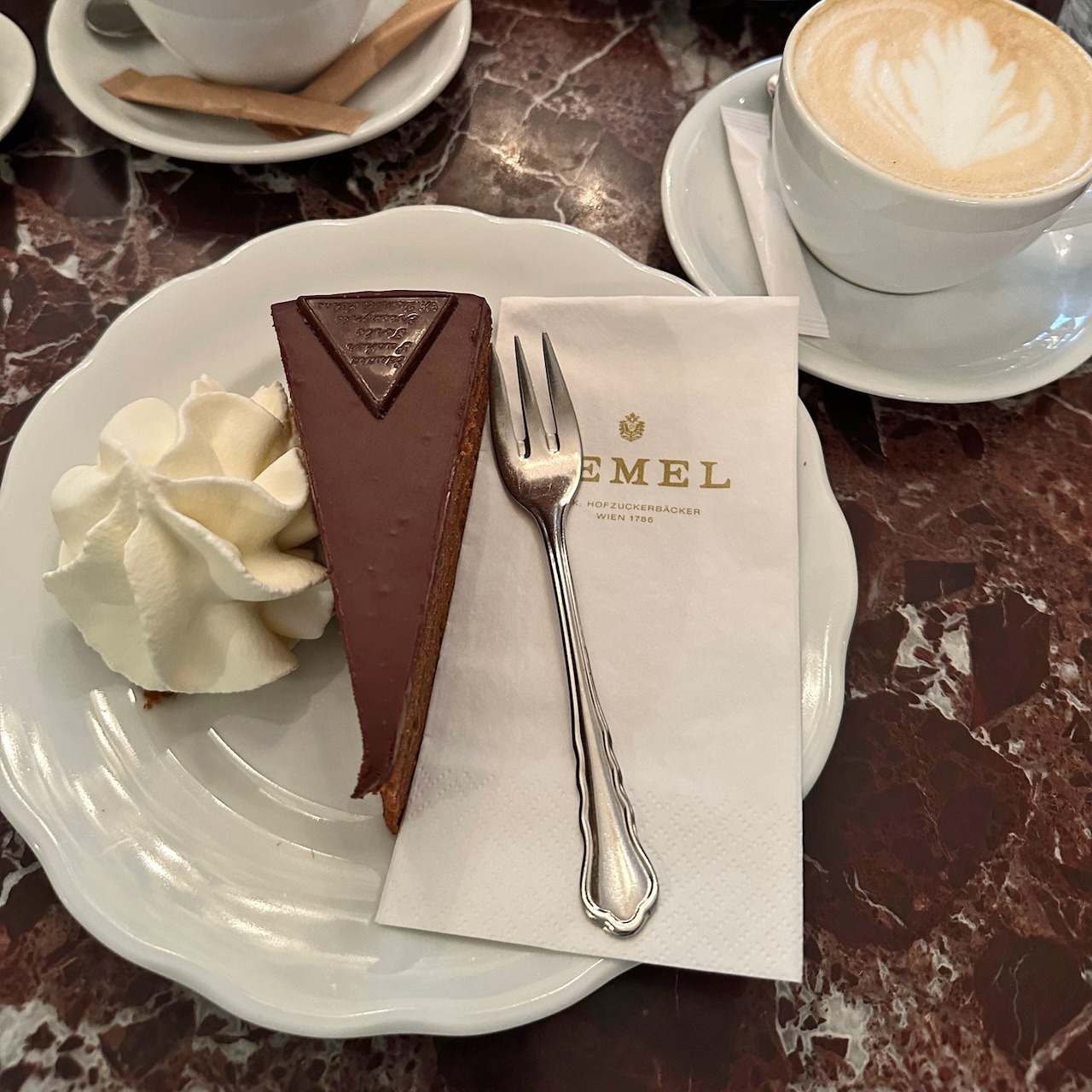
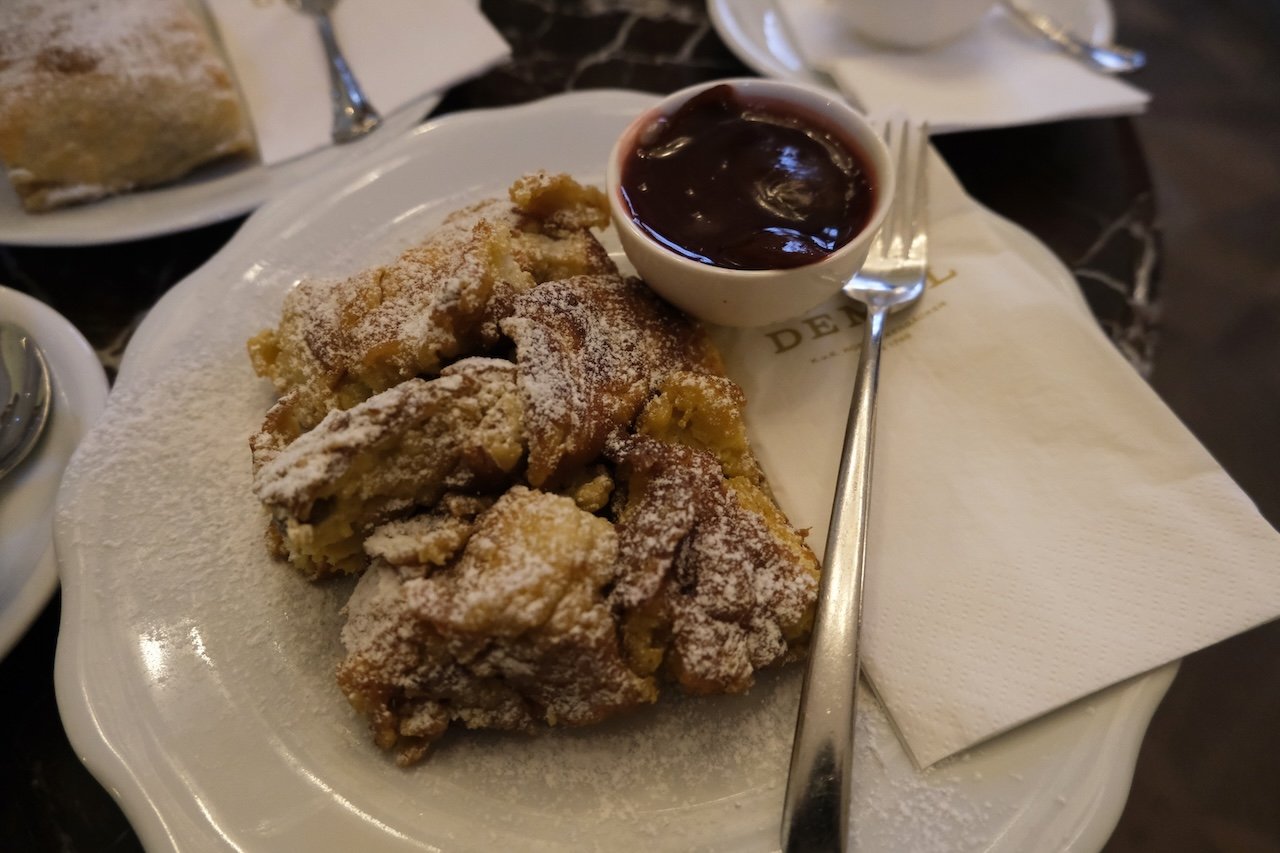
Vienna’s food scene may not be as globally renowned as cities like Paris or Rome, it is still worth experiencing its traditional dishes and historic cafés. The real highlight here is Vienna’s café culture, which is as much about atmosphere as it is about what’s on the menu.
For dessert lovers and coffee aficionados, this is one of the most enjoyable parts of visiting Vienna!
Vienna’s café culture is one of the most iconic in Europe, with a long-standing tradition of lingering over coffee and dessert in elegant, historic settings. If you’re visiting Vienna, spending time in a classic café is a must.
A few of the most famous cafés in Vienna include:
Vienna is known for a handful of classic dishes and desserts that are worth trying during your visit, including:
While Vienna isn’t necessarily known for its dining scene, we did find a few spots that were well worth visiting. These are places where we enjoyed particularly memorable meals during our time in the city.
Looking for more restaurant recommendations in Vienna? Check out the guides linked below:
Vienna offers a mix of shopping experiences, from elegant historic streets lined with luxury boutiques to lively markets and local shops. Whether you are looking for designer brands, souvenirs, or seasonal markets, these are some of the best places to shop in Vienna.
It is worth noting that most shops, including grocery stores, are closed on Sundays in Vienna.
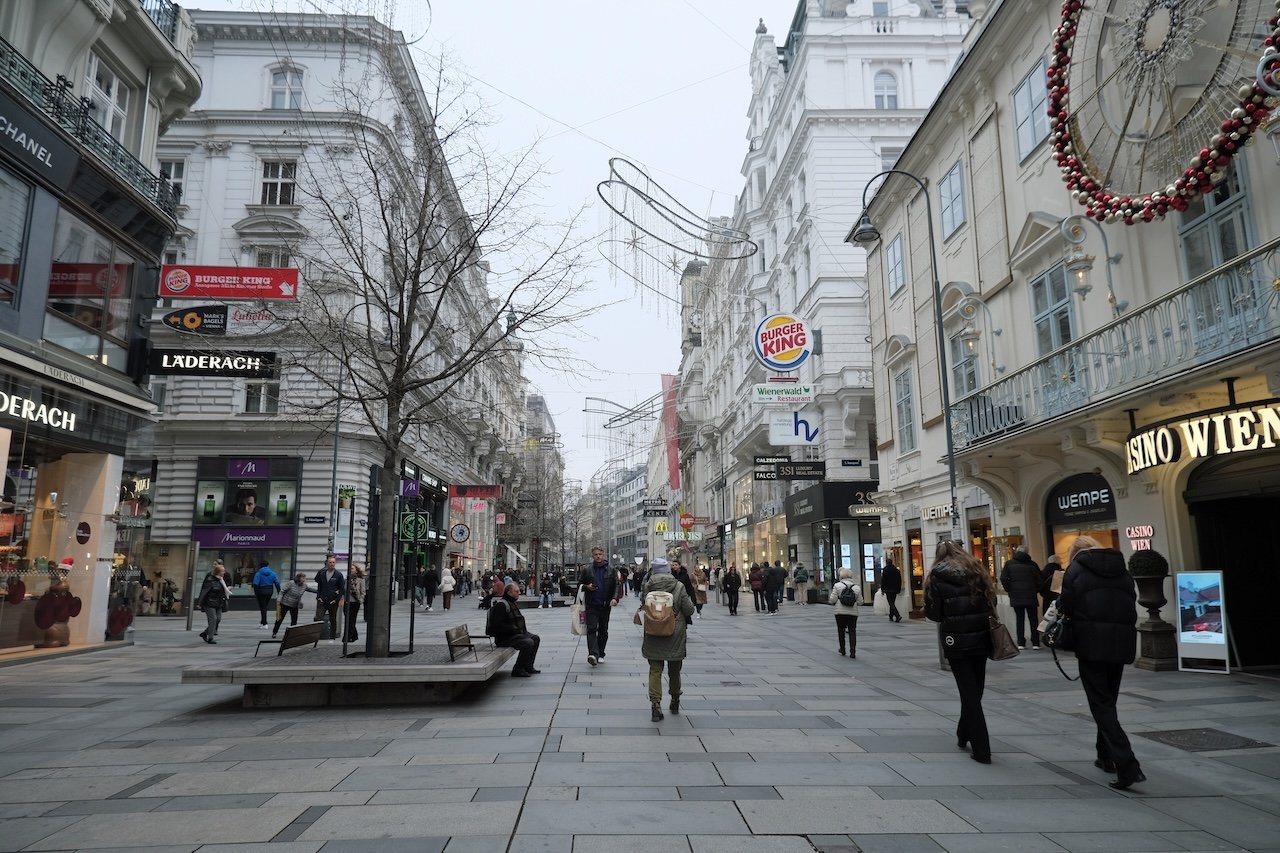
Located in the heart of Vienna’s Innere Stadt, Kärntner Straße is one of the city’s main shopping streets. This pedestrian-friendly area runs from Stephansplatz to the Vienna State Opera and is lined with a mix of international brands, upscale boutiques, and souvenir shops, making it a convenient stop as you explore the city center.
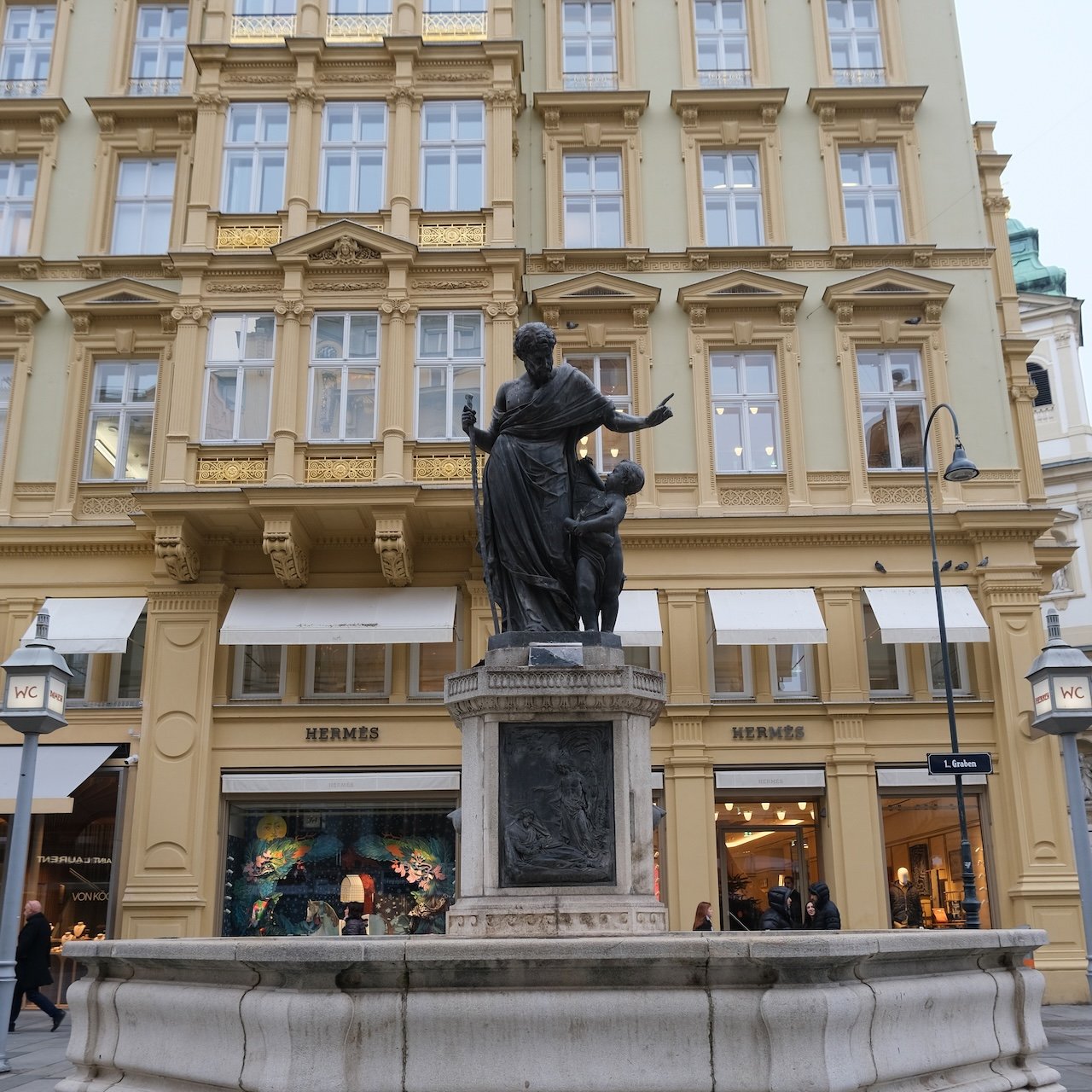
Just steps from Kärntner Straße, Graben and Kohlmarkt are among Vienna’s most elegant shopping streets. Known for luxury boutiques and high-end brands like Louis Vuitton, these streets also feature historic architecture and traditional cafés, creating a more refined shopping experience near St. Stephen’s Cathedral.
Mariahilferstraße is Vienna’s longest and busiest shopping street, located just outside the city center. It offers a wide range of stores, from major international chains to Austrian department stores like Peek & Cloppenburg, along with smaller local shops and restaurants.
Naschmarkt is Vienna’s most famous market, featuring around 120 stalls selling everything from fresh produce and spices to international cuisine and gourmet foods. It is also a great place to browse for unique souvenirs and antiques. The market is closed on Sundays.
Vienna Christmas markets are one of the city’s most popular seasonal experiences, known for their festive atmosphere, traditional crafts, and food.
Many markets are set against iconic backdrops like St. Stephen's Cathedral in Vienna, Schönbrunn Palace, and Belvedere Palace. The most famous Vienna Christmas market is the Viennese Dream Christmas Market (Wiener Christkindlmarkt) in front of Vienna City Hall, one of the largest and most well-known in Europe.
Visitors can shop for holiday gifts such as small toys, ornaments, ceramics, and holiday decorations, while also enjoying seasonal treats like roasted chestnuts (Maroni), gingerbread (Lebkuchen), and mulled wine (Glühwein). Most Christmas markets in Vienna run from mid-November through late December.
Vienna’s Easter markets celebrate the arrival of spring with colorful decorations, handcrafted goods, and seasonal food. Decorated Easter eggs are a central feature, ranging from traditional designs to more artistic creations.
One of the most popular is the Schönbrunn Palace Easter Market, where stalls are set against the backdrop of the palace. These markets typically run for a few weeks leading up to Easter and close on Easter Monday.
If you are looking for meaningful souvenirs from Vienna, focus on items tied to the city’s café culture and local specialties, including:
Most travelers will want to spend at least three days in Vienna to see the city’s main highlights, including its historic palaces, museums, and café culture.
If you want a more relaxed pace, plan to visit multiple museums, or even take a Vienna to Bratislava day trip, four or five days in Vienna is ideal. It gives you enough time to explore the city’s top attractions without feeling rushed.
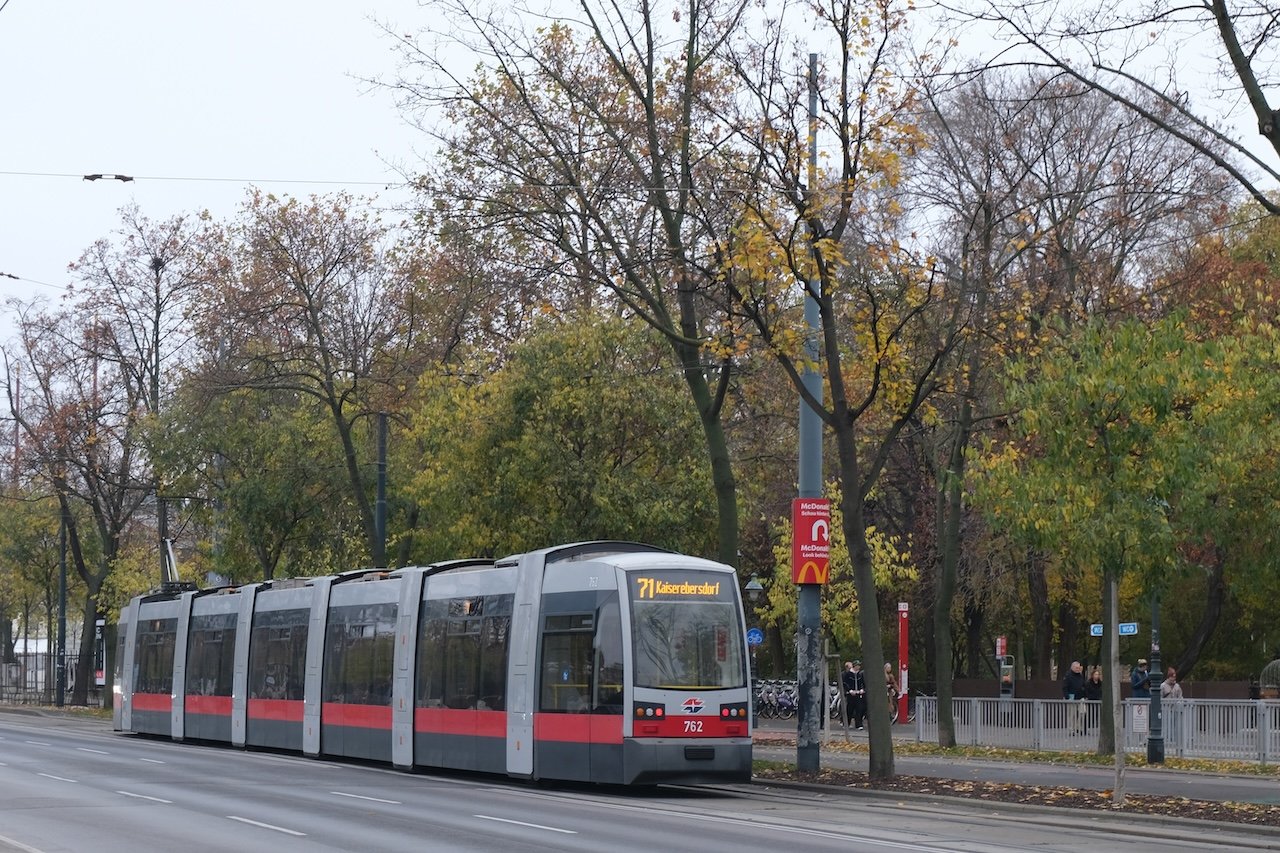
Vienna is a large city, but getting around is easy thanks to its efficient and reliable public transportation system. Most of the main sights in the city center are within walking distance, but for anything farther out (like Schönbrunn Palace), you will want to use public transit.
Vienna International Airport (Flughafen Wien-Schwechat) is located about 11 miles (18 km) southeast of the city center and is well connected by train, taxi, and rideshare.
Best ways to get from Vienna Airport to the city center:
Vienna has one of the best public transportation systems in Europe, making it easy to get around the city quickly and efficiently.
If you plan to use public transportation regularly during your time in Vienna, a 24-, 48-, or 72-hour ticket is usually the best option and can be used across the U-Bahn, trams, and buses. Additional information about fares can be found on the Vienna Tourist Board website.
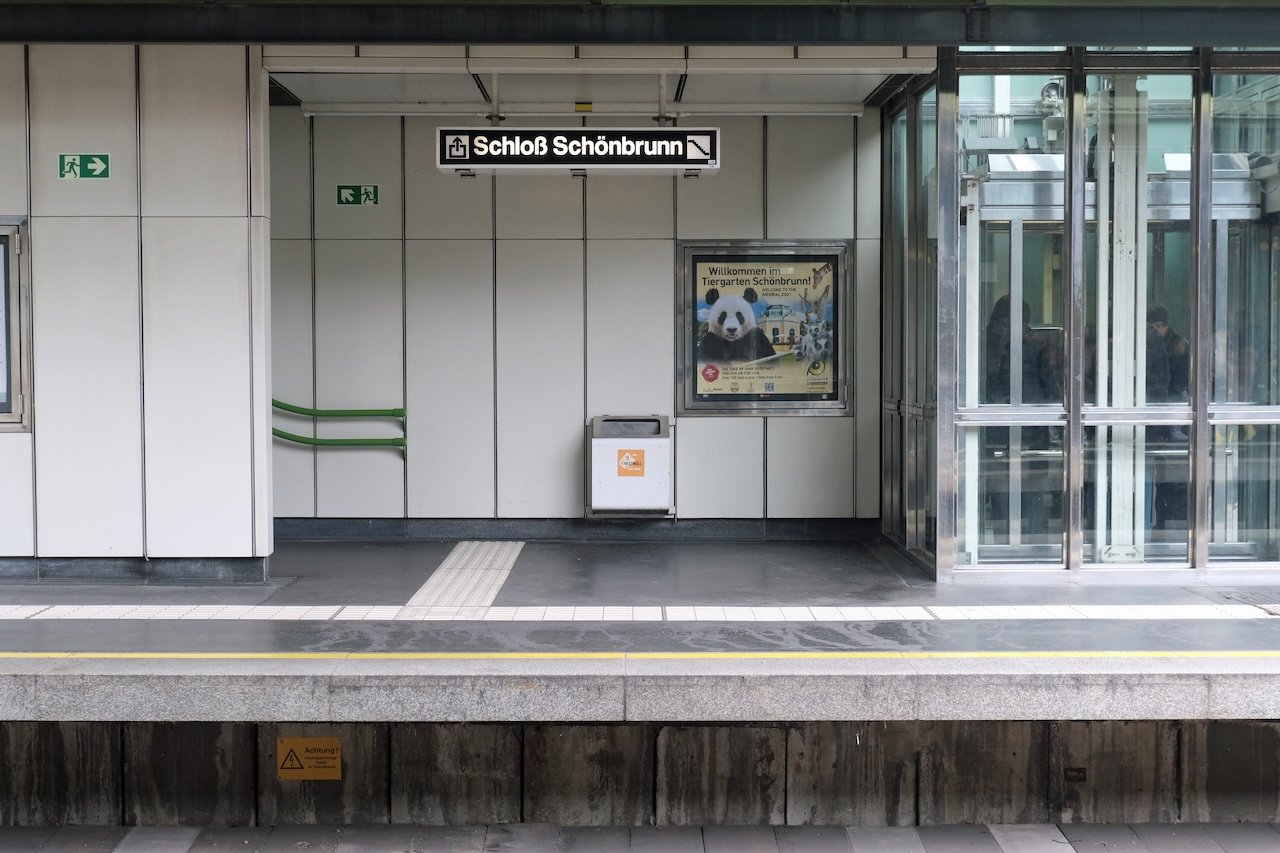
The U-Bahn is the fastest way to travel longer distances across Vienna. With five lines (U1–U6), it connects most major neighborhoods and attractions.
Key stations, such as Karlsplatz, Stephansplatz, and Westbahnhof, connect multiple lines, making it easy to transfer between lines and access the top things to do in Vienna. Trains run frequently, typically every 2-5 minutes during peak hours, making the U-Bahn a reliable and time-efficient mode of transportation. Stations and trains are equipped with clear signage, electronic displays, and announcements in both German and English.
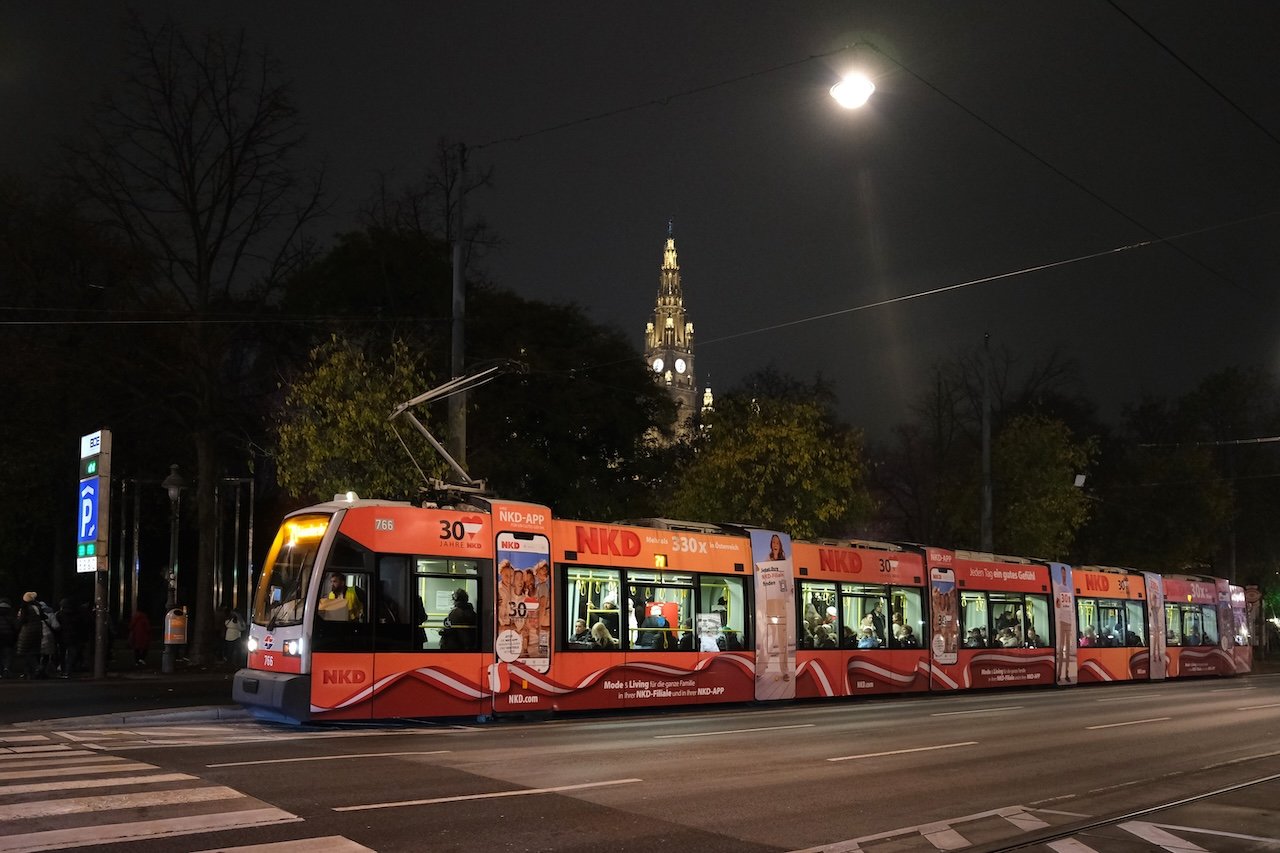
Vienna's trams, or streetcars, are an integral part of the city's public transportation system, offering an efficient and scenic way to navigate the city. Vienna boasts one of the largest tram networks in the world, with 28 lines covering more than 100 miles (161 kilometers).
Tram lines such as 1, 2, D, and 71 circle the Ringstraße, providing convenient access to many of Vienna's top landmarks. Stops are clearly marked, and trams are equipped with electronic displays and announcements in both German and English.
Uber and Bolt both operate in Vienna and are often the easiest option when traveling with luggage or heading outside central areas.
Taxis are widely available, but in our experience, they can be less reliable, particularly for trips outside the Innere Stadt, so rideshare apps are often the better choice.
Vienna is well connected to other cities in Austria and Europe, making it a great base for day trips. Since multiple rail providers operate across the region, we recommend booking tickets through Rail Europe to easily compare routes, schedules, and prices in one place.
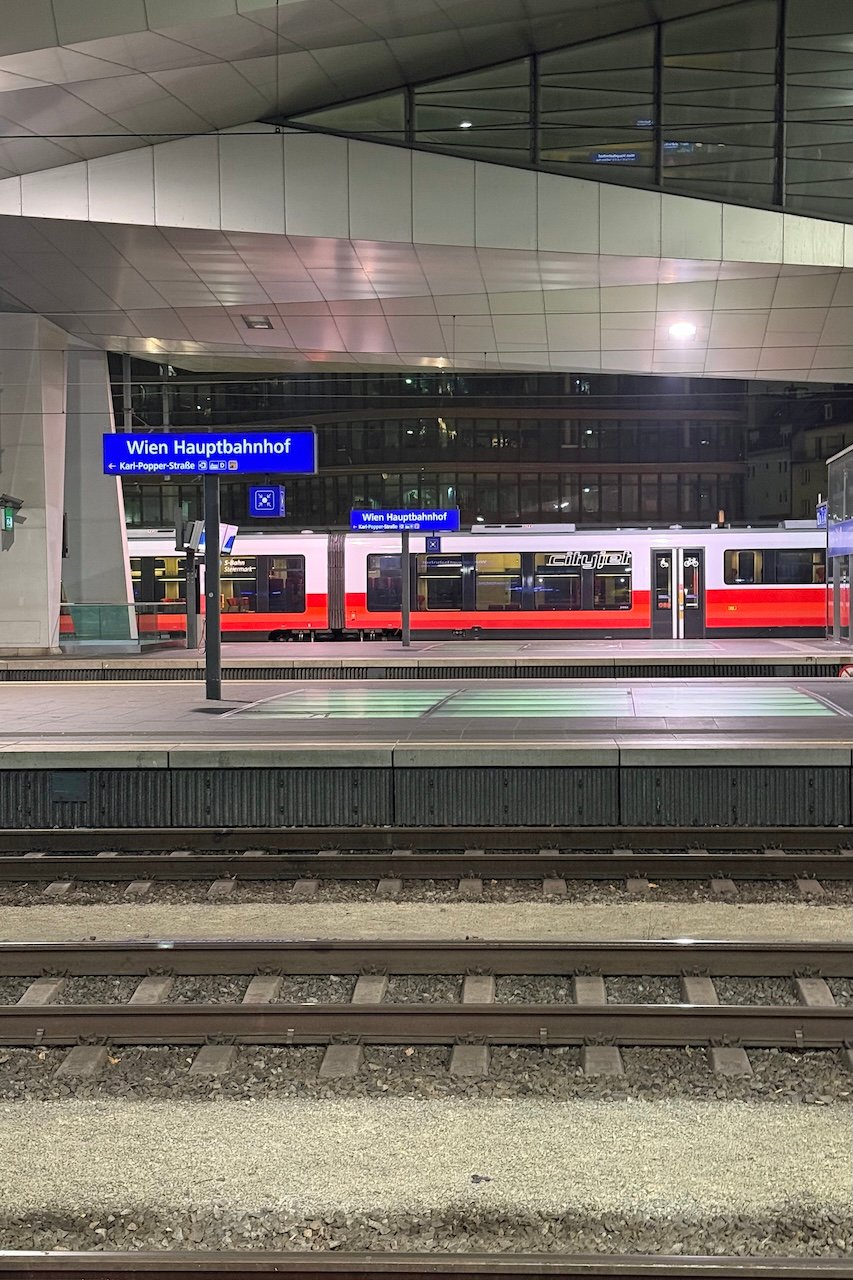
Main train stations in Vienna:
Our Vienna travel blog would not be complete without sharing our honest experience, and it might not be what you expect.
We’ll be honest: we did not love Vienna on our first visit. We found it expensive and difficult to navigate. Compared to other destinations in Central Europe, it felt cold and unwelcoming.
However, we decided to give Vienna a second chance, and we’re so glad we did!
When we returned to Vienna in November 2025, our experience was completely different. Visiting Vienna during the Christmas market season brought a new energy to the city, and it finally started to feel as magical as people describe.
The Vienna Christmas markets were a highlight, but what stood out even more was how much we appreciated the city’s museums and historic sites the second time around.
We revisited places like Schönbrunn Palace and the Imperial Treasury Vienna, and also explored new sites like the Imperial Crypt, some historic Vienna churches, and Belvedere Palace. The Upper Belvedere, in particular, ended up being one of our favorite experiences in Vienna!
Yes, Vienna is Expensive
One thing that didn’t change: Vienna is still an expensive city.
From hotels to dining, costs can add up quickly, but where you stay can make a significant difference in your overall experience.
On our first trip, we stayed at The Harmonie Vienna, located outside the Innere Stadt, in an effort to save money. While the hotel itself was nice (as was the included breakfast), its location made getting around the city inconvenient. In hindsight, we would have been better off staying near a major transit hub like Wien Hauptbahnhof, where there are several great budget-friendly hotel options and much easier access to public transportation.
On our second visit, we chose to splurge and stay at The Leo Grand near St. Stephen’s Cathedral in Vienna. The hotel's central location completely changed our experience. We were able to walk almost everywhere, and when we couldn’t, it was incredibly easy to hop on the U-Bahn and get wherever we needed to go quickly.
One of the biggest things we learned after visiting twice is that timing can completely change your experience in Vienna.
Our first trip was in early fall, but returning later in the season gave us a completely different perspective on the city. Visiting Vienna in autumn, especially in November, felt far more atmospheric, with cooler weather, fewer crowds, and the city beginning to transition into the holiday season.
Experiencing Christmas in Vienna made an even bigger impact. The Christmas markets brought a festive energy to the city, and overall, everything felt more vibrant and enjoyable! Plus, who could be sad when they’re sipping mulled wine at Vienna’s Christmas markets?!
Final Thoughts: Is Vienna Worth Visiting?
Yes, Vienna is worth visiting, especially for travelers interested in history, art, and architecture. To get the most out of the city, it helps to plan carefully, prioritize the experiences that matter most, and book a centrally located hotel so you can easily walk between major sights or quickly use the U-Bahn when needed.
If you can visit during the Christmas season, even better, as the Vienna Christmas markets add a festive atmosphere that makes the city feel far more vibrant and welcoming. Between its world-class museums, rich imperial history, and some of the most impressive palaces in Vienna, the city offers more than enough to justify a trip.
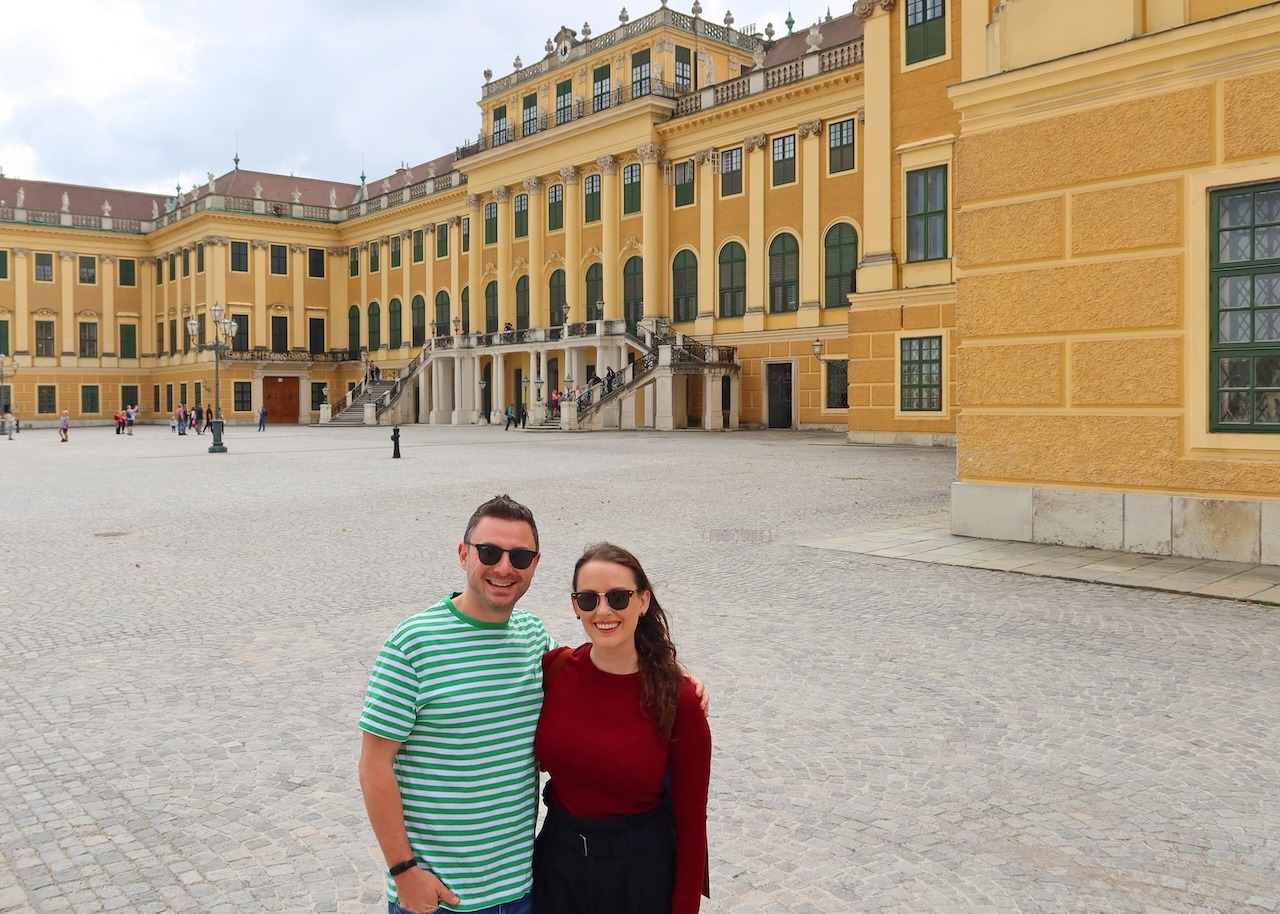
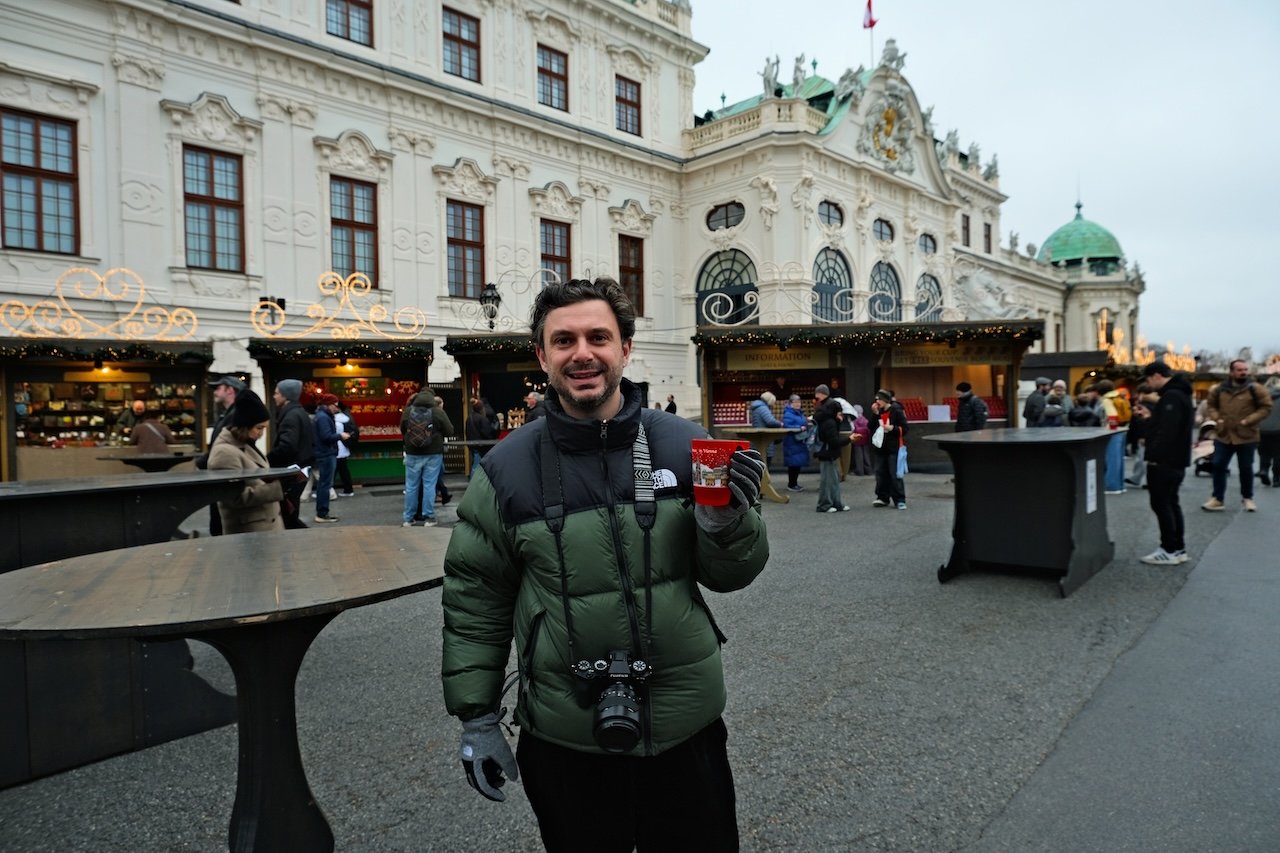
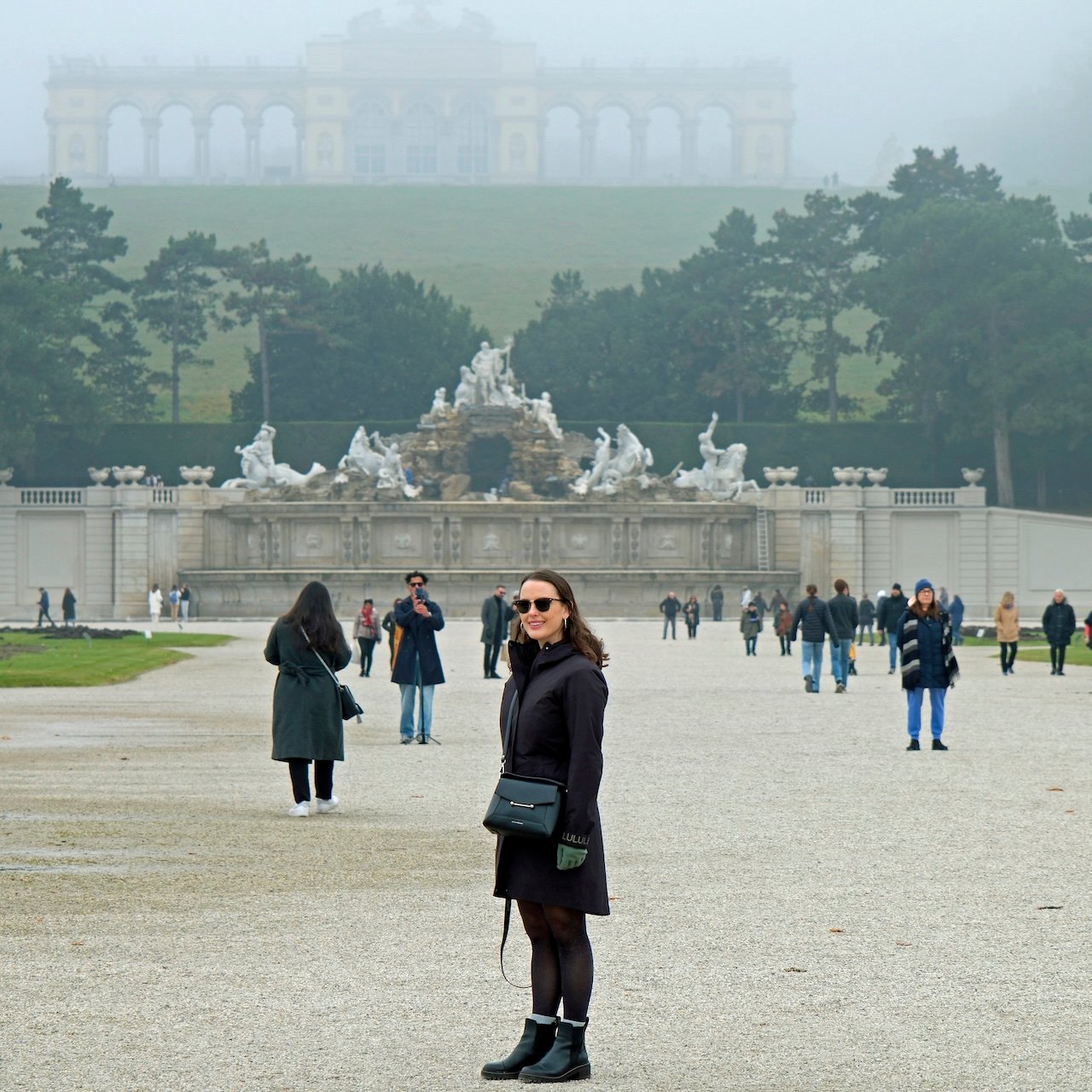
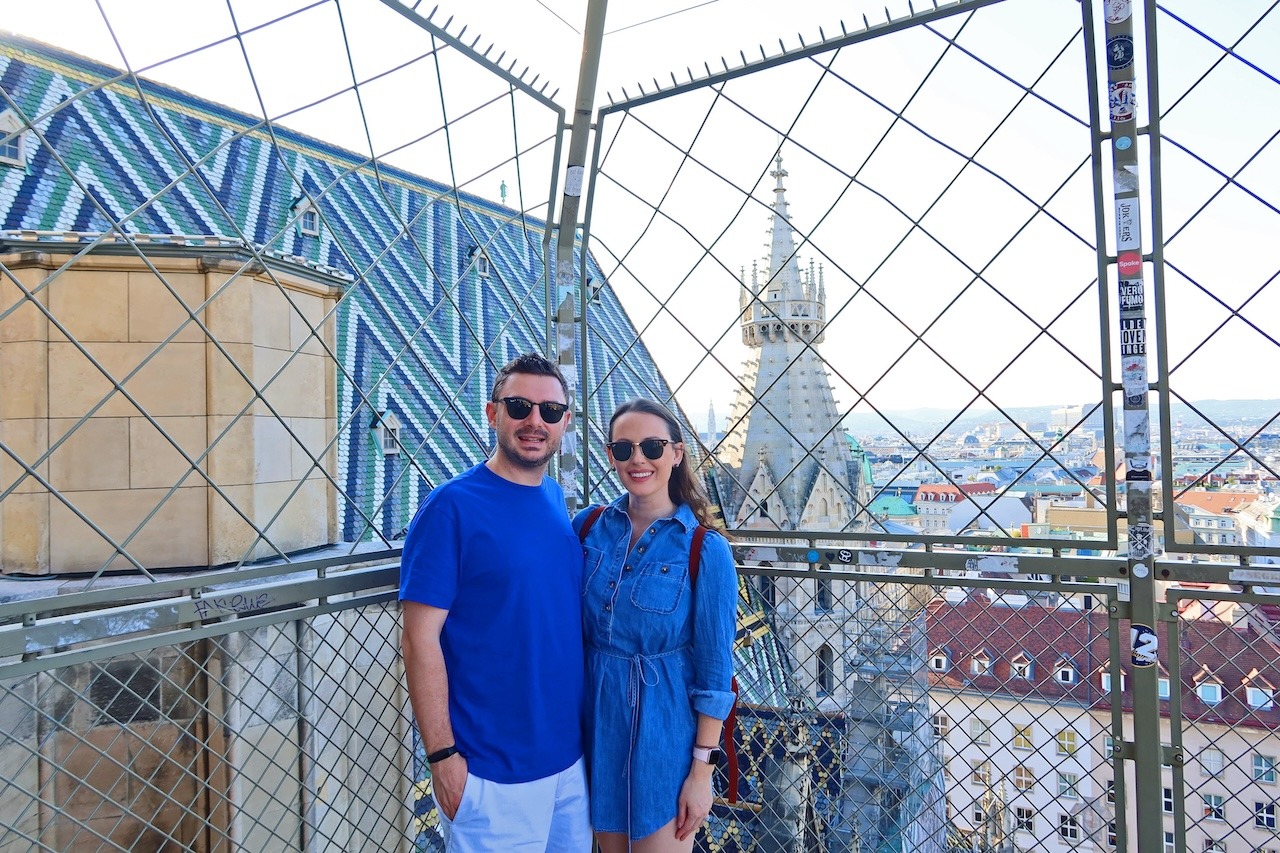
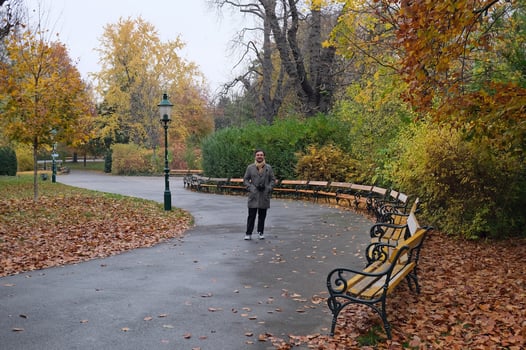
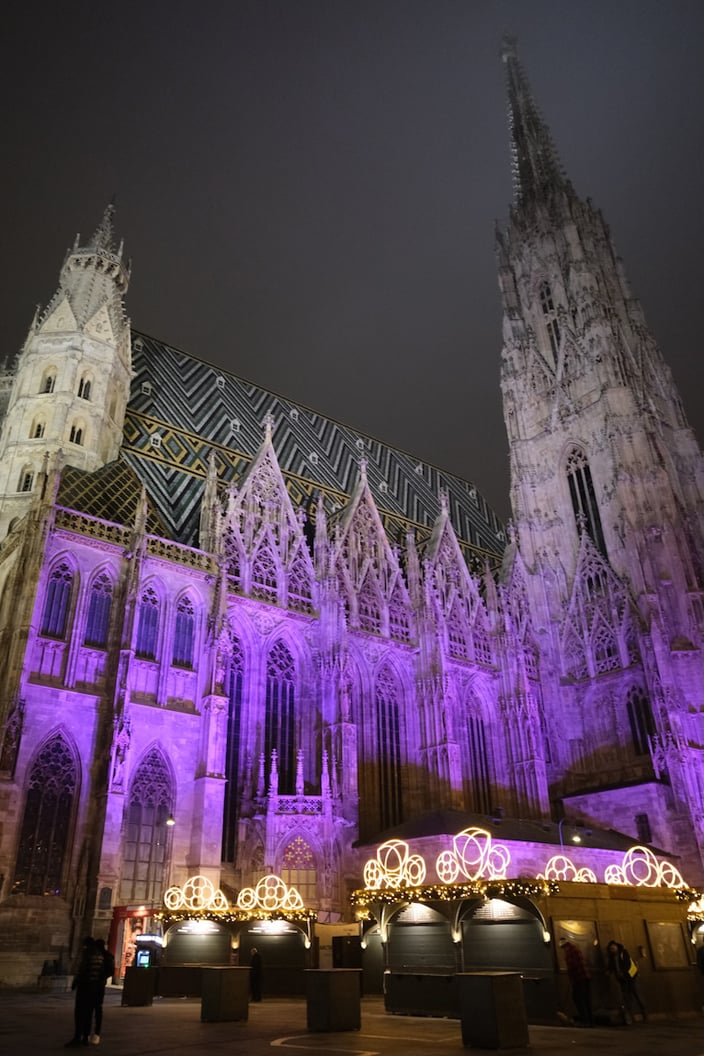
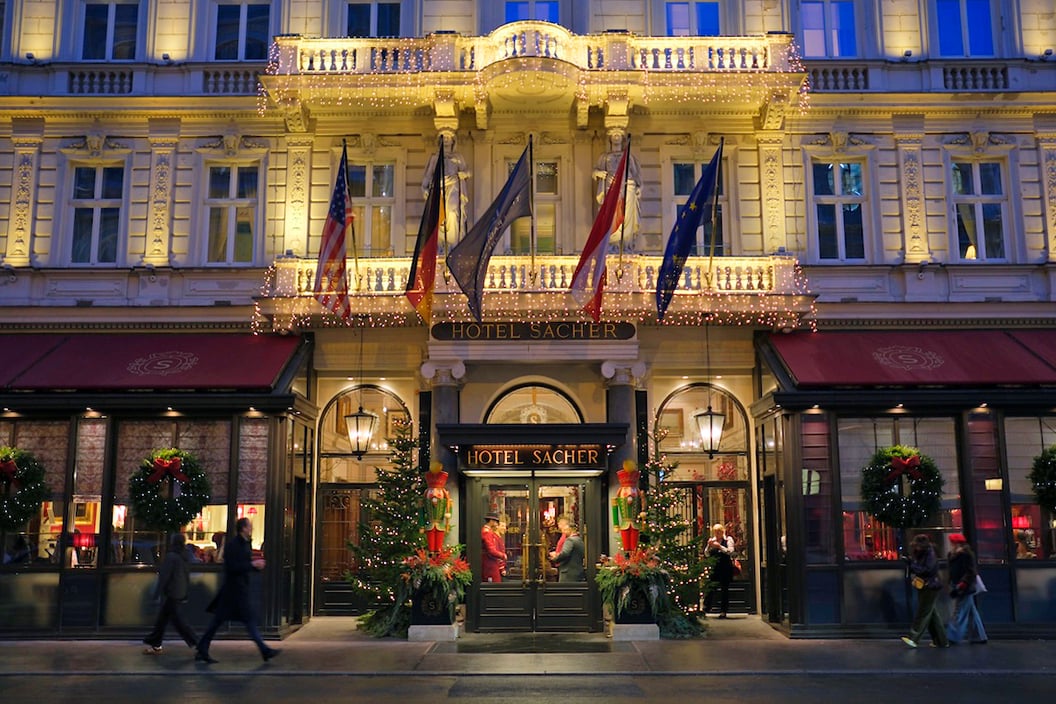
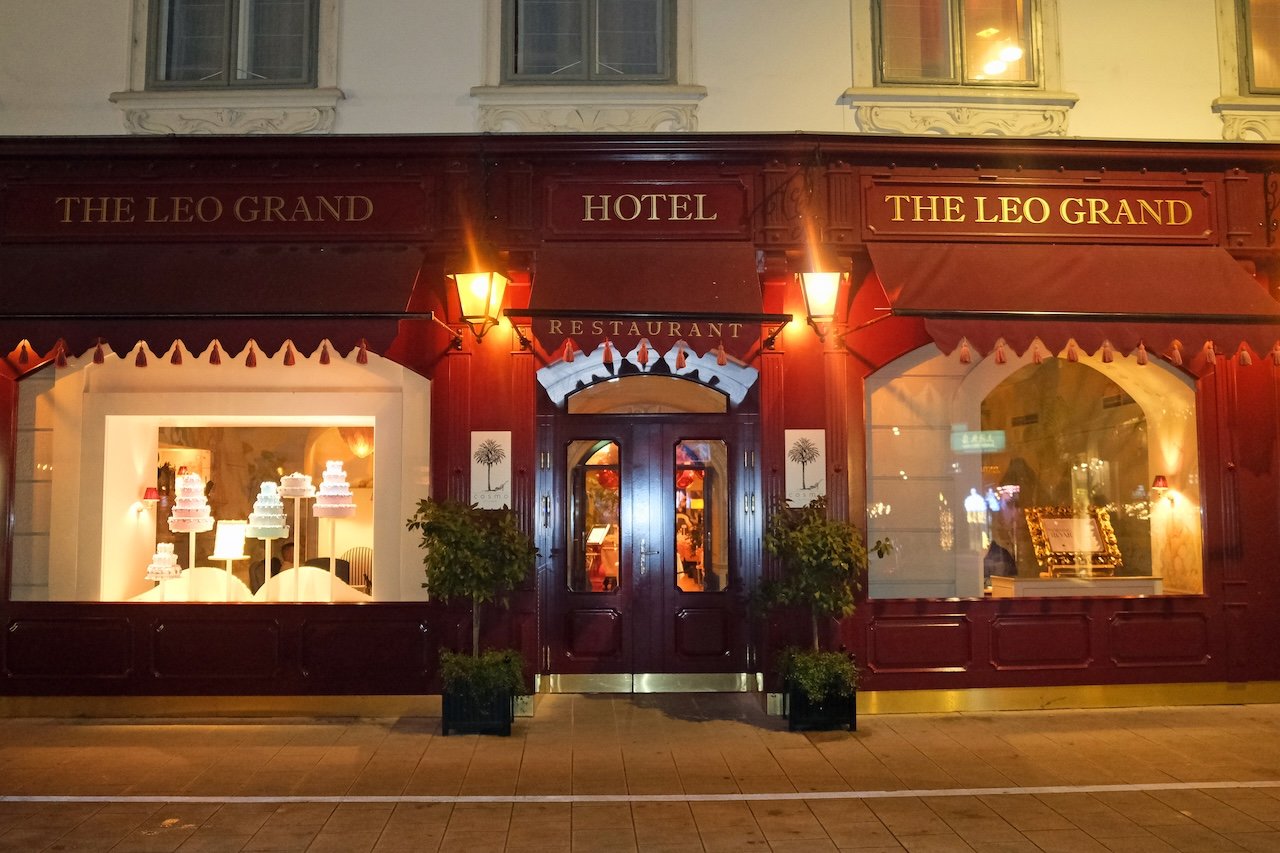
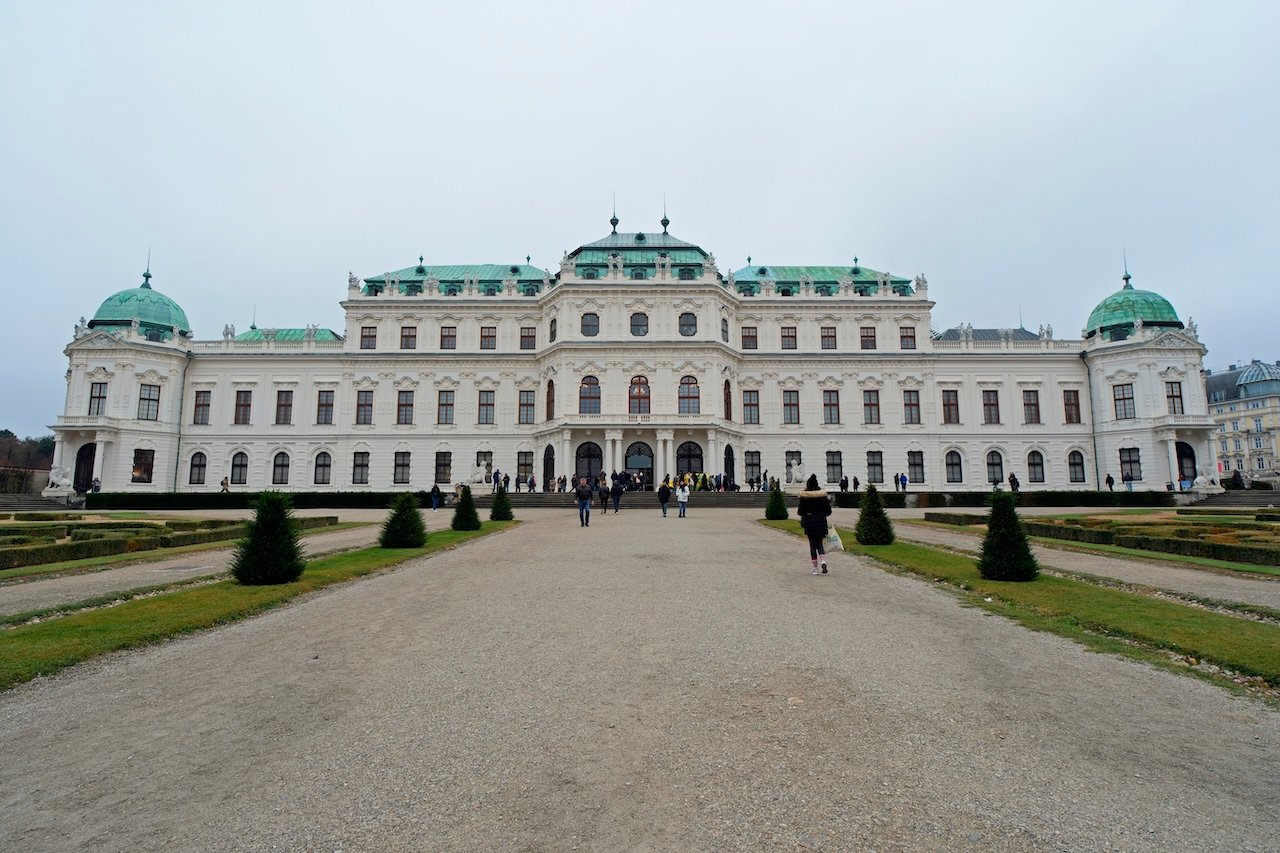
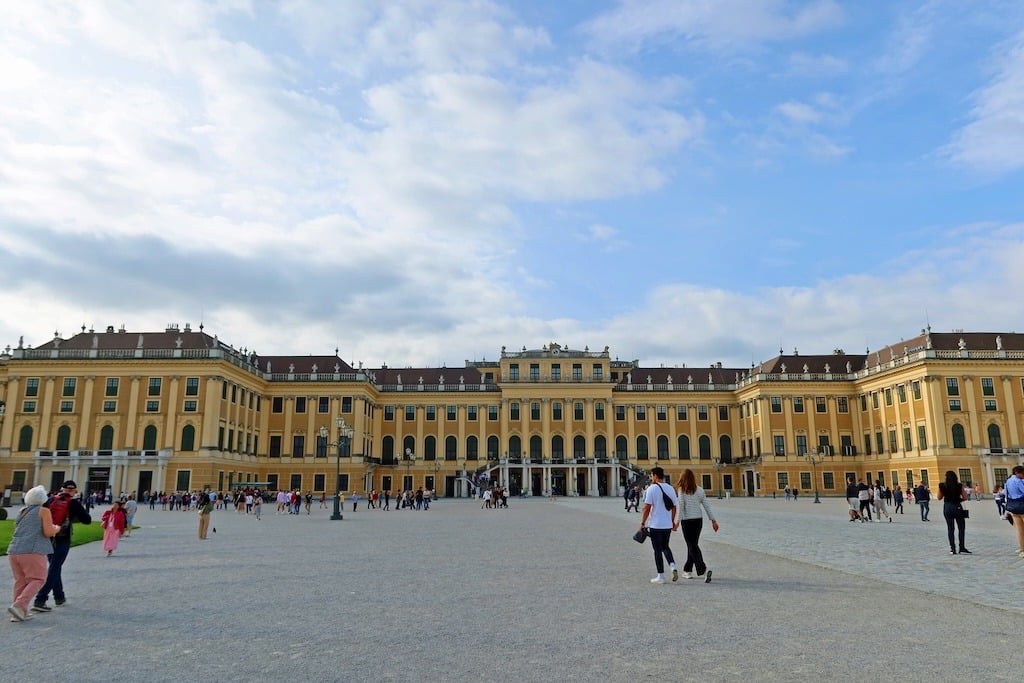
Choosing where to stay in Vienna can make a big difference in your overall experience. For most visitors, staying in a central location or near a major transit hub will make it much easier to explore the city. Our Vienna travel blog covers neighborhood breakdowns to help you choose the right place to stay:
The Innere Stadt is the historic and cultural heart of Vienna and, for most travelers, the best area to stay. This is where you’ll find many of the city’s top attractions, including St. Stephen’s Cathedral, the Hofburg Palace, and the Vienna State Opera.
Staying here allows you to walk to most major sights, as well as easily access shopping streets, cafés, and public transportation. While it’s one of the most expensive areas, the convenience and atmosphere make it well worth it for a first visit.
Recommended Hotels in the Innere Stadt:
Landstraße is a great option if you want to stay close to Vienna’s main attractions without being directly in the Innere Stadt. The district is home to Belvedere Palace and Stadtpark, and offers a mix of cultural sights, green space, and residential areas.
It’s also one of the most convenient areas for transportation, with easy access to Wien Hauptbahnhof and multiple U-Bahn and train connections, making it a strong base for both exploring Vienna and taking day trips.
While you’ll still find upscale hotels here, prices can be slightly more flexible than in the historic center, depending on where you stay.
Recommended Hotels in Landstraße:
Neubau offers a more local, creative atmosphere while still being within easy reach of the city center. Centered around MuseumsQuartier, this area is known for its mix of museums, independent shops, cafés, and restaurants.
It’s a great choice if you want a slightly less touristy experience without sacrificing convenience, as you can still walk or take a short tram or U-Bahn ride to most major sights.
Recommended Hotels in Neubau:
Favoriten is a practical option for budget-conscious travelers and travelers looking to stay near Wien Hauptbahnhof. While it does not have the same charm as more central neighborhoods, it offers excellent transportation connections and more affordable hotel options.
This area is ideal if you are planning day trips or arriving in Vienna by train, but you will need to use public transportation to reach most major sights.
Recommended Hotels in Favoriten:
Hietzing is a quieter, more residential district best known for Schönbrunn Palace and its surrounding gardens. It offers a more relaxed atmosphere compared to the city center, with tree-lined streets and fewer crowds.
While it’s farther from the main attractions, it can be a good option if you prefer a slower pace and plan to spend more time exploring Schönbrunn and nearby areas.
Recommended Hotels in Hietzing:
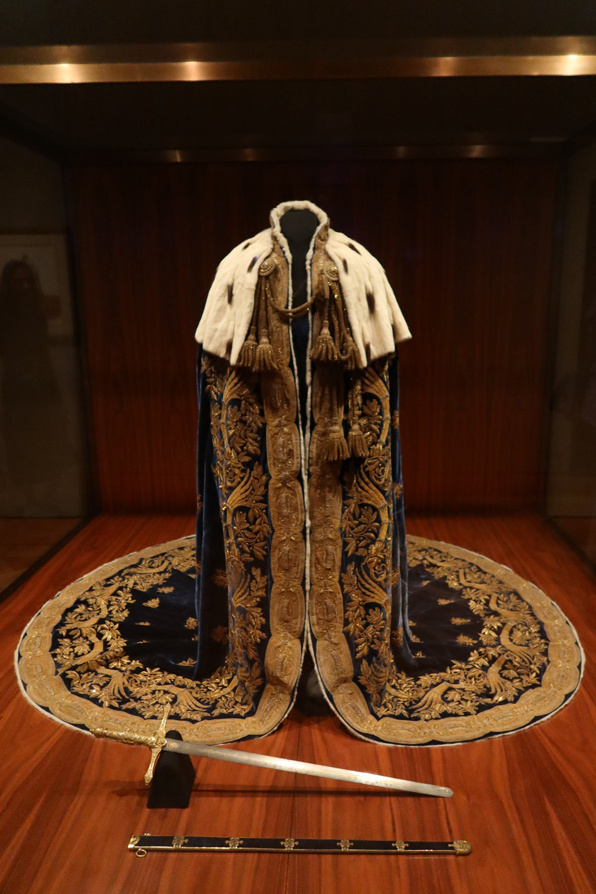
Things to Do in Vienna:
Top Attractions You Can't Miss
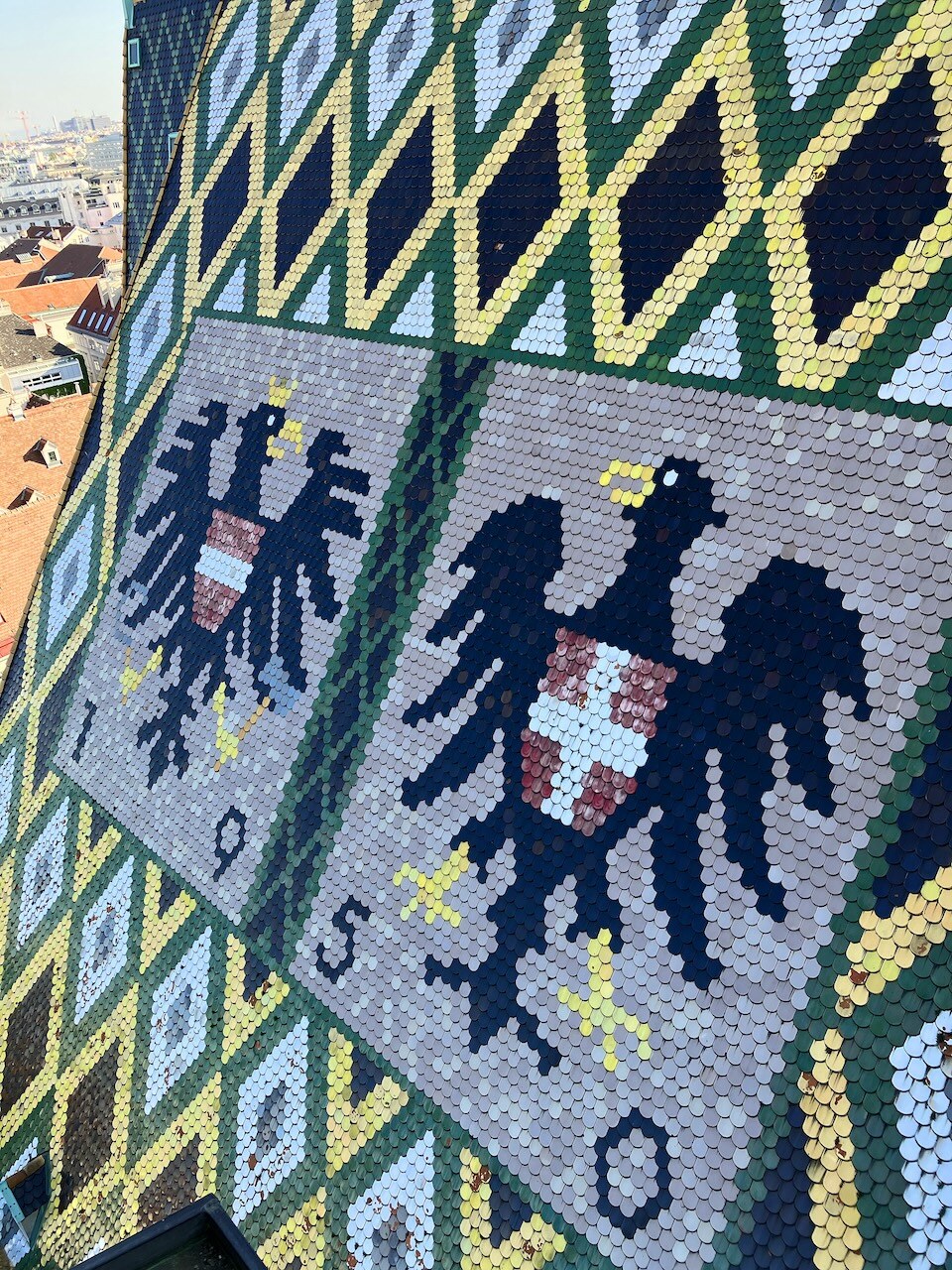
St. Stephen's Cathedral Vienna:
A Story of Resilience & Grandeur
My Favorite Vienna
Museums
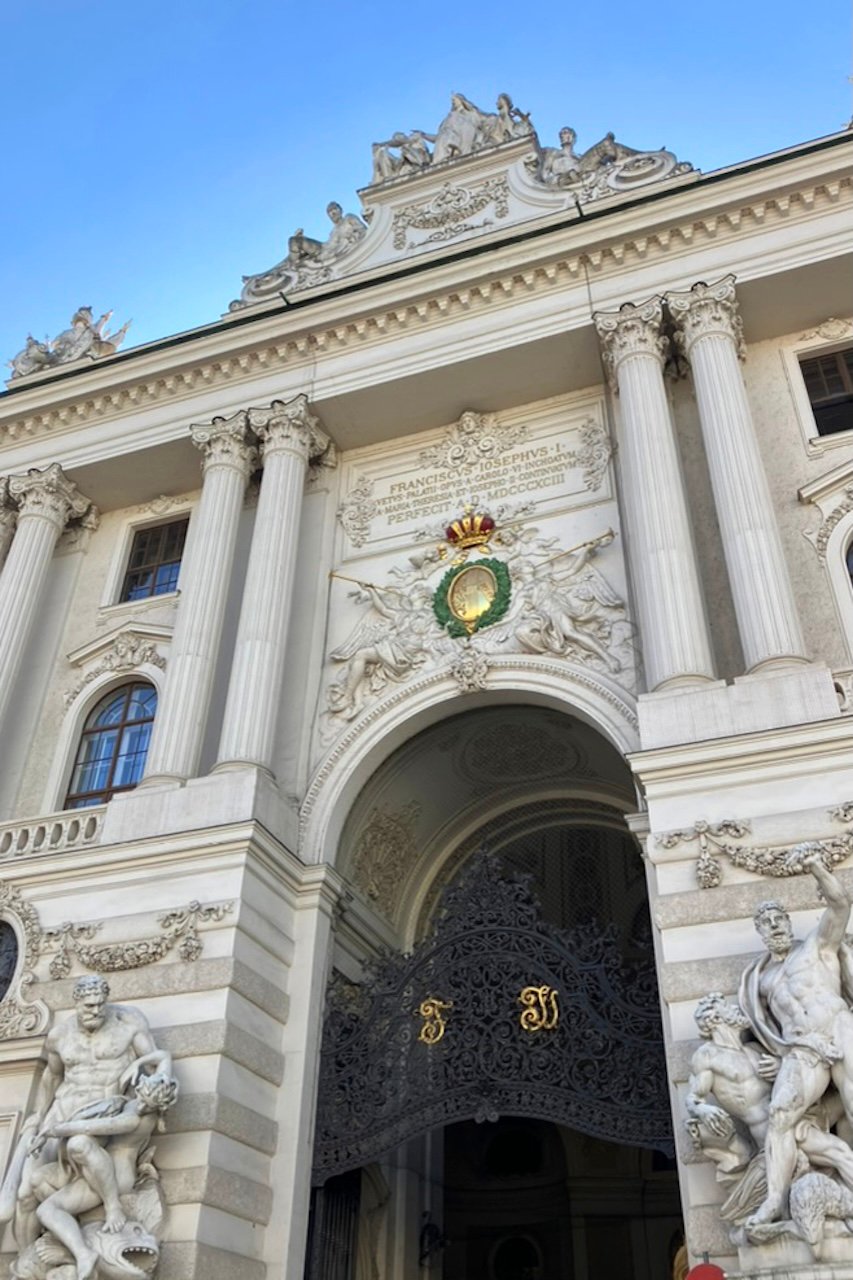
Palaces in Vienna
You Must Visit:
Hofburg, Schönbrunn,
& More
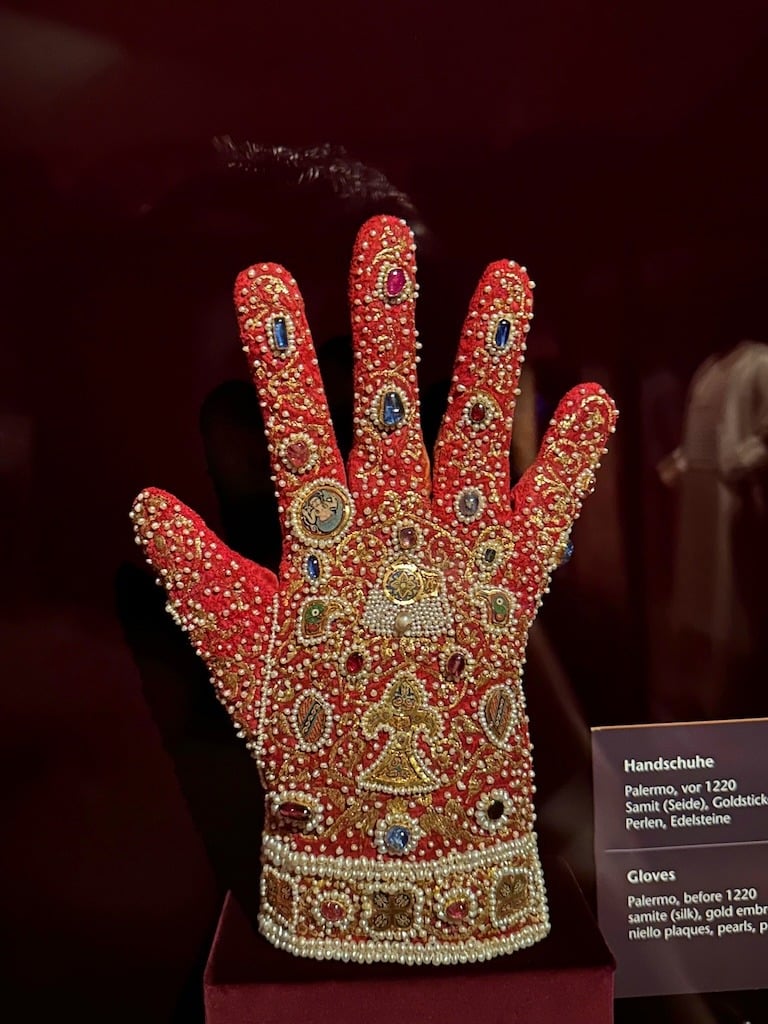
How to Spend Three
Days in Vienna:
The Perfect Vienna
Itinerary
Essential Travel Tips
for Vienna:
What to Know
Before You Go
Vienna Coffeehouse
Culture: A Timeless Tradition
Worth Savoring
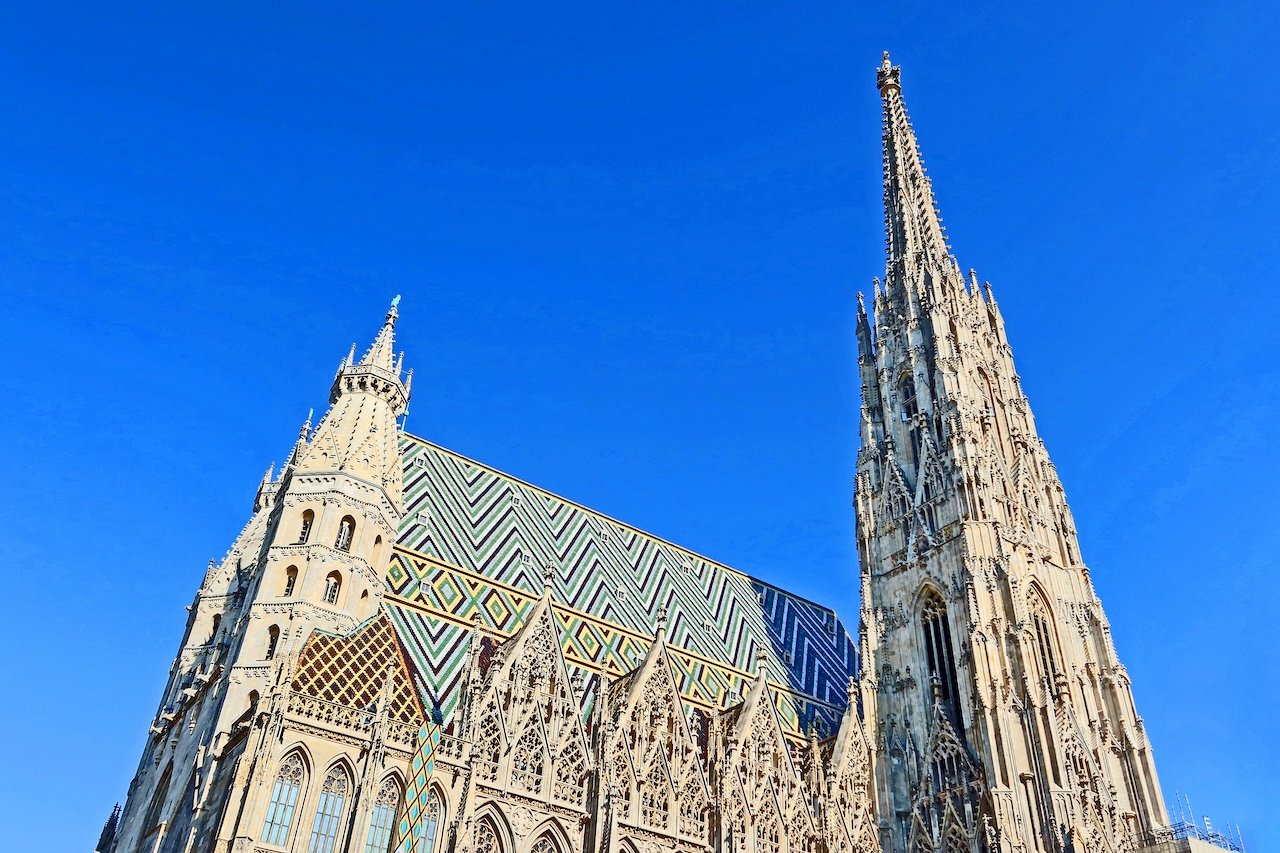
Vienna Landmarks
You Can't Miss:
A First-Timer's Guide
Inside the Imperial
Treasury Vienna:
What to See, How to Visit,
& More
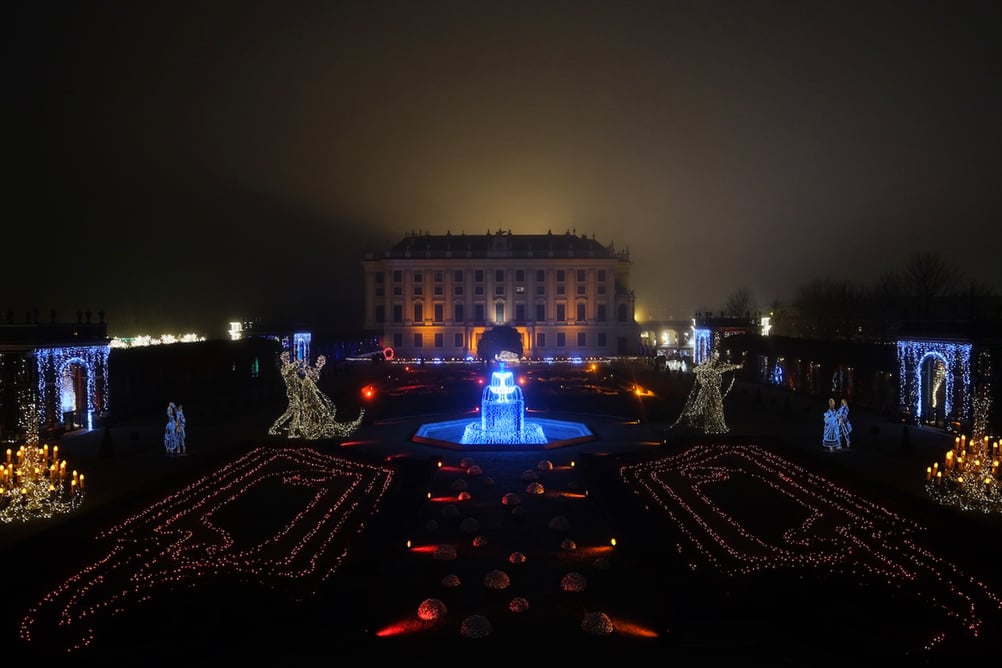
Christmas in Vienna:
A Festive Guide to Markets & More
Vienna Christmas Markets:
The Ultimate Guide
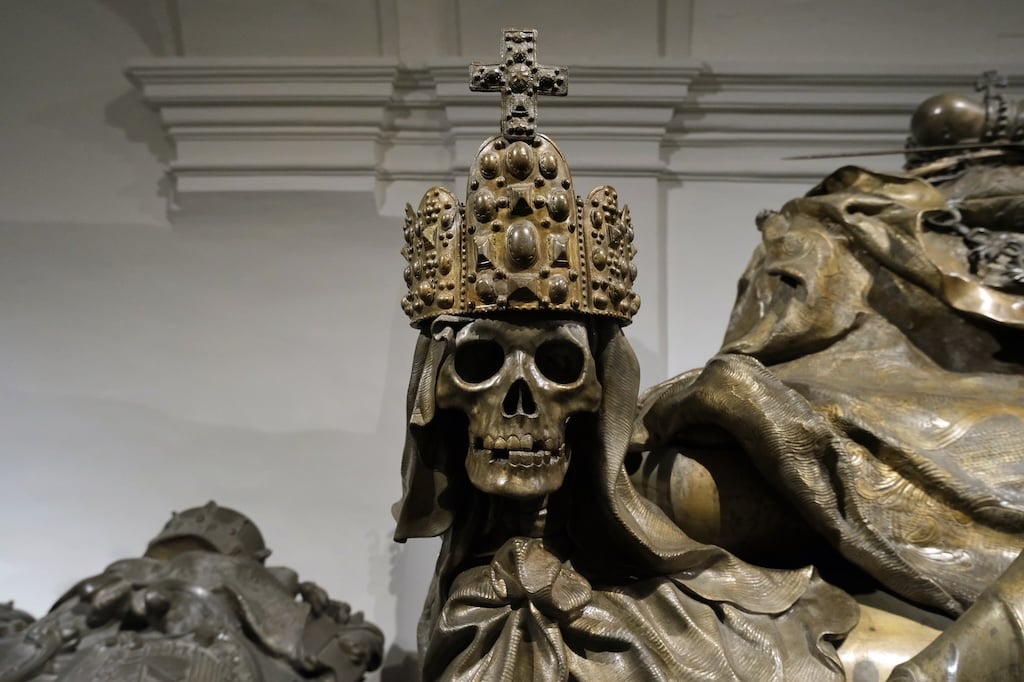
Vienna Churches Worth Visiting:
A First-Timer's Guide
Vienna in Autumn:
Why Fall Is the Best Time to Visit
Free Things to Do in Vienna: 12 Budget-Friendly Ideas
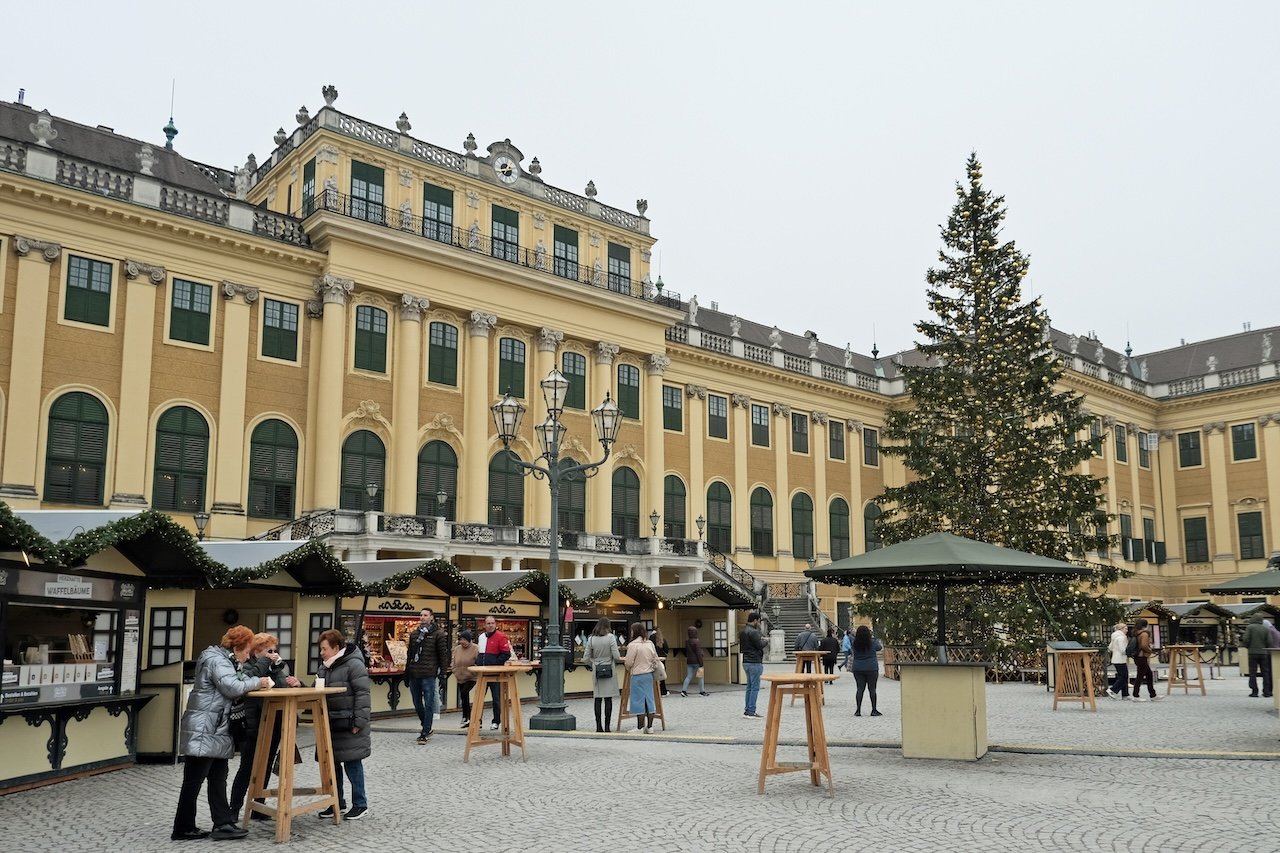
Vienna in November:
Weather, Christmas Markets, & Things to Do
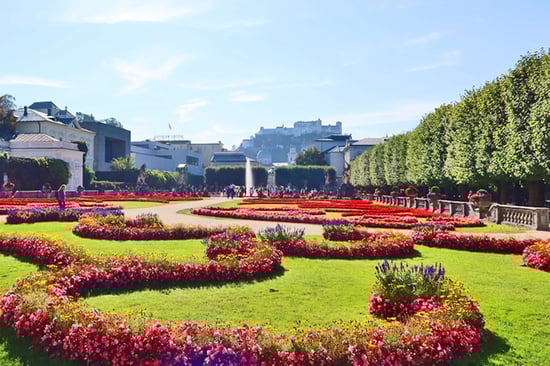
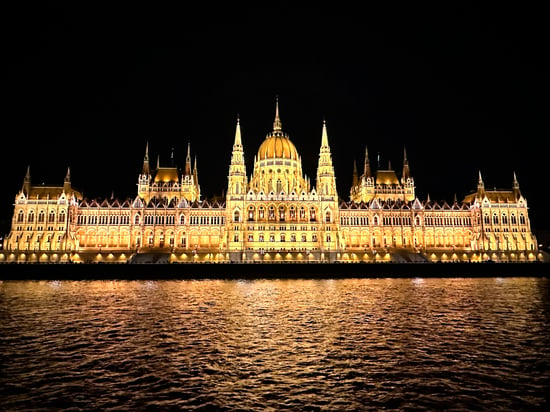
Check out the Jetset Seeker Blog!
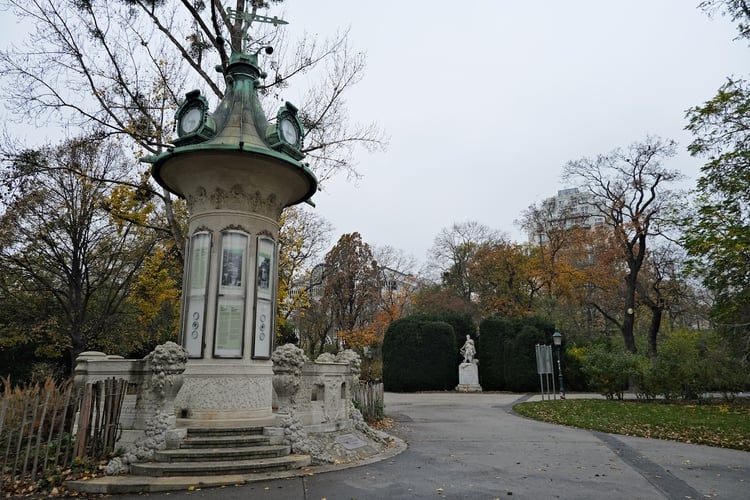
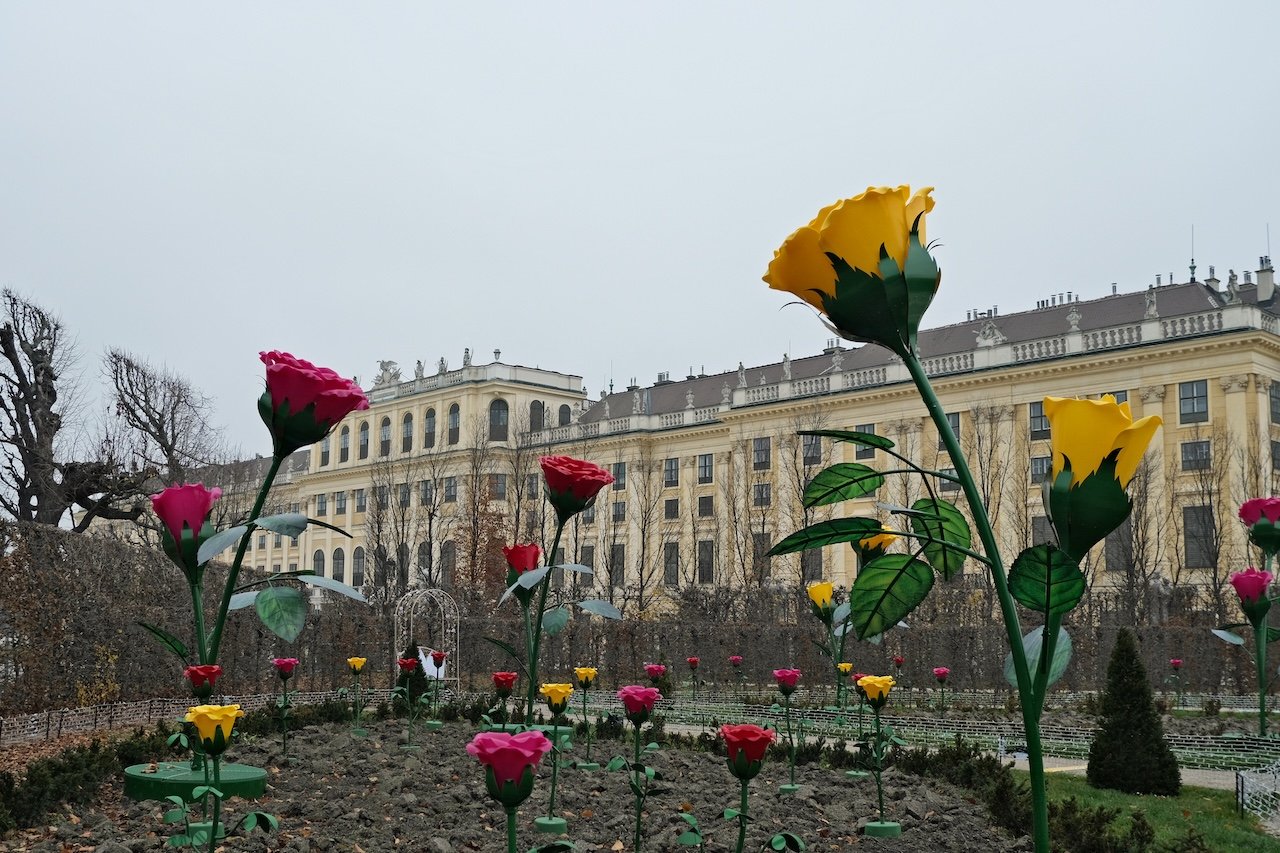
For our trip planning, we used Rick Steves Eastern Europe (9th Edition, July 2017), which was a helpful starting point for understanding Vienna’s history, key sights, and how to structure our itinerary.
While we’ve tailored this Vienna travel guide based on our own experience, Rick Steves is a great additional resource if you prefer having a physical guidebook to reference while planning your trip.
From when to visit, popular souvenirs, train information, and more, check out our Austria Travel Guide.