%20(1).png?width=3690&height=2079&name=Jetset%20Seeker%20Logo%20(Banner)%20(1).png)

24 min read.
Vienna is a city filled with churches, far more than most first-time visitors could realistically see in one trip. While some impress with grand façades and soaring towers, others reveal their beauty only once you step inside. The challenge is not finding churches in Vienna; it is knowing which ones are actually worth your time, especially if you are visiting Vienna for only a few days.
This guide focuses on the Vienna churches that leave the strongest impression, whether through architecture, history, or atmosphere. Rather than listing every option, I have narrowed things down to a carefully curated selection that gives first-time visitors a meaningful introduction to the city without feeling rushed or overwhelmed. If you are still getting oriented, our Vienna Travel Blog offers a broader overview of neighborhoods, landmarks, and planning tips before diving into specific sights.
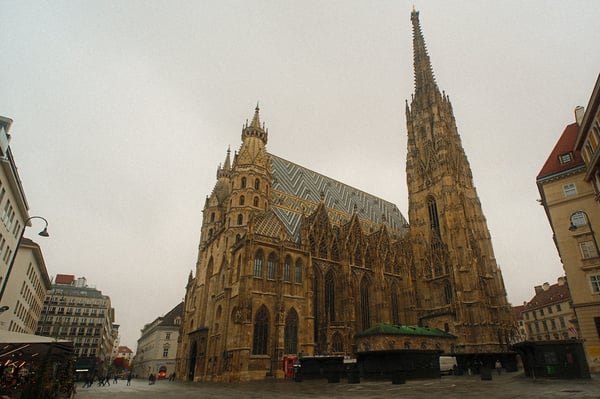
At the center of Vienna’s religious and cultural life is St. Stephen’s Cathedral, the city’s most iconic landmark and an essential stop on any first visit. From there, the Vienna churches featured in this guide fit naturally into a walk through the historic center, making them easy to combine with sightseeing, cafés, and nearby attractions. If you are planning your first trip to Vienna and want to experience the most memorable Vienna churches without overloading your itinerary, this guide will help you decide where to go.
Disclaimer: This blog post contains affiliate links. That means we may earn a small commission or receive compensation if you click on a link and make a purchase or take action - at no additional cost to you. These partnerships help support the content we create and maintain this website.
The Vienna Churches Worth Visiting
St. Stephen's Cathedral (Domkirche St. Stephan or Stephansdom)
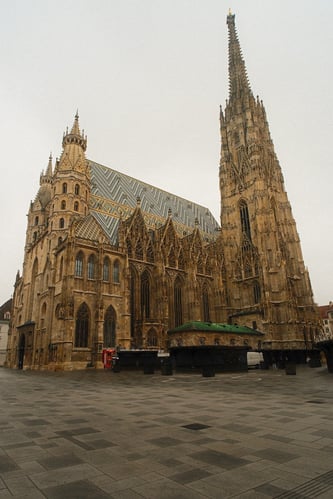
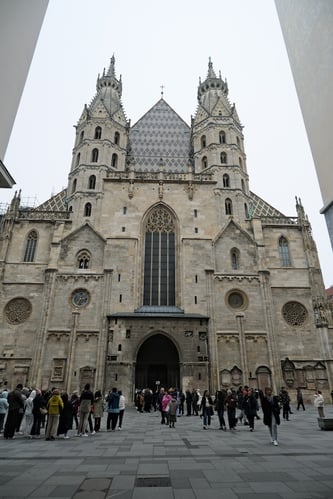
If you visit only have time to visit one of Vienna’s churches, it should be St. Stephen’s Cathedral. Rising above the historic center, this Gothic landmark is not just the most recognizable church in Vienna, it is one of the city’s most important reference points, both geographically and culturally. Nearly every first-time visit to Vienna naturally passes through Stephansplatz, making this an easy and essential stop. (Stephansplatz is also home to a small, but great Christmas market in the event that you are traveling to Vienna in November or December!)
A Brief History of St. Stephen’s Cathedral
Construction of St. Stephen’s Cathedral began in the 12th century, with much of its defining character shaped during the Gothic reconstructions and additions of the 14th century. Over time, the cathedral became a powerful symbol of Vienna itself, hosting royal events, religious ceremonies, and moments of national significance. Its endurance through centuries of upheaval gives it a gravity that is immediately felt once you arrive.
One small but striking reminder of Vienna’s turbulent past is embedded directly into the cathedral’s exterior: a cannonball left behind from the Ottoman sieges of the city. It is easy to walk past without noticing, but once you do, it serves as a tangible link to the periods when Vienna was quite literally under attack.
Architecture and Details to Notice
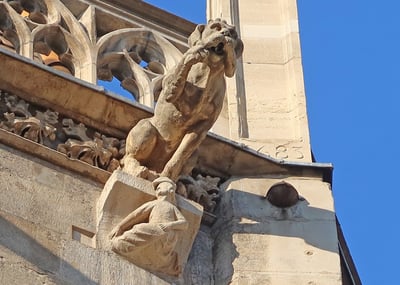
Architecturally, St. Stephen’s Cathedral is distinctly Gothic. The long nave, pointed arches, and soaring South Tower emphasize height and verticality rather than ornamentation. Compared to the Baroque churches in Vienna, the design feels heavier and more restrained, a reflection of its medieval origins.
The roof is one of the cathedral’s most recognizable features. Made up of more than 200,000 glazed tiles arranged in bold geometric patterns, it introduces an unexpected burst of color to the otherwise stone-dominated structure. From certain angles, the roof feels almost playful, creating a striking contrast with the cathedral’s imposing scale.
Visiting St. Stephen’s Cathedral Today
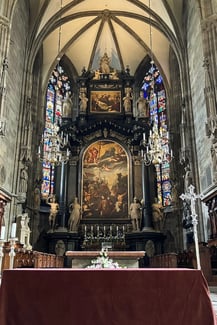
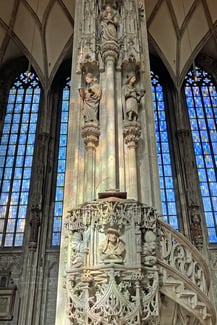
Inside, the atmosphere shifts noticeably. The space is darker and more subdued than many other Vienna churches, but that restraint adds to its sense of age and presence. The stained glass windows, many recreated after World War II, glow in beautiful shades of pastels that feel surprisingly modern against the Gothic backdrop.
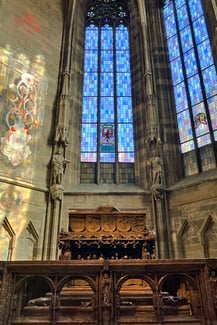
For visitors deciding what is worth paying for, St. Stephen’s Cathedral offers several optional experiences. While entry into the narthex is free (from which you can see part of the cathedral), access to the nave and other areas of the cathedral requires a paid ticket. Additional experiences include:
- Nave (Interior): Access to the main interior of the cathedral, where you can fully experience its Gothic scale, stained glass, and historic atmosphere. (A must-see!)
- North Tower: Accessed by elevator, this visit allows you to see the famous Pummerin Bell up close. (Personally, this is the one I would recommend if you choose one experience in addition to a visit to the nave.)
- South Tower: Reached by climbing 364 stairs, the reward is sweeping panoramic views over the city.
- The Catacombs: Visited only by guided tour, the catacombs lie beneath the cathedral and offer a sobering look at burial chambers holding the remains of bishops and members of Vienna’s former elite.
- Cathedral Museum: A collection of the church’s religious artifacts and access to the treasury.
Not all of these are must-dos on a short visit, and priorities will depend on your time and interests. If you would like help deciding what to prioritize during your visit, I walk through exactly what to see in my complete, in-depth St. Stephen’s Cathedral Vienna guide!
For the most up-to-date information on opening hours, ticket options, and tour times, check the official Domkirche St. Stephan website before your visit.
St. Stephen’s Cathedral also plays a central role in many Vienna itineraries, thanks to its location at the heart of the city’s pedestrian core. It is an easy starting point for exploring nearby streets, cafés, and historic landmarks, which is why it appears prominently in our Three Days in Vienna: The Perfect Vienna Itinerary.
As an introduction to Vienna’s churches, St. Stephen’s sets the tone. It provides historical context, architectural contrast, and a sense of place that makes the quieter churches you will visit next feel even more rewarding.
St. Peter's Church (Peterskirche)
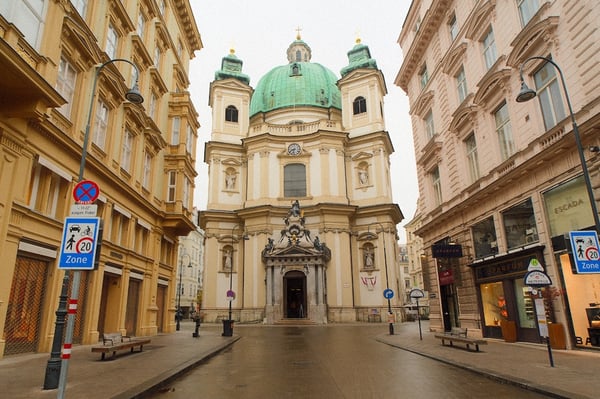
St. Peter’s Church offers one of the most dramatic interiors among Vienna churches, especially considering its relatively modest size. Tucked just off the Graben, this Baroque church is relatively easy to miss from the outside, but stepping inside is a completely different experience.
Why St. Peter’s Church Is Worth Visiting
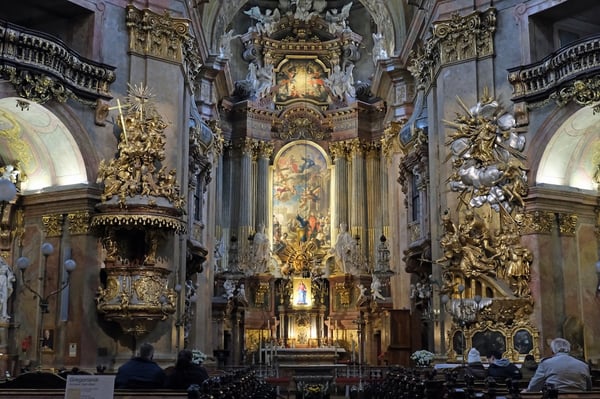
Unlike the Gothic restraint of St. Stephen’s Cathedral, St. Peter’s embraces full Baroque expression. The oval dome, gilded details, and richly colored frescoes create a sense of movement and warmth that immediately draws your eye upward. The interior feels intimate yet ornate, making it one of the most visually impressive church interiors in Vienna.
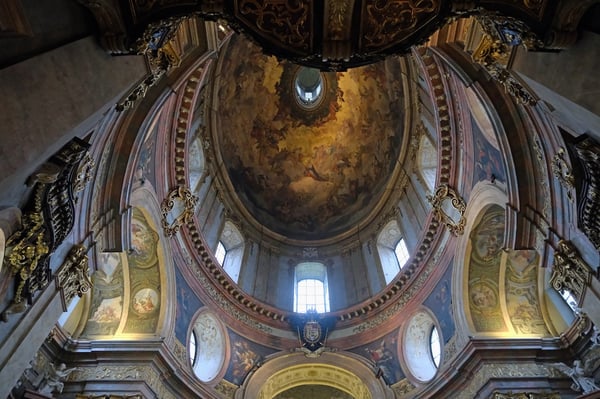
Thanks to its compact layout, St. Peter’s is an excellent option for first-time visitors who want a memorable church interior without committing a large chunk of their day. It is also one of the easiest Vienna churches to visit spontaneously. You can step inside, take it all in, and be back on the street in about 10 minutes.
Visiting St. Peter’s Church Today
Entry to St. Peter’s Church is free, which makes it an easy addition to a walk through Vienna’s historic center. It is particularly convenient to pair with time spent along the Graben or en-route between St. Stephen’s Cathedral and other nearby landmarks.
The church is also known for hosting classical music concerts, often featuring string ensembles. While attending a concert is not essential to appreciate the space, it is a nice option for travelers interested in experiencing Vienna’s musical tradition in a historic setting. Two concert options at St. Peter's Church are available to book through our affiliate partner, GetYourGuide.
As a contrast to St. Stephen’s Cathedral, St. Peter’s Church highlights the stylistic diversity found among Vienna churches and it is often the one visitors mention as a favorite simply because of how unexpected the interior feels.
St. Michael's Church (Michaelerkirche)
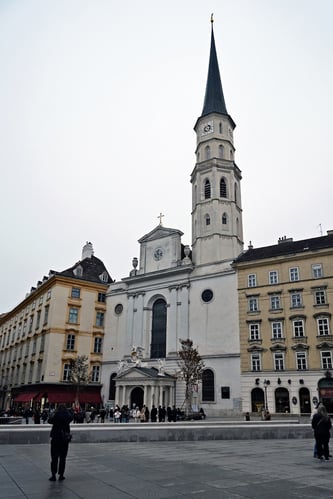
St. Michael’s Church is one of Vienna’s oldest churches, and that sense of age is felt immediately. Located on Michaelerplatz at the edge of the Hofburg complex, it is a place many visitors walk past without realizing just how much history is inside.
A Church Shaped by Centuries
Founded in the 13th century, St. Michael’s Church has evolved over time, resulting in a blend of architectural styles rather than a single cohesive look. Gothic elements sit alongside Baroque additions, reflecting centuries of renovation and changing tastes. This mix gives the church a lived-in, almost transitional quality. It is certainly less polished than St. Peter’s, but still deeply atmospheric.
The exterior, especially when viewed from Michaelerplatz, feels understated compared to nearby imperial buildings. Inside, however, the space opens into a calm, slightly shadowed interior that invites slower observation rather than immediate spectacle.
Architecture and Interior Highlights
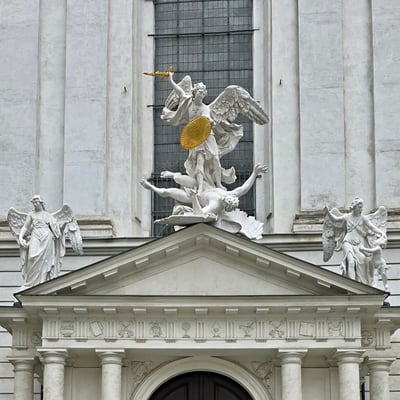
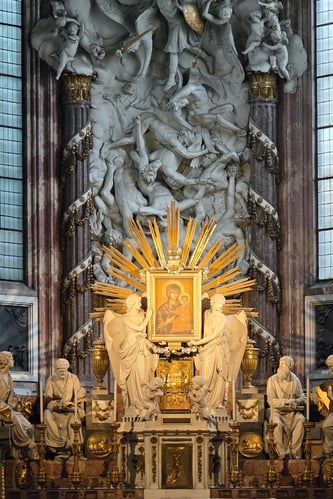
While the decoration here is more restrained than St. Peter's Church, there are plenty of details worth noticing. The high altar, sculptural elements, and layered architectural features reward visitors who take their time to stop inside. Compared to the ornate Baroque interiors elsewhere in Vienna, St. Michael’s feels quieter and more reflective.
Capuchin Church
At first glance, the Capuchin Church is easy to overlook. The exterior is modest, and the interior is simple by Vienna standards. That is intentional, and also part of what makes the experience that follows so striking.
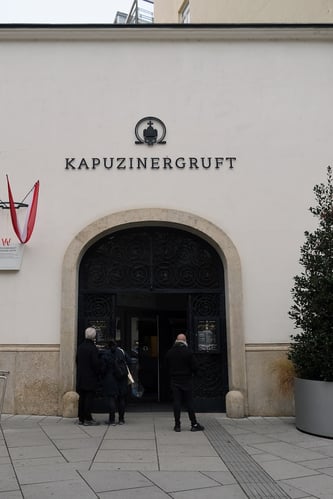
Why the Capuchin Crypt Is the Real Reason to Visit
Beneath the church lies the Capuchin Crypt, also known as the Imperial Crypt (Kaisergruft or Kapuzinergruft in German) or Habsburg Crypt, the final resting place of members the Habsburg dynasty. This is where 150 emperors, empresses, and members of Europe’s most powerful ruling family are buried.
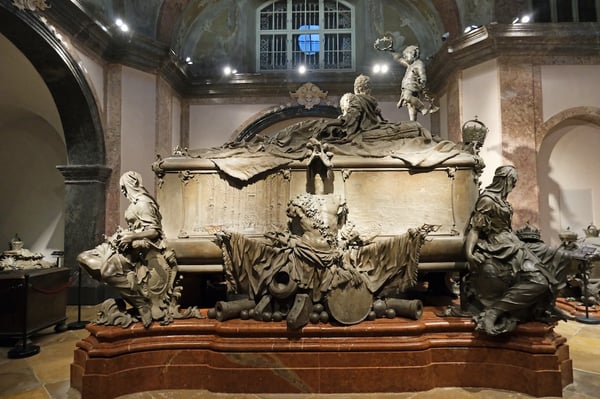
The crypt is anything but understated. It is filled with elaborately decorated sarcophagi, many crafted from bronze and adorned with crowns, skull motifs, coats of arms, and sculptural flourishes. Some are restrained, others almost theatrical, reflecting the status, personality, and era of the individuals they were made for. Walking through the crypt feels less like visiting a traditional burial site and more like stepping into a subterranean gallery of imperial propaganda.
An Over-the-Top Expression of Imperial Vienna
What makes the Imperial Crypt especially memorable is how unapologetically grand it is considering it is a crypt, afterall. These tombs were designed not just to mark a burial, but to project power, legacy, and permanence. The scale and ornamentation stand in sharp contrast to the simplicity of the church above.
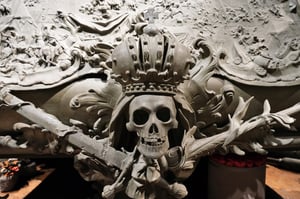
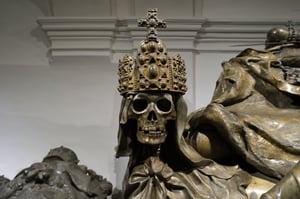
For first-time visitors, the crypt provides a visceral introduction to the Habsburgs, not through portraits or palace rooms, but through the way they chose to be remembered. It is a striking complement to the palaces in Vienna, and one of the most unique royal experiences in the city.
Visiting the Capuchin Church and Crypt
While the church itself can be visited quickly, the crypt requires a separate ticket and is best approached as a focused experience rather than a casual stop. It is well worth the time for travelers interested in imperial history, symbolism, and the more dramatic side of Vienna’s imperial past.
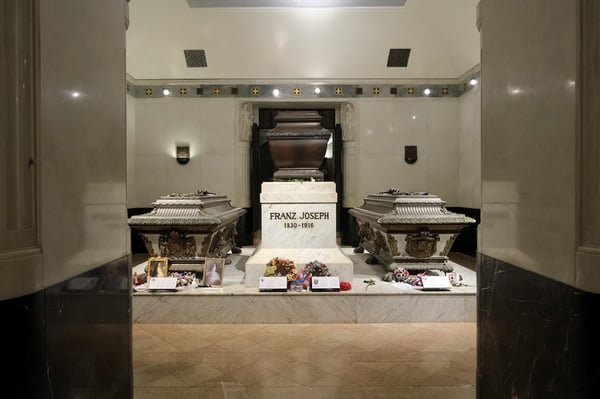
Among Vienna churches, this stop stands apart. It may not impress with soaring ceilings or frescoes, but the Habsburg Crypt delivers one of the city’s most unforgettable encounters with history.
If you prefer to plan ahead, tickets for the Habsburg Crypt can be booked online through our affiliate partner, GetYourGuide. One advantage of booking this way is the ability to pay in USD or your local currency instead of Euros, making it easier to know exactly what you are spending before you arrive. For more information regarding the Imperial Crypt, including admission cost and opening hours, please visit the Capuchin Crypt website.
Augustinian Church (Augustinerkirche)
The Augustinian Church feels different from many other Vienna churches, largely because of its strong connection to music. Located just behind the Hofburg Palace and steps from the Austrian National Library, this church is elegant and restrained. However, it is the sound, not the decoration, that often leaves the strongest impression.
A Church of Imperial Ceremonies
The Augustinian Church served as the court church of the Habsburgs, and its history is closely tied to imperial life in Vienna. Over the centuries, it hosted numerous royal weddings, including the marriage of Archduchess Marie Louise to Napoleon Bonaparte in 1810, a union that symbolized one of Europe’s most politically charged alliances.
Standing inside the church, it is easy to imagine the scale and significance of these events. The architecture is dignified rather than extravagant, allowing moments of ceremony, rather than decoration, to take center stage.
Music at the Center of the Augustinian Church
Music has long been central to the identity of the Augustinian Church. Its acoustics were carefully designed for music, and the church became an important venue for musical performances. In addition to space for an orchestra, the church has two organs. Composer Franz Schubert was closely connected to the church, and several of his works were first performed here, further cementing its place in Vienna’s musical history.
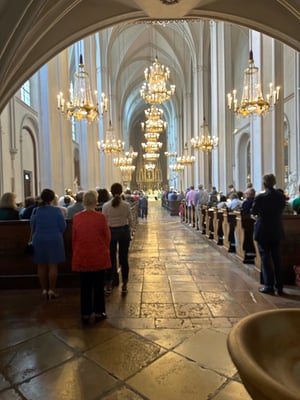
Experiencing Live Music During Sunday Mass
One of the most memorable ways to experience the Augustinian Church is during Sunday Mass at 11:00 AM when live music fills the space. This typically includes choral works, organ music, and a small orchestra.
For visitors, this offers a rare opportunity to experience Vienna’s musical heritage in an authentic setting. Even those who do not attend the full Mass often find that stepping inside while music is being performed becomes a highlight of their time in Vienna. Plus, as an added bonus, Sunday Mass is free to attend. (Although a small donation is appreciated.)
If you do visit the Augustinian Church for Sunday Mass, be sure to arrive early to get a seat. In the event that you need to leave before Mass finishes, I would recommend selecting an aisle seat in the rear of the church.
Visiting the Augustinian Church Today
Outside of Mass, the church is quiet and seldom visited compared to the more famous Vienna landmarks. Its location near the Hofburg Palace makes it easy to include in a walk through the historic center, especially when paired with nearby museums and or the Austrian National Library.
Among Vienna churches, the Augustinian Church stands apart not for visual excess, but for its atmosphere. Here, imperial history and music intersect, and for many first-time visitors, it becomes one of the most unexpectedly memorable stops in Vienna.
Practical Tips for Visiting Vienna Churches
Vienna's churches are active places of worship, not just historic landmarks, and a little awareness goes a long way in making your visit smooth and respectful.
When it comes to dress code, modest attire is recommended. Covered shoulders and pants or long skirts/dresses are generally sufficient, especially if you plan to visit multiple churches in one day. While dress code enforcement varies, dressing appropriately helps avoid any awkward moments.
It is also important to be mindful of Mass and posted guidelines. If Mass or another religious service is taking place, visitors are usually welcome to enter quietly, but you should return for traditional sightseeing after Mass has ended. Some churches may restrict photography entirely, while others ask that visitors refrain during from taking photos or videos during Mass. These requests should always be respected.
Approaching Vienna churches with patience and consideration not only shows respect, but also enhances the experience. The calmer and quieter you are, the more you will notice, whether it is music drifting through the space or small architectural details that are easy to miss when you are busy chatting with your travel companions.
Final Thoughts on Vienna Churches Worth Visiting
Vienna’s churches are more than architectural landmarks. They are a window into the city’s history, imperial power, and cultural identity. From an incredible Gothic cathedral and elaborate Baroque interiors to imperial burial sites, these Vienna churches reflect the layers of the city better than almost any other type of attraction.
For first-time visitors, the key is selectivity. You do not need to see every church in Vienna to appreciate their significance. Focusing on this small group of Vienna churches that are worth visiting allows each experience to feel intentional, whether you are drawn to grand architecture, royal history, or the quiet beauty of sacred music performed in its original setting.
Taken together, these Vienna churches pair naturally with a walk through the historic center and complement the city’s palaces, museums, and cafés. If you are planning your first trip, prioritizing a few meaningful church visits will give you a deeper sense of Vienna, not just as a destination, but as a city shaped by centuries of faith, empire, and art.
Join the Conversation 💬
If you have visited any of these Vienna churches, we would love to hear which one stood out to you most! Feel free to share your experience in the comments below. And, if you are planning a trip to Vienna (or dreaming of one), you can follow along on Instagram for more first-hand travel tips and inspiration.