%20(1).png?width=3690&height=2079&name=Jetset%20Seeker%20Logo%20(Banner)%20(1).png)
Many of the most well-known landmarks in Munich are clustered within a compact area of the Altstadt (Old Town), which means you can see a surprising amount of the city on foot with nothing more than a comfortable pair of walking shoes. Within a short walk, you can move from the crowds of Marienplatz and the iconic Glockenspiel at Neues Rathaus to historic sites like the Munich Residenz and tourist staples like Hofbräuhaus München.
At the same time, Munich is not limited to its Old Town. Munich landmarks like Nymphenburg Palace and BMW Welt offer a different perspective on the city and are well worth adding into your Munich itinerary.
If you are still in the early stages of planning your trip to Munich, we cover where to stay, what to do, and where to eat in our Munich Travel Guide.
In this post, we break down the must-see landmarks in Munich, how they fit together geographically, and which ones are actually worth prioritizing depending on how much time you have in the city.
Table of Contents:
- The 12 Best Landmarks in Munich
- Map of the Must-See Munich Landmarks
- FAQs About Landmarks in Munich
- Final Thoughts on Visiting the Must-See Landmarks in Munich
Disclaimer: This blog post contains affiliate links. That means we may earn a small commission or receive compensation if you click on a link and make a purchase or take action - at no additional cost to you. These partnerships help support the content we create and maintain this website.
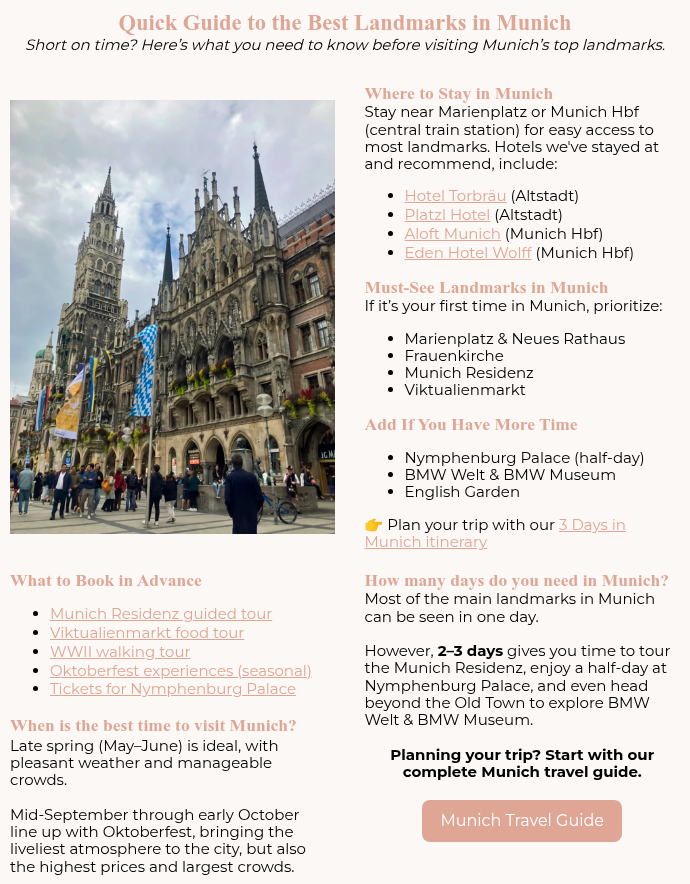
The 12 Best Landmarks in Munich
Most of the landmarks in Munich are located within or just beyond the Altstadt (Old Town), so I have organized this list in a way that roughly follows how you would experience the city as a first-time visitor. It starts at the edge of the Old Town and moves inward through the city’s most central sights before branching out to landmarks that require a bit more time or planning to visit.
1. Karlsplatz
For many first-time visitors, Karlsplatz is where Munich begins. Located just a short walk from München Hauptbahnhof (Munich Hbf, the city’s main train station), this large square marks the western edge of the Altstadt (Old Town) and serves as a natural entry point into the historic center.
The focal point of Karlsplatz is Karlstor, one of the original medieval city gates that once formed part of Munich’s defensive walls. The city's defensive walls were torn down starting at the end of the 18th century, to make way for a growing population and expanding city. Today, there are few reminders of the city's medieval fortifications, but a handful prominent gates remain including the gates here at Karlsplatz. (You will also spot preserved sections of the old city walls near the Isartor S-Bahn station, anchored by the Isar Gate (Isartor), as well as at Sendlinger Tor along the southern edge of the Altstadt.)
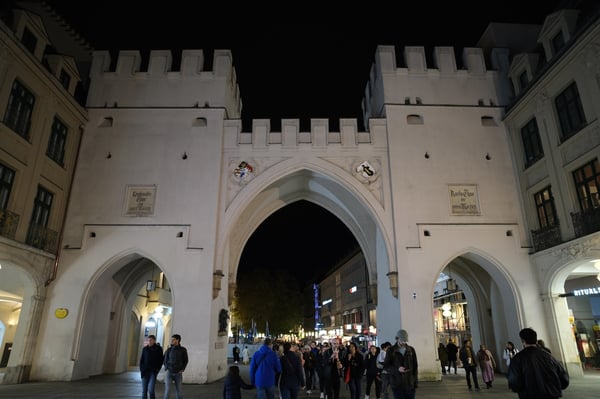
Karlstor stands as a clear visual marker of where the modern city gives way to the historic core. Passing through it, you move immediately into the pedestrian streets that lead toward Marienplatz.
Karlsplatz itself is often more of a transition point than a destination or formal landmark, but it is still worth taking a moment to pause. It gives you a clear sense of how the city is laid out and how easily the main landmarks connect, especially if you are planning to explore Munich on foot.
2. Marienplatz & Neues Rathaus
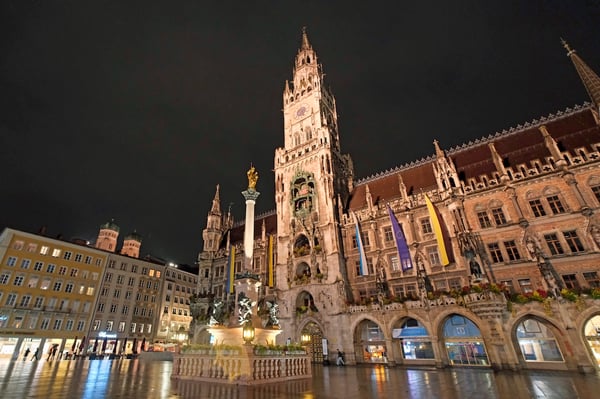
Marienplatz is the central square in Munich and the core of the city’s main tourist area. It has been Munich’s primary gathering place since the 12th century, and it remains one of the busiest parts of the city.
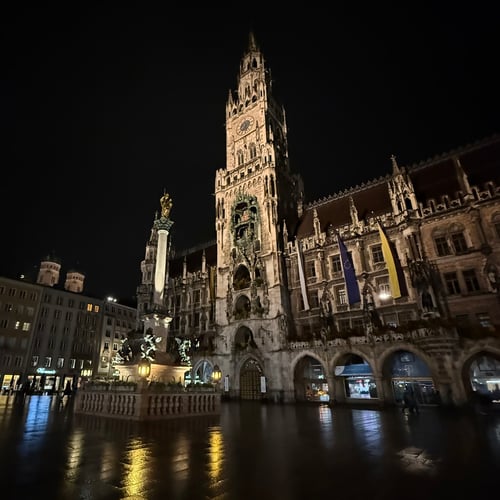
The square is best known for the Neues Rathaus, Munich’s New Town Hall, whose ornate Gothic Revival façade dominates the entire space. Completed in 1905, it is still home to Munich’s city government, but visitors come to see its grand exterior architecture. While the New Town Hall does not offer much for tourists (although there is an observation tower), you should take this opportunity to see the famous Glockenspiel.
Every day at 11:00 AM and 12:00 PM (as well as at 5:00 PM from March to October), crowds gather to watch the Glockenspiel. As we explain in our 3 Days in Munich Itinerary, the glockenspiel is effectively a giant cuckoo clock that reenacts scenes from Munich's history. The show lasts about fifteen minutes, and while it always draws a crowd, it is worth pausing to watch.
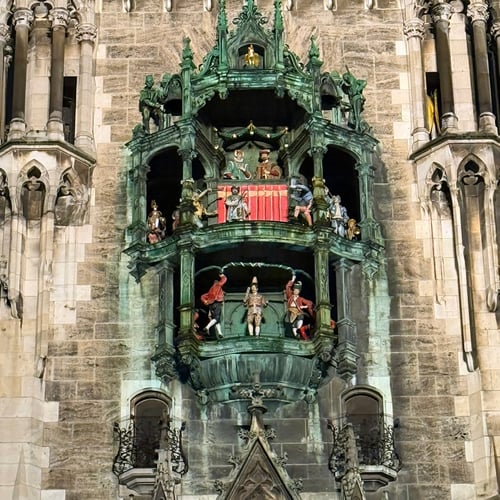
Beyond the Glockenspiel, Marienplatz serves as a useful reference point for navigating the Old Town. Many of Munich’s main pedestrian streets intersect here, and several of the city’s most well-known landmarks are just a short walk away. From the square, you can easily reach places like Viktualienmarkt, Frauenkirche, and the Munich Residenz.
Thanks to its central location, you will pass through Marienplatz more than once during your visit. Given its central location, staying near Marienplatz is one of the most convenient ways to experience Munich, especially if it is your first visit. You will be within walking distance of many of the city’s top landmarks, which makes it easy to get around without relying too much on public transportation.
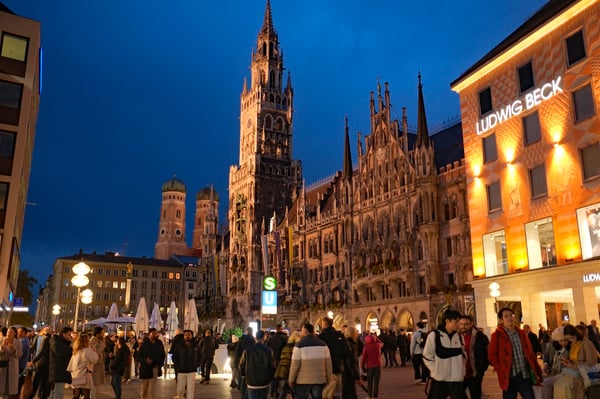
Two of our favorite hotels in Munich, Hotel Torbräu and the Platzl Hotel, are just a short walk from Marienplatz. However, if you are looking for additional options, you can check availability and pricing with our partner, Booking.com, below.
3. St. Peter's Church Munich
Just a short walk from Marienplatz, St. Peter’s Church is the oldest church in Munich and one of the best places to get a view over the city’s Old Town.
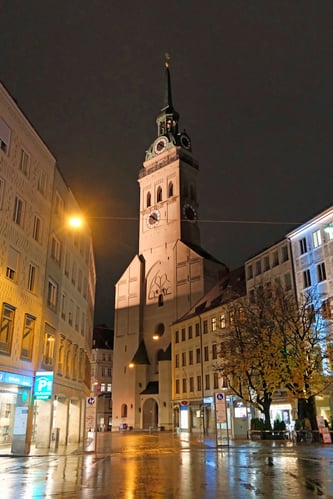
From the outside, it is relatively understated compared to Munich landmarks like the Frauenkirche or the Neues Rathaus, which makes it easy to walk past without giving it much thought. That was the case for us on multiple visits to Munich, where we have admired it from the outside but never made it up the tower. However, it is at the top of our list for the next time we are back in Munich!
The real highlight here is the view from the top of its nearly 300-foot tower, known as Alter Peter (Old Peter), which is often cited as one of the best views in the city. Climbing the tower gives you a clear perspective over Marienplatz and the surrounding rooftops, including a direct look at the Neues Rathaus from above. On a clear day, you can even see the Alps in the distance.
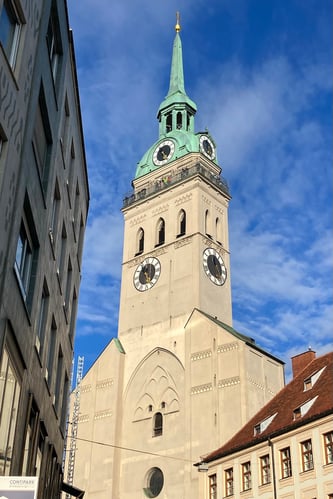
The climb itself is narrow and fairly steep, so it is not suited for everyone. Although, if you are comfortable with stairs, this is one of the best viewpoints in the city and worth adding into your plans.
4. Frauenkirche (Cathedral of Our Lady)
Of all the landmarks in Munich, none is more iconic than the Frauenkirche, or the Cathedral of Our Lady. Its twin onion-domed towers define the city’s skyline and are visible from across the Old Town, making it one of the easiest landmarks to recognize from a distance as you explore the city.
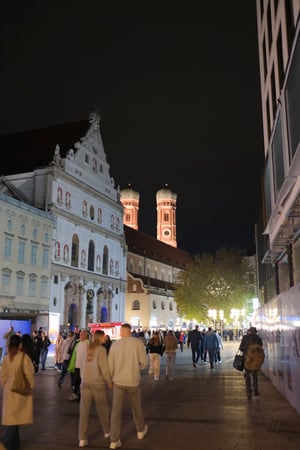
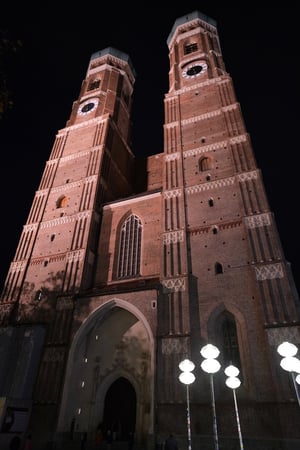
Originally built in the 15th century, the Frauenkirche serves as Munich’s cathedral and has long been one of the city’s most important religious sites.
While the exterior is what most visitors immediately notice, the interior is surprisingly simple compared to other cathedrals in Europe, with a more understated design. One of the more unusual features to look for is the Devil’s Footprint near the entrance, tied to a local legend about how the church was built. The cathedral is also closely associated with Pope Benedict XVI, who served as Archbishop of Munich and Freising before becoming pope.
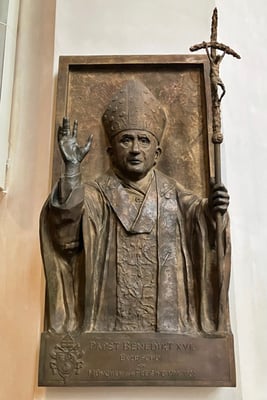
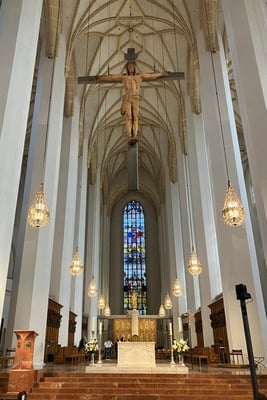
Thanks to its central location, the Frauenkirche is a Munich landmark that you will naturally walk past. Admission to the cathedral is free, making it an easy (and free) stop to include on your itinerary as you explore the Altstadt.

5. Viktualienmarkt
Located just a short walk from Marienplatz, Viktualienmarkt is a large open-air market made up of individual stalls spread across a central square. Viktualienmarkt has been a staple in Munich since the early 19th century, when the city’s main market was moved here from Marienplatz.
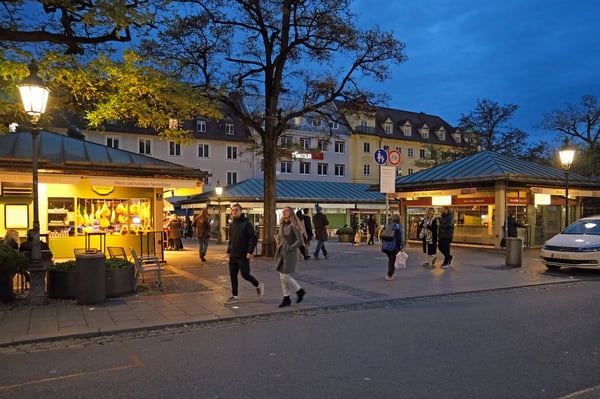
Today, you will find everything from fresh produce and meats to cheeses, baked goods, and local specialties, along with a number of stands selling ready-to-eat food.
There is also a central beer garden area, which is almost always busy, especially when the weather is nice and people are looking to spend time outdoors.
Viktualienmarkt an easy stop to add to your Munich itinerary, especially if you are moving between landmarks in the Old Town. You can grab something to eat, sit for a few minutes, and then continue on without needing to go out of your way. It is also one of our favorite spots for a quick, casual lunch when we are in Munich.
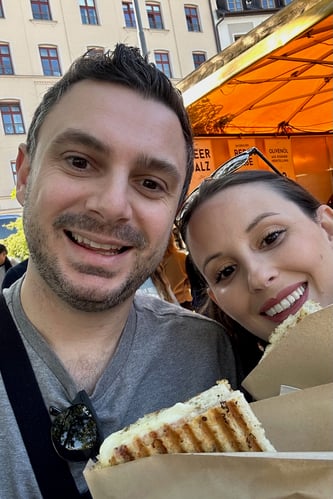
Viktualienmarkt is busiest on Saturday mornings and closed on Sundays, so be sure to plan your visit accordingly. If you want a more structured way to experience the famous market, joining a food tour is a great option.
6. Hofbräuhaus München
Located just a short walk from Marienplatz, Hofbräuhaus is one of the most famous beer halls in the world and an iconic stop for first-time visitors to Munich. It dates back to the late 16th century, when it was originally established as a brewery to supply beer for the Bavarian royal court, and has since become one of the most recognizable names in the city.
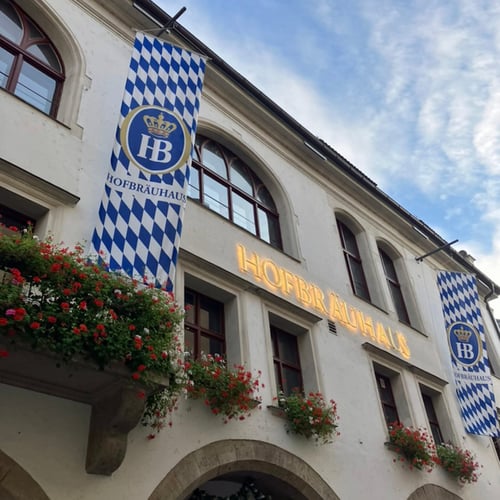
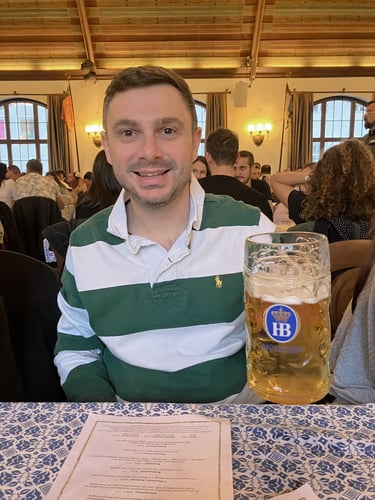
Hofbräuhaus is also one of the most popular places in the city amongst tourists. You are far more likely to find visitors here than locals, especially during peak travel seasons. That said, Hofbräuhaus is still worth experiencing at least once! The atmosphere, long communal tables, and traditional Bavarian music make it easy to understand why it has become such a well-known part of Munich.
If your trip does not overlap with Oktoberfest Munich but you still want to get a feel for it, Hofbräuhaus is one of the closest year-round alternatives, complete with live music. It is a great place to stop for a drink, and it is worth ordering food as well, whether that is a pretzel or half a roast chicken.
7. Munich Residenz
The Munich Residenz sits just north of Marienplatz, about a 5 to 10 minute walk through the Old Town. The Residenz was once the city palace of the Bavarian monarchs and is now one of the most historically significant landmarks in the city. What began as a modest royal residence in the 14th century eventually expanded into a sprawling complex of courtyards and grand halls, that reflects centuries of architectural styles and royal influence.
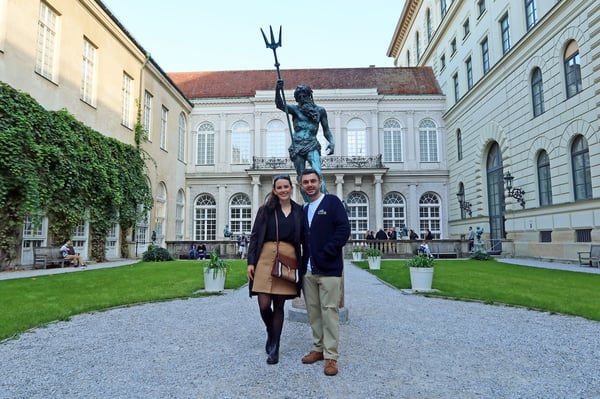
Some of the highlights inside the Residenz include the Antiquarium, a long Renaissance-era hall lined with frescoes and sculptures, the Shell Grotto Courtyard, which is decorated with intricate mosaics made from seashells, and the Ancestral Gallery, where portraits of the Wittelsbach dynasty line the walls. There is also a separate Treasury, which houses royal jewels, crowns, and other ceremonial objects.
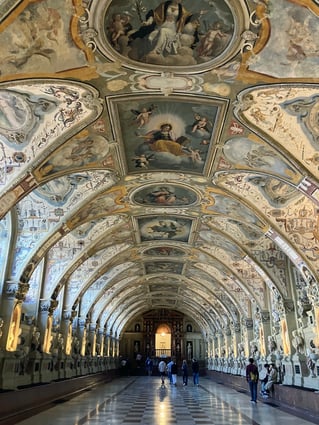
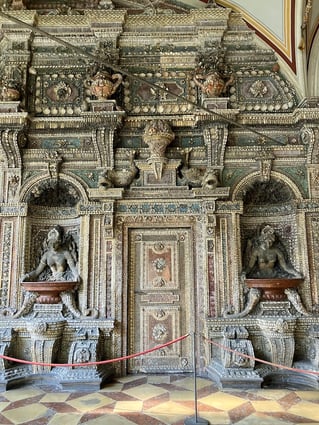
The Munich Residenz is the kind of place where you can easily spend a few hours if you choose to explore it in depth, especially if you plan to visit the palace, the Treasury, and the Hofgarten.
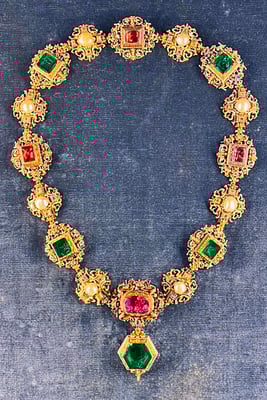
It is worth setting time side to visit the Munich Residenz, especially if you have an interest in history or architecture. It is a more immersive stop compared to many of the other Munich landmarks on this list and offers a look into the city's royal past.
With so much to see, visiting the Munich Residenz with a guided tour can make a big difference in understanding the history behind each room. You can check current availability for tours with our affiliate partner, GetYourGuide, below.
8. Odeonsplatz
Continuing north from the Munich Residenz, Odeonsplatz is one of the more recognizable squares in Munich, with a noticeably different feel from Marienplatz. The square is open, less crowded, and defined more by its architecture than by activity.
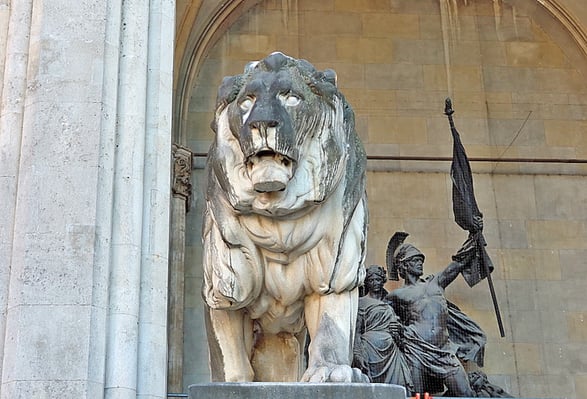
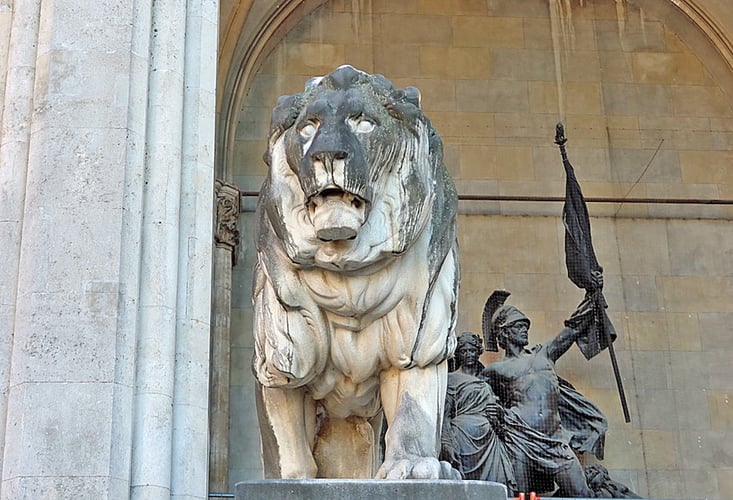
Odeonsplatz is framed by the Theatinerkirche, with its distinctive yellow façade, and the Feldherrnhalle, a loggia modeled after Florence’s Loggia dei Lanzi (located outside of Palazzo Vecchio in Piazza della Signoria). Together, they give this part of the city a slightly more formal, almost Italian feel compared to the other streets of the Old Town.
The Feldherrnhalle was originally constructed in the 19th century to honor the Bavarian army. However, the plaza and loggia are also tied to a darker part of the city's history. In 1923, the Feldherrnhalle was the site of the failed Beer Hall Putsch, an early event in the rise of the Nazi Party. A decade later, Hitler transformed the site into a memorial dedicated to the Nazis killed during the coup.
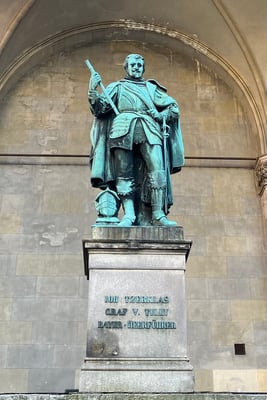
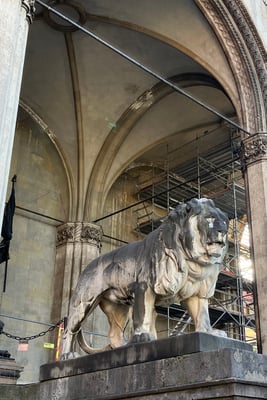
While there is no monument or plaque that directly acknowledges this dark period or the significance of the site to the Third Reich, its history remains an important part of understanding Munich.
Today, Odeonsplatz is also a natural transition point as you move through the city. From here, you are just a few minutes from the English Garden, making it an easy stop between the Altstadt and the city's larger, greener spaces.
If you are interested in learning more about Munich’s role in World War II and the rise of the Nazi Party, this is something we would strongly recommend exploring in more depth. A guided walking tour can provide important context and help connect many of the sites throughout the city. You can check availability for World War II walking tours below.
9. English Garden Munich
Just past Odeonsplatz, the English Garden is one of the largest urban parks in Europe, which is part of what makes it such a defining landmark in Munich. The expansive park stretches for miles through the city, but most visitors will only see a small portion of it, usually near Odeonsplatz and the southern entrance to the park.
One of the most famous spots in the park was the Eisbach wave, where surfers lined up to ride a standing wave in the middle of the landlocked city. The wave disappeared in November 2025 after the city dredged the river, but it remains one of the more unique aspects of Munich that many visitors still associate with the English Garden.
Farther into the park, you will find plenty of walking paths, open green spaces, and even a beer garden, including the Chinesischer Turm Biergarten (Chinese Tower Beer Garden), which is one of the largest in the city. The beer garden is a great place to spend a sunny afternoon, especially if you are looking to slow down after a morning of sightseeing through the Old Town.
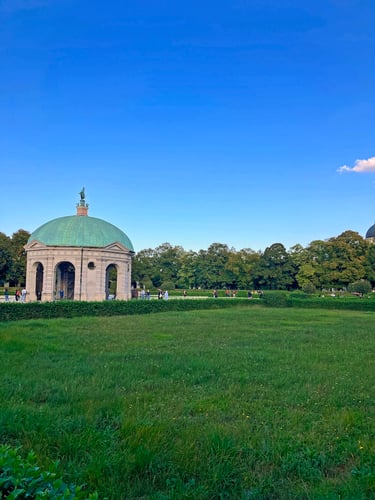
Due to its size, the English Garden is not something you will see in its entirety. However, if you are short on time, the nearby Hofgarten is a smaller, more formal garden located just behind the Munich Residenz. The Hofgarten is a quicker stop and an easy alternative if you do not have time to explore the English Garden.
10. Nymphenburg Palace
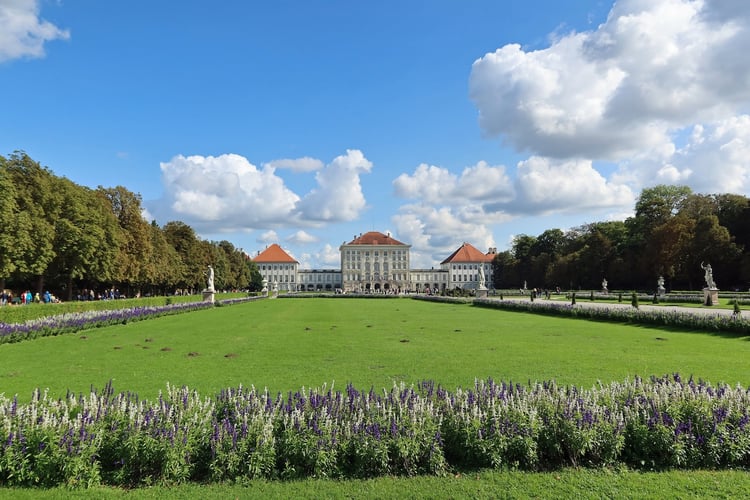
Located a few miles west of the city center, Nymphenburg Palace is one of the most impressive landmarks in Munich. Originally built in the 17th century as a summer residence for the Bavarian rulers, the palace complex reflects the scale and wealth of the dynasty that once lived here.
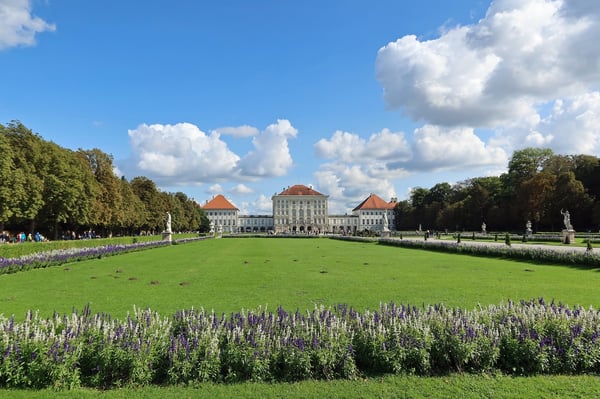
The main palace is certainly worth visiting, with large ceremonial rooms and ornate interiors, but what sets Nymphenburg Palace apart is everything beyond it. The grounds extend far behind the palace and consist of formal gardens, a long canal, and a series of smaller palaces (pavilions), each with its own distinct design. There are also several museums on site, including the Marstallmuseum (Carriage Museum) and the Porcelain Museum.
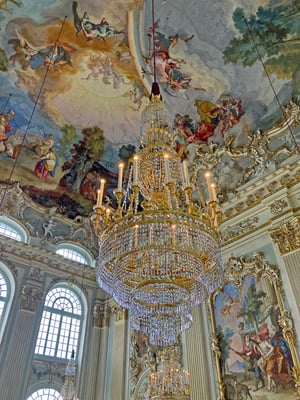
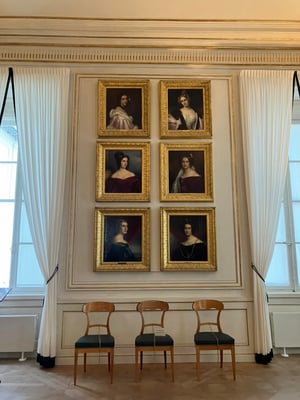
Since there is so much to see at Nymphenburg Palace, this is not a quick stop. You should plan to spend at least half a day here if you want to explore both the palace and the surrounding grounds without rushing. If you are planning ahead, we put together a dedicated guide to visiting Munich Nymphenburg Palace, including what not to miss and how to book tickets in advance of your visit.
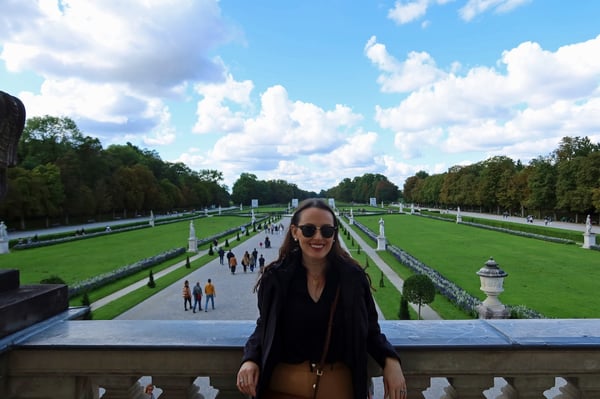
Given its distance from the Old Town and how much there is to see on the palace grounds, Nymphenburg Palace is best treated as a dedicated part of your itinerary rather than something to fit in between other landmarks.
11. BMW Welt & BMW Museum
Located north of the city center near Olympiapark, BMW Welt and the BMW Museum offer a more modern side of the city that contrasts with the historic landmarks in Munich.
BMW Welt is the more accessible of the two sites and is free to enter. The space functions as both a showroom and exhibition hall, where you can see current BMW models up close, along with interactive displays and rotating exhibits. Even if you are not particularly interested in cars, the architecture of the building itself is worth seeing.

Across the street, the BMW Museum takes a deeper look at the brand’s history, with exhibits that cover everything from early vehicles to concept designs and motorsports. It is a more traditional museum experience and requires a paid ticket, but it is well done and worth visiting if you have an interest in automotive history or design. The museum is very family-friendly, so if you are traveling to Munich with children, it is well worth adding the BMW Museum to your itinerary.
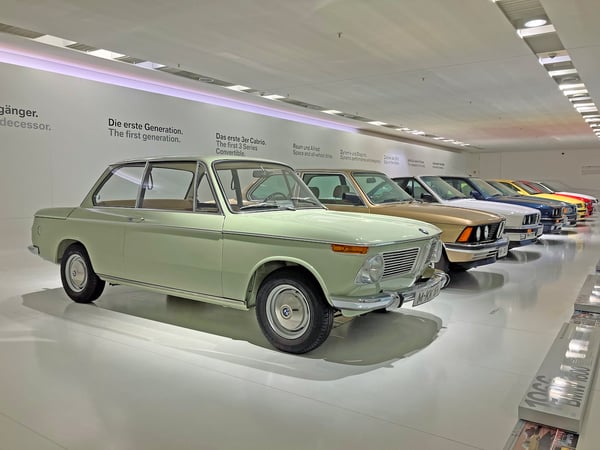
Next door to the BMW Museum, the brand's headquarters is hard to miss. Its distinctive design is meant to resemble a four-cylinder engine, making it one of the most recognizable modern landmarks in Munich.
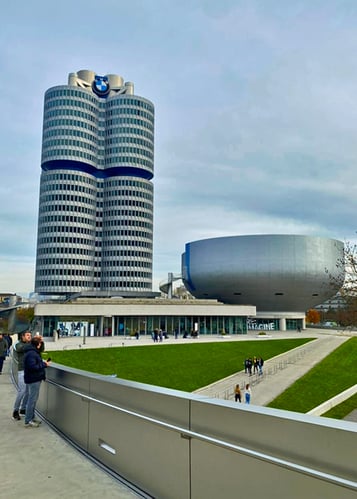
Since these two sites are located slightly outside the main tourist area, they are best visited together and combined with a stop at nearby Olympiapark. This makes for a well-paced half-day, especially if you are looking to see a different side of the city.
12. Theresienwiese
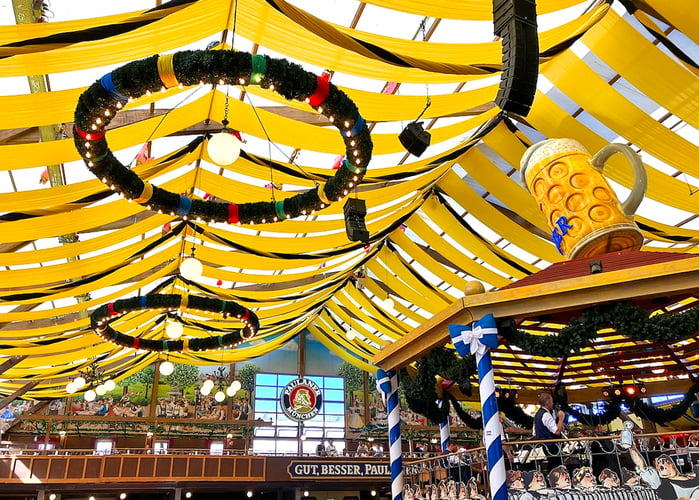
Located southwest of the city center, Theresienwiese is best known as the site of Oktoberfest, the world’s largest beer festival. During the festival, the entire area transforms into a massive fairground filled with beer tents, rides, and food stands.
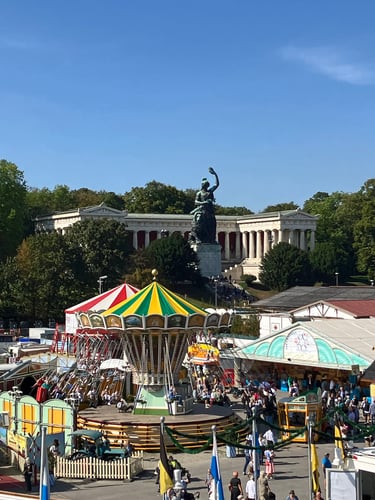
Outside of Oktoberfest, Theresienwiese is a large open field that can feel surprisingly quiet compared to the rest of the city. At the edge of the grounds stands the Bavaria statue, a large bronze statue overlooking the site.
If you are planning a trip to Munich during Oktoberfest, this is where you will likely spend a significant amount of time. If not, it is still an easy stop to add to your itinerary if you are curious about one of Munich’s most well-known events.

Map of the Must-See Munich Landmarks
To give you a better sense of how these landmarks are laid out across the city, I have included a map below with all 12 locations, plus some other Munich landmarks and important locations mentioned throughout this post. You will notice that many of the main sights are clustered within the Old Town, while a few others require a short trip outside the city center.
FAQs About Munich Landmarks
Planning your visit to Munich? Here are a few commonly asked questions to help you make the most of your time exploring the city’s top landmarks.
What are the most famous landmarks in Munich?
Marienplatz, Frauenkirche, the Munich Residenz, and Nymphenburg Palace are among the most well-known landmarks in the city.
Can you walk to most landmarks in Munich?
Yes, most major landmarks are located within Munich's Old Town and can be easily reached on foot, especially if you are staying in the Old Town. However, for landmarks like the Nymphenburg Palace and BMW Welt, you will want to rely on public transportation.
To reach Nymphenburg Palace, most visitors need to take the tram, which is straightforward and easy to use. Munich’s U-Bahn system is also efficient, and together with the tram network, makes getting around the city easy, if you are venturing beyond the Old Town.
Is one day enough to see Munich’s landmarks?
One day is enough time to see the main highlights, but 2–3 days allows you to explore more fully, including sites outside the city center.
What is the best time to visit Munich?
Late spring (May–June) and early fall (September–early October) offer the best combination of weather and manageable crowds. Late September through early October also coincides with Oktoberfest, which is the most popular time to visit the city (and the most expensive).
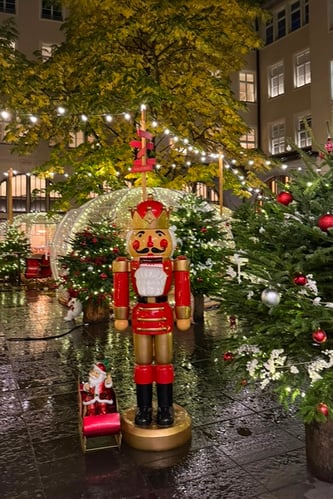
Alternatively, we really enjoy visiting Munich in November. The city begins to transition into the holiday season, Christmas markets start to open, and the autumn foliage is still visible in many areas. It is an especially nice time to visit if you are planning a Neuschwanstein Castle day trip, where the fall colors can really enhance the experience.
Are things closed on Sundays in Munich?
Yes, many shops and markets are closed on Sundays in Munich, including Viktualienmarkt. However, most major landmarks, museums, and restaurants remain open, so it is still a good day for sightseeing.
Keep in mind that the BMW Museum is closed on Mondays, while BMW Welt is open daily, so try to avoid planning your museum visit for a Monday if it is a priority during your time in Munich.
Final Thoughts on Visiting the Must-See Landmarks in Munich
Munich is a city that is easy to navigate and it offers more variety than you might expect, especially once you start exploring. Many of the most recognizable landmarks in Munich are clustered within the Altstadt, making it possible to see a lot in a short period of time. At the same time, must-see Munich landmarks like Nymphenburg Palace and the English Garden show a different side of the city that is well worth exploring.
If it is your first time visiting Munich, focusing on the landmarks in the Old Town is a great starting point, with options to expand your itinerary depending on how much time you have. Whether you are planning a quick visit or a longer stay, these landmarks provide a solid foundation for experiencing the city.
If you are in the early stages of planning your trip to Munich, be sure to check out our Munich travel guide for a more detailed breakdown of neighborhoods, things to do, and restaurant suggestions to help you make the most of your trip.
We’d Love to Hear From You!
Have you visited Munich, or are you planning a trip? Let us know in the comments below which Munich landmarks you’re most excited to see, or if there’s anything you’d add to the list.