%20(1).png?width=3690&height=2079&name=Jetset%20Seeker%20Logo%20(Banner)%20(1).png)
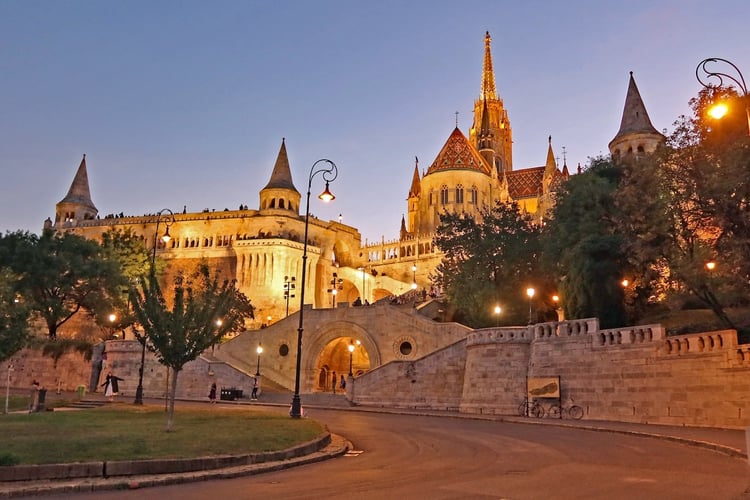
Budapest's Jewish Quarter, located in District VII (also known as Erzsébetváros), is one of the most dynamic and culturally rich neighborhoods in the city. Known for its historic synagogues, vibrant ruin bars, and thriving food scene, the Jewish Quarter Budapest offers a unique blend of past and present that you will not find anywhere else in the city.
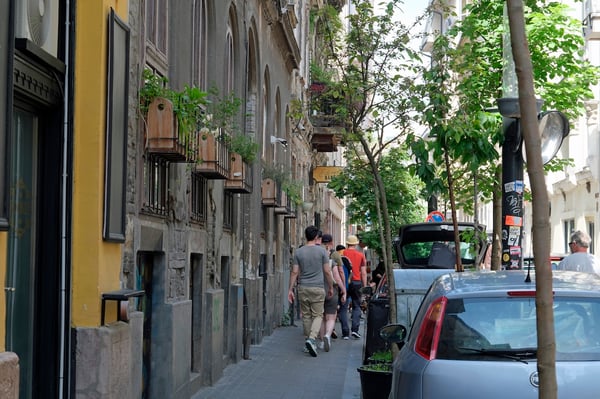
Whether you are visiting Budapest for the first time or returning to explore more deeply, this neighborhood is a place where history, nightlife, and local culture intersect. In this guide, I will walk you through the top things to do, where to stay, and what makes the Jewish Quarter Budapest such an essential stop on any itinerary.
For a more complete overview of the city, including where to stay and how to plan your trip, be sure to explore our Budapest Travel Guide.
Table of Contents:
- What Is the Jewish Quarter in Budapest?
- Best Things to Do in the Jewish Quarter Budapest
- Tips for Visiting the Jewish Quarter Budapest
- Where to Stay in the Jewish Quarter Budapest
- Is the Jewish Quarter Budapest Worth Visiting?
Disclaimer: This blog post contains affiliate links. That means we may earn a small commission or receive compensation if you click on a link and make a purchase or take action - at no additional cost to you. These partnerships help support the content we create and maintain this website.
What is the Jewish Quarter in Budapest?
Budapest’s Jewish Quarter, located in District VII (Erzsébetváros), is the historic center of Jewish life in the city and one of its most culturally significant neighborhoods. Before World War II, Hungary was home to one of the largest Jewish communities in Europe. Jewish Hungarians were deeply ingrained in society, contributing to the country’s cultural and economic life, and made up roughly 5% of the country's population and nearly a quarter of Budapest’s residents.
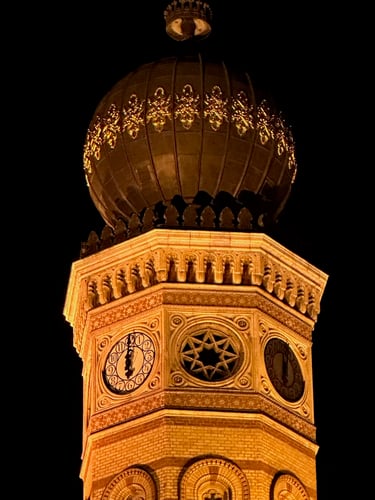
In the late 19th and early 20th centuries, the Jewish Quarter Budapest was a thriving hub of culture, religion, and daily life, anchored by landmarks like the Dohány Street Synagogue (also called the Great Synagogue), the largest synagogue in Europe. That changed dramatically during World War II, when Hungary allied itself with Nazi Germany and anti-Jewish laws intensified. In November 1944, the neighborhood was designated as the Jewish Ghetto, where tens of thousands of Jewish Hungarians were forced to live in overcrowded and inhumane conditions.
As deportations to concentration camps accelerated, many were sent to Auschwitz, while others perished within the ghetto itself due to starvation, disease, and violence.
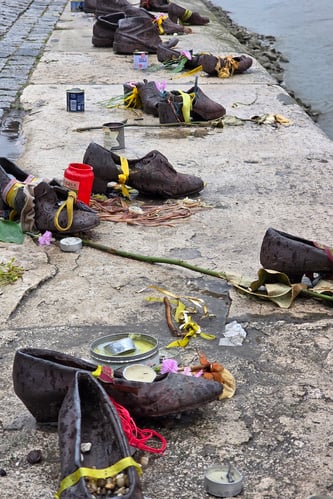
Others were executed by the Arrow Cross Party along the banks of the Danube, a tragedy commemorated today by the solemn Shoes on the Danube Bank memorial near the Hungarian Parliament (shown above). By the end of the war, much of this once-thriving community had been destroyed, leaving a somber legacy that still shapes the neighborhood today.
The Jewish Quarter Budapest Today
Today, the Jewish Quarter reflects both its difficult history and its modern revival, where memorials and historic sites exist alongside ruin bars, cafés, and some of the city’s best restaurants. Budapest is also still home to the largest Ashkenazi Jewish community in continental Europe, with an estimated population of 80,000 to 120,000, many of whom continue to call the Jewish Quarter home.
Understanding the history of the Jewish Quarter Budapest adds an important layer to any visit, but today, it is also one of the most dynamic and vibrant neighborhoods in the city. From historic landmarks to incredible restaurants and the iconic ruin bars, there is no shortage of things to see and do.

Best Things to Do in the Jewish Quarter Budapest
The Jewish Quarter Budapest is home to some of the city’s most important landmarks, along with a mix of cultural sites, restaurants, and nightlife that make it one of the most exciting areas to explore. Whether you are interested in history, food, or simply looking to experience the atmosphere of the neighborhood, there are plenty of things to do in the Jewish Quarter Budapest for every traveler.
Visit the Dohány Street Synagogue
No visit to the Jewish Quarter Budapest is complete without seeing the Dohány Street Synagogue, also known as the Great Synagogue. As the largest synagogue in Europe and one of the most significant Jewish landmarks in the world, it stands as both an architectural masterpiece and a powerful reminder of the city's history. Visiting the Dohány Street Synagogue is also easily one of the top 10 things to do in Budapest, and alongside St Stephen's Basilica Budapest, it is one of the two religious sites you should prioritize during your visit.
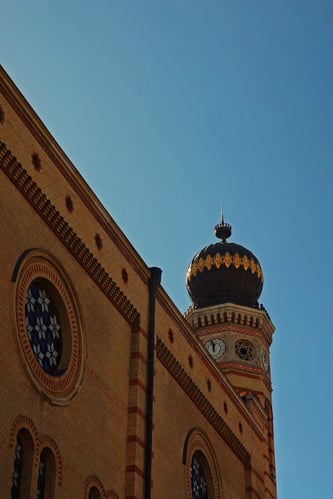
Completed in 1859, the synagogue features a distinctive Moorish Revival design, with twin towers and an intricately decorated interior that sets it apart from both traditional European churches and synagogues.
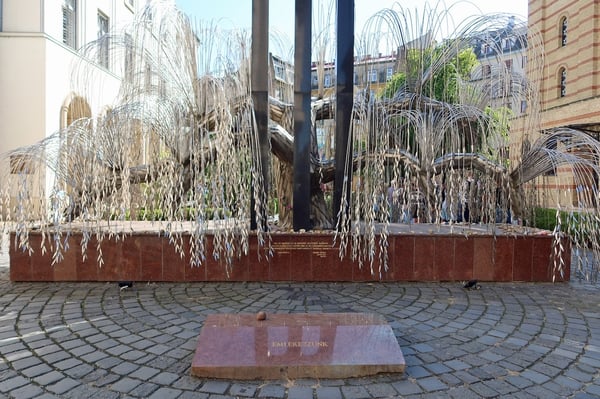
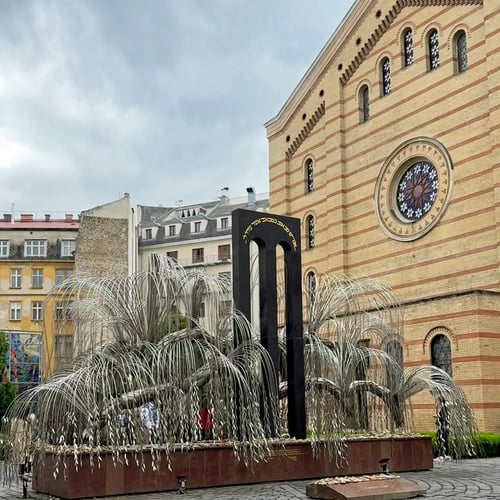
The complex also includes the Jewish Museum, the Raoul Wallenberg Memorial Park, and the poignant Tree of Life memorial. Visiting these spaces can be an emotional experience, as they reflect the atrocities of World War II and honor the lives lost during the Holocaust.
As an active house of worship, visitors are expected to dress respectfully. Men are required to cover their heads, though yarmulkes are available on-site. It is also important to note that the synagogue is closed on Saturdays (the Jewish Sabbath) and on Jewish holidays, so plan your visit accordingly.
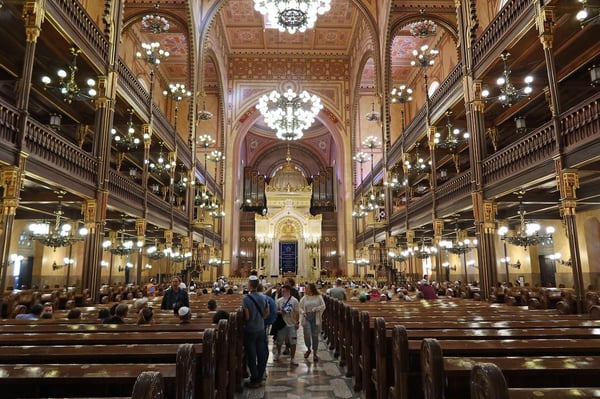
I highly recommend booking a guided tour of the synagogue to gain a better understanding of Budapest's Jewish community. Tours of the Dohány Street Synagogue and the Jewish Quarter Budapest are available through our affiliate partner, GetYourGuide.
Tickets for the Dohány Street Synagogue can be purchased on-site. For additional information and the most up-to-date opening hours, please visit the Dohány Street Synagogue website.
Experience the Ruin Bars
One of the defining features of the Jewish Quarter Budapest is its ruin bars, which were constructed inside buildings that were left vacant and in disrepair (or ruin, hence the name "ruin bars") after World War II. Rather than being restored in a traditional sense, many of these dilapidated spaces were repurposed into bars, creating a style that is now uniquely associated with Budapest.
The most well-known of these ruin bars is Szimpla Kert, the original ruin bar. Spread across multiple rooms and a courtyard, it is known for its eclectic interiors, vintage furnishings, and live music. Szimpla Kert is also open during the day, making it easy to stop by as you explore the Jewish Quarter in Budapest. Visiting, even for a short time, allows you to experience the unique space, grab a drink or something to eat, and avoid the inevitable crowds later in the evening.
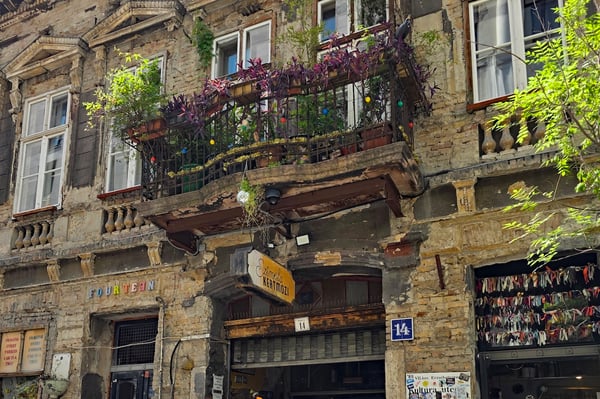
While Szimpla Kert is the most famous ruin bar, there are a handful of other ruin bars in the neighborhood, although not all of them offer the same experience. Instant-Fogas offers more of a night club experience, while Mazel Tov functions more as a restaurant within a courtyard setting than a traditional ruin bar. For most visitors, seeing Szimpla Kert alone is enough to understand the concept and experience one of the most distinctive aspects of the Jewish Quarter Budapest.
If you are interested in seeing more of the ruin bars in the Jewish Quarter Budapest or prefer exploring with a larger group, consider booking a bar crawl. Several guided bar crawl options are available through our affiliate partner, GetYourGuide, offering a convenient way to experience the best of Budapest's nightlife and meet fellow travelers.
Explore the Food Scene in the Jewish Quarter
The Jewish Quarter Budapest has become one of the city's top foodie neighborhoods, known less for the traditional Jewish cuisine one might expect and more for its diverse and evolving food scene. Within just a few blocks, you will find everything from classic Hungarian restaurants to trendy cafés, casual street food spots, and ruin bar-style dining spaces.
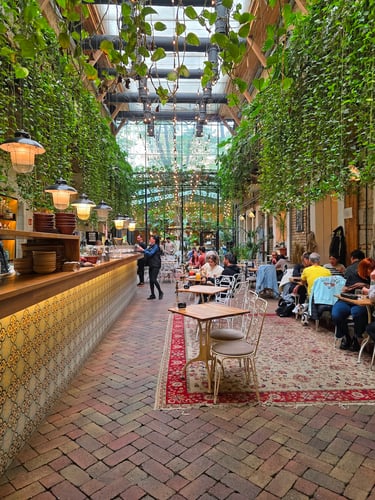
One of my favorite spots in the neighborhood is Mazel Tov, a lively restaurant set within an enclosed courtyard, providing an almost greenhouse-style feel. The restaurant is known for its Mediterranean and Middle Eastern-inspired menu.
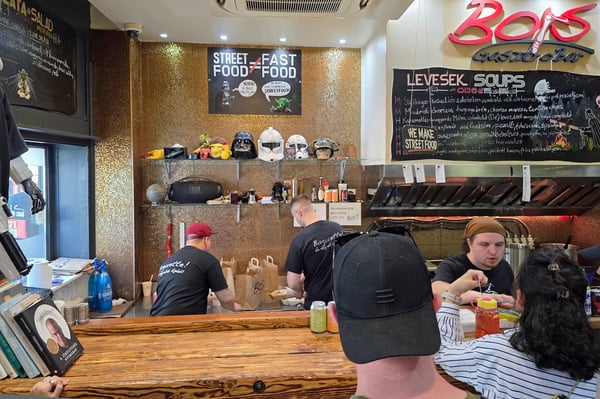
For a more local experience, Bors GasztroBár is well worth a stop. Known for its creative soups and sandwiches, it offers a modern take on hearty, comforting flavors that reflect the city’s rich food heritage.
Several of our favorite restaurants in Budapest are located in or near the Jewish Quarter, and if you are looking for more recommendations, be sure to check out our guide to the top Budapest restaurants for every budget, where we highlight a mix of fine dining, casual options, and other favorites.
Food Tours in Budapest
If you prefer a more structured introduction to the Jewish Quarter Budapest and the local food scene, we recommend booking a guided food tour. We personally did this Budapest food tour through GetYourGuide and found it to be one of the best ways to experience Budapest’s food scene, especially for first-time visitors. If that option is unavailable, or you are looking for something slightly different, there are several other highly rated food tours in Budapest available through GetYourGuide as well.
Walk Through the Jewish Quarter Budapest
One of the best ways to experience the Jewish Quarter Budapest is simply by walking through it. Many of the neighborhood's most interesting sights are located within a few blocks of one another, making it easy to explore on foot at your own pace.
Start Along Kazinczy Street
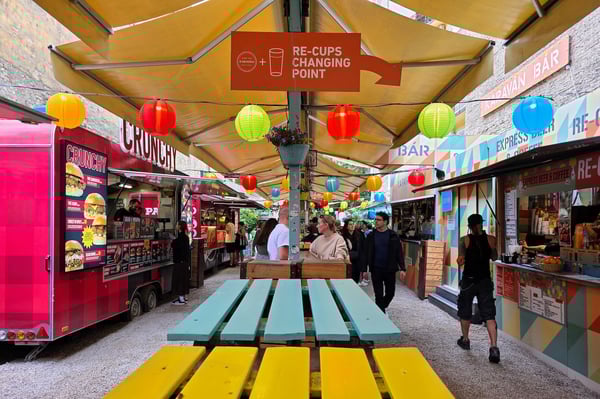
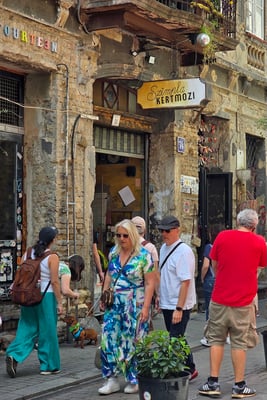
Kazinczy Street is one of the most well-known streets in the Jewish Quarter Budapest and a great place to begin your walk. Along this stretch, you will find several of the neighborhood’s most notable spots, including Szimpla Kert, the Kazinczy Street Synagogue (Orthodox Synagogue), and Street Food Karaván Budapest, along with a mix of cafés, bars, independent boutiques, and restaurants.
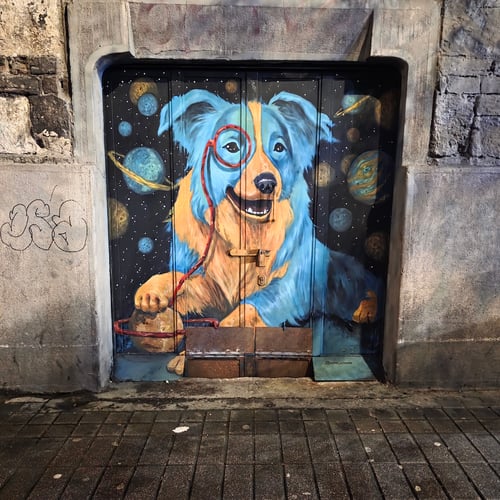
Look for Murals and Street Art
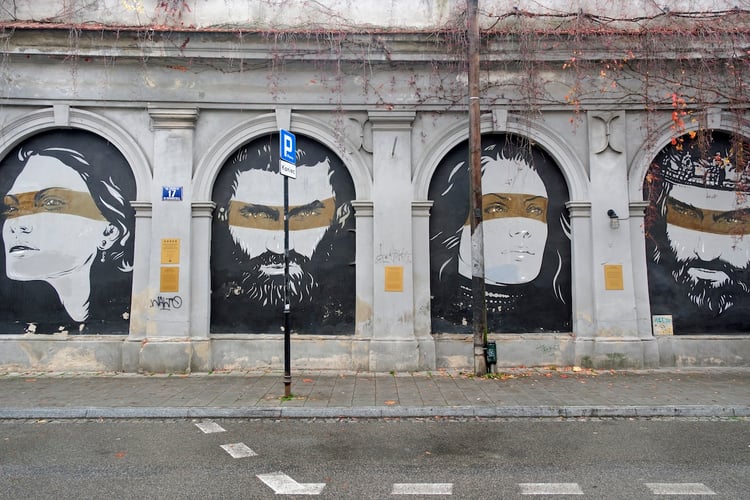
As you continue through the surrounding streets, you will come across colorful street art and murals, tucked between buildings or along quieter side streets. The street art often reflects Budapest’s culture and history in a more modern, expressive way.
Holocaust Memorials and Reminders of the Neighborhood’s Past
The neighborhood, of course, is also home to small, but meaningful reminders of the neighborhood’s past. Throughout the Jewish Quarter, you may notice “stumbling stones,” set into the sidewalks in front of homes and places of business. These small brass plaques honor Holocaust victims who once lived and worked here before being deported to concentration camps.
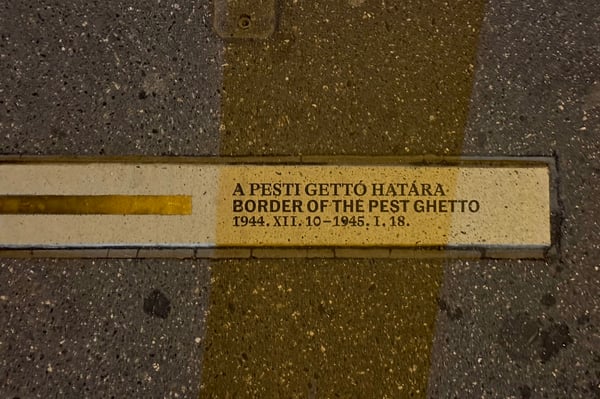
Plaques also mark the border of the Pest Ghetto which operated from 1944 to 1945. These plaques are easy to miss if you are not looking for them, but they dot sidewalks and streets of the neighborhood.
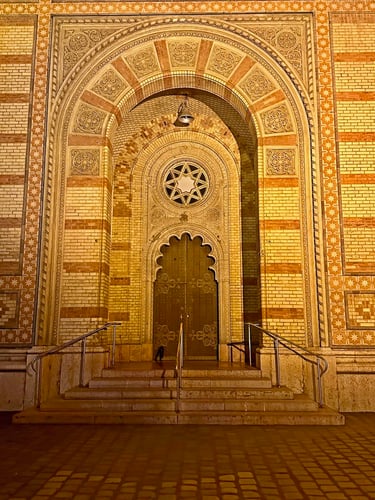
In addition to the Dohány Street Synagogue, it is also worth seeking out the Rumbach Street Synagogue, a beautifully restored building known for its striking Moorish-style design. While you do not necessarily need to go inside, the synagogue underwent a major restoration completed in 2021 and is worth seeing for its architecture alone. Today, it also frequently hosts concerts and cultural events, adding another layer to its significance within the neighborhood.
Nearby on Dob Utca (Dob Street), the Carl Lutz Memorial honors the Swiss diplomat who helped save tens of thousands of Hungarian Jews during World War II. The sculpture depicts Lutz as a golden angel, descending from heaven to help a fallen victim. It is a truly moving monument.
However, part of what makes walking through the Jewish Quarter in Budapest so rewarding is the contrast between old and new. Historic buildings and Holocaust memorials exist alongside lively cafés, bars, restaurants, and boutiques giving the neighborhood a distinct energy that evolves throughout the day. Taking the time to wander without a strict plan often leads to some of the most memorable moments.
If you prefer a more structured way to explore the neighborhood, guided walking tours of the Jewish Quarter in Budapest are also available through our affiliate partner, GetYourGuide.

Tips for Visiting the Jewish Quarter Budapest
When Is the Best Time to Visit?
The Jewish Quarter in Budapest can be visited at any time of day, but the experience changes significantly depending on when you go. During the day, the neighborhood is quieter and better suited for sightseeing, while the evening brings a much livelier atmosphere as restaurants and ruin bars begin to fill up.
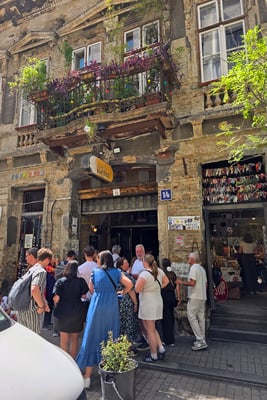
For many visitors, late afternoon is the ideal time to explore, allowing you to see the neighborhood in daylight before enjoying dinner and/or drinks at one of the many spots in the Jewish Quarter.
What to Know Before You Go
As you explore the Jewish Quarter Budapest, it is important to remember that many of its main sites, particularly the synagogues and memorials, hold deep religious, historical, and cultural significance. Show respect when visiting Holocaust-related sites and memorials.
When visiting religious sites, dress modestly by covering your shoulders and avoiding short skirts and shorts. Men are also required to cover their heads inside the Dohány Street Synagogue and the other synagogues in Budapest, though yarmulkes are available on-site.
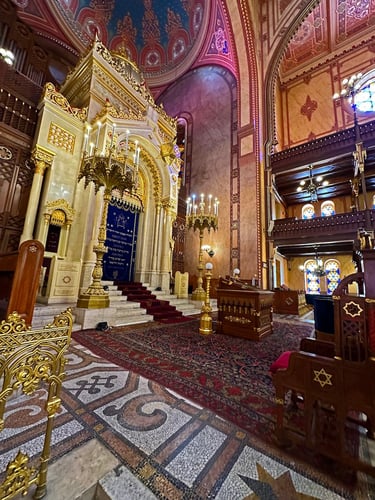
The Dohány Street Synagogue is closed on Saturdays and on Jewish holidays, so be sure to plan your visit accordingly.
Getting Around the Jewish Quarter Budapest
The Jewish Quarter is best explored on foot. Most of the neighborhood's main sights are located within walking distance of one another, and wandering through the streets is part of the experience.
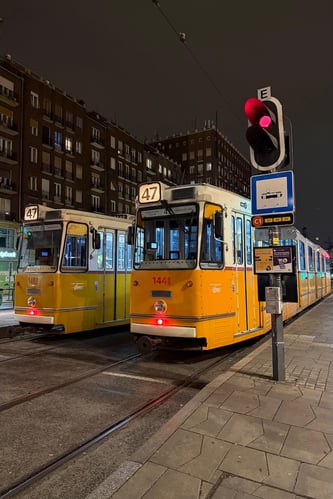
If you are coming from other parts of the city, the area is easily accessible via public transportation with several tram and metro stops nearby, including Deák Ferenc tér, one of Budapest’s main transit hubs.
Is the Jewish Quarter Crowded?
Yes, the Jewish Quarter can get quite crowded, especially in the evening and on weekends. As one of the most popular areas in the city for nightlife, streets like Kazinczy Street tend to fill up quickly.
If you prefer a quieter experience, consider visiting earlier in the day when the neighborhood is best suited for sightseeing.
Restaurants in the area can also fill up quickly in the evening, so reservations are recommended if you are looking to dine at a specific place.
Where to Stay in the Jewish Quarter Budapest
The Jewish Quarter in Budapest is one of the city's most lively and energetic neighborhoods, known for its bars, diverse dining scene, and late-night atmosphere. If you are looking to be close to Budapest's nightlife and social scene, this is one of the best areas to stay in the city.
That said, it is not necessarily the best fit for every traveler. The neighborhood can be noisy in the evenings, especially on weekends, and the constant activity may not appeal to those looking for a quieter, more relaxed stay.
For younger travelers and food lovers in particular, the Jewish Quarter can be an excellent place to stay in Budapest.
Best Hotels in the Jewish Quarter Budapest
The Jewish Quarter Budapest offers a range of accommodations, from luxury hotels set just outside the busiest streets to boutique and budget-friendly options in the heart of the neighborhood. Here are a few well-located hotels to consider:
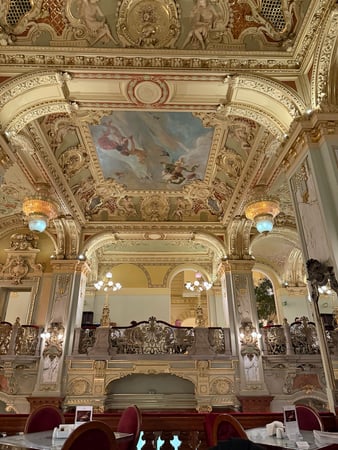
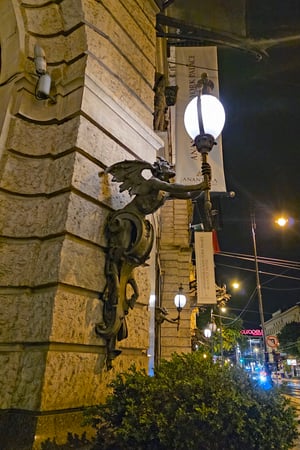
Set in a restored historic building, the Continental Hotel Budapest is one of the most popular hotel options in the area. Its central location makes it easy to walk to nearby restaurants and ruin bars, and it also features a rooftop pool, which is a nice addition during the warmer months.
A smaller, design-forward hotel located in the heart of the Jewish Quarter. The Roombach Hotel is a practical option if you want to be within walking distance of Kazinczy Street, ruin bars, and restaurants, while keeping down.
👉 Explore availability for Roombach Hotel Budapest Center on Booking.com
If you are still deciding, use the Booking.com search tool below to browse additional hotels in the Jewish Quarter Budapest and check availability for your travel dates.
Is the Jewish Quarter Budapest Worth Visiting?
The Jewish Quarter Budapest is one of the most dynamic and culturally significant neighborhoods in the city, offering a unique mix of history, food, and nightlife. From the Dohány Street Synagogue to the neighborhood’s ruin bars and restaurants, it is a place where Budapest’s past and present come together in a way that feels both meaningful and engaging.
While it may not be the best place to stay for every traveler, it is absolutely worth visiting, whether you are sightseeing during the day or experiencing its nightlife in the evening. The contrast between its historic religious sites and modern atmosphere is what makes it one of the most memorable neighborhoods in Budapest.
If you are planning your trip, be sure to explore our Budapest travel guide for a more complete overview of the city, along with additional recommendations on things to do, where to eat, and how to plan your itinerary.
Planning a trip to Budapest? If you have questions about the Jewish Quarter or want help narrowing down what to prioritize, leave us a comment below. 👇