%20(1).png?width=3690&height=2079&name=Jetset%20Seeker%20Logo%20(Banner)%20(1).png)

Florence is a beautiful city at street level, but some of its most memorable landmarks are best...
There are cities known for their beauty, and then there are cities that redefine it. Florence (known as Firenze in Italian) belongs to the latter. In the 14th and 15th centuries, this small Tuscan city became the birthplace and epicenter of the Renaissance, a cultural awakening that transformed how humanity understood art, science, philosophy, and itself. It was here that perspective was mastered, anatomy was studied, and artists began signing their names as individuals rather than anonymous craftsmen. The art that emerged from Florence did not simply decorate churches and palaces. It reshaped the Western world.
Under the patronage of the powerful Medici family, artists like Donatello, Michelangelo Buonarroti, Leonardo da Vinci, and Sandro Botticelli created works that continue to define what we consider genius. Michelangelo's David, carved from a single block of marble, became a symbol of human potential. Botticelli's mythological scenes introduced a new softness and emotional depth to art. Brunelleschi engineered the dome for Florence's cathedral (affectionately known as the Duomo) in a way that stunned his contemporaries and still dominates the city's skyline today. In Florence, these masterpieces are not isolated to a single museum. They are interspersed throughout the city, inside chapels, across piazzas, and inside palaces that altered the course of human history.
If Rome feels like the stage of an empire - vast, layered, and monumental - Florence feels like a workshop of ideas. Its influence did not spread through conquest, but through creativity. The city is smaller and intensely concentrated. You can walk from one transformative artwork to another in a matter of minutes. That closeness is part of what makes Florence an incredible city to visit. It is also what makes it overwhelming to many first time visitors.
Today, Florence balances its artistic legacy with the realities of modern tourism. Its narrow medieval streets fill quickly, year-round. Museum lines form early. The density of artistic and architectural masterpieces can be exhilarating or exhausting depending on how you approach it. Florence rewards intention. It rewards pacing. And, perhaps more than any other Italian city, it rewards discernment: knowing what is truly worth your time.
This Florence travel blog blends historical context, practical planning, and honest firsthand experience. Rather than attempting to catalog every museum and masterpiece in the city, we are sharing how Florence actually feels to explore, what we believe is genuinely worth prioritizing, and what can be skipped without regret. If a friend asked us how to plan their first trip to Florence, this is exactly where we would begin.
Benvenuti a Firenze!
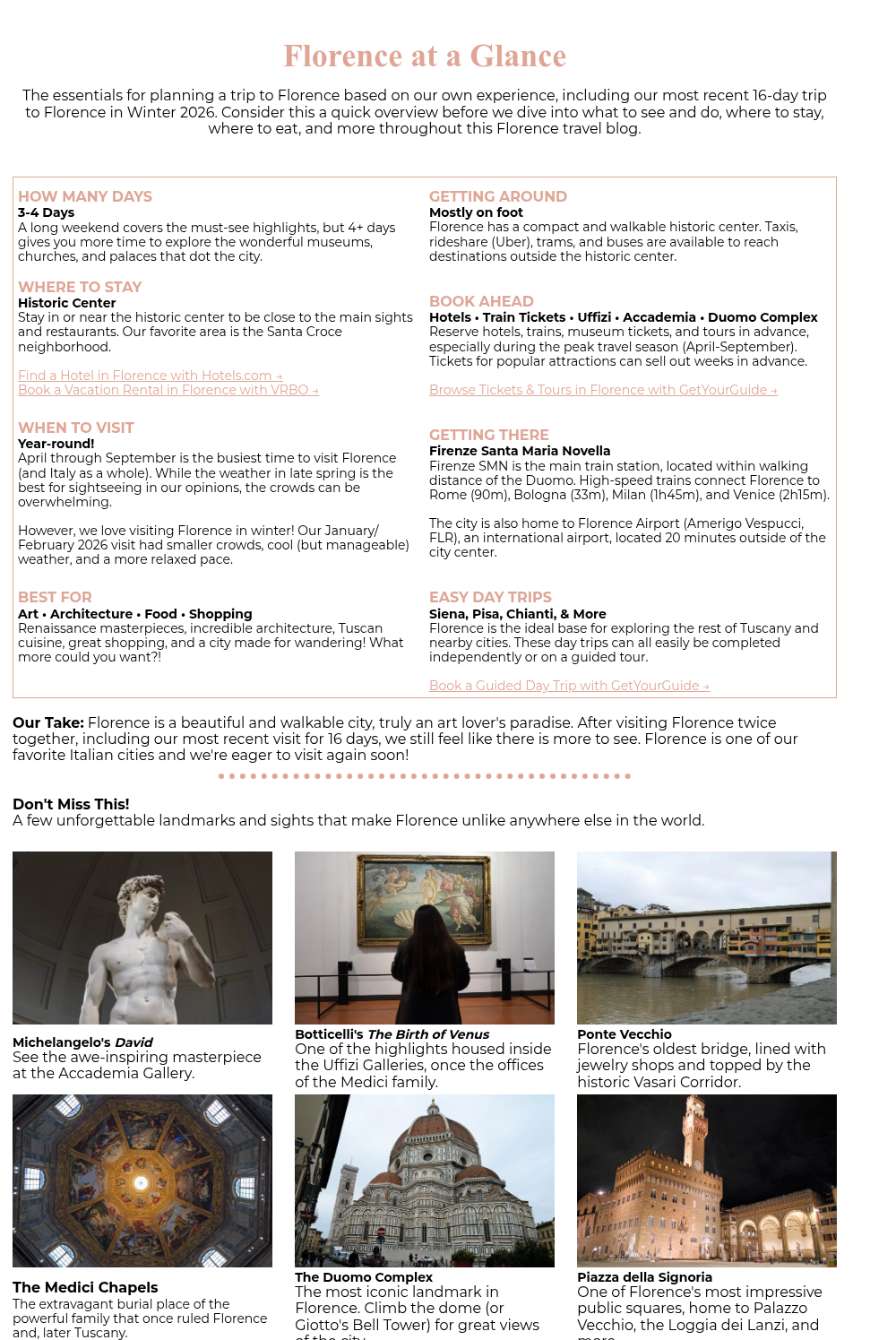
Florence may be small and compact, but it is not a city for spontaneous sightseeing. If you are hoping to see the city's headline attractions, particularly The Uffizi Galleries, the Accademia (home to Michelangelo's David), or climb to the top of the Duomo for panoramic views across the city, you should book your tickets well before you ever arrive in Florence. These experiences require timed-entry tickets and regularly sell out weeks in advance.
What we have learned over multiple visits to Florence, however, is that planning your trip here does not mean scheduling activities for every hour of your day. While The Uffizi Galleries and Accademia demand advance reservations (and patience as you navigate through the seas of tour groups), other incredible sites feel far more approachable.
If your schedule allows it, save time for places like the Bargello Museum, the Medici Chapels, and even the expansive Pitti Palace. These museums see smaller crowds and frequently have same-day tickets available. Additionally, churches such as Santa Croce and Santa Maria Novella allow you to experience Renaissance art and history without the intense crowds found at the Duomo.
Florence still requires patience, but thoughtful planning gives you the opportunity to balance its most famous landmarks with sites that offer a bit more breathing room.
Florence is busy, always busy. After visiting in winter, spring, and summer, one thing is clear: this city struggles under the weight of overtourism. Its medieval streets were never designed to handle the sheer volume of visitors it now receives.
Tour groups move in waves, particularly outside the Uffizi and along the narrow streets surrounding the Duomo, Piazza della Signoria, and Ponte Vecchio. Sidewalks are narrow, piazzas crowded, and patience becomes essential. Even in winter, the so-called "off season," you should expect company.
Winter does shift the experience noticeably. In winter, tourist numbers shrink, museum access improves, and navigating the historic center becomes far more manageable. The tradeoff, however, is rain.
Winters in Florence are mild, but often damp and gray. Still, we would gladly take gray, rainy days over the overwhelming spring and summer crowds, every single time. Trust us, we have navigated the crowds in Florence in April and June, far preferring the less-than-favorable weather for the ability to feel like you can actually enjoy the city.
It is worth remembering that Florence is not a theme park built for tourism. It is an old, living city, with residents navigating the same streets and spaces.
Patience, awareness, and small choices make a difference. Step aside rather than stopping in the middle of narrow streets, begin your sightseeing early in the day, and carve out time in your itinerary for places beyond the obvious highlights. Most importantly, stay aware of your surroundings and be courteous to the people who live here.
Florence is easy to feel overwhelmed in, slowing down and moving thoughtfully makes the experience more enjoyable for both you and for the people who call this wonderful city home.
Florence is an extraordinary city, one we genuinely adore. We spent 16 days here in the winter of 2026, long enough to uncover more of its hidden gems. While we revisited the highlights, we also caught a small glimpse of what living in Florence might feel like, with slower mornings, familiar streets, market visits, and favorite cafés. That extended stay only deepened our love and appreciation for the city.
If you arrive in Florence with a plan and realistic expectations about the crowds, we have no doubt that you will enjoy your time here. Its walkability and its concentration of art make it unlike anywhere else in the world!
At the same time, Florence does not exist in isolation. As the capital of Tuscany, Florence is surrounded by landscapes and towns that are just as compelling. If your itinerary allows, carve out time for the vineyards of Chianti, the medieval skyline of Siena, or even a brief stop in Pisa. Florence is unforgettable, but your trip will feel richer if you have time to experience more of Tuscany as well.
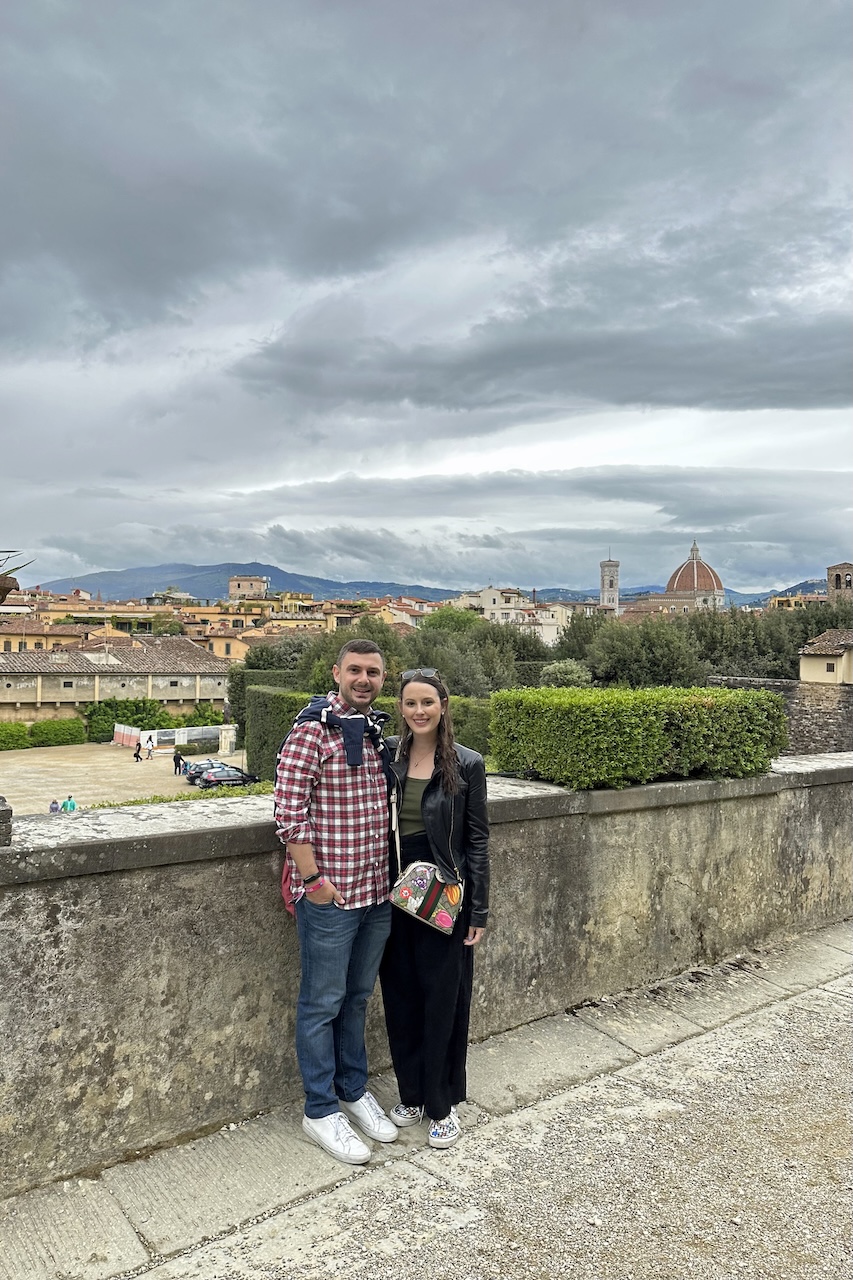
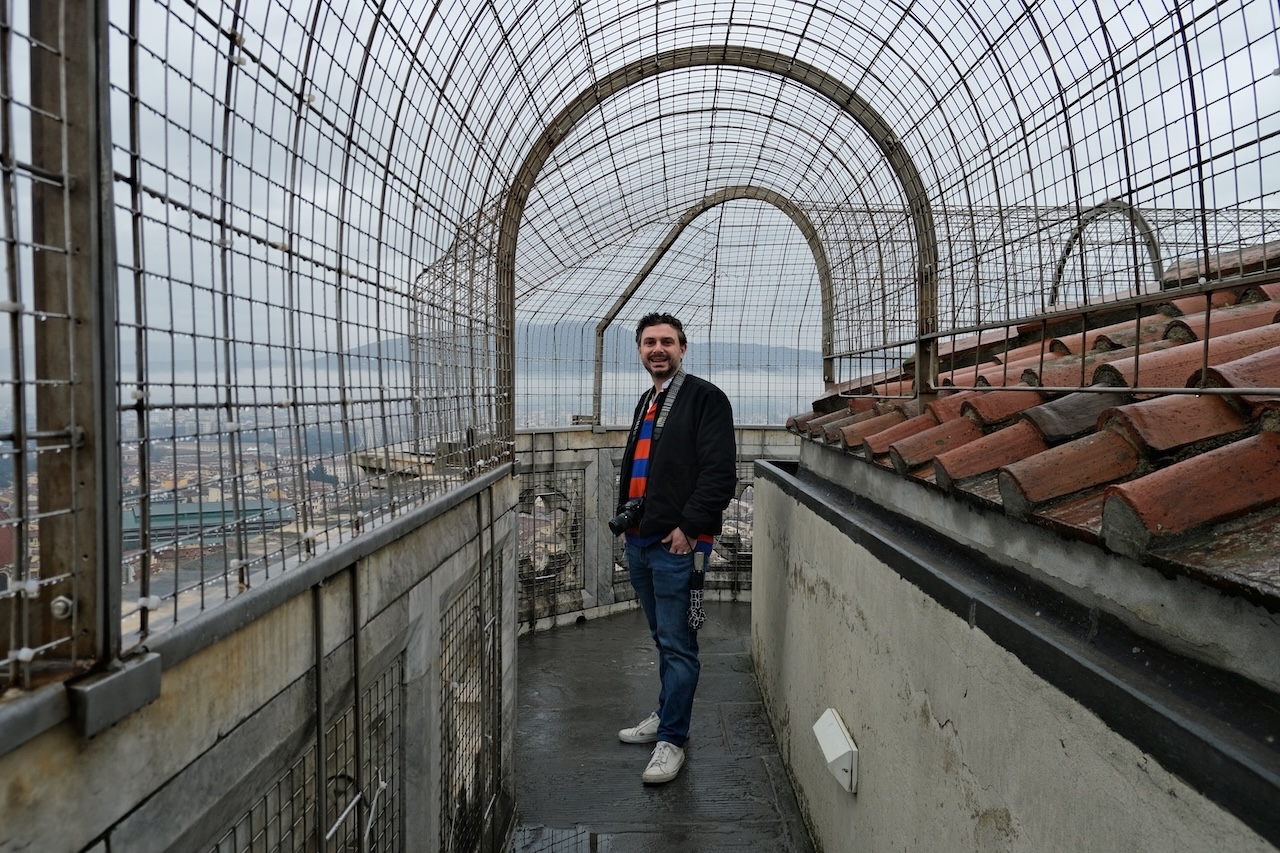
If you are visiting Florence for the first time and not planning any day trips, three days is the minimum we would recommend. With three days, you can prioritize one or two major museums, explore the Duomo complex, wander across Ponte Vecchio, and still see places like the Bargello Museum or the Basilica of Santa Croce.
That said, the optimal amount of time depends on how you travel:
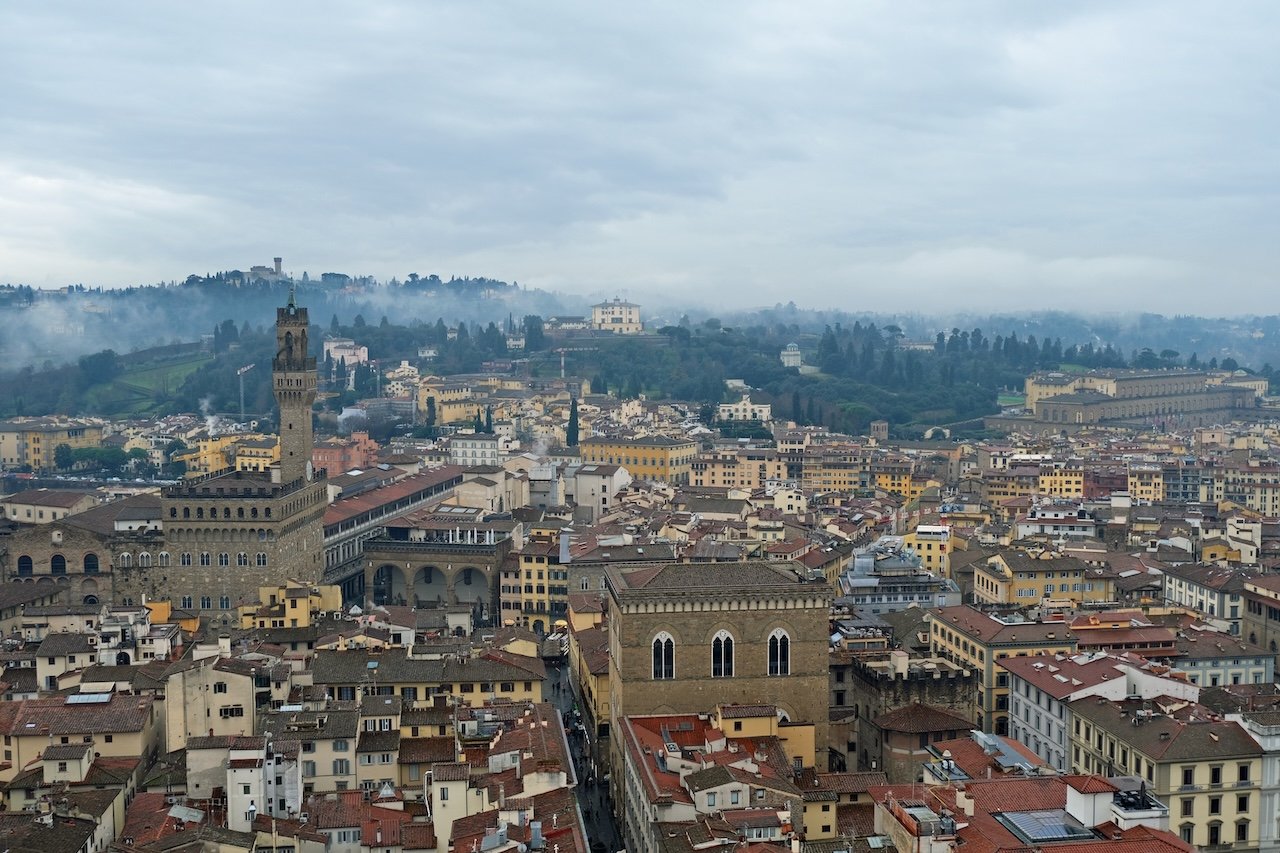
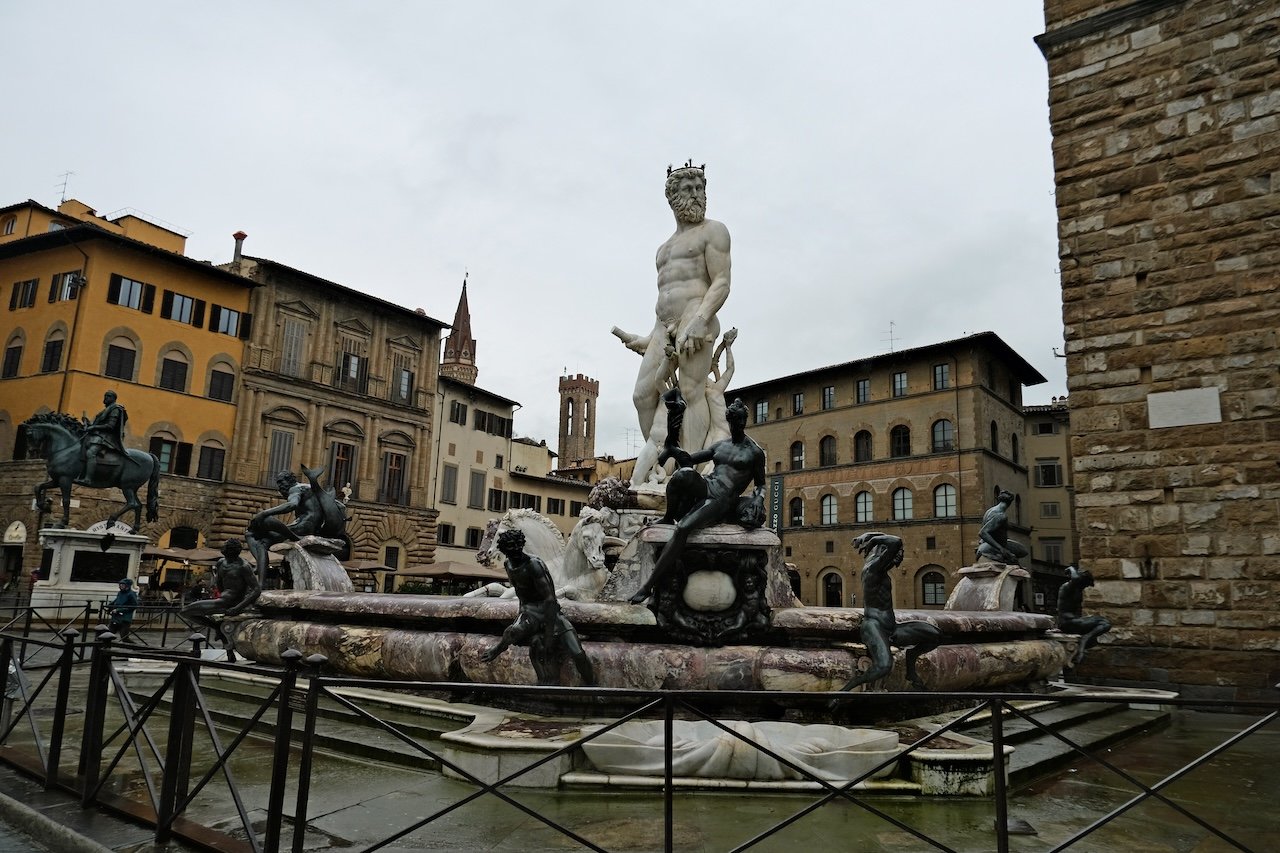
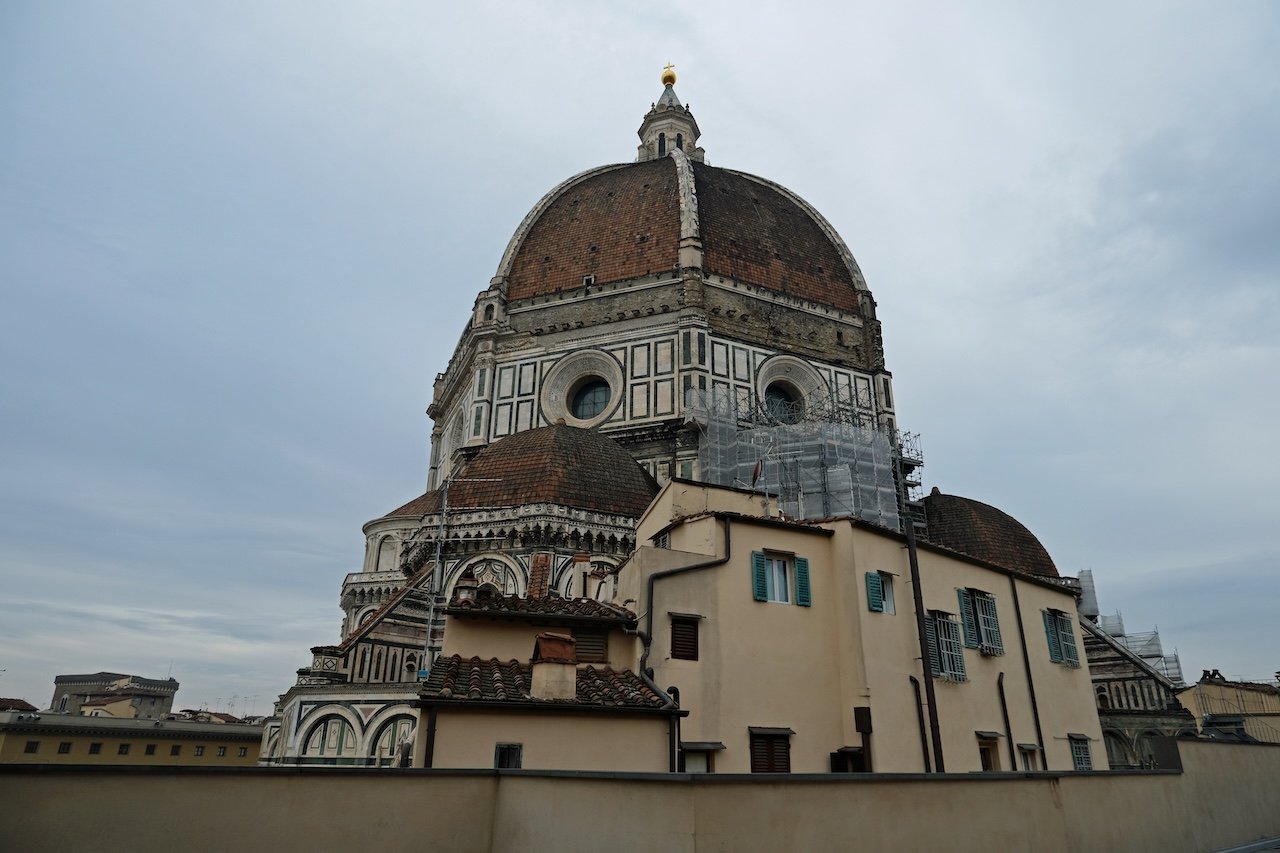
Florence has a wonderful concentration of art, architecture, and history packed into a remarkably small footprint. After multiple visits, we have learned that trying to see everything is the fastest way to feel exhausted. After two trips to Florence together, plus a visit Lauren took on her own during her time in university, we feel well prepared to share our recommendations for this Florence travel blog.
Rather than organizing your days around every “must-see,” we think in terms of what consistently feels worth our time, what is great if you have extra time in your itinerary, and what we would personally skip or approach differently on a future trip to Florence.
These are the experiences we think belong at the core of any Florence itinerary, especially on a first visit to this incredible city. Think of them as the best things to do in Florence!
A QUICK PLANNING NOTE: The Uffizi Galleries, Accademia Gallery, and the Pitti Palace are closed on Mondays. Meanwhile, the Bargello is closed on Tuesdays. The Museo dell'Opera del Duomo (Duomo Museum) is closed on the first Tuesday of the month.
The Accademia Gallery (Galleria dell'Accademia di Firenze) dates back to 1784, occupying a 14th century hospital and convent. Closely connected to the Academy of Fine Arts, the gallery provided works that students could study as part of their artistic training.
The museum forever changed in 1873, when Michelangelo's David was moved here from Piazza della Signoria for its protection. A gallery was eventually constructed to showcase the sculpture, and the present-day Accademia was formally established in 1882. Today, the collection extends well beyond Michelangelo, with medieval and Renaissance paintings, plaster models, and historic musical instruments.
Of course, most visitors come for one reason: Michelangelo's David.
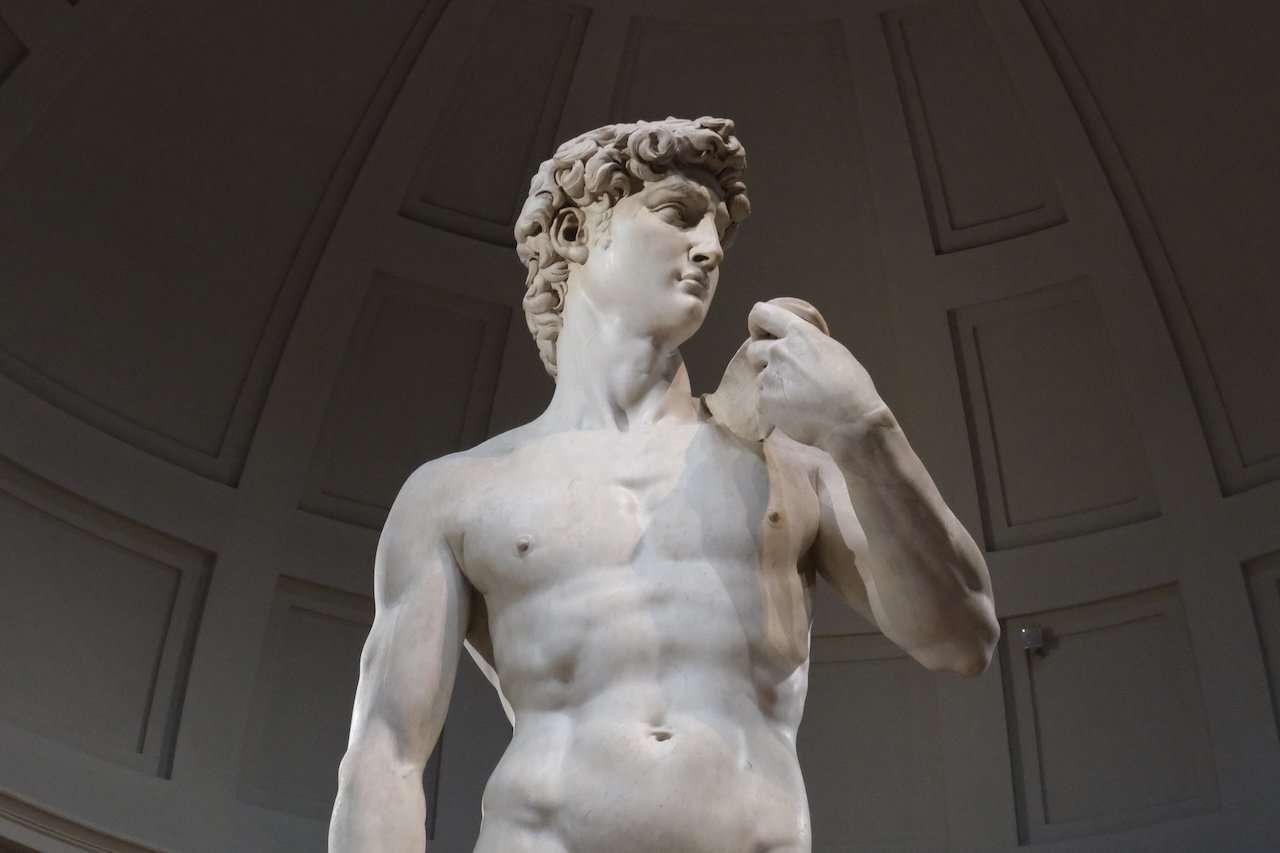
If there is one work of art synonymous with Florence, it is David. It is arguably the most famous sculpture of the Renaissance and one of those works that, no matter how many times you have seen it reproduced in photographs, is completely different when you are standing directly in front of it.
We have visited the Accademia Gallery twice, and seeing David up close is still absolutely incredible. The sculpture's scale alone is impressive, but take time to look more closely. The muscles, veins, tendons, facial expression, and subtle shift in weight reveal an astonishing understanding of human anatomy. This is not a work we recommend simply taking a photograph of and checking off of your must-see list. Walk around it, look at it from different angles, and give yourself a few minutes to really appreciate the artistry.
David was originally commissioned for the Duomo. Once completed, however, it was decided to place the sculpture outside Palazzo Vecchio in Piazza della Signoria, where it became a symbol of the Florentine Republic.
While David is unquestionably the star of the museum's collection, the Accademia contains several other works and galleries worth your attention.
The hallway leading toward David is lined with four of Michelangelo's unfinished Prisoners, sometimes called Slaves. The male figures appear to emerge from the blocks of marble, giving you a fascinating look at Michelangelo's sculpting process. They also illustrate something that becomes apparent as you explore more of the artist's work throughout Florence: Michelangelo left a surprising number of projects unfinished.
If you have ever visited the Louvre in Paris, then you have likely seen two other finished sculptures from this series: the Dying Slave and the Rebellious Slave. These six sculptures were all commissioned for the extravagant tomb of Pope Julius II. The project ultimately went unfinished because of interruptions and competing high-priority projects, including the ceiling of the Sistine Chapel.
Two additional sculptures attributed to Michelangelo are on display at the Accademia, both incomplete: the Palestrina Pietà and a sculpture of San Matteo.
Elsewhere in the museum, look for the full-size model of Giambologna's Abduction of a Sabine Woman (The Rape of the Sabine). The finished marble sculpture is located in the Loggia dei Lanzi in Piazza della Signoria.
The Gallery of Plaster Casts, or Gipsoteca, is another highlight, filled with models and casts that make the room feel almost like an artist's workshop. The collection is closely connected to Florence's Academy of Fine Arts, where plaster models were used as teaching tools for students learning sculpture. The gallery is packed with casts and models, many associated with prominent 19th-century Florentine sculptures.
One of our favorite parts of the museum, however, is the Museum of Musical Instruments. The collection includes historic instruments, including some of the first ever-created pianos dating to the late 17th century. They are more than just instruments, but beautiful works of art in their own right.
If you have additional time, head upstairs to view the museum's collection of medieval and early Renaissance paintings. These galleries tend to be much quieter and provide a nice look at Italian art before the period dominated by Michelangelo and his contemporaries.
We have visited the Accademia twice together, and we would absolutely return for a future visit!
A large part of why we would visit again comes down to David. Seeing this masterpiece in person, even on a second visit, does not make it any less impressive. If anything, knowing what to expect gave us more time to notice the details that make it such an incredible, lifelike masterpiece.
We also love that the Accademia never feels as overwhelming as the Uffizi. The collection is substantial enough to make the museum worthwhile beyond David, but compact enough that you can explore it without dedicating half of your day to the experience. We also think the museum simply does a better job of managing crowds in comparison to the Uffizi.
For us, seeing David in person remains a bucket-list Florence experience. It is a defining work of the Renaissance, inseparable from the history of the city, and something we believe everyone should see at least once.
The Accademia Gallery is one of Florence's most popular attractions, and timed tickets typically sell out in advance, especially during the spring and summer months. We recommend purchasing your tickets before you arrive in Florence.
Tickets can be purchased directly through the official Ministero della Cultura website. Combo tickets are available if you are also interested in visiting the Bargello Museum and the Medici Chapels.
One of the best ways to truly appreciate Michelangelo's masterpiece is to visit the Accademia on a guided tour. While official guided tours are not available through the Accademia Gallery directly, third-party tours can be booked through GetYourGuide.
Jetset Seeker Pro Tip: If you decide not to book a guided tour, consider using the free audio guide from Rick Steves' Europe for the Accademia Gallery. The audio guide is easy to follow and adds much-needed context without the cost of a private tour guide.
The Accademia Gallery (Galleria dell'Accademia di Firenze) dates back to 1784, occupying a 14th century hospital and convent. Closely connected to the Academy of Fine Arts, the gallery provided works that students could study as part of their artistic training.
The museum forever changed in 1873, when Michelangelo's David was moved here from Piazza della Signoria for its protection. A gallery was eventually constructed to showcase the sculpture, and the present-day Accademia was formally established in 1882. Today, the collection extends well beyond Michelangelo, with medieval and Renaissance paintings, plaster models, and historic musical instruments.
Of course, most visitors come for one reason: Michelangelo's David.
If there is one work of art synonymous with Florence, it is Michelangelo's David. It is arguably the most famous sculpture of the Renaissance and one of those works that, no matter how many times you have seen it reproduced in photographs, is completely different when you are standing directly in front of it.
We have visited the Accademia Gallery twice, and seeing David up close is still absolutely incredible. The sculpture's scale alone is impressive, but take time to look more closely. The muscles, veins, tendons, facial expression, and subtle shift in weight reveal an astonishing understanding of human anatomy. This is not a work we recommend simply taking a photograph of and checking off of your must-see list. Walk around it, look at it from different angles, and give yourself a few minutes to really appreciate the artistry.
David was originally commissioned for the Duomo. Once completed, however, it was decided to place the sculpture outside Palazzo Vecchio in Piazza della Signoria, where it became a symbol of the Florentine Republic.
While David is unquestionably the star of the museum's collection, the Accademia contains several other works and galleries worth your attention.
The hallway leading toward David is lined with four of Michelangelo's unfinished Prisoners, sometimes called Slaves. The male figures appear to emerge from the blocks of marble, giving you a fascinating look at Michelangelo's sculpting process. They also illustrate something that becomes apparent as you explore more of the artist's work throughout Florence: Michelangelo left a surprising number of projects unfinished.
If you have ever visited the Louvre in Paris, then you have likely seen two other finished sculptures from this series: the Dying Slave and the Rebellious Slave. These six sculptures were all commissioned for the extravagant tomb of Pope Julius II. The project ultimately went unfinished because of interruptions and competing high-priority projects, including the ceiling of the Sistine Chapel.
Two additional sculptures attributed to Michelangelo on display at the Accademia, both incomplete: the Palestrina Pietà and a sculpture of San Matteo.
Elsewhere in the museum, look for the full-size model of Giambologna's Abduction of a Sabine Woman (The Rape of the Sabine). The finished marble sculpture is located in the Loggia dei Lanzi in Piazza della Signoria.
The Gallery of Plaster Casts, or Gipsoteca, is another highlight, filled with models and casts that make the room feel almost like an artist's workshop. The collection is closely connected to Florence's Academy of Fine Arts, where plaster models were used as teaching tools for students learning sculpture. The gallery is packed with casts and models, many associated with prominent 19th-century Florentine sculptures.
One of our favorite parts of the museum, however, is the Museum of Musical Instruments. The collection includes historic instruments, including some of the first ever-created pianos dating to the late 17th century. They are more than just instruments, but beautiful works of art in their own right.
If you have additional time, head upstairs to view the museum's collection of medieval and early Renaissance paintings. These galleries tend to be much quieter and provide a nice look at Italian art before the period dominated by Michelangelo and his contemporaries.
We have visited the Accademia twice together, and we would absolutely return for a future visit.
A large part of why we would visit again comes down to David. Seeing this masterpiece in person, even on a second visit, does not make it any less impressive. If anything, knowing what to expect gave us more time to notice the details that make it such an incredible, lifelike masterpiece.
We also love that the Accademia never feels as overwhelming as the Uffizi. The collection is substantial enough to make the museum worthwhile beyond David, but compact enough that you can explore it without dedicating half of your day to the experience. We also think the museum simply does a better job of managing crowds in comparison to the Uffizi.
For us, seeing David in person remains a bucket-list Florence experience. It is a defining work of the Renaissance, inseparable from the history of the city, and something we believe everyone should see at least once.
The Accademia Gallery is one of Florence's most popular attractions, and timed tickets typically sell out in advance, especially during the spring and summer months. We recommend purchasing your tickets before you arrive in Florence.
Tickets can be purchased directly through the official Ministero della Cultura website. Combo tickets are available if you are also interested in visiting the Bargello Museum and the Medici Chapels.
One of the best ways to truly appreciate Michelangelo's masterpiece is to visit the Accademia on a guided tour. While official guided tours are not available through the Accademia Gallery directly, third-party tours can be booked through GetYourGuide.
Jetset Seeker Pro Tip: If you decide not to book a guided tour, consider using the free audio guide from Rick Steves' Europe for Accademia Gallery. The audio guide is easy to follow and adds much-needed context without the cost of a private tour guide.
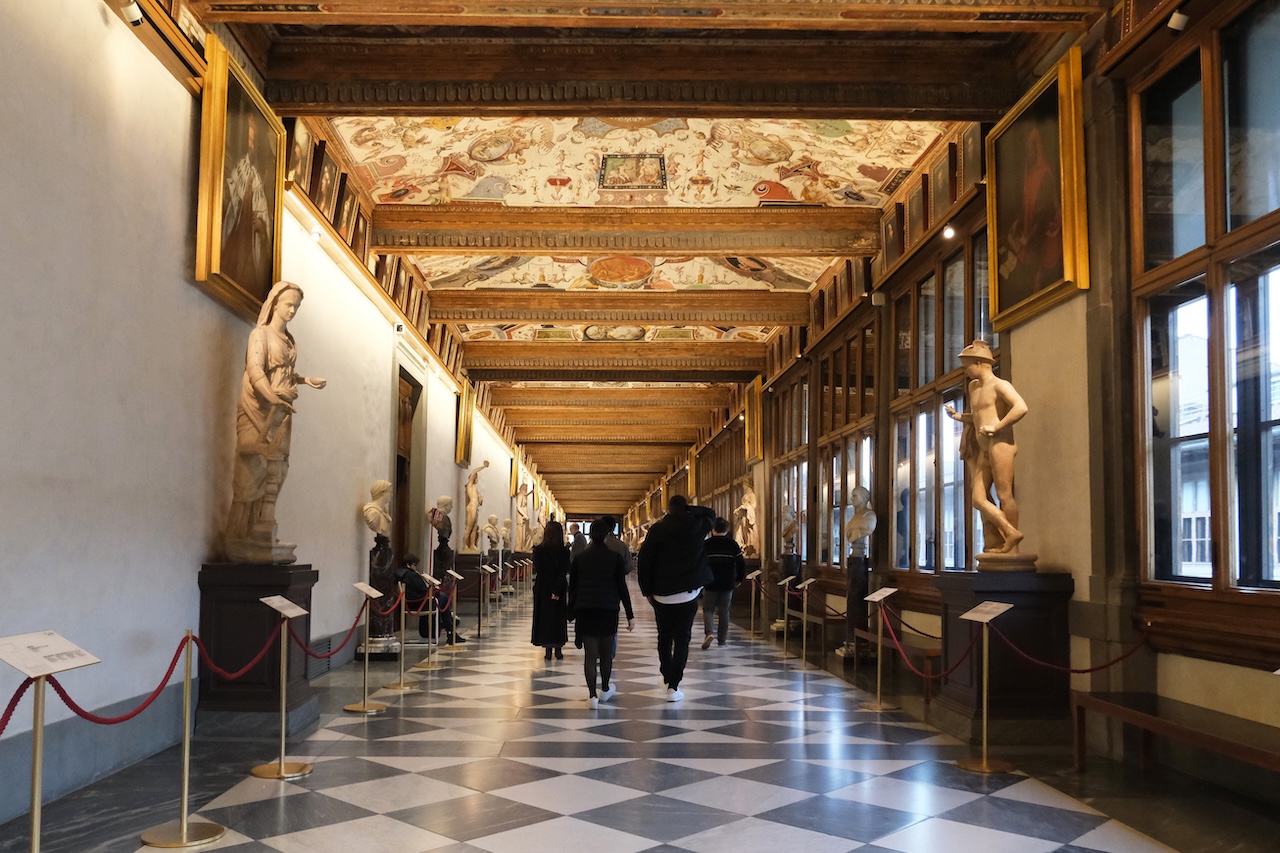
If you only have time for one museum in Florence, make it the Uffizi Gallery. Nowhere else in the world will you find a collection of Italian Renaissance art quite like this, with works by Botticelli, Leonardo da Vinci, Michelangelo, Raphael, Caravaggio, and many more under one roof.
The Uffizi was commissioned by Cosimo I de' Medici in the 16th century and designed by Giorgio Vasari. The name Uffizi literally means "offices" in Italian, reflecting the building's original purpose as the offices of the Medici government.
Over time, the Medici used portions of the complex to display their growing art collections. After Medici rule ended in 1737, Anna Maria Luisa de' Medici, the last surviving member of the family's grand ducal line, ensured through the Family Pact that their enormous collection of paintings, sculptures, jewels, books, and other treasures would remain in Florence. Those collections ultimately became the foundation of the museum visitors experience today.
The Uffizi contains an incredible number of masterpieces, so it helps to know what you can expect to see before you arrive.
The works by Sandro Botticelli in the collection are easily Lauren's favorites. Make sure you see Primavera (Spring) and The Birth of Venus. Both are much larger and more impressive in person than photos suggest, and they are easily among the most recognizable works in the entire museum.
Meanwhile, Brian particularly loves the two works in the collection by Leonardo da Vinci, The Annunciation and Adoration of the Magi, in addition to a work by da Vinci's teacher, Andrea del Verrocchio. A young Leonardo da Vinci helped his master with The Baptism of Christ, painting the angel on the left of the painting. According to legend, Verrocchio was so impressed by the talent of his young student, Leonardo da Vinci, that he never painted again.
Other works and artists we recommend looking out for include:
There is far more to see than this short list, but these works provide a good starting point for a first visit to the Uffizi!
The Uffizi is also not-so-secretly connected to both Palazzo Vecchio and Palazzo Pitti via the Vasari Corridor. Bearing the name of its builder, Giorgio Vasari, the elevated passageway allowed the Medici family to move privately between their offices and residence across the Arno River. The Vasari Corridor rises above the streets of Florence, across the top of Ponte Vecchio, before eventually reaching Palazzo Pitti.
In essence, the Vasari Corridor is just a really long hallway connecting some of the city's most important landmarks. The corridor is open to tourists, although access requires a specific ticket and is not included with standard admission to the Uffizi Galleries. If you want to walk through the Vasari Corridor during your visit, make sure you select the appropriate ticket when booking.
We have visited the Uffizi twice now, and we still have not seen everything. That is something to keep in mind when planning your visit. The Uffizi is enormous, and trying to see every room is an easy way to end up with museum fatigue. Add in the crowds, particularly around the most famous paintings in the collection, and the experience can become extremely overwhelming rather quickly.
We strongly recommend booking the first entry time of the day for your visit to the Uffizi. Arriving when the museum first opens in the morning gives you at least a brief head start before the galleries become increasingly congested. From our experience, tour groups typically arrive mid-morning and that is when the museum gets to be the busiest. However, keep in mind that you will likely not be able to see the entire collection during one single visit.
The main Renaissance highlights are concentrated on the second floor, and this is where we recommend that you begin your visit. Give the works you are most excited to see your attention while you are still fresh, then explore the rest of the museum at your own pace.
Tickets for the Uffizi should be purchased in advance of your visit via the official Uffizi Galleries website. Combo tickets are also available if you are interested in visiting the Vasari Corridor, Palazzo Pitti, and/or the Boboli Gardens.
Jetset Seeker Pro Tip: A free audio tour of the Uffizi Galleries is available from Rick Steves' Europe if you are looking for some added context as wander through one of the greatest collections of Italian Renaissance art. Keep in mind that the museum does occasionally move paintings around, so the works highlighted in the audio tour may be out of order. Even so, it is a great way to identify the pieces that deserve a little more of your attention.
We recommend spending at least four hours at the Uffizi during your visit. If you are pressed for time, we recommend booking a guided tour of the museum to help you see the highlights more efficiently. A number of guided tour options for the Uffizi Galleries are available through GetYourGuide.
The Uffizi can be exhausting and overwhelming. It gets extremely crowded, the collection is expansive, and after several hours, even Renaissance masterpieces can begin competing for your increasingly limited attention.
Despite that, we have visited twice and will absolutely return! There is simply too much here to absorb in a single visit, and even after two trips, we still have not seen everything. More importantly, returning gives us the opportunity to revisit the works we genuinely love, while devoting our attention to galleries and artists we may have missed on previous visits.
If you only have time for one museum in Florence, make it the Uffizi Gallery. Nowhere else in the world will you find a collection of Italian Renaissance art quite like this, with works by Botticelli, Leonardo da Vinci, Michelangelo, Raphael, Caravaggio, and many more under one roof.
The Uffizi was commissioned by Cosimo I de' Medici in the 16th century and designed by Giorgio Vasari. The name Uffizi literally means "offices" in Italian, reflecting the building's original purpose as the offices of the Medici government.
Over time, the Medici used portions of the complex to display their growing art collections. After Medici rule ended in 1737, Anna Maria Luisa de' Medici, the last surviving member of the family's grand ducal line, ensured through the Family Pact that their enormous collection of paintings, sculptures, jewels, books, and other treasures would remain in Florence. Those collections ultimately became the foundation of the museum visitors experience today.
The Uffizi contains an incredible number of masterpieces, so it helps to know what you can expect to see before you arrive.
The works by Sandro Botticelli in the collection are easily Lauren's favorites. Make sure you see Primavera (Spring) and The Birth of Venus. Both are much larger and more impressive in person than photos suggest, and they are easily among the most recognizable works in the entire museum.
Meanwhile, Brian particularly loves the two works in the collection by Leonardo da Vinci, The Annunciation and Adoration of the Magi, in addition to a work by da Vinci's teacher, Andrea del Verrocchio. A young Leonardo da Vinci helped his master with The Baptism of Christ, painting the angel to the left of the painting. According to legend, Verrocchio was so impressed by the talent of his young student, Leonardo da Vinci, that he never painted again.
Other works and artists we recommend looking out for include:
There is far more to see than this short list, but these works provide a good starting point for a first visit to the Uffizi!
The Uffizi is also not-so-secretly connected to both Palazzo Vecchio and Palazzo Pitti via the Vasari Corridor. Bearing the name of its builder, Giorgio Vasari, the elevated passageway allowed the Medici family to move privately between their offices and residence across the Arno River. The Vasari Corridor rises above the streets of Florence, across the top of Ponte Vecchio, before eventually reaching Palazzo Pitti.
In essence, the Vasari Corridor is just a really long hallway connecting some of the city's most important landmarks. The corridor is open to tourists, although access requires a specific ticket and is not included with standard admission to the Uffizi Galleries. If you want to walk through the Vasari Corridor during your visit, make sure you select the appropriate ticket when booking.
We have visited the Uffizi twice now, and we still have not seen everything. That is something to keep in mind when planning your visit. The Uffizi is enormous, and trying to see every room is an easy way to end up with museum fatigue. Add in the crowds, particularly around the most famous paintings in the collection, and the experience can become extremely overwhelming rather quickly.
We strongly recommend booking the first entry time of the day for your visit to the Uffizi. Arriving when the museum first opens in the morning gives you at least a brief head start before the galleries become increasingly congested. From our experience, tour groups typically arrive mid-morning and that is when the museum gets to be the busiest. However, keep in mind that you will likely not be able to see the entire collection during one single visit.
The main Renaissance highlights are concentrated on the second floor, and this is where we recommend that you begin your visit. Give the works you are most excited to see your attention while you are still fresh, then explore the rest of the museum at your own pace.
Tickets for the Uffizi should be purchased in advance of your visit via the official Uffizi Galleries website. Combo tickets are also available if you are interested in visiting the Vasari Corridor, Palazzo Pitti, and/or the Boboli Gardens.
Jetset Seeker Pro Tip: A free audio tour of the Uffizi Galleries is available from Rick Steves' Europe if you are looking for some added context as wander through one of the greatest collections of Italian Renaissance art. Keep in mind that the museum does occasionally move paintings around, so the works highlighted in the audio tour may be out of order. Even so, it is a great way to identify the pieces that deserve a little more of your attention.
We recommend spending at least three to four hours at the Uffizi during your visit. If you are pressed for time, we recommend booking a guided tour of the museum to help you see the highlights more efficiently. A number of guided tour options for the Uffizi Galleries are available through GetYourGuide.
The Uffizi can be exhausting and overwhelming. It gets extremely crowded, the collection is expansive, and after several hours, even Renaissance masterpieces can begin competing for your increasingly limited attention.
Despite that, we have visited twice and will absolutely return! There is simply too much here to absorb in a single visit, and even after two trips, we still have not seen everything. More importantly, returning gives us the opportunity to revisit the works we genuinely love, while devoting our attention to galleries and artists we may have missed on previous visits.
The Medici Chapels are one of our favorite places to visit in Florence. We have visited twice, and even on our second visit, we were just as impressed by the sheer grandeur of the complex.
Attached to the Basilica of San Lorenzo, the chapels were created to serve as the final resting place of the Medici, the family whose wealth, power, and patronage shaped Florence for centuries. The family financed churches, collected art, provided patronage for some of the greatest artists of the Italian Renaissance, and eventually ruled the Grand Duchy of Tuscany. Their influence is visible throughout Florence, but nowhere does the sheer scale of their wealth and ambition feel quite as tangible as it does here.
Nothing quite prepares you for entering the Chapel of the Princes. The enormous octagonal space rises high above you, covered in richly colored marble, semi-precious stones, monumental tombs, and elaborate decoration. It is opulent, dramatic, and genuinely incredible to see in person.
It is grand in a way that photographs cannot convey. The Chapel of the Princes offers so much detail to take in, from the elaborate stonework beneath your feet to the decoration extending all the way up toward the dome. It is one of those places that no matter how many times you may visit, there is always something else to notice.
The Chapel of the Princes was conceived in the early 17th century as an appropriate burial space for the Medici grand dukes, but completing it became an enormous undertaking. Work continued long after the Medici dynasty itself disappeared, with elements of the decoration, including the elaborate floor, not completed until the 1960s.
The adjoining New Sacristy, however, provides a complete contrast to the Chapel of the Princes. Designed by Michelangelo, the space and design is far more restrained than the Chapel of the Princes, allowing architecture and sculpture to be the highlight.
Here you will find the tombs of Lorenzo, Duke of Urbino, and Giuliano, Duke of Nemours, accompanied by Michelangelo's famous allegorical sculptures of Dawn, Dusk, Day, and Night. Lorenzo the Magnificent and his brother, Giuliano, are also buried within the sacristy beneath Michelangelo's Madonna and Child.
Michelangelo never completed everything he intended for this space and that is really what makes the New Sacristy even more interesting. Instead of feeling unfinished or diminishing the experience, the incomplete nature of the grandiose tombs gives you a glimpse into a project that was still very much a work-in-progress when Michelangelo left Florence for Rome in 1534.
Michelangelo certainly left his mark on the Cappelle Medicee and if you can get tickets, Michelangelo's Secret Room (Stanza Segreta di Michelangelo) will not disappoint! Seeing Michelangelo's Secret Room in January 2026 was easily the most incredible experience we have ever had in Florence!
Hidden beneath the New Sacristy, this tiny room was rediscovered in 1975. Michelangelo took refuge in this space for two to three months during a turbulent period in Florence in 1530. During this brief period, Michelangelo was given a death sentence by Pope Clement VII, a member of the Medici family, after Michelangelo sided with the Florentine Republic against Medici rule. Pope Clement VII eventually pardoned Michelangelo, allowing the artist to emerge from hiding and resume work on the Medici projects at the Basilica of San Lorenzo.
Knowing this history makes stepping into this room feel truly surreal. This is not simply a studio where Michelangelo happened to work. Instead, it is a tiny space where one of the most famous artists in history sought safety during an incredibly dangerous period in his life.
The walls are covered with charcoal drawings attributed to Michelangelo. Figures, faces, limbs, and anatomical studies appear across the plaster walls, some connected to ideas and works you can see today at the Bargello and the Vatican. Other drawings here are attributed to Pierino da Vinci, the nephew of Leonardo da Vinci.
Access to Michelangelo's Secret Room is extremely limited due to its small size and in order to preserve the art. As such, admission requires an advance reservation. Tickets can be booked only through the official Ministero della Cultura website. Tickets to Michelangelo's Hidden Room include admission to the Cappelle Medicee. (Tickets for Cappelle Medicee can also be purchased ahead of your visit using the website linked above.)
If you can manage to get tickets, we cannot recommend the experience enough! Seeing Michelangelo's original sketches in the very space where he sought refuge was easily one of the highlights of our most recent trip to Florence.
Tickets to Cappelle Medicee, without access to Michelangelo's Secret Room, can also be purchased on-site at the Cappelle Medicee.
The Medici Chapels are one of our favorite places to visit in Florence. We have visited twice, and even on our second visit, we were just as impressed by the sheer grandeur of the complex.
Attached to the Basilica of San Lorenzo, the chapels were created to serve as the final resting place of the Medici, the family whose wealth, power, and patronage shaped Florence for centuries. The family financed churches, collected art, provided patronage for some of the greatest artists of the Italian Renaissance, and eventually ruled the Grand Duchy of Tuscany. Their influence is visible throughout Florence, but nowhere does the sheer scale of their wealth and ambition feel quite as tangible as it does here.
Nothing quite prepares you for entering the Chapel of the Princes. The enormous octagonal space rises high above you, covered in richly colored marble, semi-precious stones, monumental tombs, and elaborate decoration. It is opulent, dramatic, and genuinely incredible to see in person.
It is grand in a way that photographs cannot convey. The Chapel of the Princes offers so much detail to take in, from the elaborate stonework beneath your feet to the decoration extending all the way up toward the dome. It is one of those places that no matter how many times you may visit, there is always something else to notice.
The Chapel of the Princes was conceived in the early 17th century as an appropriate burial space for the Medici grand dukes, but completing it became an enormous undertaking. Work continued long after the Medici dynasty itself disappeared, with elements of the decoration, including the elaborate floor, not completed until the 1960s.
The adjoining New Sacristy, however, provides a complete contrast to the Chapel of the Princes. Designed by Michelangelo, the space and design is far more restrained than the Chapel of the Princes, allowing architecture and sculpture to be the highlight.
Here you will find the Medici tombs of Lorenzo, Duke of Urbino, and Giuliano, Duke of Nemours, accompanied by Michelangelo's famous allegorical sculptures of Dawn, Dusk, Day, and Night. Lorenzo the Magnificent and his brother, Giuliano, are also buried within the sacristy beneath Michelangelo's Madonna and Child.
Michelangelo never completed everything he intended for this space and that is really what makes the New Sacristy even more interesting. Instead of feeling unfinished or diminishing the experience, the incomplete nature of the grandiose tombs gives you a glimpse into a project that was still very much a work-in-progress when Michelangelo left Florence for Rome in 1534.
Michelangelo certainly left his mark on the Cappelle Medicee and if you can get tickets, Michelangelo's Secret Room (Stanza Segreta di Michelangelo) will not disappoint! Seeing Michelangelo's Secret Room in January 2026 was easily the most incredible experience we have had in Florence!
Hidden beneath the New Sacristy, the tiny room was rediscovered in 1975. Michelangelo took refuge in this space for two to three months during a turbulent period in Florence in 1530. During this brief period, Michelangelo was given a death sentence by Pope Clement VII, a member of the Medici family, after Michelangelo sided with the Florentine Republic against Medici rule. Pope Clement VII eventually pardoned Michelangelo, allowing the artist to emerged from hiding and resume work on the Medici projects at the Basilica of San Lorenzo.
Knowing this history makes stepping into this room feel truly surreal. This is not simply a studio where Michelangelo happened to work. Instead, it is a tiny space where one of the most famous artists in history sought safety during an incredibly dangerous period in his life.
The walls are covered with charcoal drawings attributed to Michelangelo. Figures, faces, limbs, and anatomical studies appear across the plaster walls, some connected to ideas and works you can see today at the Bargello and the Vatican. Other drawings here are attributed to Pierino da Vinci, the nephew of Leonardo da Vinci.
Access to Michelangelo's Secret Room is extremely limited due to its small space and in order to preserve the art. As such, admission requires an advance reservation. Tickets can be booked only through the official Ministero della Cultura website. Tickets to Michelangelo's Hidden Room include admission to the Cappelle Medicee.
If you can manage to get tickets, we cannot recommend the experience enough! Seeing Michelangelo's original sketches in the very space where he sought refuge was easily one of the highlights of our most recent trip to Florence.
Tickets to Cappelle Medicee, without access to Michelangelo's Secret Room, can be purchased both on-site at the Cappelle Medicee and online via the official Ministero della Cultura website.
The Basilica of Santa Croce is our favorite church in Florence. It is certainly not unknown, but compared to the crowds that surround the Duomo, Santa Croce can feel like one of the city's best hidden gems. The basilica is beautiful, filled with important Renaissance art and Florentine history, yet it rarely seems to receive much attention from first-time visitors to Florence.
The Franciscan basilica dates primarily to the late 13th and 14th centuries. Its marble Neo-Gothic façade, however, was added much later in the 19th century. Once you step inside, much of the experience is decidedly medieval. The soaring nave, pointed Gothic arches, and enormous stained-glass windows create an interior that feels dramatically different from the Duomo.
The stained glass is one of the highlights of Santa Croce. The color the windows cast across the otherwise restrained Gothic interior is breathtaking, especially behind the main altar. There is also a lot of art to see at the Basilica of Santa Croce, including the recently restored Stories of St. Francis by Giotto in the Bardi Chapel. However, what really makes Santa Croce truly memorable is the individuals who are buried here.
The basilica is the final resting place for some of the most consequential figures of the Italian Renaissance. Michelangelo is buried here beneath an elaborate monument designed by Giorgio Vasari, with allegorical figures representing painting, sculpture, and architecture mourning the artist. Nearby is the monumental tomb of Galileo Galilei, honoring the astronomer and scientist whose strained relationship with the Catholic Church made his eventual burial inside Santa Croce particularly significant. The philosopher Niccolò Machiavelli is also buried in Santa Croce.
The basilica also contains memorials to numerous other Italian artists, writers, thinkers, and figures which have given the basilica a nickname of the "Temple of the Italian Glories." In many ways, Santa Croce feels like Florence's answer to the Panthéon in Paris, bringing together the memory of individuals whose work shaped the city's art, science, literature, music, and political scene.
The idea of Santa Croce as a “Temple of the Italian Glories” was reinforced by Italian poet Ugo Foscolo, who celebrated the basilica and its tombs in his 1807 poem Dei Sepolcri. Foscolo, who is also buried in Santa Croce, wrote of the power that monuments to great figures can have on future generations: “The tombs of the great inspire strong souls to noble deeds.” (In Italian: “A egregie cose il forte animo accendono l'urne de' forti.”)
Not every figure commemorated inside Santa Croce is actually buried here. Dante Alighieri is one of the most famous examples. An elaborate cenotaph honors the Florentine poet inside Santa Croce, but his remains are not physically here. Dante was exiled from Florence in 1302 and eventually died in Ravenna (a city in Emilia-Romagna), where he was buried.
Other memorials of note include Florence Nightingale, who was born in Florence in 1820 and named for the city, is commemorated here despite being buried in England.
As you explore the basilica, be sure to check out areas beyond the main nave. The cloisters are peaceful and the Pazzi Chapel is a great example of the art and architecture of the early Renaissance. The Basilica of Santa Croce is one of our favorite places to visit in Florence because it brings together so much of the city's art and history in one place. While the Duomo may be the city's most recognizable church, Santa Croce is the one we enjoy visiting the most.
Tickets for the Basilica of Santa Croce can be purchased both at the ticket office at the basilica and online via the official Santa Croce Opera website.
As with all churches and religious sites throughout Italy, visitors should dress respectfully when entering the Basilica of Santa Croce. Avoid revealing clothing, shorts or skirts that fall above the knee, and tops that leave your shoulders bare. Hats and other non-religious head coverings should be removed before entering. If you are visiting Florence during the summer months, carrying a lightweight scarf or shawl is an easy way to cover your shoulders when needed.
The Basilica of Santa Croce is our favorite church in Florence. It is certainly not unknown, but compared to the crowds that surround the Duomo, Santa Croce can feel like one of the city's best hidden gems. The basilica is beautiful, filled with important Renaissance art and Florentine history, yet it rarely seems to receive much attention from first-time visitors to Florence.
The Franciscan basilica dates primarily to the late 13th and 14th centuries. Its marble Neo-Gothic façade, however, was added much later in the 19th century. Once you step inside, much of the experience is decidedly medieval. The soaring nave, pointed Gothic arches, and enormous stained-glass windows create an interior that feels dramatically different from the Duomo.
The stained glass is one of the highlights of Santa Croce. The color the windows cast across the otherwise restrained Gothic interior is breathtaking, especially behind the main altar. There is also a lot of art to see at the Basilica of Santa Croce, including the recently restored Stories of St. Francis by Giotto in the Bardi Chapel. However, what really makes Santa Croce truly memorable is the individuals who are buried here.
The basilica is the final resting place and place of commemoration for some of the most consequential figures of the Italian Renaissance. Michelangelo is buried here beneath an elaborate monument designed by Giorgio Vasari, with allegorical figures representing painting, sculpture, and architecture mourning the artist. Nearby is the monumental tomb of Galileo Galilei, honoring the astronomer and scientist whose strained relationship with the Catholic Church made his eventual burial inside Santa Croce particularly significant. The philosopher Niccolò Machiavelli is also buried in Santa Croce.
The basilica also contains memorials to numerous other Italian artists, writers, thinkers, and figures which have given the basilica a nickname of the "Temple of the Italian Glories." In many ways, Santa Croce feels like Florence's answer to the Panthéon in Paris, bringing together the memory of individuals whose work shaped the city's art, science, literature, music, and political scene.
The idea of Santa Croce as a “Temple of the Italian Glories” was reinforced by Italian poet Ugo Foscolo, who celebrated the basilica and its tombs in his 1807 poem Dei Sepolcri. Foscolo, who is also buried in Santa Croce, wrote of the power that monuments to great figures can have on future generations: “The tombs of the great inspire strong souls to noble deeds.” (In Italian: “A egregie cose il forte animo accendono l'urne de' forti.”)
Not every figure commemorated inside Santa Croce is actually buried here. Dante Alighieri is one of the most famous examples. An elaborate cenotaph honors the Florentine poet inside Santa Croce, but his remains are not physically here. Dante was exiled from Florence in 1302 and eventually died in Ravenna (a city in Emilia-Romagna), where he was buried.
Other memorials of note include Florence Nightingale, who was born in Florence in 1820 and named for the city, is commemorated here despite being buried in England.
As you explore the basilica, be sure to check out areas beyond the main nave. The cloisters are peaceful and the Pazzi Chapel provides insight into the art and architecture of the early Renaissance. The Basilica of Santa Croce is one of our favorite places to visit in Florence because it brings together so much of the city's art and history in one place. While the Duomo may be the city's most recognizable church, Santa Croce is the one we enjoy visiting the most.
Tickets for the Basilica of Santa Croce can be purchased both at the ticket office at the basilica and online via the official Santa Croce Opera website.
As with all churches and religious sites throughout Italy, visitors should dress respectfully when entering the Basilica of Santa Croce. Avoid revealing clothing, shorts or skirts that fall above the knee, and tops that leave your shoulders bare. Hats and other non-religious head coverings should be removed before entering. If you are visiting Florence during the summer months, carrying a lightweight scarf or shawl is an easy way to cover your shoulders when needed.
If there is one piazza in Florence that captures the city's history, politics, and art in a single place, it is Piazza della Signoria. This beautiful square has served as the civic heart of Florence for centuries, with Palazzo Vecchio rising above it and an incredible collection of Renaissance sculpture displayed throughout the surrounding space.
As cliché as this may seem, this is one of our favorite public spaces in Florence. There is so much to look at that even after multiple visits, we still find ourselves stopping here to take it all in. The architecture is imposing, the sculptures are remarkable, and few places make Florence's history feel quite as tangible.
The entrance to Palazzo Vecchio is guarded by two monumental sculptures. Michelangelo's David originally stood here after its completion in the early 16th century, transforming the biblical hero into a power civic symbol for the Florentine Republic. The original remained outside of Palazzo Vecchio for centuries before being moved to the Accademia Gallery for its protection in 1873. A marble replica now occupies its former position beside the palace entrance.
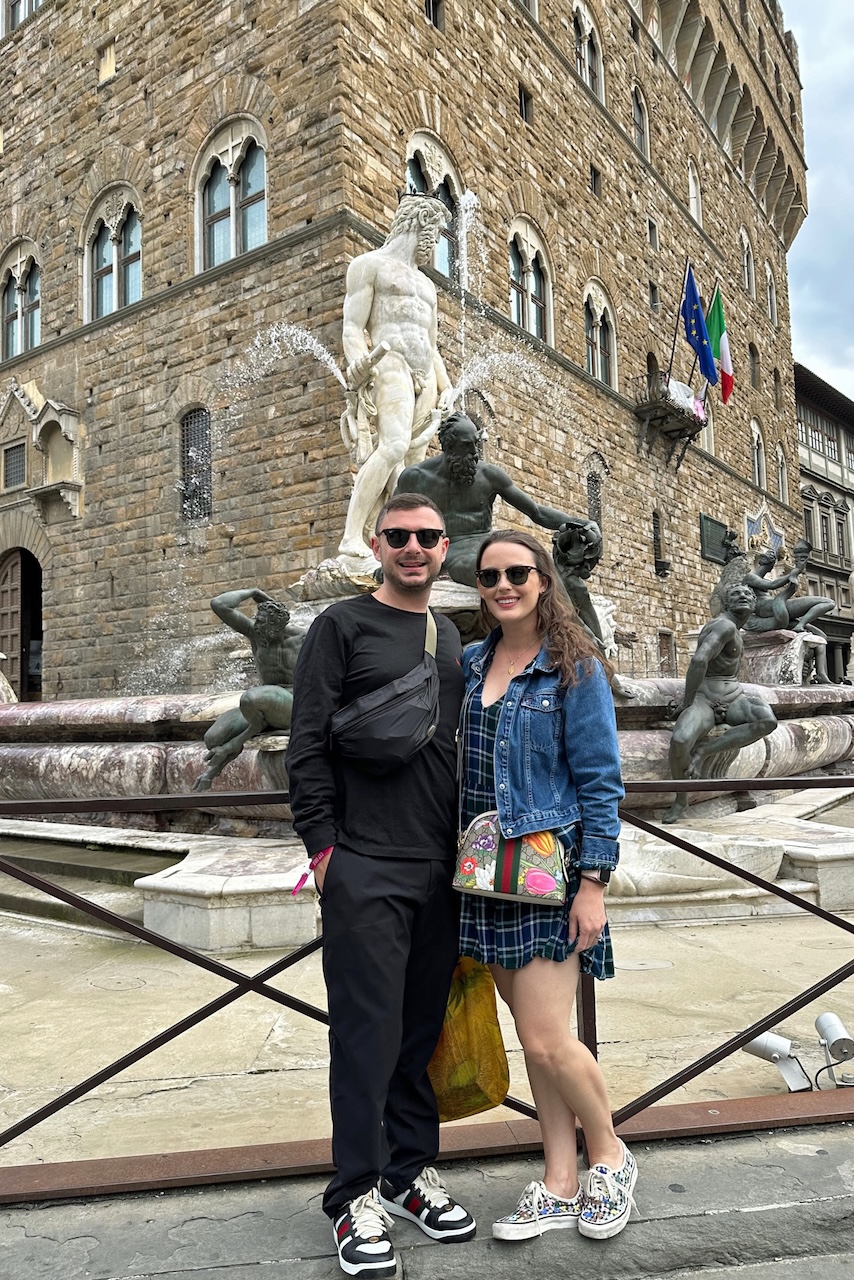
Next to David stands Baccio Bandinelli's Hercules and Cacus, while elsewhere in the piazza you will find Bartolomeo Ammannati's Fountain of Neptune (also known as Biancone and Lauren's favorite sculpture in the piazza) and Giambologna's Equestrian Monument of Cosimo I de' Medici. Unlike the David outside of Palazzo Vecchio, these are all original works, making the Piazza della Signoria effectively an open-air Renaissance sculpture gallery.
As beautiful as the piazza is during the day, it can get incredibly crowded, so we prefer to visit late at night. Once the tour groups and daytime crowds begin to disappear, the square can actually be appreciated. At night, Palazzo Vecchio and the surrounding buildings are illuminated, making the sculptures easier to appreciate without crowds scattered amongst them. Standing here after dark is one of our favorite ways to savour the beauty of Florence.
If there is one piazza in Florence that captures the city's history, politics, and art in a single place, it is Piazza della Signoria. This beautiful square has served as the civic heart of Florence for centuries, with Palazzo Vecchio rising above it and an incredible collection of Renaissance sculpture displayed throughout the surrounding space.
As cliché as this may seem, this is one of our favorite public spaces in Florence. There is so much to look at that even after multiple visits, we still find ourselves stopping here to take it all in. The architecture is imposing, the sculptures are remarkable, and few places make Florence's history feel quite as tangible.
The entrance to Palazzo Vecchio is guarded by two monumental sculptures. Michelangelo's David originally stood here after its completion in the early 16th century, transforming the biblical hero into a power civic symbol for the Florentine Republic. The original remained outside of Palazzo Vecchio for centuries before being moved to the Accademia Gallery for its protection in the 19th century. A marble replica now occupies its former position beside the palace entrance.
Next to David stands Baccio Bandinelli's Hercules and Cacus, while elsewhere in the piazza you will find Bartolomeo Ammannati's Fountain of Neptune (also known as Biancone and Lauren's favorite sculpture in the piazza) and Giambologna's Equestrian Monument of Cosimo I de' Medici. Unlike the David outside of Palazzo Vecchio, these are all original works, making Piazza della Signoria effectively an open-air Renaissance sculpture gallery.
As beautiful as the piazza is during the day, it can get incredibly crowded, so we prefer to return late at night. Once the tour groups and daytime crowds begin to disappear, the square can actually be appreciated. At night, Palazzo Vecchio and the surrounding buildings are illuminated, making the sculptures easier to appreciate without crowds scattered amongst them. Standing here after dark is one of our favorite ways to savour the beauty of Florence.
Palazzo Vecchio, also known as Palazzo della Signoria, has stood in Piazza della Signoria since the early 14th century and remains one of the best physical reminders of Florence's long history as a center of civic and political power. Its fortress-like exterior feels intentionally harsh, but step inside and the experience changes considerably.
The palace began as the seat of the Republic of Florence's government long before becoming associated with the Medici. However, Cosimo I de' Medici moved his family and court here in the mid-16th century from the nearby Palazzo Medici Riccardi, transforming portions of the medieval government building into an elaborate palace fit for the Dukes of Florence, before the family eventually relocated across the Arno to Palazzo Pitti.
That history is reflected throughout the palace's grand interior. The enormous Salone dei Cinquecento (Hall of the 500) is arguably the main highlight, created to accommodate Florence's governing council and then dramatically redesigned (as you see it today) under Cosimo I. Its soaring ceiling and enormous frescos make the room feel every bit as ambitious as the political figures who used it. The hall is also home to Michelangelo's The Genius of Victory.
Other highlights inside Palazzo Vecchio include the Bronzino Chapel of Eleonora of Toledo, wife of Cosimo I, as well as, the Hall of Lilies (Sala dei Gigli). The Hall of Lilies is named for the golden fleur-de-lis that cover its deep blue walls. The richly decorated room is easily one of the most beautiful inside Palazzo Vecchio.
Palazzo Vecchio is, however, more than just opulently decorated rooms. So much of Florence's political history unfolded within these walls. Visiting the palace gives you a better understanding of the republic that Florence once was, the rise of Medici power, and the close relationship between politics and art that shaped the city during the Renaissance.
Tickets for Palazzo Vecchio can be purchased online in advance of your visit via the Comune di Firenze website. Guided tours of the palace are also available in English on Mondays and can be booked online. Access to the palace's tower, Torre di Arnolfo, requires a separate ticket for an additional fee. Keep in mind that the tower may close due to inclement weather. It is 418 steps to the top of the tower. Children under the age of six are not allowed to visit the Torre di Arnolfo.
Jetset Seeker Pro Tip: A free audio tour of Palazzo Vecchio is available through the official Museo di Palazzo Vecchio website, making it easy to learn more about the palace and its history as you explore at your own pace. Just scroll down to the section titled 'Audios' (about two-thirds of the way down the page) and remember to bring a pair of headphones so you can listen during your visit.
Palazzo Vecchio, also known as Palazzo della Signoria, has stood in Piazza della Signoria since the early 14th century and remains one of the best physical reminders of Florence's long history as a center of civic and political power. Its fortress-like exterior feels intentionally harsh, but step inside and the experience changes considerably.
The palace began as the seat of the Republic of Florence's government long before becoming associate with the Medici. However, Cosimo I de' Medici moved his family and court here in the mid-16th century from the nearby Palazzo Medici Riccardi, transforming portions of the medieval government building into an elaborate palace fit for the Dukes of Florence, before the family eventually relocated across the Arno to Palazzo Pitti.
That history is reflected throughout the palace's grand interior. The enormous Salone dei Cinquecento (Hall of the 500) is arguably the main highlight, created to accommodate Florence's governing council and then dramatically redesigned (as you see it today) under Cosimo I. Its soaring ceiling and enormous frescos make the room feel every bit as ambitious as the political figures who used it. The hall is also home to Michelangelo's The Genius of Victory.
Other highlights inside Palazzo Vecchio include the Bronzino Chapel of Eleonora of Toledo, wife of Cosimo I, as well as, the Hall of Lilies (Sala dei Gigli). The Hall of Lilies is named for the golden fleur-de-lis that cover its deep blue walls. The richly decorated room is easily one of the most beautiful inside Palazzo Vecchio.
Palazzo Vecchio is, however, more than just opulently decorated rooms. So much of Florence's political history unfolded within these walls. Visiting the palace gives you a better understanding of the republic that Florence once was, the rise of Medici power, and the close relationship between politics and art that shaped the city during the Renaissance.
Tickets for Palazzo Vecchio can be purchased online in advance of your visit via the Comune di Firenze website. Guided tours of the palace are also available in English on Mondays and can be booked online. Access to the palace's tower, Torre di Arnolfo, requires a separate ticket for an additional fee. Keep in mind that the tower may close due to inclement weather. It is 418 steps to the top of the tower. Children under the age of six are not allowed to visit the Torre di Arnolfo.
Jetset Seeker Pro Tip: A free audio tour of Palazzo Vecchio is available through the official Museo di Palazzo Vecchio website, making it easy to learn more about the palace and its history as you explore at your own pace. Just scroll down to the section titled 'Audios' (about two-thirds of the way down the page) and remember to bring a pair of headphones so you can listen during your visit.
Across from Palazzo Vecchio and lining one side of the Piazza della Signoria is the Loggia dei Lanzi (also called the Loggia della Signoria), and it offers something particularly unusual: the opportunity to see major works of sculpture in their historic setting without purchasing a ticket.
Built in the 14th century for public ceremonies and gatherings, the open-air loggia later became a showcase for sculpture under the Medici. Today, it is technically a part of the Uffizi complex, but the Loggia dei Lanzi remains completely free to visit.
Among its most important works is Benvenuto Cellini's bronze Perseus with the Head of Medusa, commissioned in the 16th century by Cosimo I de' Medici. Also located here is Giambologna's Abduction of a Sabine Woman (The Rape of the Sabine), an ambitious marble sculpture designed to be viewed from multiple angles, along with the artist's Hercules and Nessus. These are not modern replicas, but original works that have occupied this public space since the Renaissance.
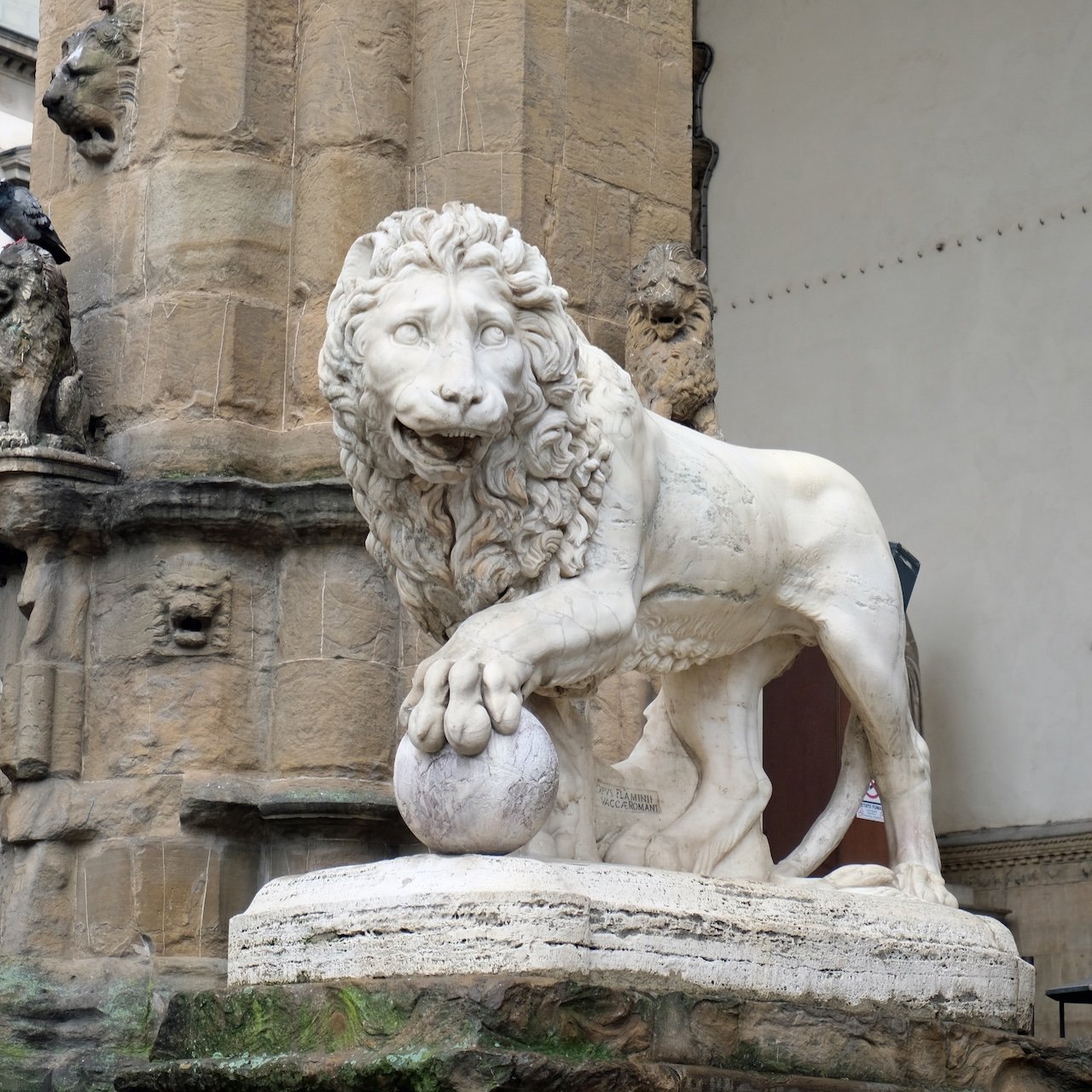
At the front of the Loggia, two Medici lions stand guard. One of which is Roman and dates to the 2nd century AD, while the other was created as to be its companion in the 16th century. The lion had long been associated with strength, authority, power, and royalty, symbolism that made these monumental sculptures particularly fitting for the Medici.
The Medici Lions themselves are enormously influential, with copies and variations appearing at palaces, gardens, museums, and important buildings throughout Europe. Similar lion sculptures appear in royal settings such as the Throne Room of the Royal Palace of Madrid, where four gilded lions flank the Spanish throne. It is another reminder of just how far the influence of the Medici extended beyond Tuscany. The family did not simply shape the politics, art, and architecture of their own city. Through wealth, patronage, marriage, and political connections, their influence reached royal courts across Europe, helping spread the art and artistic ideals of Renaissance Florence well beyond Italy.
That history is a big part of why we love visiting the Loggia dei Lanzi and the Piazza della Signoria as a whole. You can stand in the center of the square surrounded by incredible Renaissance sculptures, look up at the palace from which Florence was governed, and see evidence of the Medici's influence almost everywhere you turn. Few places in Florence encapsulate the city's art and political history together quite as vividly, and you do not need to step inside a museum to experience it.
Across from Palazzo Vecchio and lining one side of the Piazza della Signoria is the Loggia dei Lanzi (also called the Loggia della Signoria), and it offers something particularly unusual: the opportunity to see major works of sculpture in their historic setting without purchasing a ticket.
Built in the 14th century for public ceremonies and gatherings, the open-air loggia later became a showcase for sculpture under the Medici. Today, it is technically a part of the Uffizi complex, but the Loggia dei Lanzi remains completely free to visit.
Among its most important works is Benvenuto Cellini's bronze Perseus with the Head of Medusa, commissioned in the 16th century by Cosimo I de' Medici. Also located here is Giambologna's Abduction of a Sabine Woman (The Rape of the Sabine), an ambitious marble sculpture designed to be viewed from multiple angles, along with the artist's Hercules and Nessus. These are not modern replicas, but original works that have occupied this public space since the Renaissance.
At the front of the Loggia, two Medici lions stand guard. One of which is Roman and dates to the 2nd century AD, while the other was created as to be its companion in the 16th century. The lion had long been associated with strength, authority, power, and royalty, symbolism that made these monumental sculptures particularly fitting for the Medici.
The Medici Lions themselves are enormously influential, with copies and variations appearing at palaces, gardens, museums, and important buildings throughout Europe. Similar lion sculptures appear in royal settings such as the Throne Room of the Royal Palace of Madrid, where four gilded lions flank the Spanish throne. It is another reminder of just how far the influence of the Medici extended beyond Tuscany. The family did not simply shape the politics, art, and architecture of their own city. Through wealth, patronage, marriage, and political connections, their influence reached royal courts across Europe, helping spread the art and artistic ideals of Renaissance Florence well beyond Italy.
That history is a big part of why we love visiting the Loggia dei Lanzi and the Piazza della Signoria as a whole. You can stand in the center of the square surrounded by incredible Renaissance sculptures, look up at the palace from which Florence was governed, and see evidence of the Medici's influence almost everywhere you turn. Few places in Florence encapsulate the city's art and political history together quite as vividly, and you do not need to step inside a museum to experience it.
While this list is supposed to encompass the best things to do in Florence, we have to suggest at least one day trip from Florence: Siena. We have taken quite a few day trips from Florence over the years, including trips to Bologna, Pisa, Vernazza in Cinque Terre, and wineries throughout Chianti. However, if you have enough time in Florence to dedicate a full day to exploring somewhere else, Siena is our first choice.
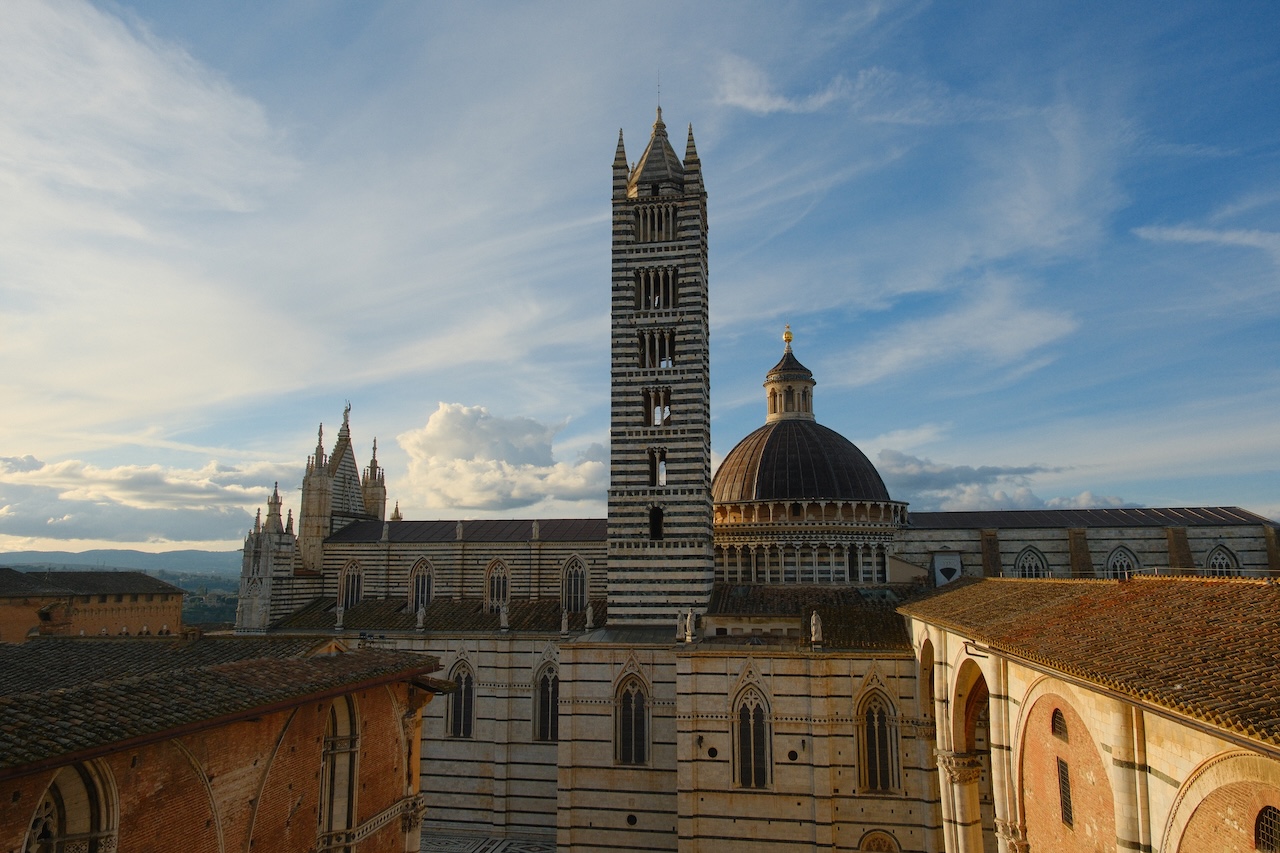
Siena is a medieval city that feels distinctly different from Florence and a place we genuinely love exploring. The historic center is compact and incredibly well preserved, with narrow medieval streets that all seemingly lead towards the city's center: Piazza del Campo. The enormous shell-shaped piazza is unlike any other we have encountered in Italy, but it was Siena Cathedral (Duomo di Siena, also known as the Metropolitan Cathedral of Saint Mary of the Assumption) that really made the day trip from Florence memorable for us.
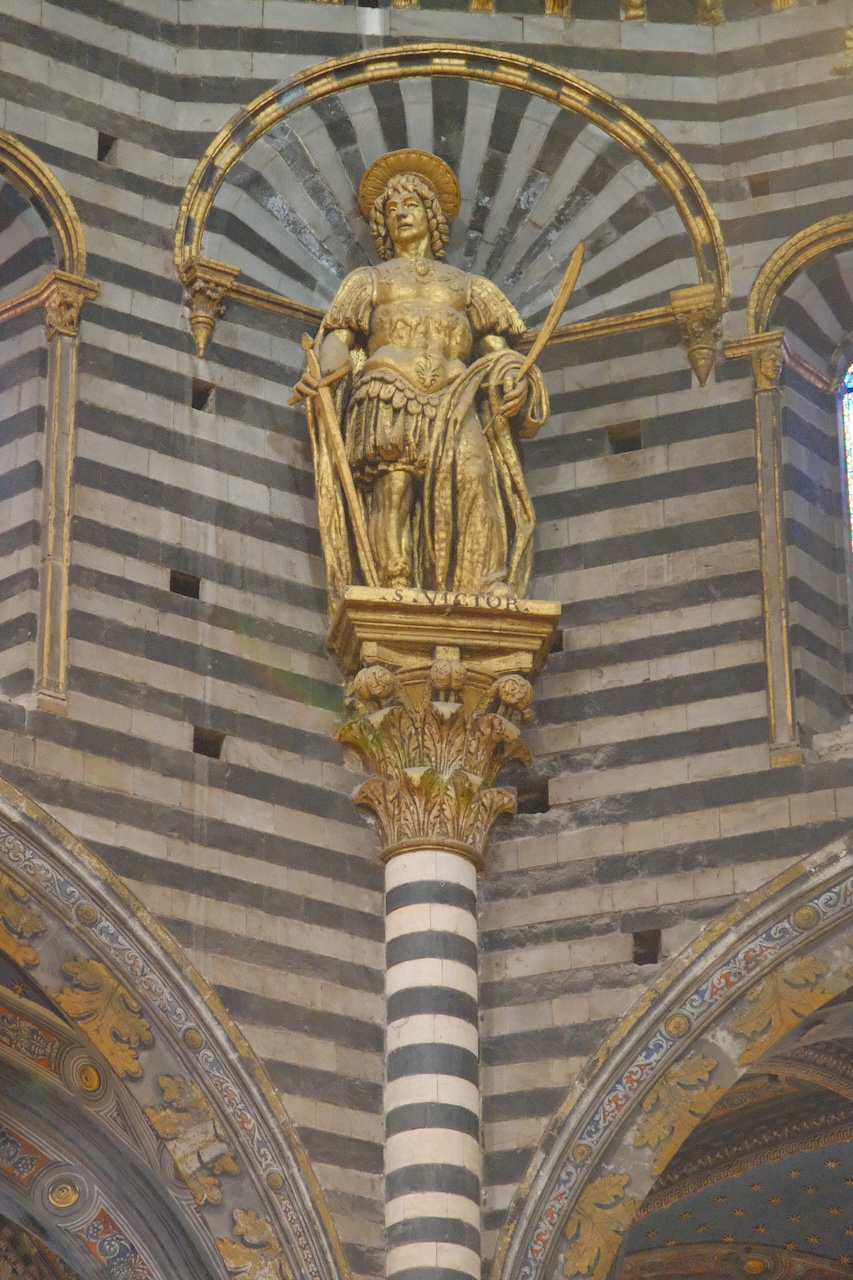
The cathedral is easily one of the most beautiful churches in Italy. Its striped marble interior is truly striking. The grand cathedral contains works by Donatello, Michelangelo, and Bernini, along with the incredibly opulent Piccolomini Library and the cathedral's elaborate marble mosaic floors. If you enjoy the art and architecture in Florence, Siena feels like a natural extension of that experience while still being a distinctly different city in Tuscany.
While we would not give up one of only two or three days in Florence to visit Siena, if you have more time in the city and are eager to explore more of Tuscany, Siena is the day trip we would prioritize first!
Siena is one of the easiest day trips from Florence to do independently. Regional trains connect Florence Santa Maria Novella and Siena FS in approximately 90 minutes. Trains typically run hourly and tickets can be purchased directly through the train operator, Trenitalia, either at the ticket kiosks at the train station or on the Trenitalia website.
Of course, you can also book a guided day trip to Siena through GetYourGuide. A number of tour options also include stops in Pisa, Chianti, and elsewhere in Tuscany.
Tickets for Siena Cathedral can be purchased at the on-site ticket office or via the Opera Duomo Siena website. We recommend purchasing the Porta del Cielo pass, which includes access to the cathedral's roof and all of the other sites at the cathedral complex.
Keep in mind that the grand mosaic floors of Siena Cathedral are not always visible to the public. Large sections are typically kept covered to protect the delicate marble and are uncovered only during designated periods each year for visitors to see. We were lucky to see the floors during our visit in February 2026, however, even if portions of the floor are covered for conservation, Siena Cathedral is still one of the highlights of the city, and, in our opinion, well worth a trip!
We love that a day trip to Siena does not require you to race between attractions to make the day feel worthwhile. There is plenty of time to visit the major sights, including Siena Cathedral and Piazza del Campo, while still wandering the medieval streets, stopping for a long lunch, and simply enjoying the city. Siena is genuinely beautiful, and having the time to slow down and appreciate it is a big part of what makes this such a great day trip from Florence. It is also one of the main reasons we would happily return!
While this list is supposed to encompass the best things to do in Florence, we have to suggest at least one day trip from Florence: Siena. We have taken quite a few day trips from Florence over the years, including trips to Bologna, Pisa, Vernazza in Cinque Terre, and wineries throughout Chianti. However, if you have enough time in Florence to dedicate a full day to exploring somewhere else, Siena is our first choice.
Siena is a medieval city that feels distinctly different from Florence and a place we genuinely love exploring. The historic center is compact and incredibly well preserved, with narrow medieval streets that all seemingly lead towards the city's center: Piazza del Campo. The enormous shell-shaped piazza is unlike any other we have encountered in Italy, but it was Siena Cathedral that really made the day trip from Florence memorable for us.
The cathedral is easily one of the most beautiful churches in Italy. Its striped marble interior is truly striking. The grand cathedral contains works by Donatello, Michelangelo, and Bernini, along with the incredibly opulent Piccolomini Library and the cathedral's elaborate marble mosaic floors. If you enjoy the art and architecture in Florence, Siena feels like a natural extension of that experience while still being a distinctly different city in Tuscany.
While we would not give up one of only two or three days in Florence to visit Siena, if you have more time in the city and are eager to explore more of Tuscany, Siena is the day trip we would prioritize first.
Siena is one of the easiest day trips from Florence to do independently. Regional trains connect Florence Santa Maria Novella and Siena FS in approximately 90 minutes. Trains typically run hourly and tickets can be purchased directly through the train operator, Trenitalia, either at the train station's ticket kiosks or on the Trenitalia website.
Of course, you can also book a guided day trip to Siena through GetYourGuide. A number of tour options also include stops in Pisa, Chianti, and elsewhere in Tuscany.
Tickets for Siena Cathedral can be purchased at the on-site ticket office or via the Opera Duomo Siena website. We recommend purchasing the Porta del Cielo pass, which includes access to the cathedral's roof and all of the other sites at the cathedral complex.
Keep in mind that the grand mosaic floors of Siena Cathedral are not always visible to the public. Large sections are typically kept covered to protect the delicate marble and uncovered only during designated periods each year for visitors to see. We were lucky to see the floors during our visit in February 2026, however, even if portions of the floor are covered for conservation, Siena Cathedral is still one of the highlights of the city, and, in our opinion, well worth a trip!
We love that a day trip to Siena does not require you to race between attractions to make the day feel worthwhile. There is plenty of time to visit the major sights, including Siena Cathedral and Piazza del Campo, while still wandering the medieval streets, stopping for a long lunch, and simply enjoying the city. Siena is genuinely beautiful, and having the time to slow down and appreciate it is a big part of what makes this such a great day trip from Florence. It is also one of the main reasons we would happily return!
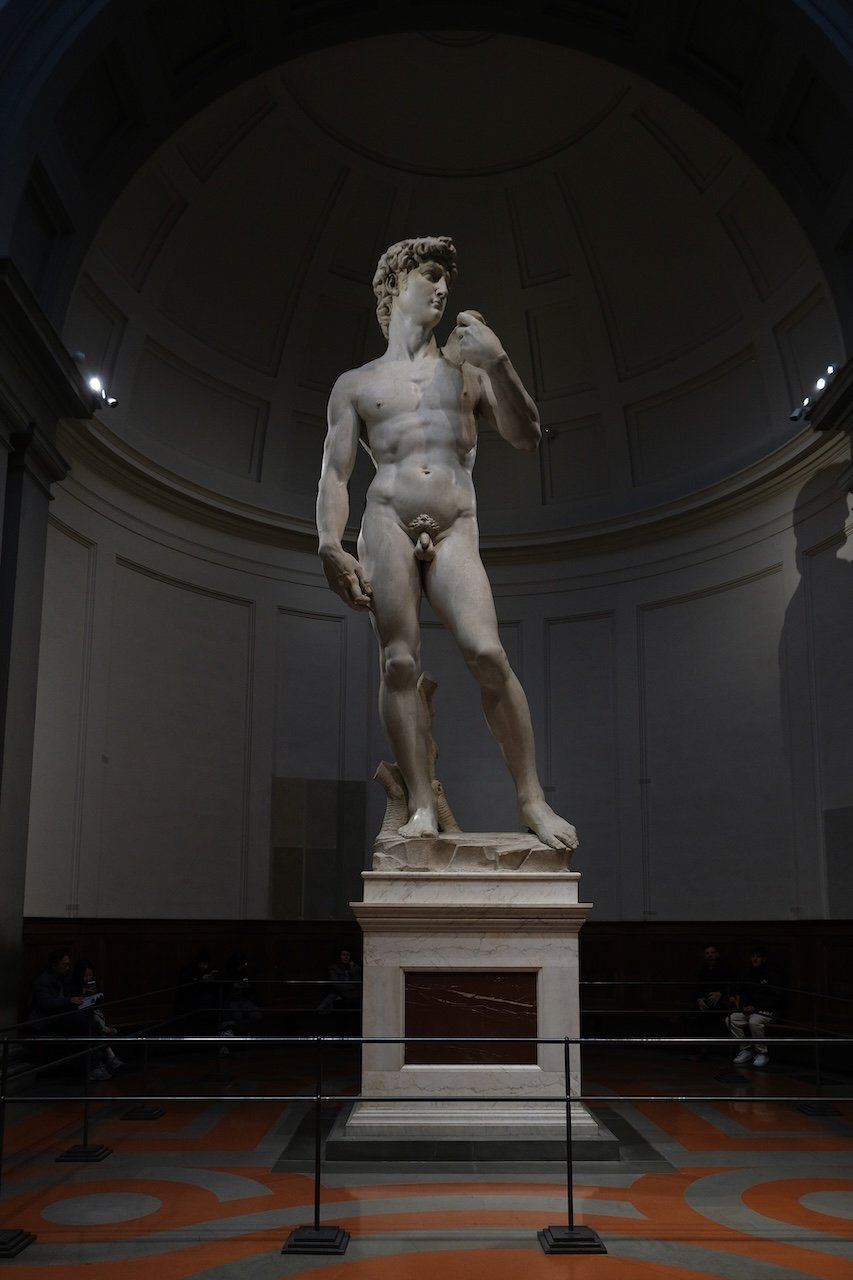 The most famous sculpture in the world on display at the Accademia Gallery and a must-see in Florence: Michelangelo's David.
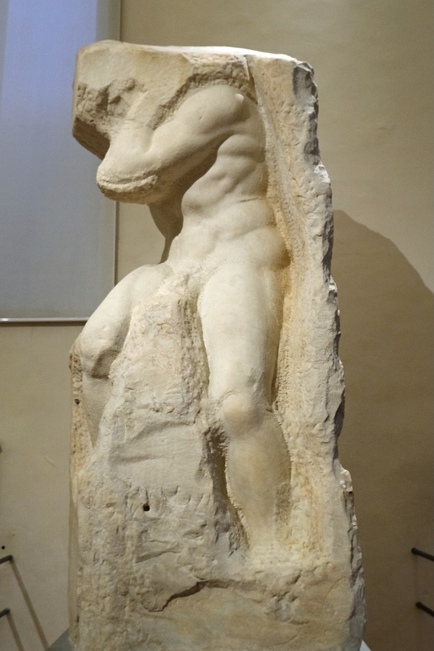 An unfinished sculpture by Michelangelo on display at the Accademia Gallery, referred to the Prisoner known as Atlas.
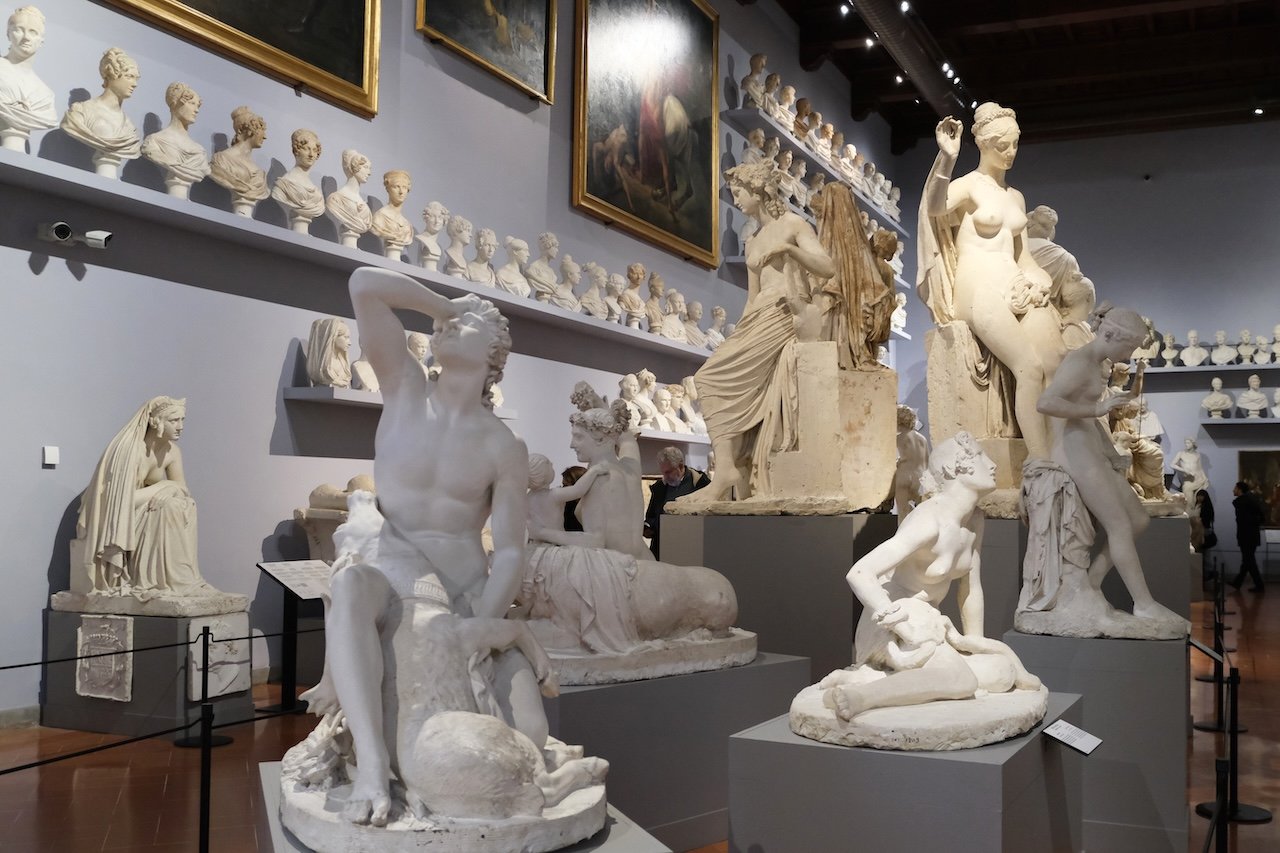
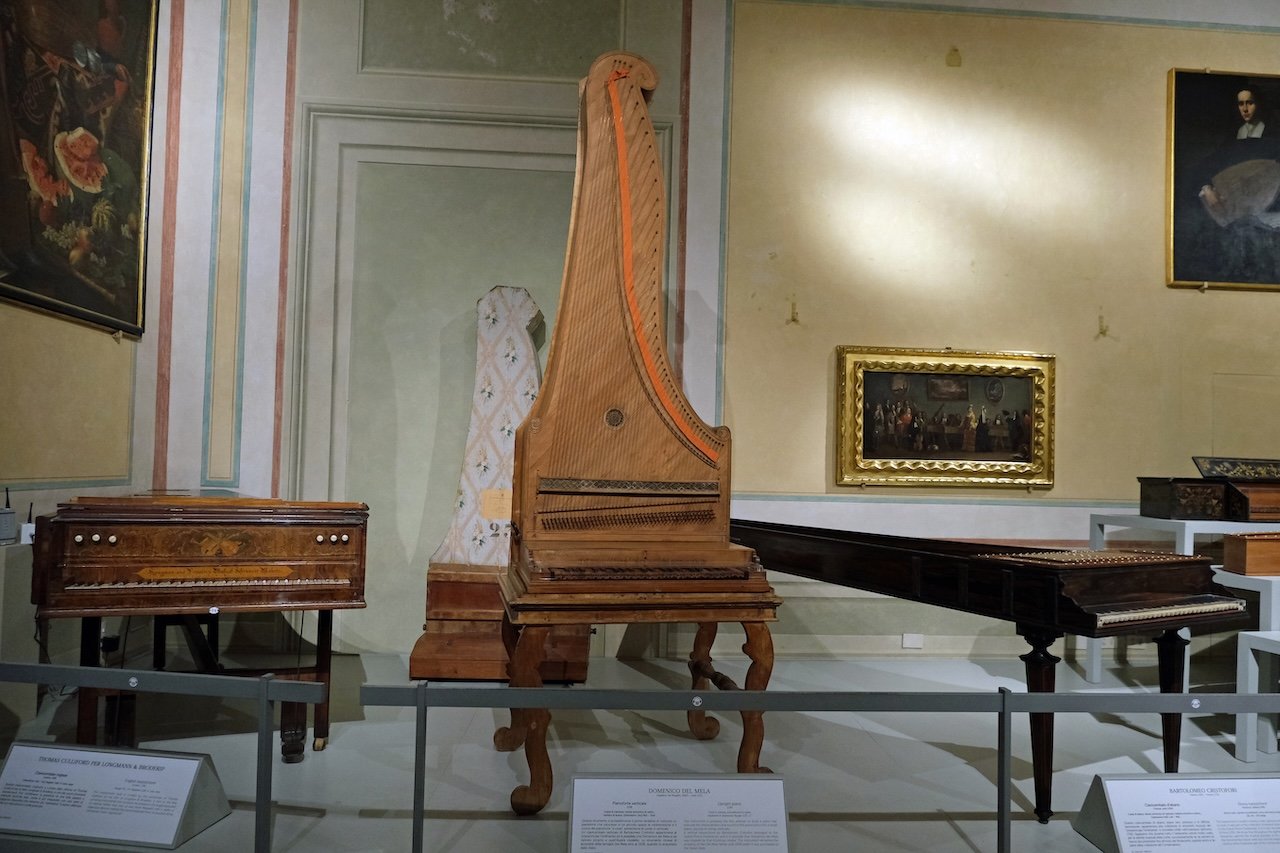 Snapshots from the Accademia Gallery, including the Gipsoteca and the Museum of Musical Instruments.
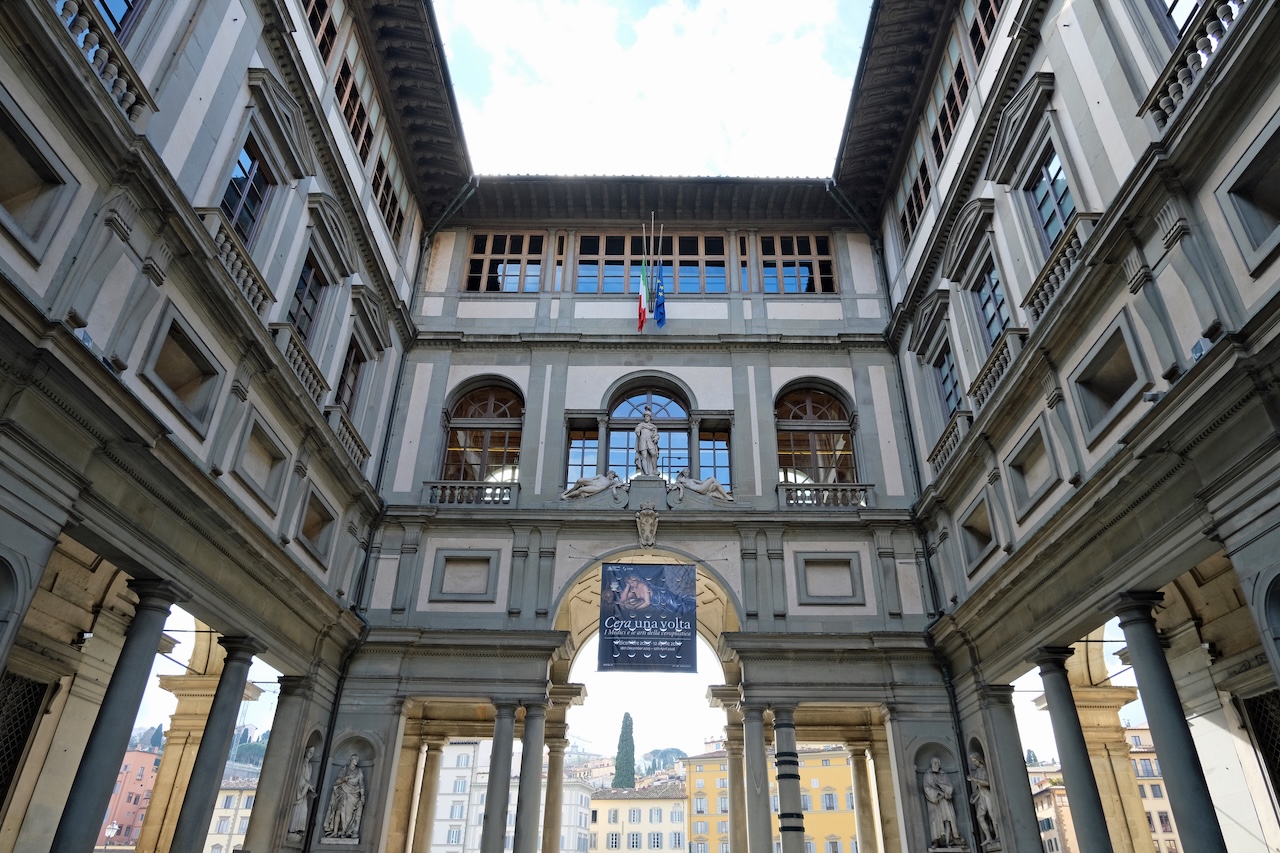
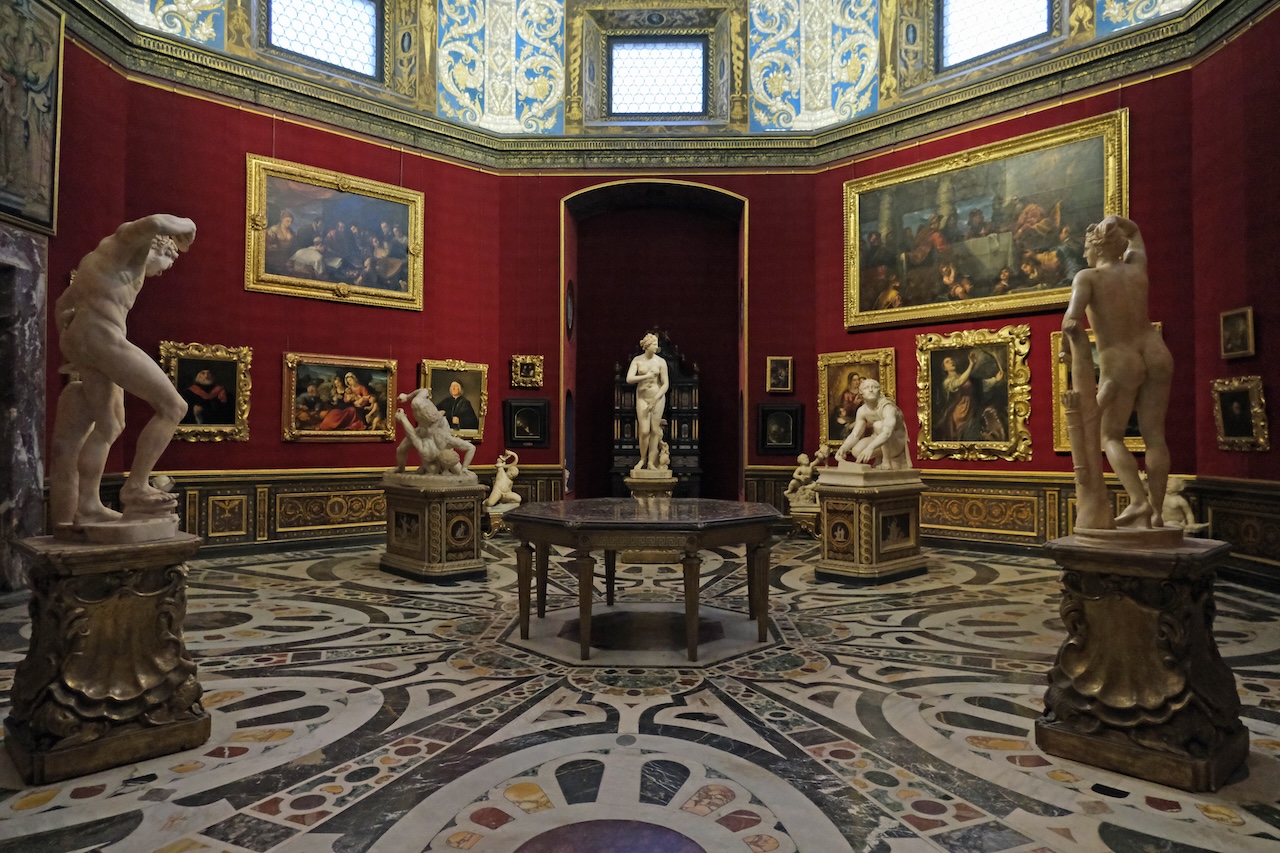
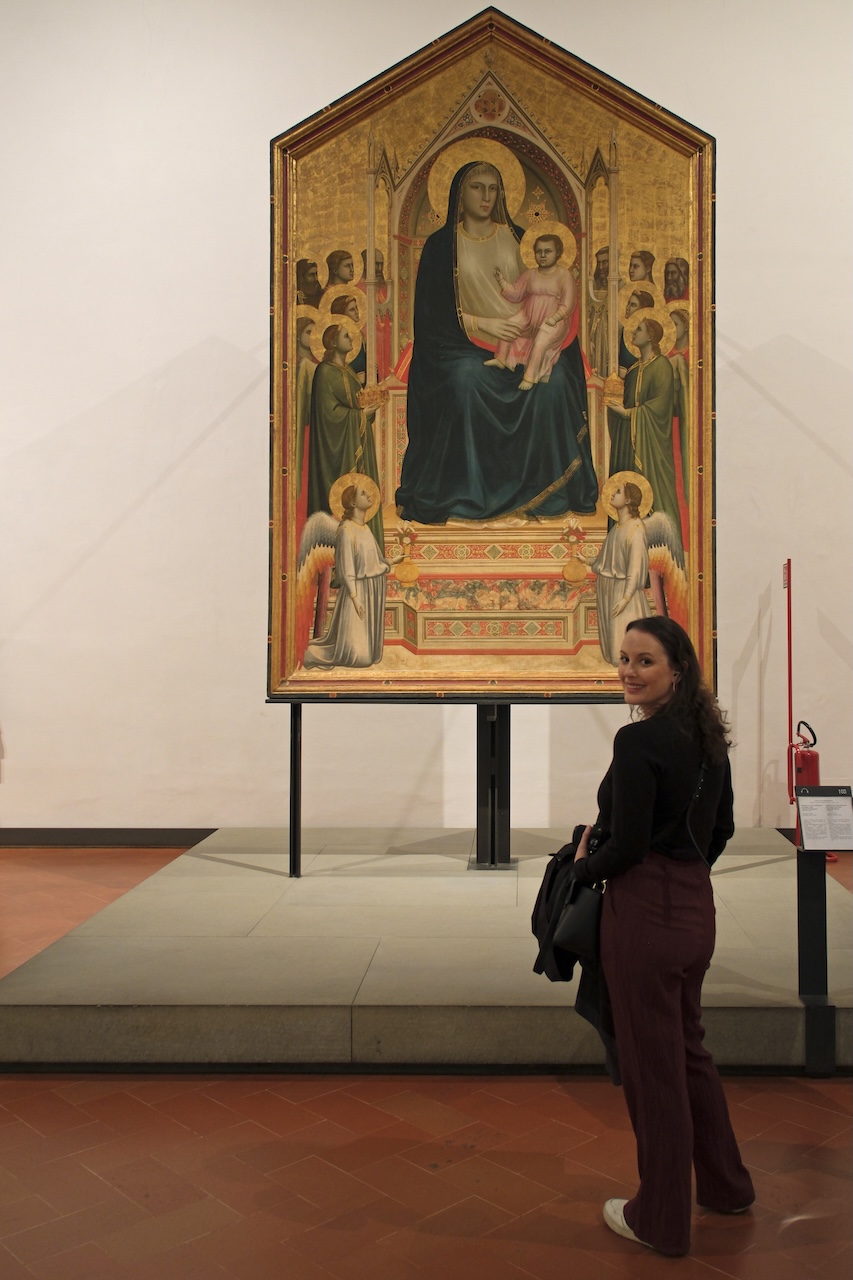 Snapshots from the Uffizi, including Lauren at the Uffizi Galleries on our most recent trip in Winter 2026.
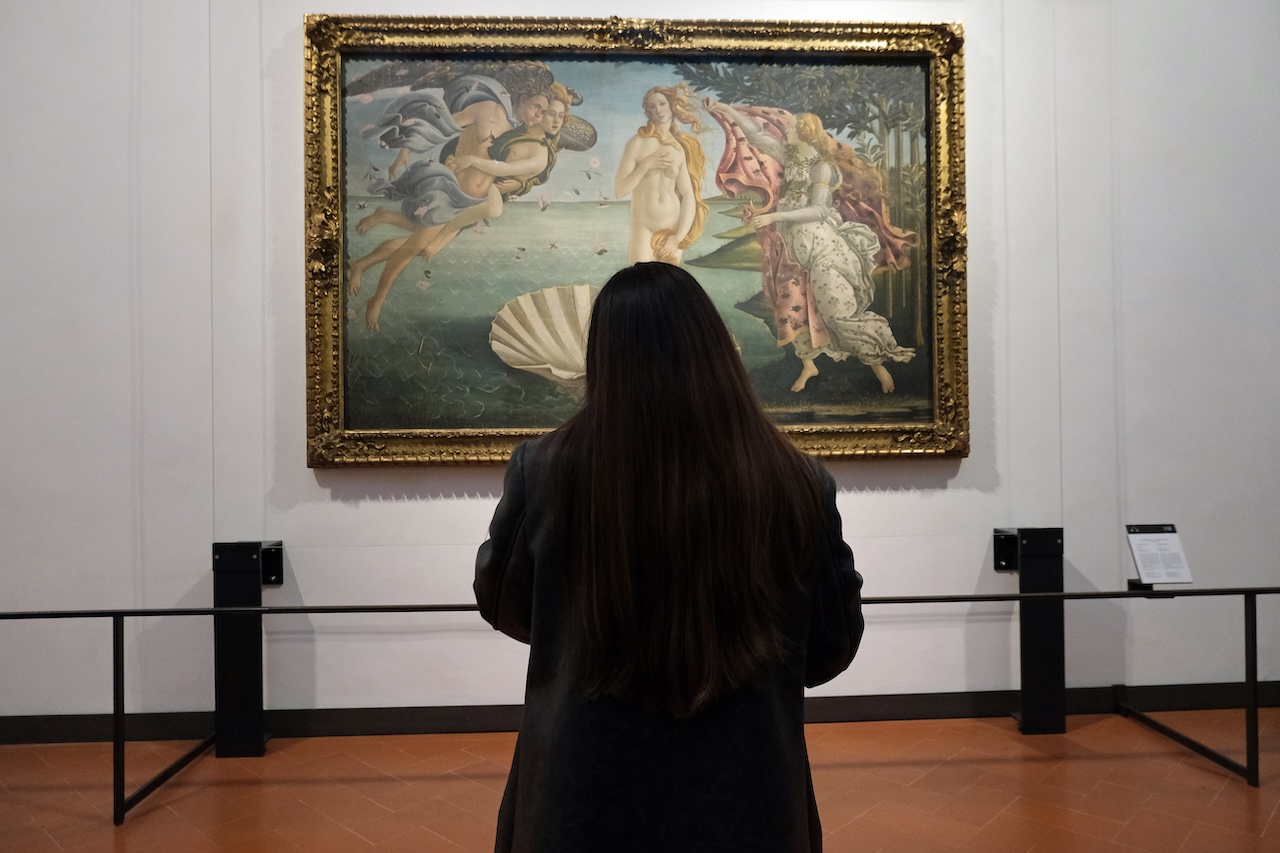 Admiring Botticelli's The Birth of Venus at the Uffizi Galleries.
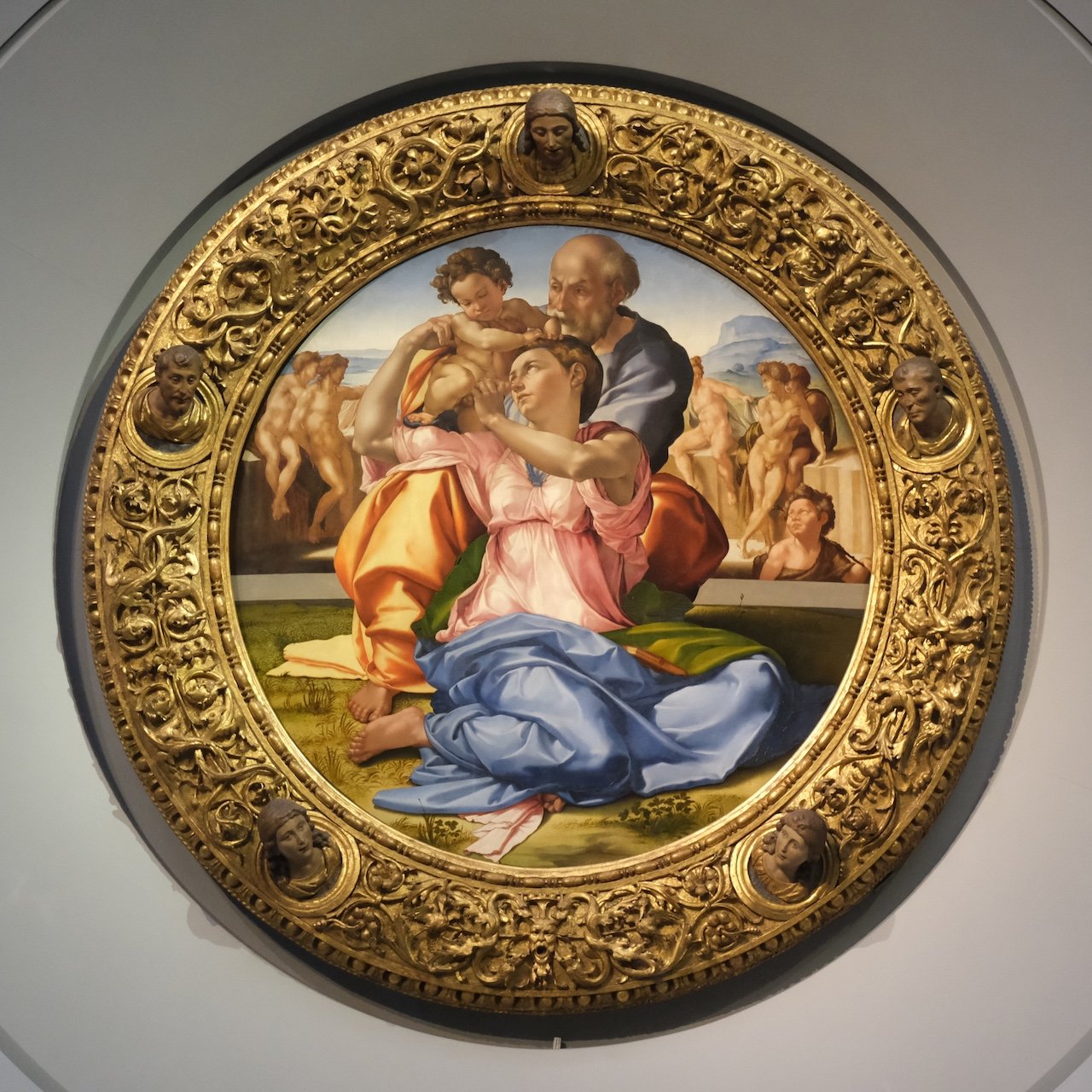 Holy Family (Doni Tondo) by Michelangelo inside the Uffizi Galleries.
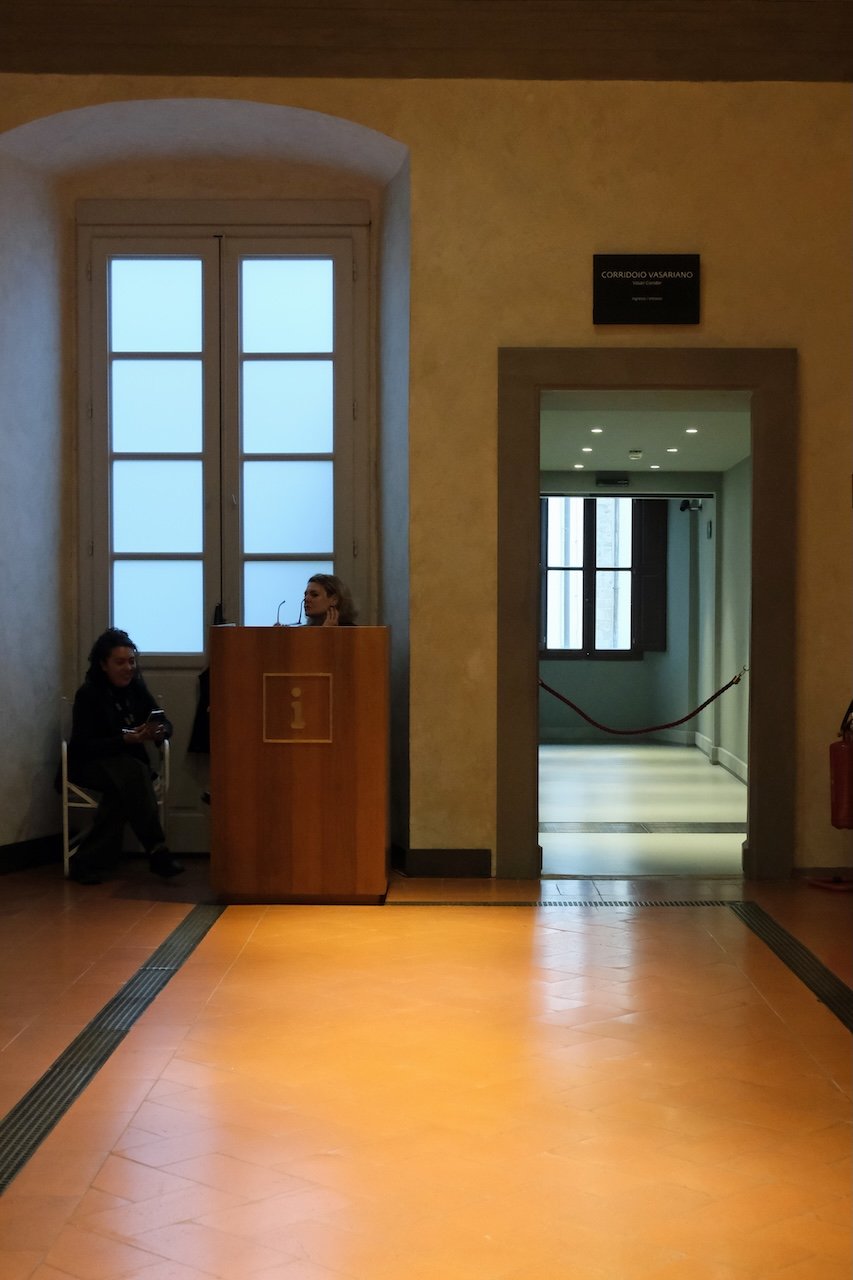 Entrance to the Vasari Corridor from the Uffizi Galleries. If you are interested in visiting, be sure to book the appropriate ticket. General admission tickets to the Uffizi Galleries do not include the Vasari Corridor.
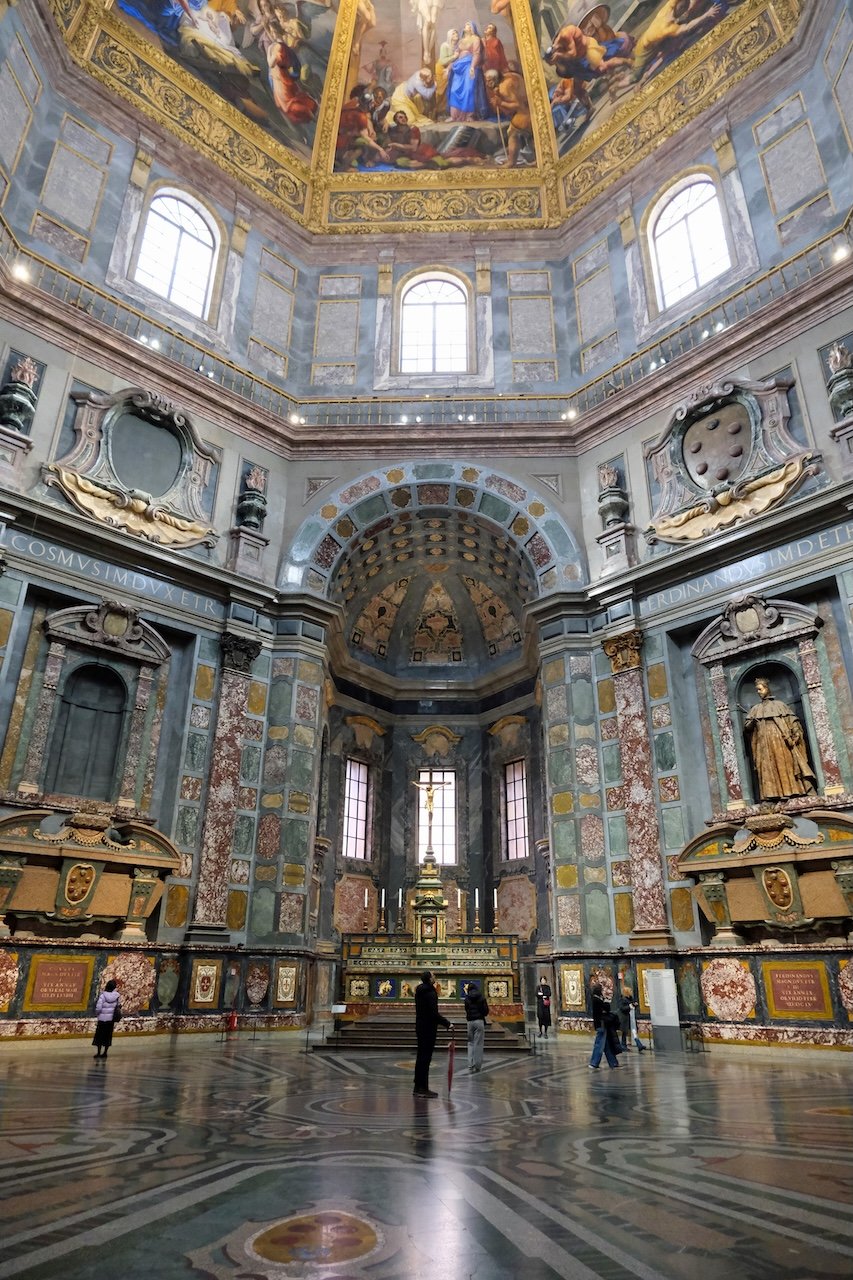
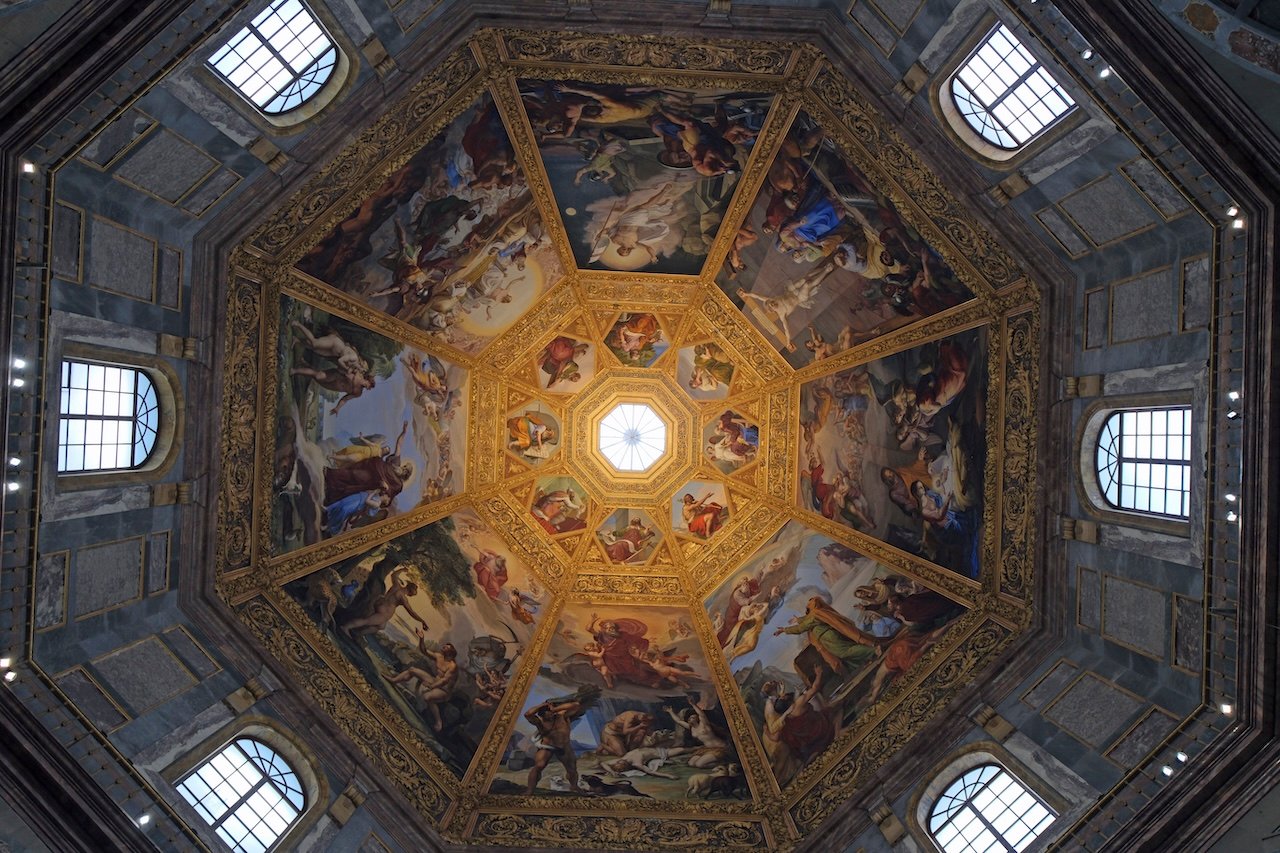
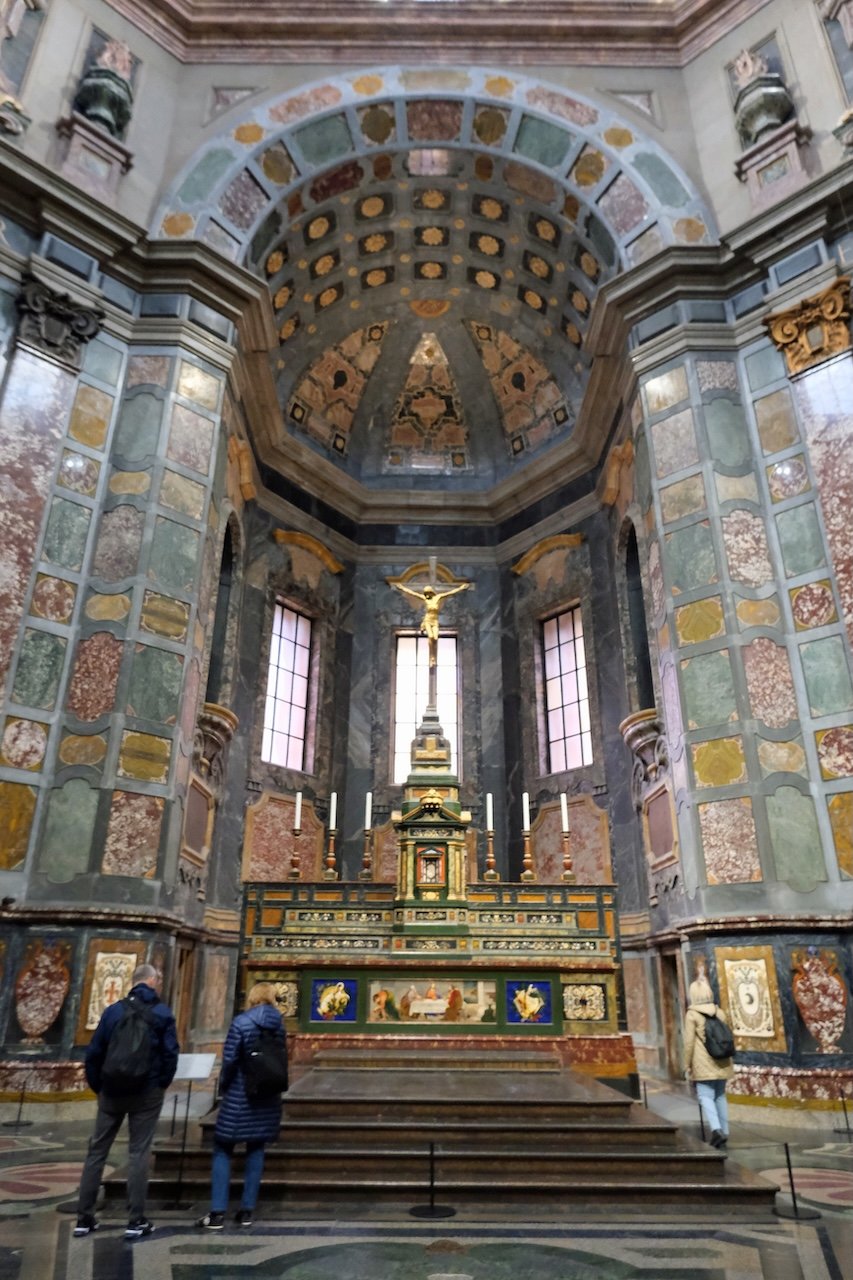 The opulent Chapel of the Princes at the Medici Chapels.
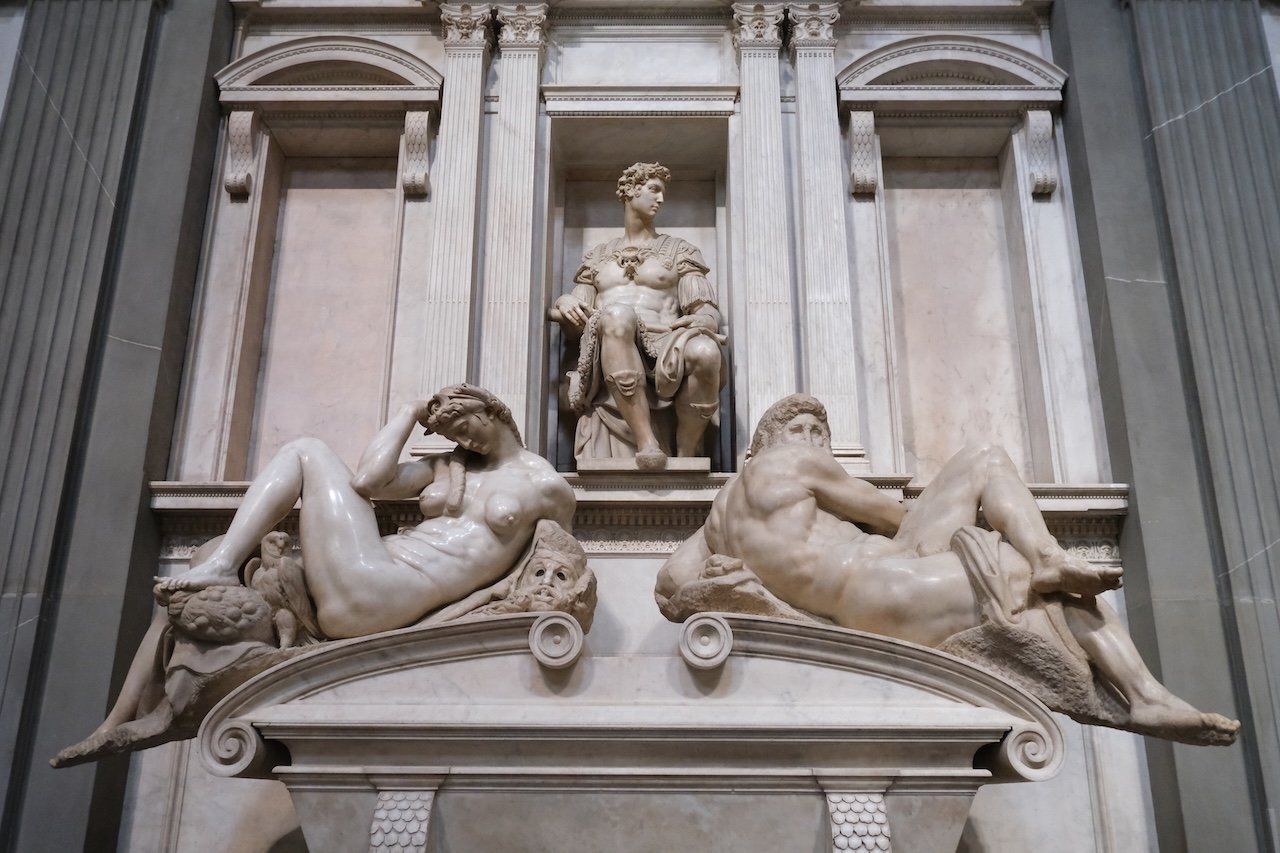
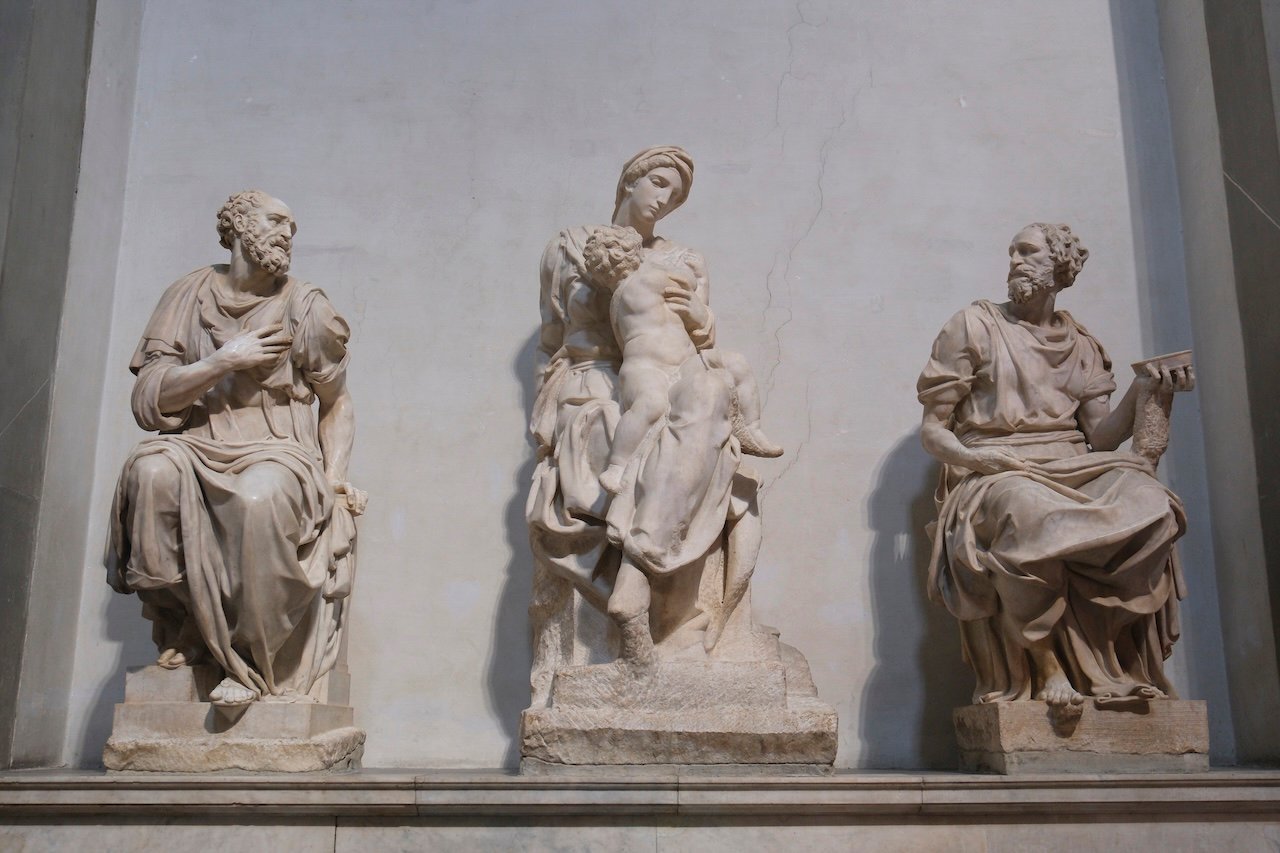
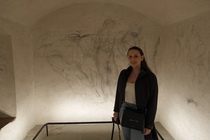
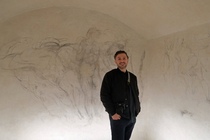 Highlights from the Medici Chapels (Cappelle Medicee), including drawings in Michelangelo's Secret Room.
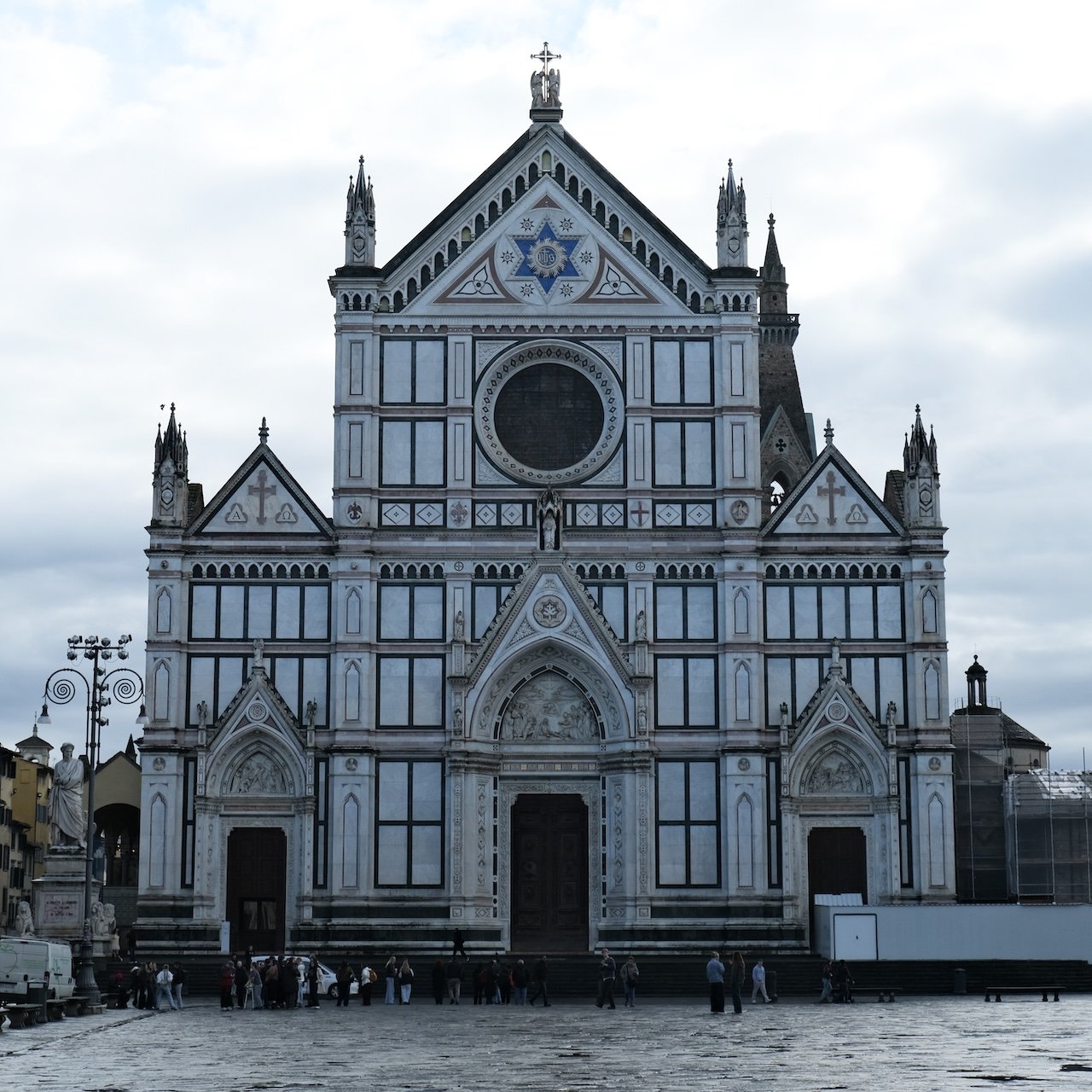
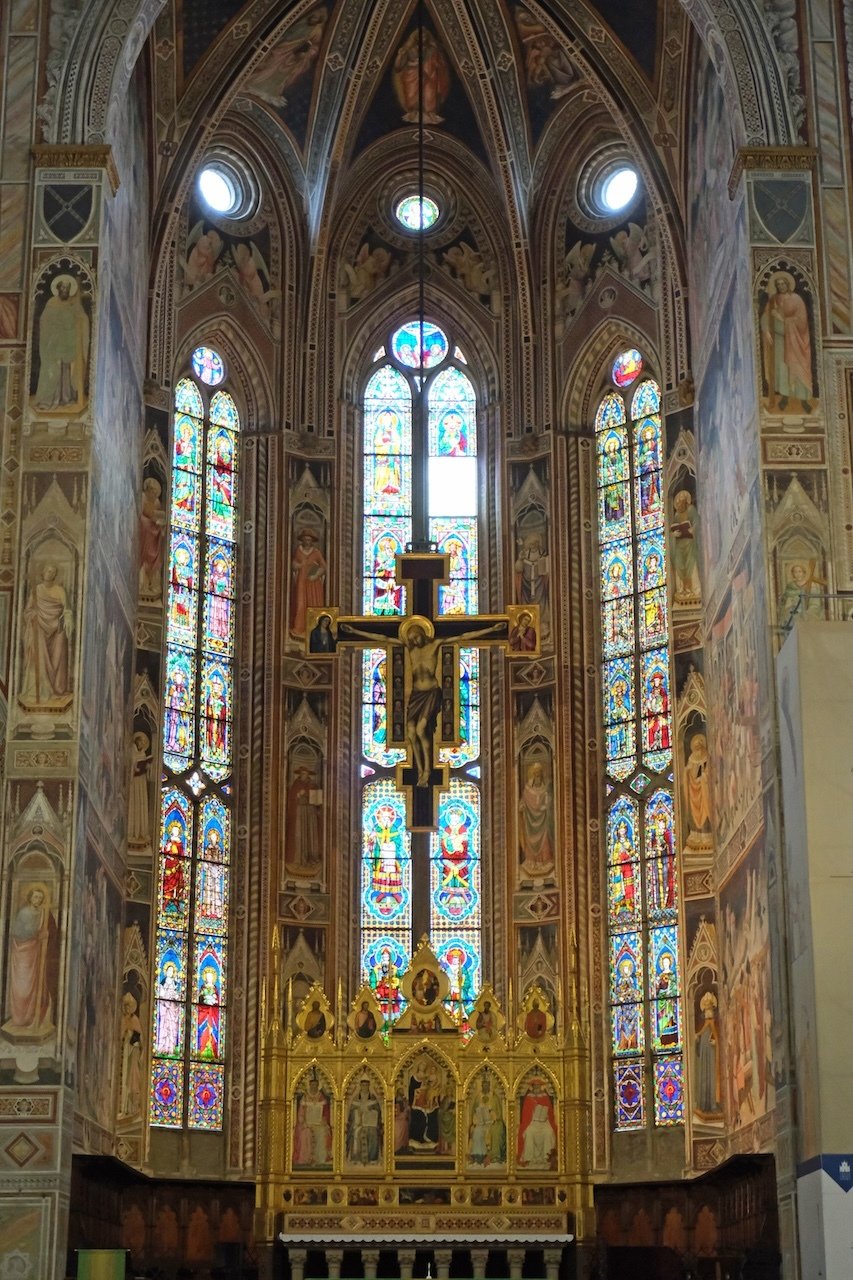
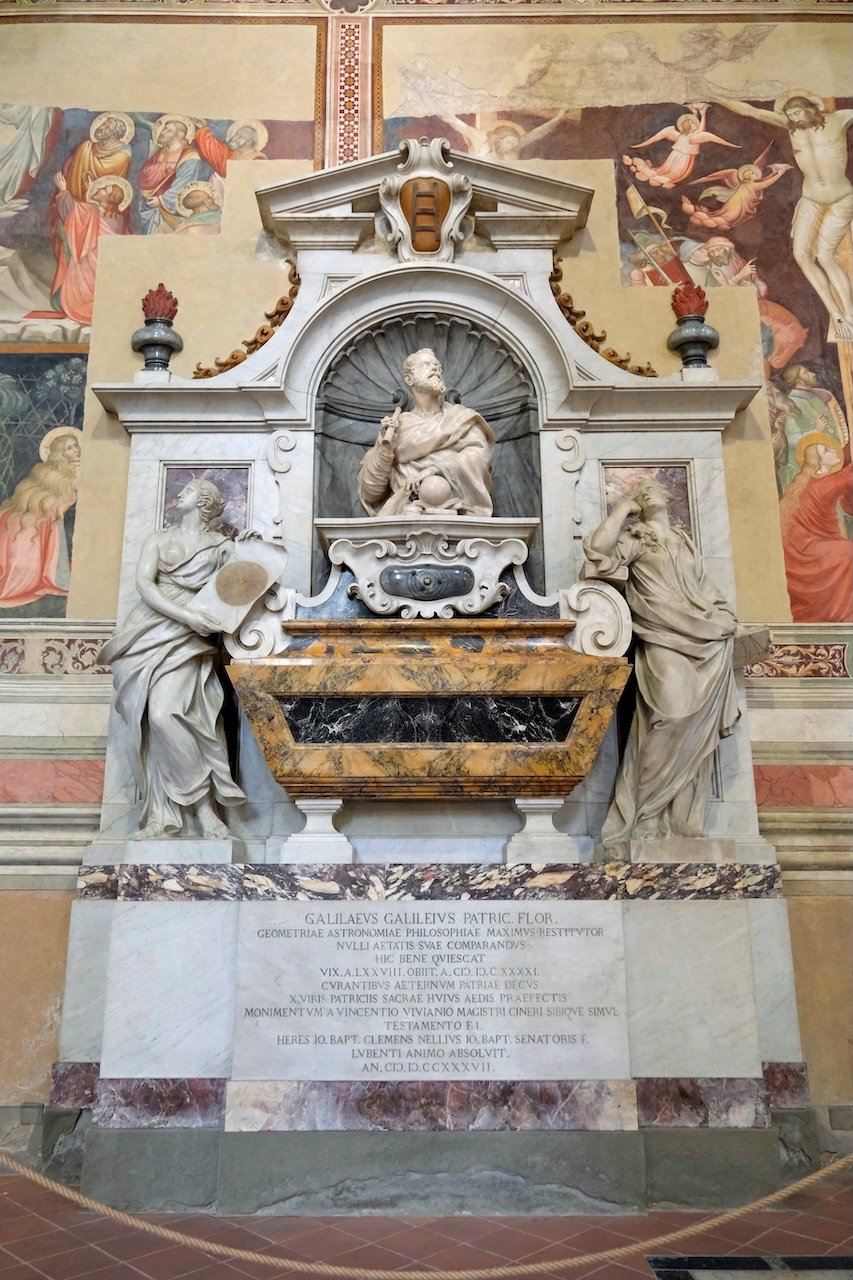
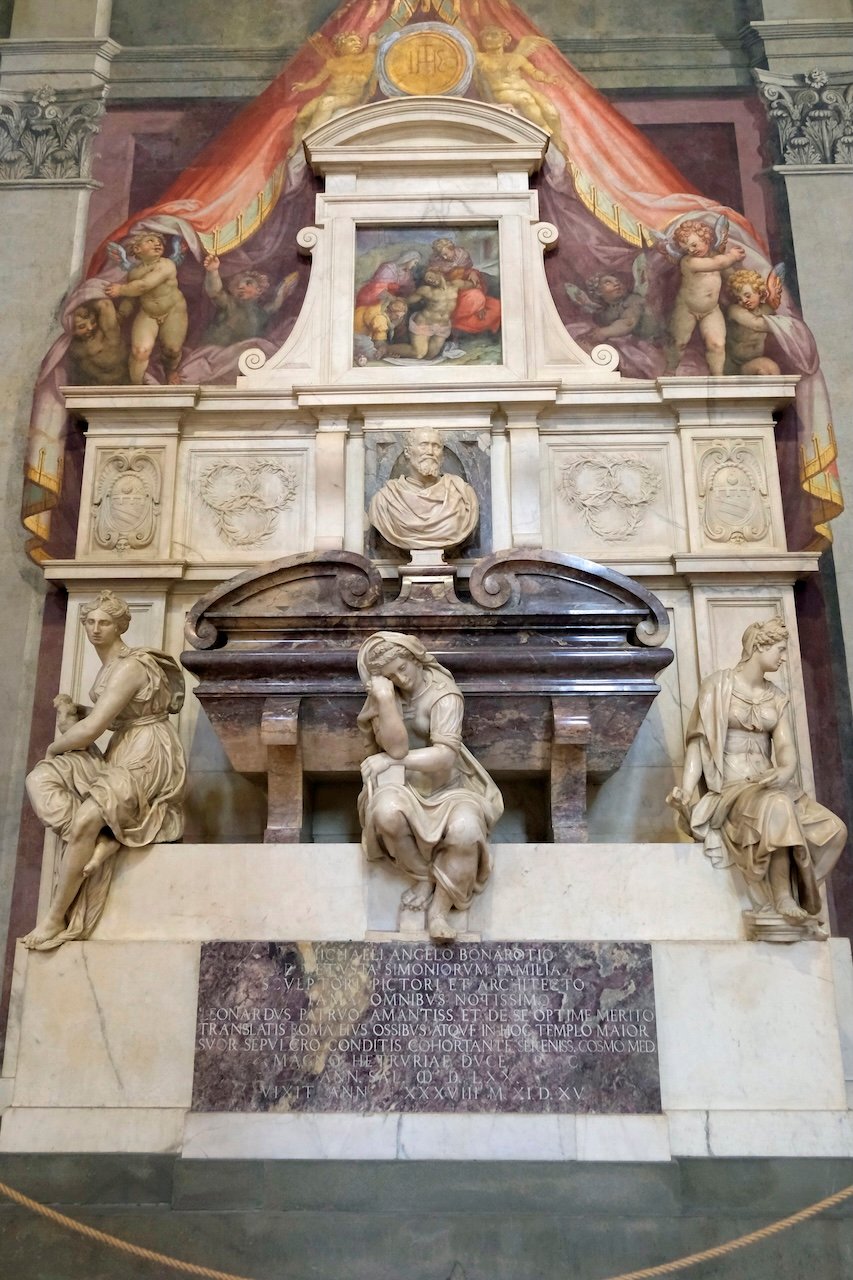
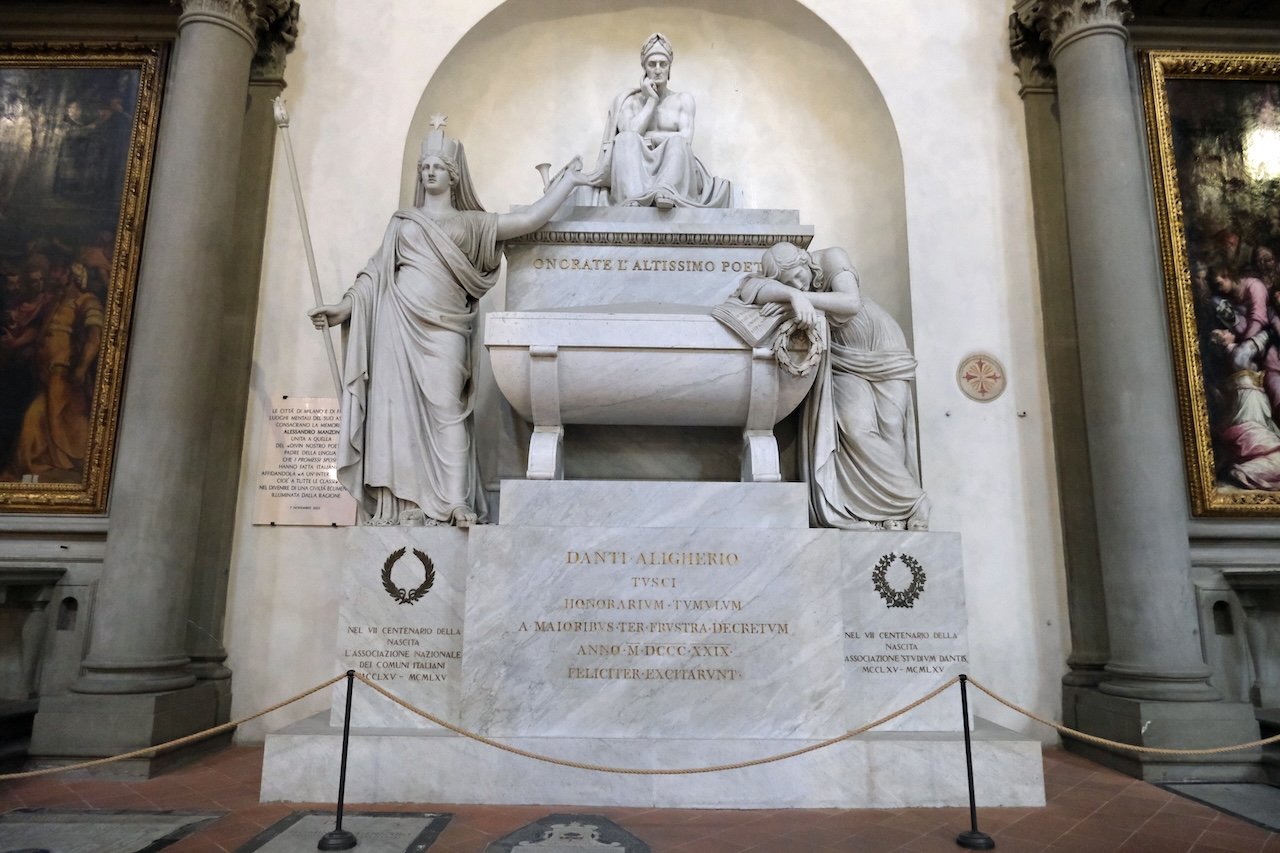 Snapshots from one of the most beautiful church in Florence: the Basilica of Santa Croce, often referred to as the Temple of Italian Glories.
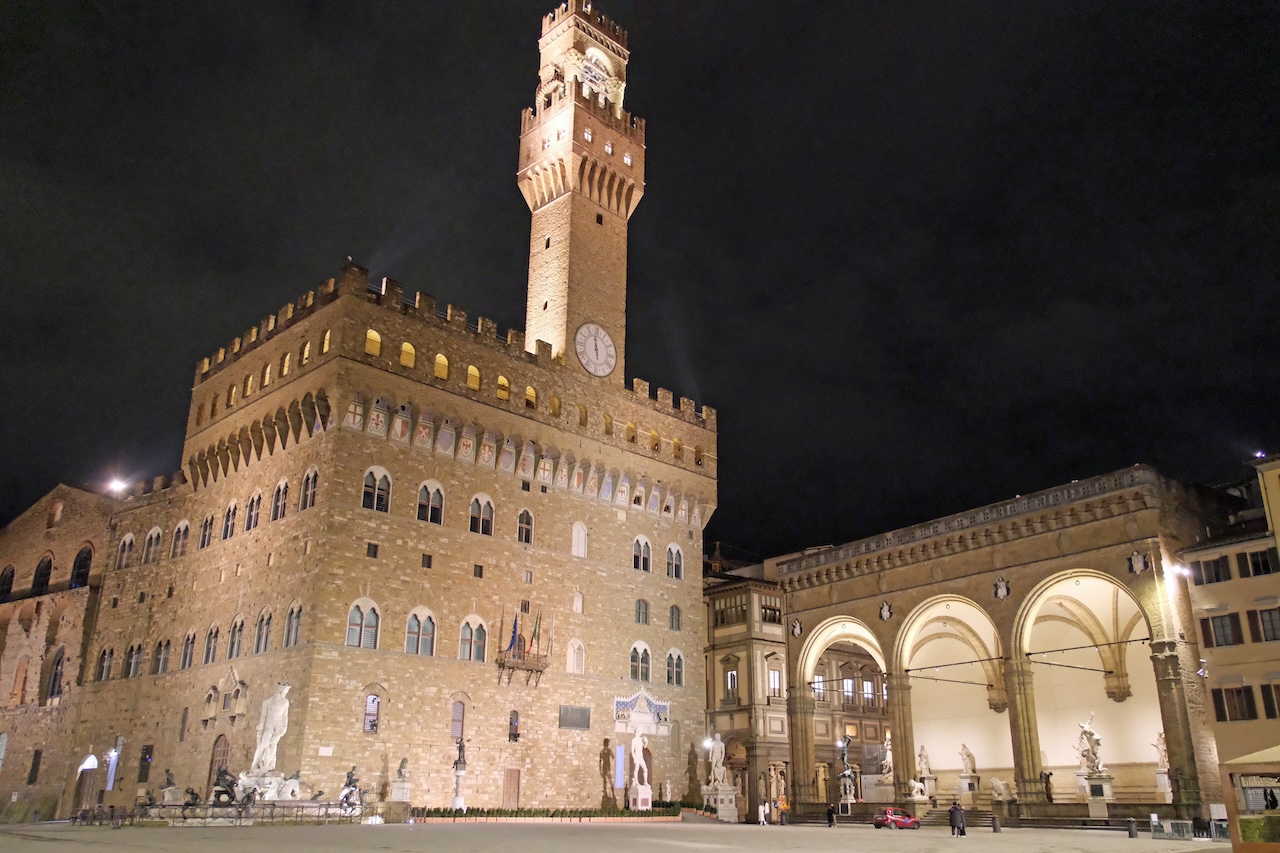
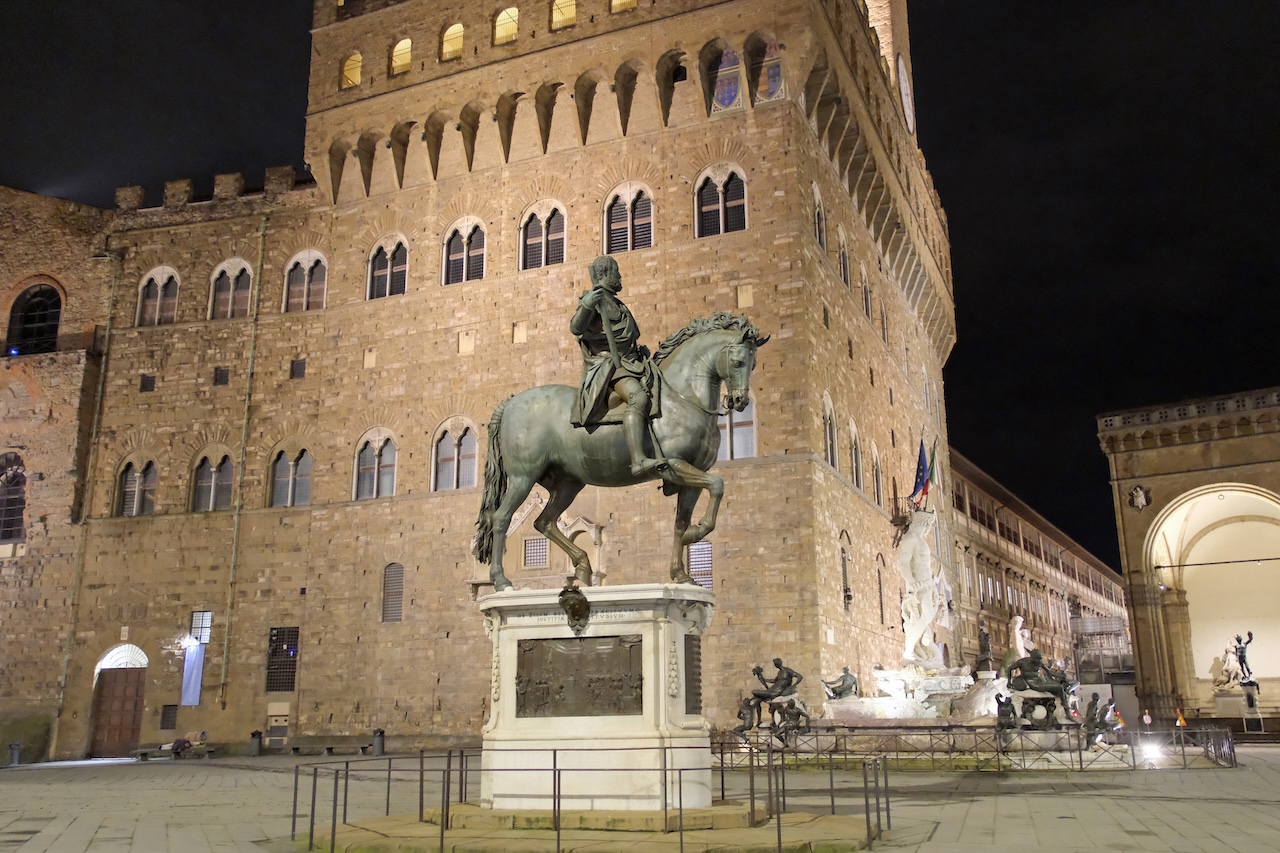 A quick view of the Piazza della Signoria at night.
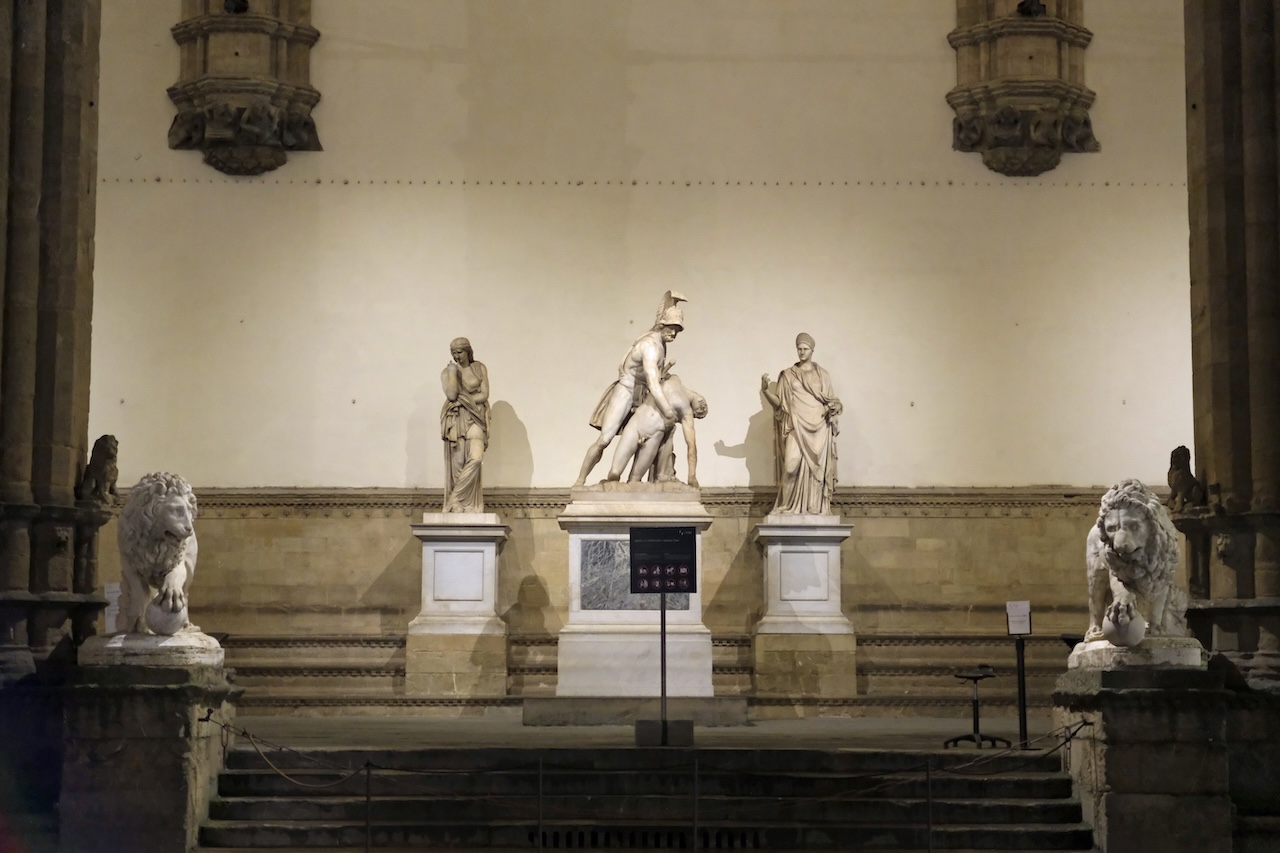
 Snapshots from one of the free things to do in Florence: view incredible Renaissance sculptures in the Loggia dei Lanzi.
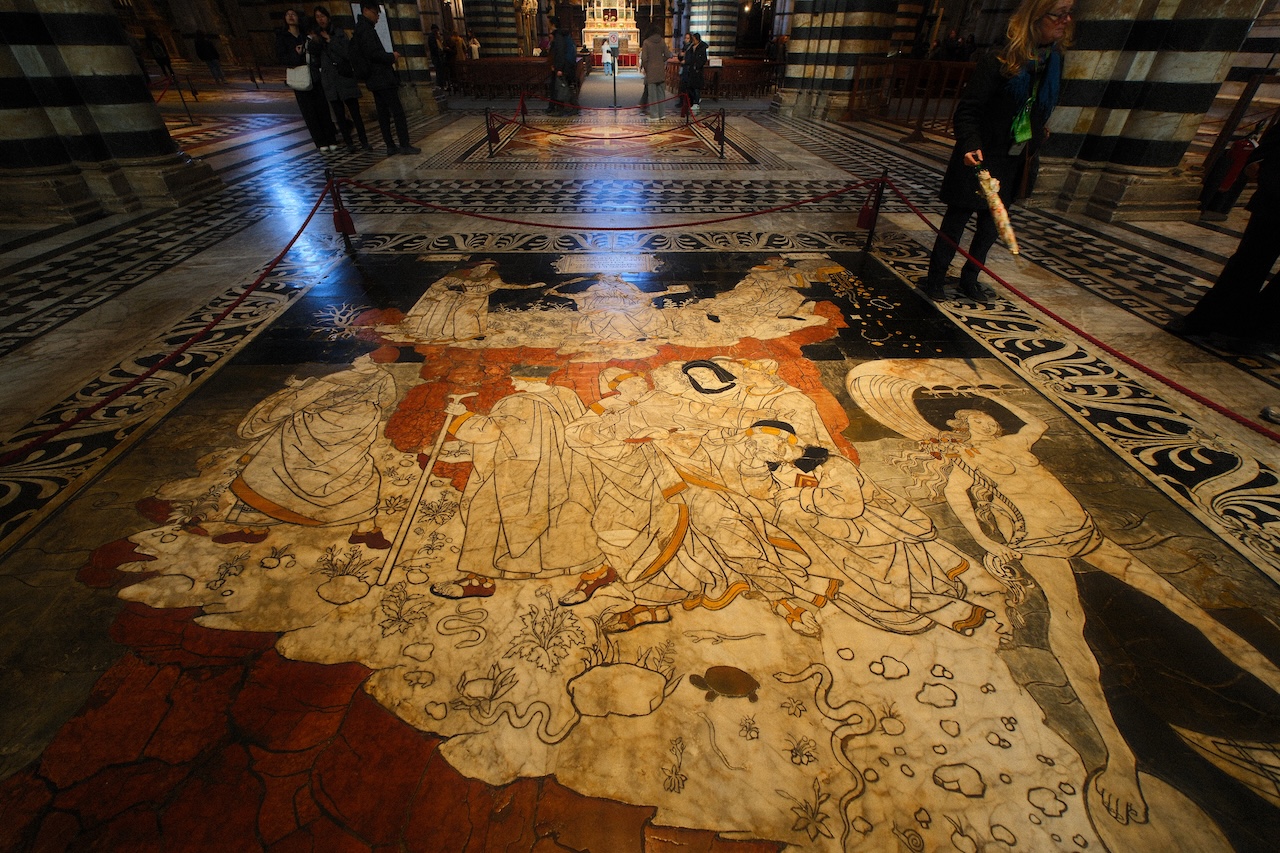 Part of the stunning mosaic floor inside Siena Cathedral.
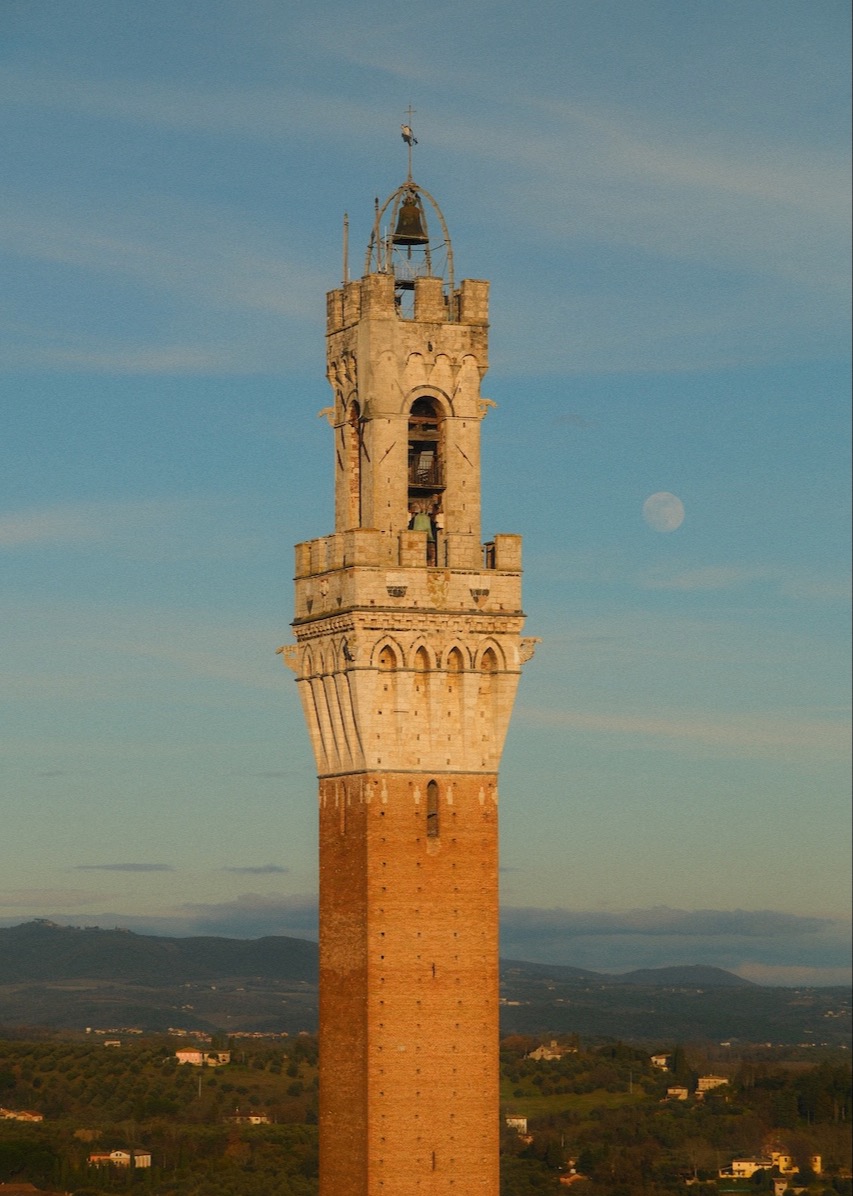
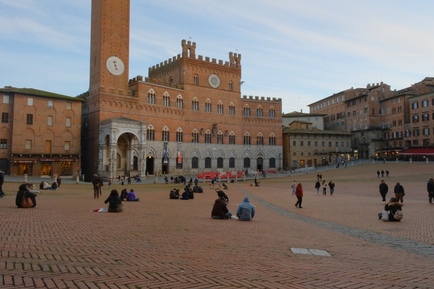
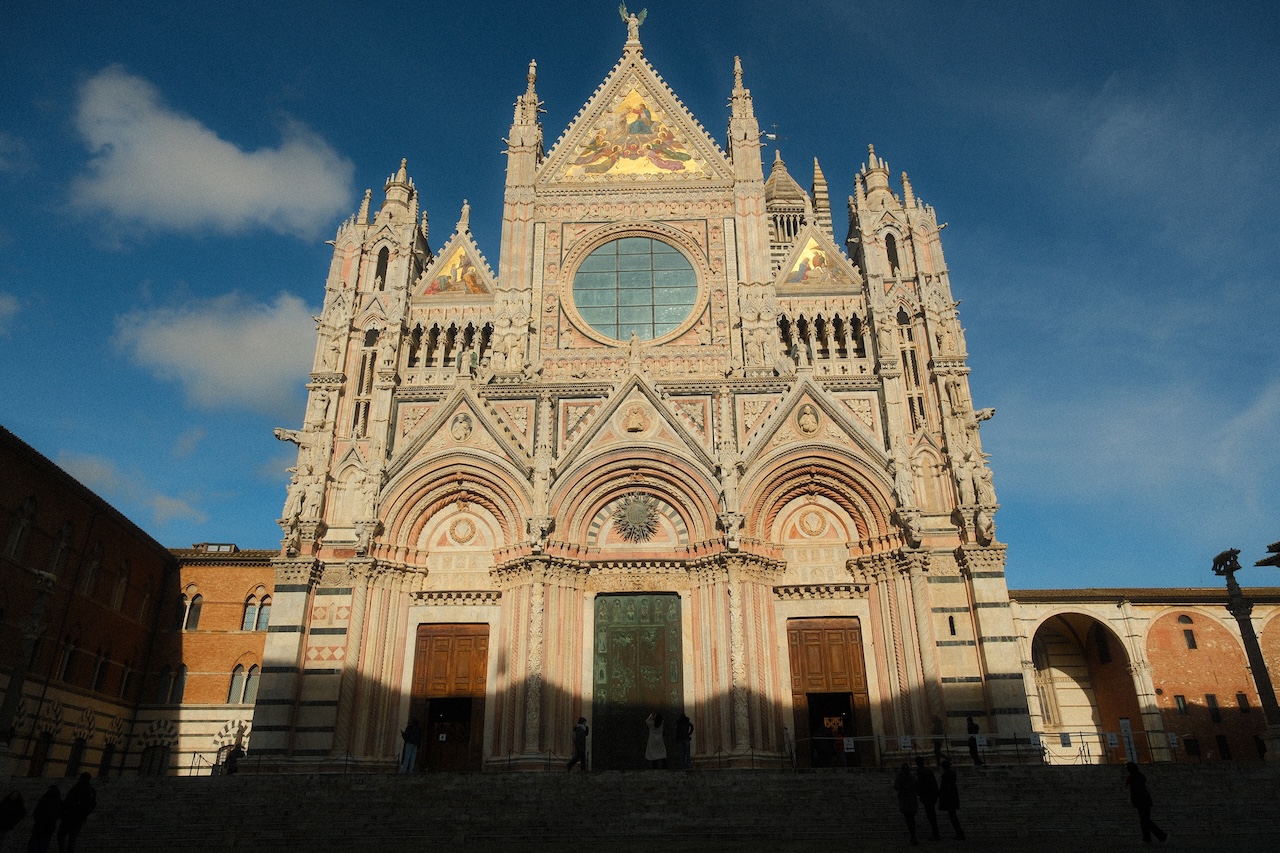
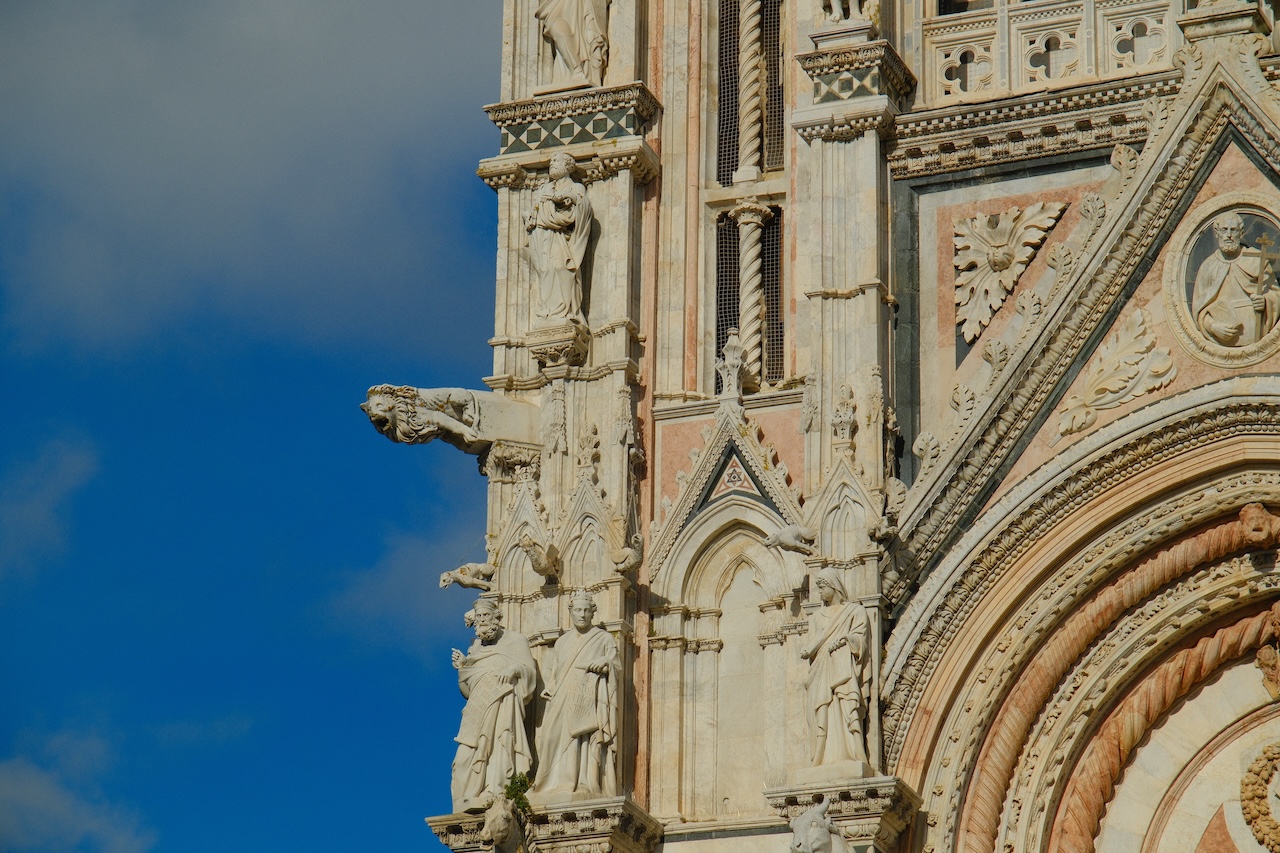 Snapshots from one of the best day trips from Florence: Siena.
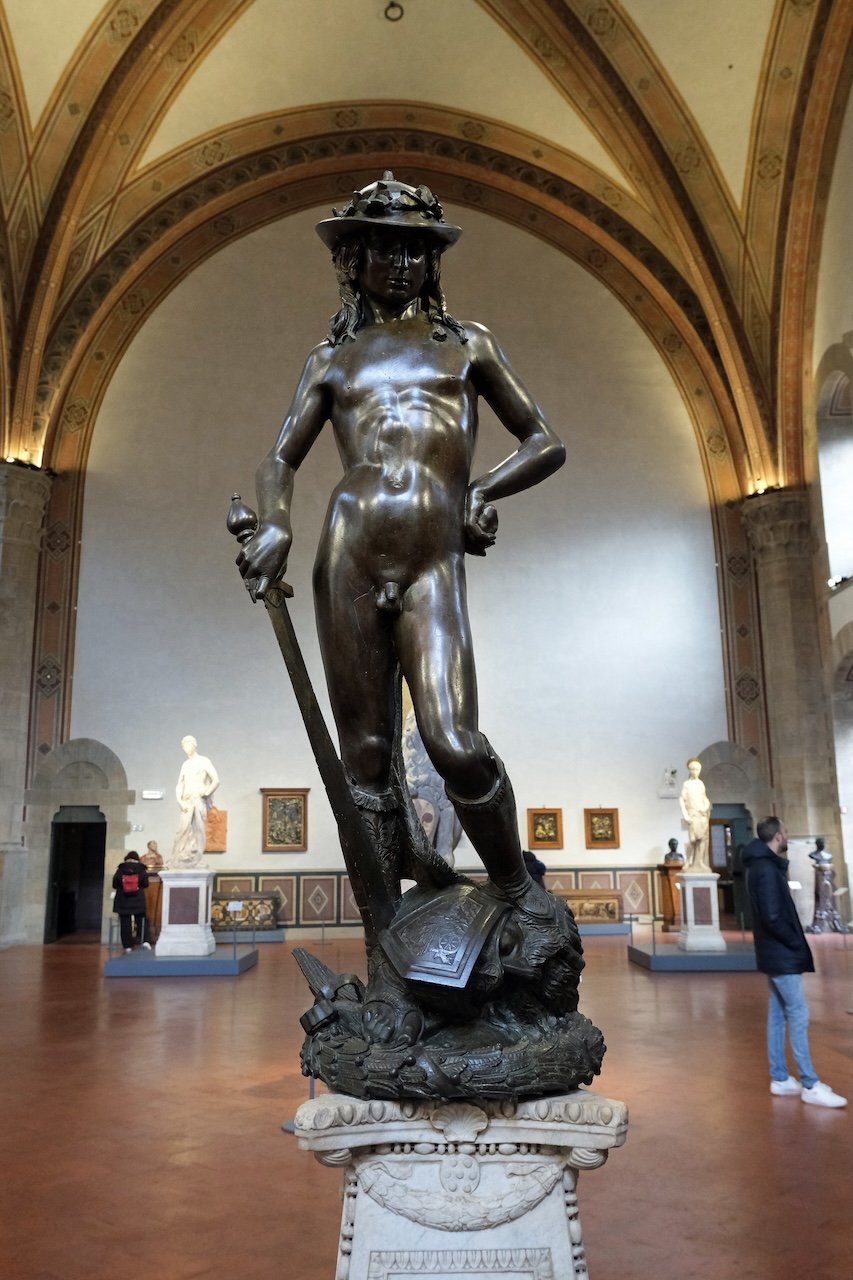
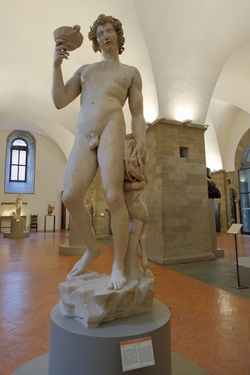
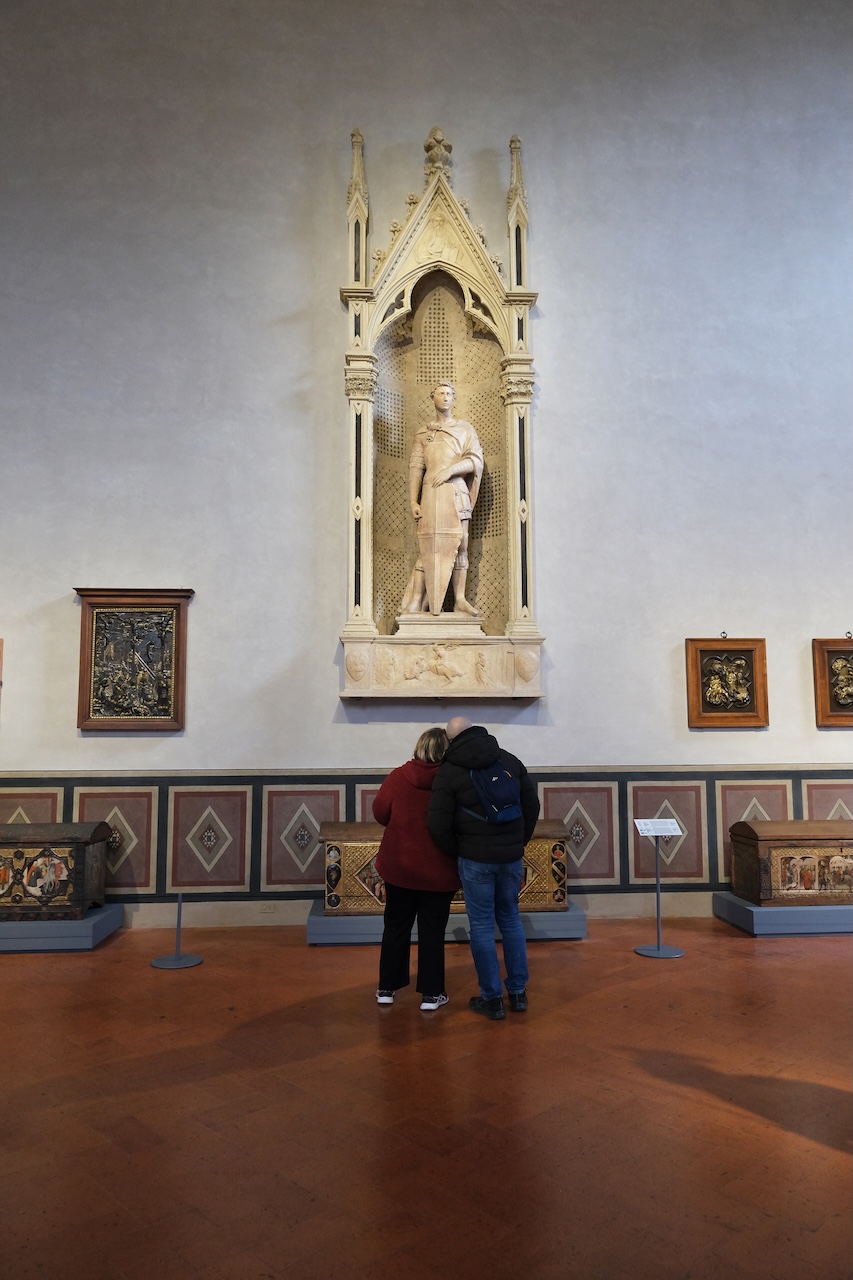
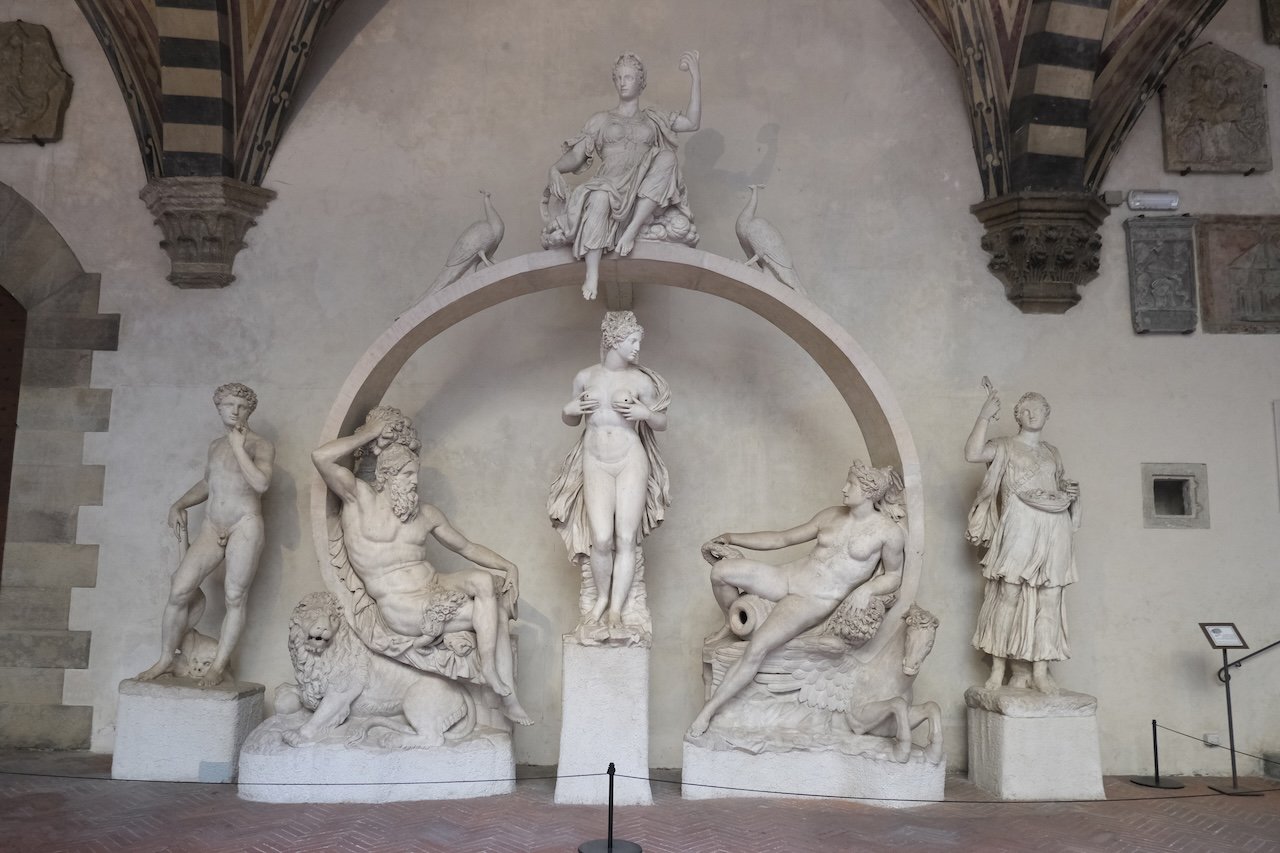 Highlights from the Bargello Museum, including Donatello's bronze David and Michelangelo's Bacchus.
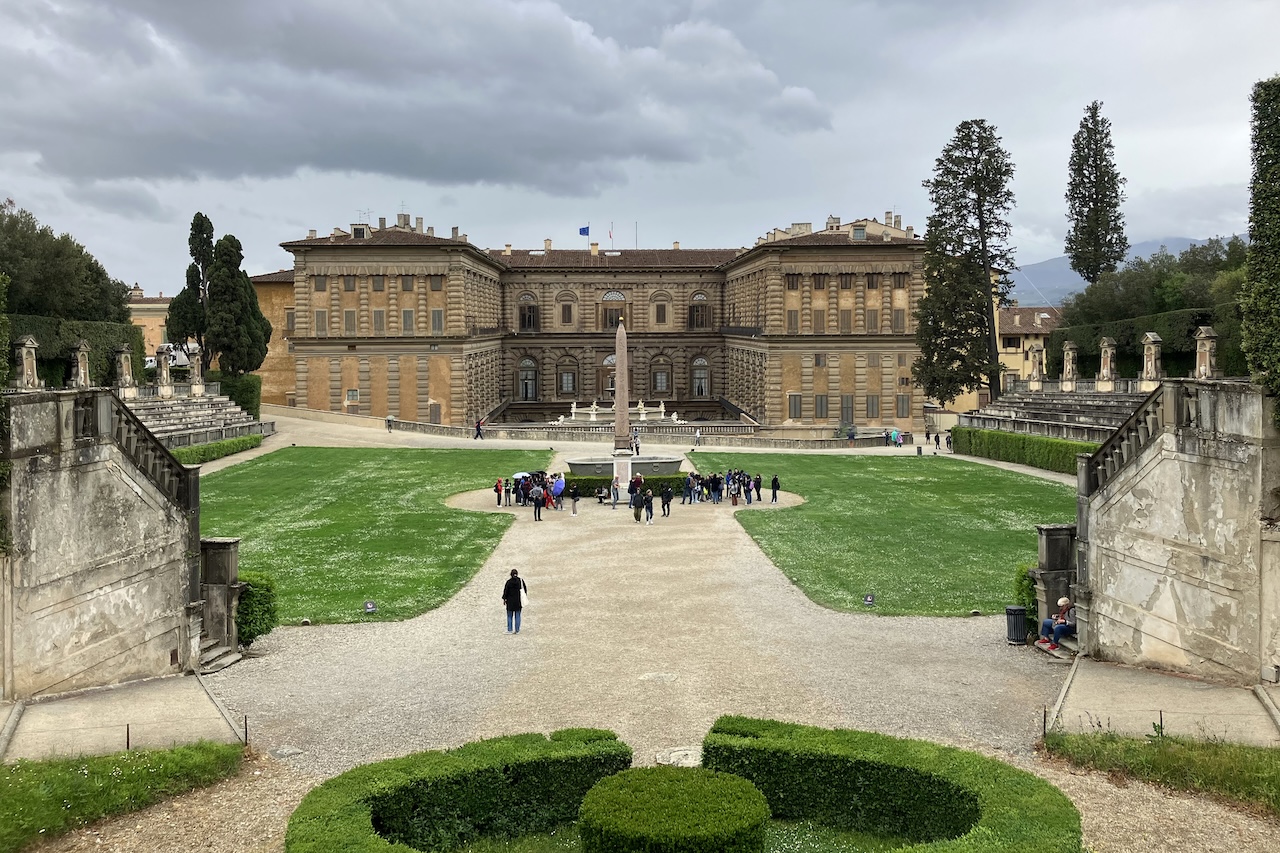
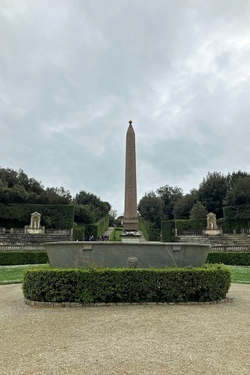
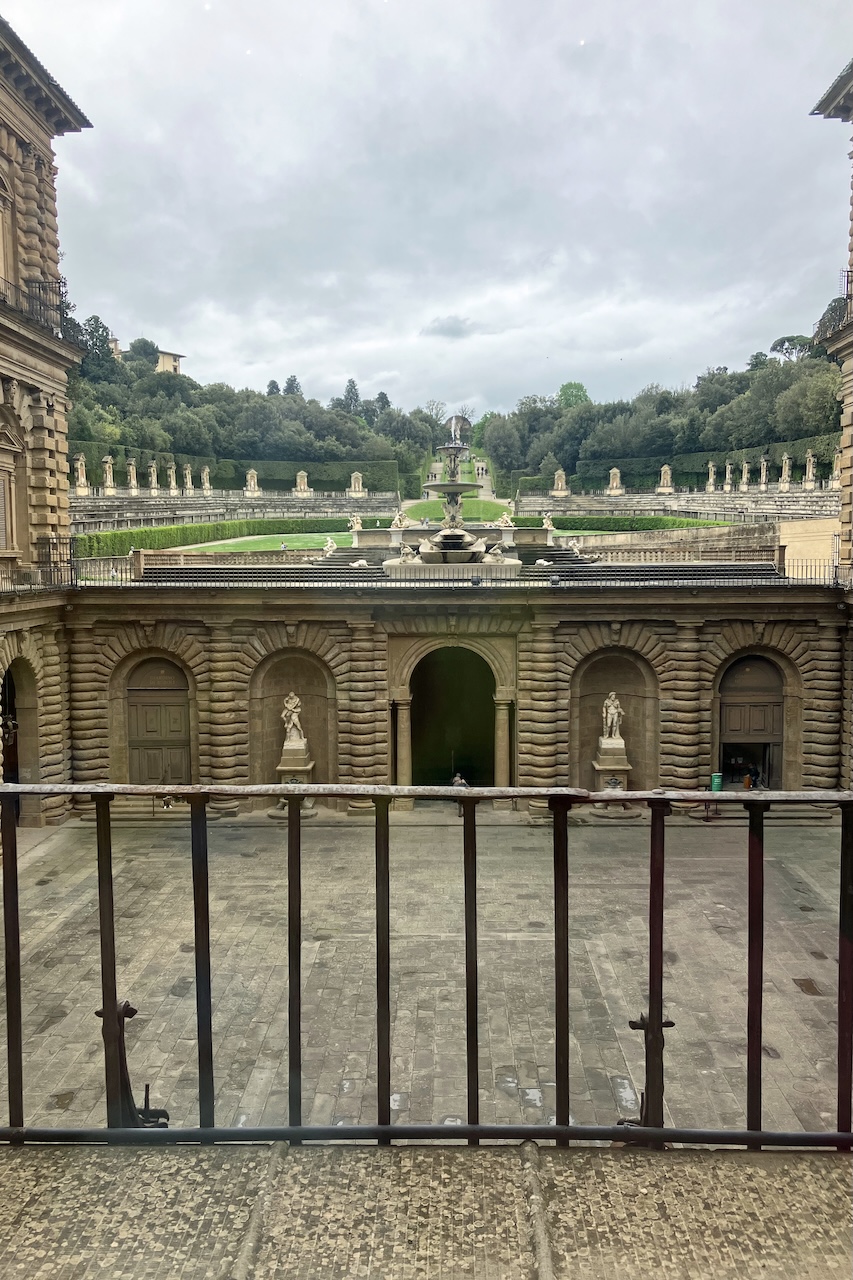
A few photos of the Boboli Gardens and Pitti Palace.
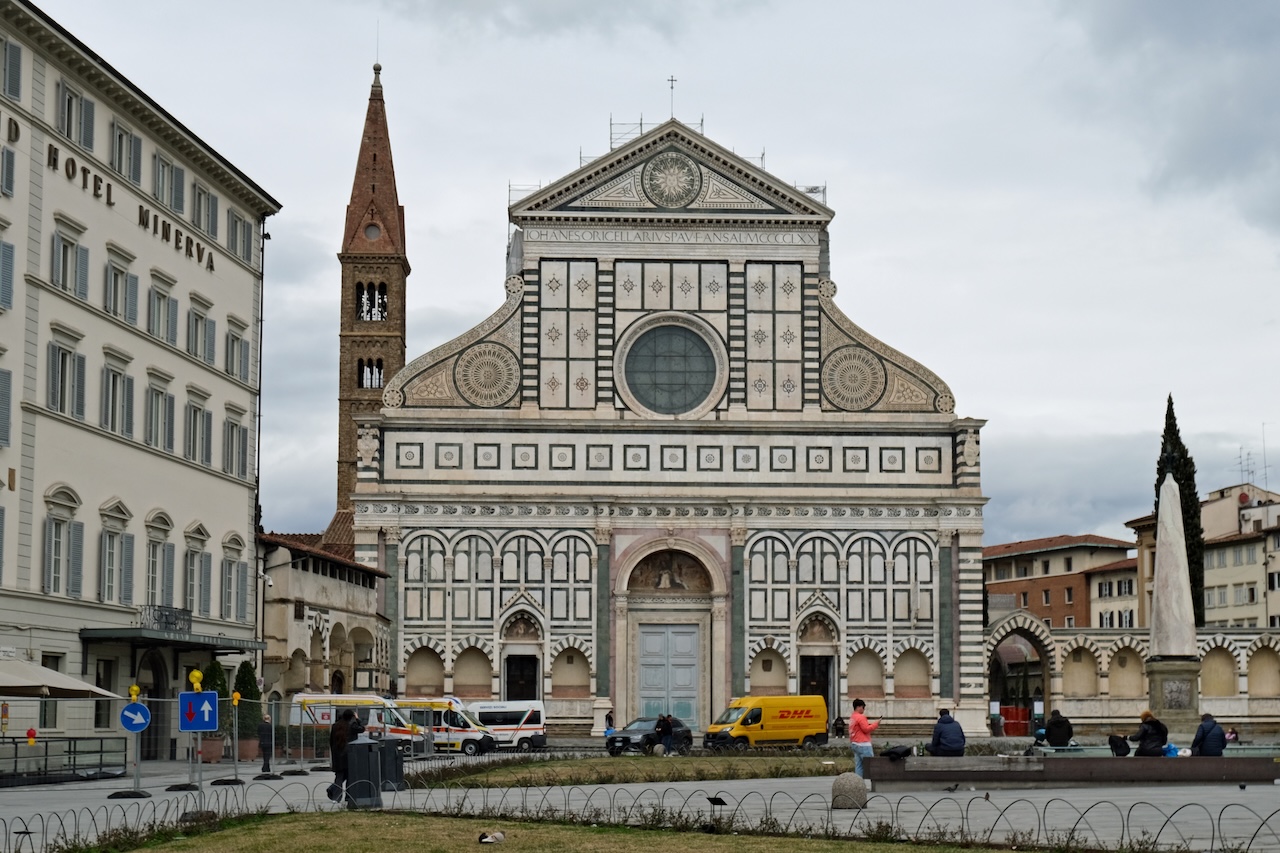
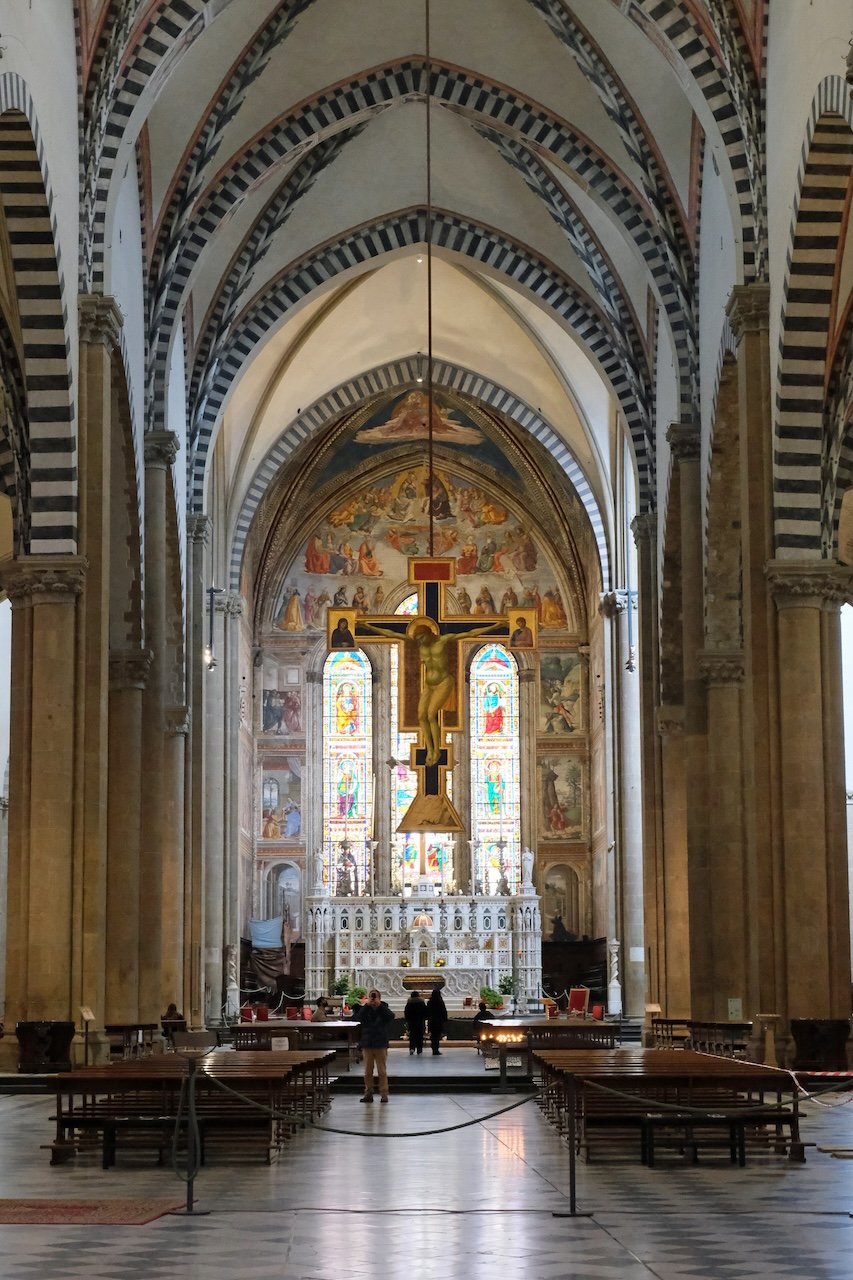
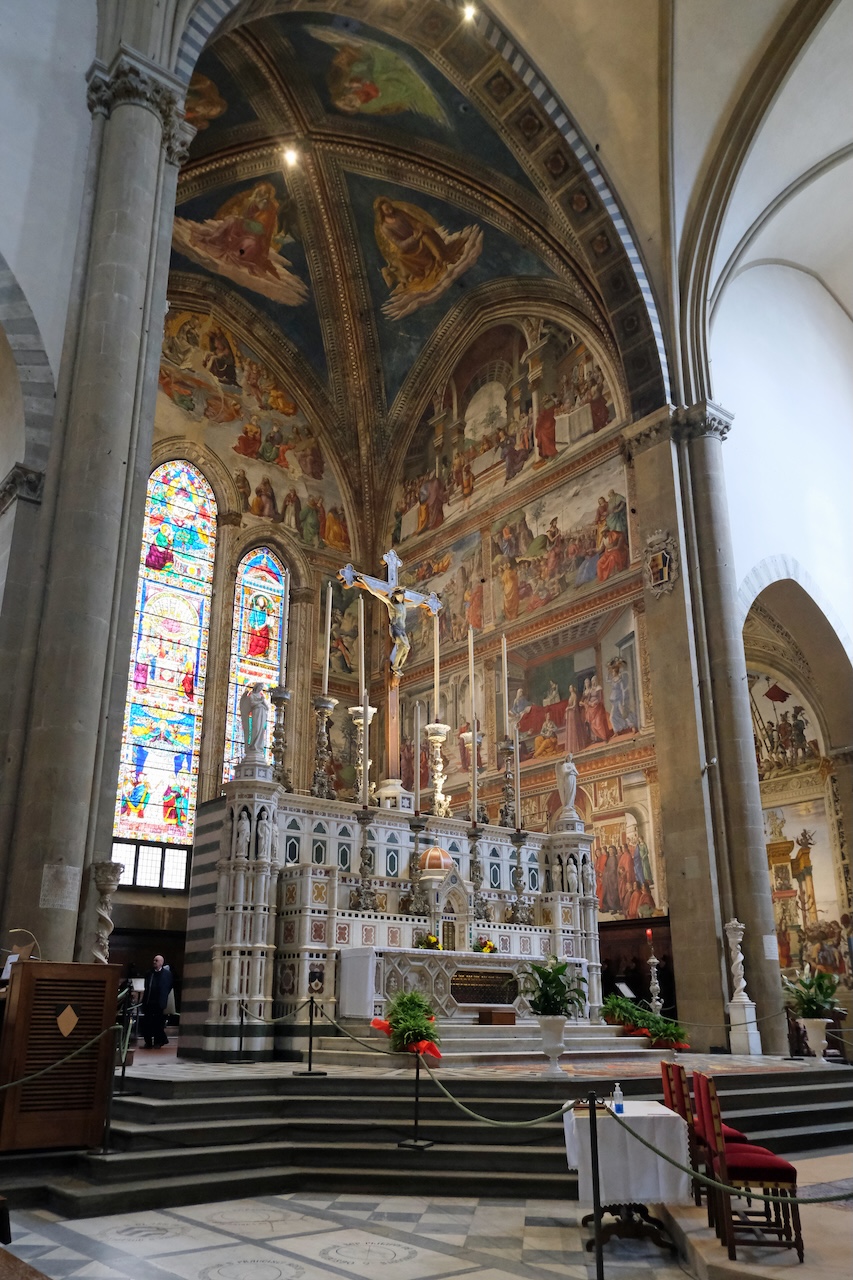
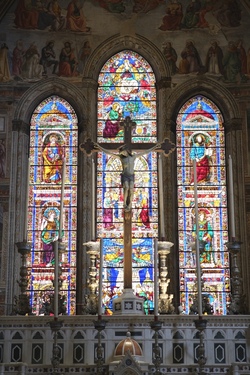 Snapshots of the High Altar and interior of the Basilica of Santa Maria Novella.
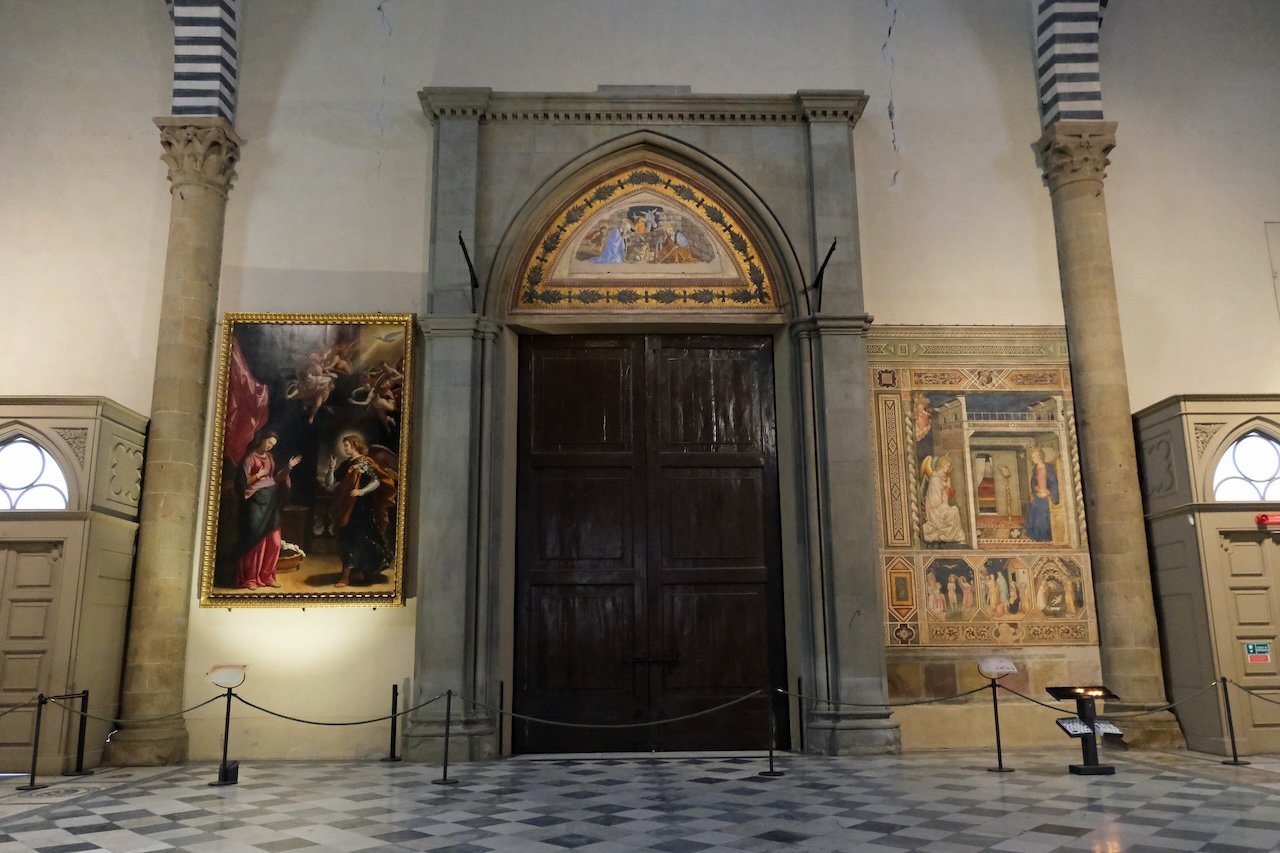 Botticelli's Nativity above the doors of the Basilica of Santa Maria Novella.
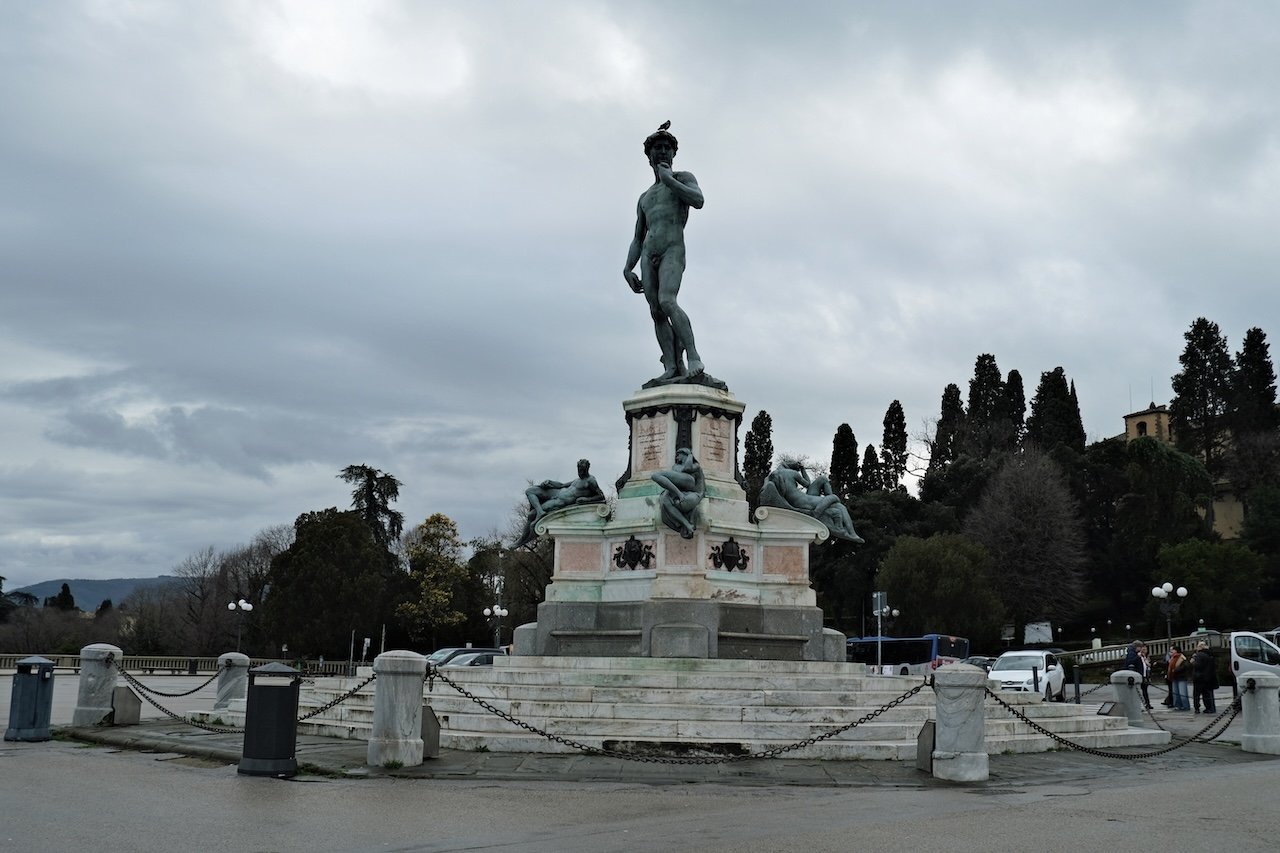
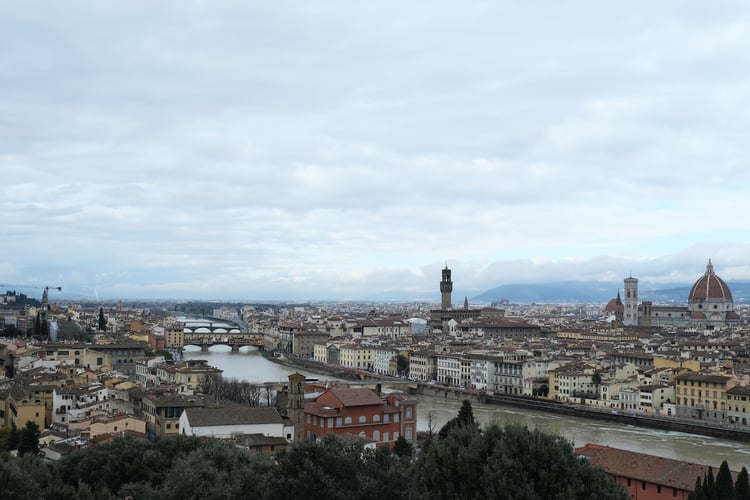
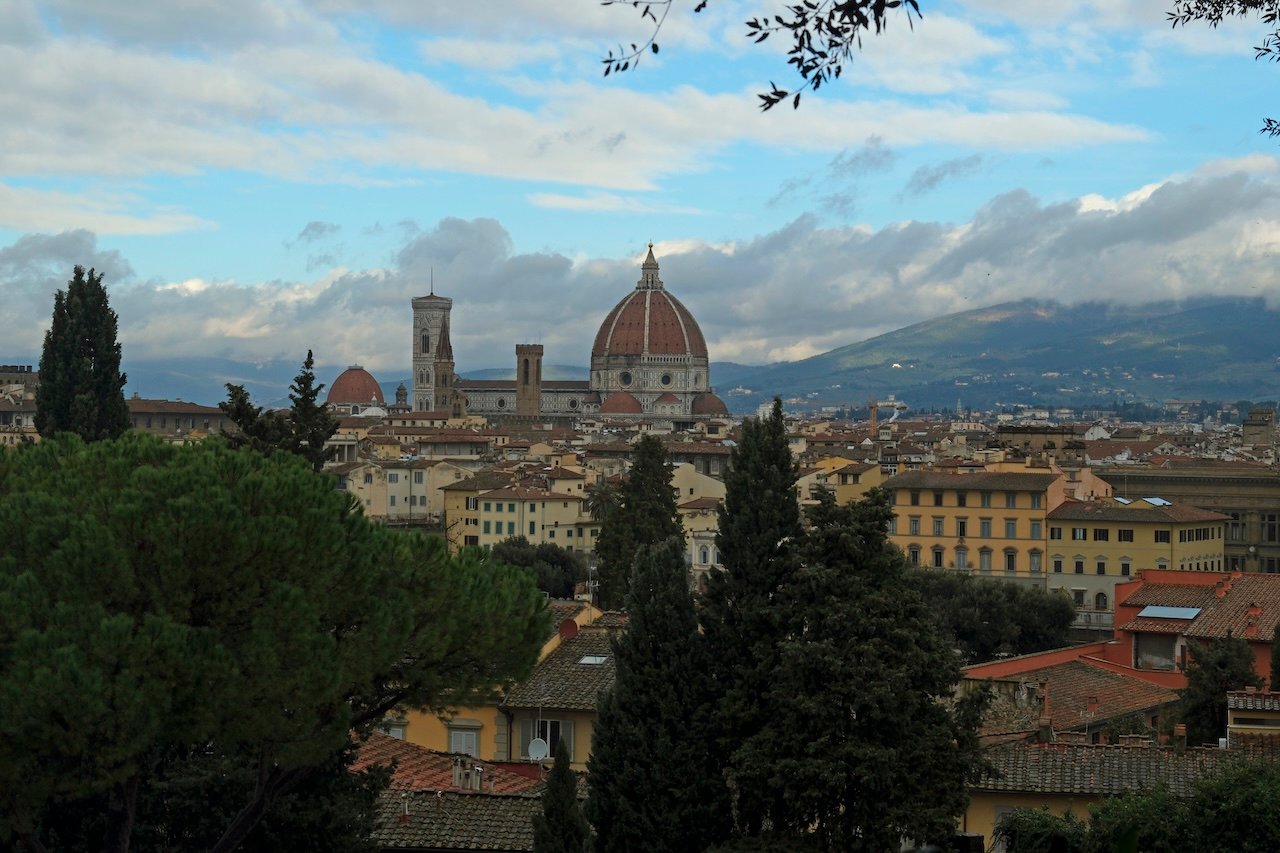
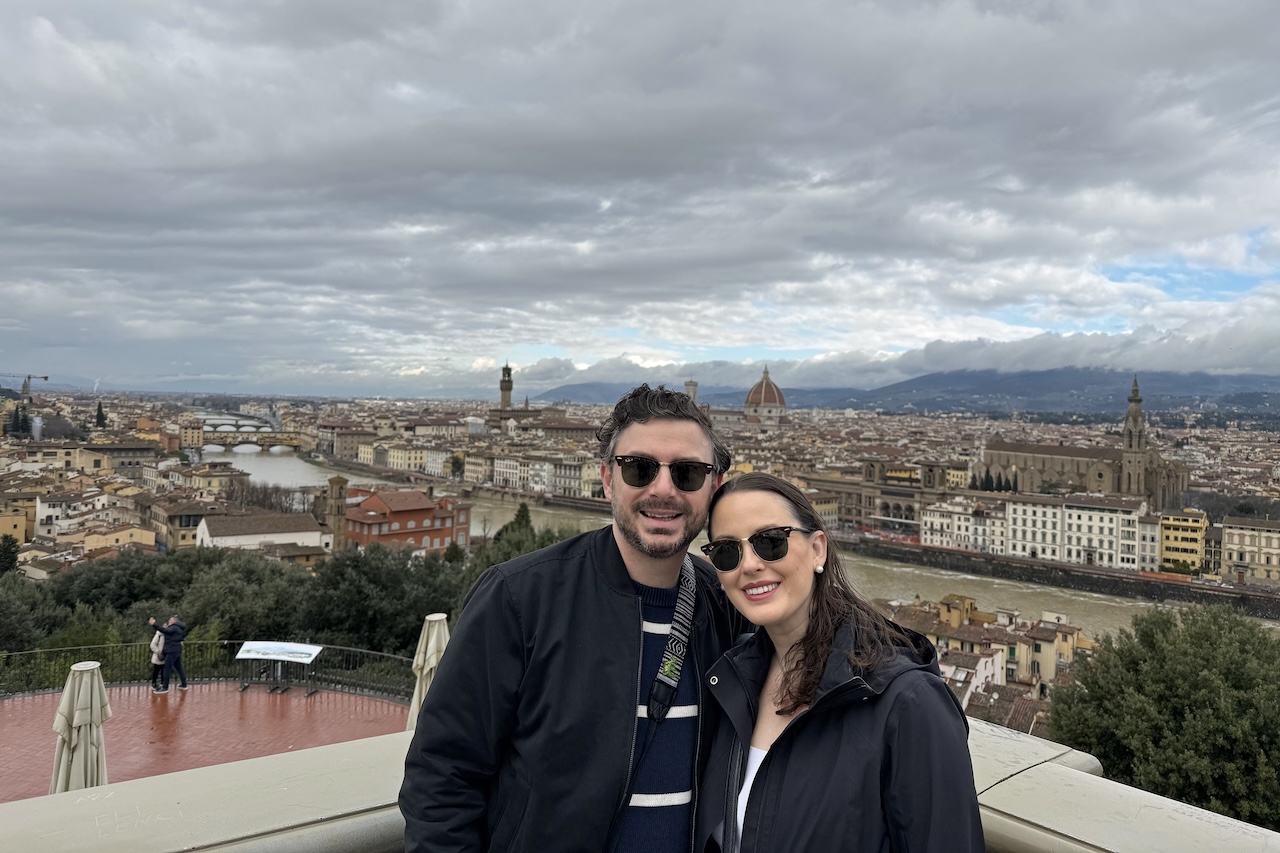
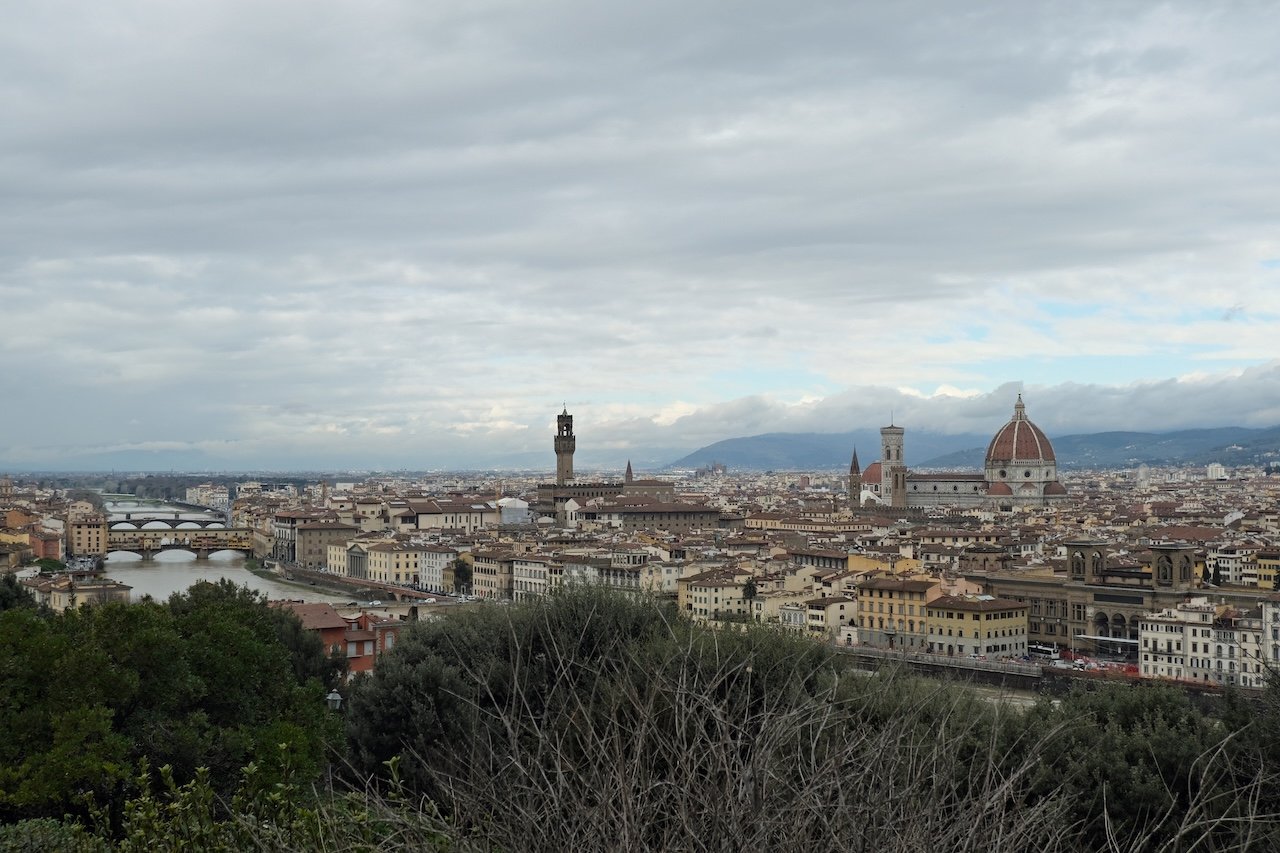 View of Florence, including the Duomo, Ponte Vecchio, Palazzo Vecchio, and the Arno River from Piazzale Michelangelo.
The following are not essential stops for a first visit to Florence, but they add depth and variety if you have extra time in your Florence itinerary.
If you are interested in Renaissance sculpture, the Bargello Museum is one of the best museums in Florence! Housed inside a medieval palace that once served as the headquarters of the city's police chief (or bargello in Italian) and a jail, the building itself feels dramatically different from the grand galleries found elsewhere in the city. The museum is also refreshingly quiet compared to the crowded halls of The Uffizi or the Accademia Gallery, making it a great stop if you have extra time in the city and want a brief escape from the crowds.
The museum is best known for its outstanding collection of sculpture, including works by Donatello, Michelangelo, and Verrocchio. One of the most celebrated works in the collection is Donatello's bronze David, a landmark work of the early Renaissance and one of the first freestanding nude sculptures created since antiquity. The bronze sculpture is also a textbook example of contrapposto, the natural shift of weight through the body that Donatello helped re-introduce to Western art after studying ancient Greek and Roman sculpture.
Donatello's influence is felt throughout the museum. In addition to the bronze David, the Bargello is home to his St. George, one of the most confident and lifelike sculptures of the early Renaissance, as well as works like David in marble and St. John the Baptist, which show Donatello's range of style and the development of Florentine sculpture during the 15th century.
Andrea del Verrocchio is also represented in the museum, including his own bronze version of David. Verrocchio was another leading artist of the Renaissance, although he is arguably more famous for being a teacher of the young Leonardo da Vinci.
Above all else, the main draw of the Bargello Museum is the collection of sculptures by Michelangelo. His sculpture of Bacchus, depicting the Roman god of wine in an unsteady, drunken pose, is one of the artist's few works that is not religious in subject. Michelangelo's Tondo Pitti, the bust of Brutus, and an unfinished sculpture known as Apollo-David are also on display in the museum.
Jetset Seeker Pro Tip: A free audio tour of the Bargello Museum is available from Rick Steves' Europe. The tour officially begins on the ground floor with works by Michelangelo. However, to better understand the evolution of Florentine sculpture during the Renaissance, we recommend listening to the introduction and then fast-forwarding to the first-floor galleries that feature Donatello and Verrocchio. (You will want to head upstairs to hear this part of the audio tour.) After exploring the upper-level rooms and completing that portion of the tour, return to the ground floor and finish with the section covering Michelangelo’s sculptures.
Tickets for the Bargello Museum can be purchased directly from the official Bargello Museum website. While the Bargello Museum does not offer guided tours, guided tours can be booked through our affiliate partner, GetYourGuide.
If you are interested in Renaissance sculpture, the Bargello Museum is one of the best museums in Florence. Housed inside a medieval palace that once served as the headquarters of the city's police chief (or bargello in Italian) and a jail, the building itself feels dramatically different from the grand Renaissance galleries found elsewhere in the city. The museum is also refreshingly quiet compared to the crowded halls of The Uffizi or the Accademia Gallery, making it a great stop if you have extra time in the city and want a brief escape from the crowds.
The museum is best known for its outstanding collection of sculpture, including works by Donatello, Michelangelo, and Verrocchio. One of the most celebrated works in the collection is Donatello's bronze David, a landmark work of the early Renaissance and one of the first freestanding nude sculptures created since antiquity. The bronze sculpture is also a textbook example of contrapposto, the natural shift of weight through the body that Donatello helped re-introduce to Western art after studying ancient Greek and Roman sculpture.
Donatello's influence is felt throughout the museum. In addition to the bronze David, the Bargello is home to his St. George, one of the most confident and lifelike sculptures of the early Renaissance, as well as works like David in marble and St. John the Baptist, which show Donatello's range of style and the development of Florentine sculpture during the 15th century.
Andrea del Verrocchio is also represented in the museum, including his own bronze version of David. Verrocchio was another leading artist of the Renaissance, although he is arguably more famous for being a teacher of the young Leonardo da Vinci.
Above all else, the main draw of the Bargello Museum is the collection of sculptures by Michelangelo. His sculpture of Bacchus, depicting the Roman god of wine in an unsteady, drunken pose, is one of the artist's few works that is not religious in subject. Michelangelo's Tondo Pitti, the bust of Brutus, and an unfinished sculpture known as Apollo-David are also on display in the museum.
Jetset Seeker Pro Tip: A free audio tour of the Bargello Museum is available from Rick Steves' Europe. The tour officially begins on the ground floor with works by Michelangelo. However, to better understand the evolution of Florentine sculpture during the Renaissance, we recommend listening to the introduction and then fast-forwarding to the first-floor galleries that feature Donatello and Verrocchio. (You will want to head upstairs to hear this part of the audio tour.) After exploring the upper-level rooms and completing that portion of the tour, return to the ground floor and finish with the section covering Michelangelo’s sculptures.
Tickets for the Bargello Museum can be purchased directly from the official Bargello Museum website. While the Bargello Museum does not offer guided tours, guided tours can be booked through our affiliate partner, GetYourGuide.
If you are looking to experience the Medici at the height of their power, the Pitti Palace is hard to beat. Before moving across the Arno River, the Medici governed Florence from Palazzo Vecchio. When they relocated to Pitti Palace in the 16th century, the shift was symbolic as much as practical. Palazzo Vecchio functioned as a civic palace tied to the administration of the Republic of Florence. Pitti Palace, in contrast, is unmistakably royal.
The scale alone is impressive. The palace stretches across the hillside, projecting the wealth and authority the Medici had accumulated by the time they made it their primary residence. Inside, the Palatine Gallery contains works by Raphael, Titian, and other masters displayed in lavishly decorated rooms.
Visiting Pitti Palace offers a different perspective on Florence's history. It showcases how the Medici evolved from powerful bankers into a ruling dynasty that controlled Tuscany as grand dukes, with relatives becoming popes and marrying into royal families across Europe.
Behind the palace lies the Boboli Gardens, one of the greatest historic garden complexes in Italy. Designed in the Italian formal garden style, the gardens unfold in terraces of sculptures, fountains, and carefully planted greenery that climb the hillside behind the palace. This style of garden design would later influence the development of French formal gardens across Europe.
One of our favorite aspects of the Boboli is the perspective it offers on Florence itself. From several points in the gardens, you can look out over a sea of terracotta rooftops and see the Duomo rising above the historic center. It is a beautiful vantage point.
The gardens also provide plenty of space. While the palace galleries can feel busy at times, the Boboli Gardens allows you to wander along shaded pathways and open terraces.
The Boboli Gardens are a particularly great addition to your itinerary if the weather cooperates. On a pleasant day, the combination of views, sculptures, and gardens makes it one of the most enjoyable places to wander outside of the city's busiest areas.
If you are already planning to visit the Uffizi Galleries during your time in Florence, you should purchase the combo ticket (PassePartout 5 Days) that includes admission to the Uffizi, Palazzo Pitti, and the Boboli Gardens. It is the easiest and most cost-effective way to visit all three, particularly if you are spending several days in Florence. You can also add-on the Vasari Corridor (Corridoio Vasariano), to your combo ticket for an extra cost.
Individual tickets are available for the Pitti Palace and Boboli Gardens via the Uffizi Galleries website. Boboli Gardens are open daily; however, opening hours differ with the season. For more information and to purchase tickets, please visit the Uffizi Galleries website.
A guided tour can help you better understand the Medici family who once lived here. Guided tours of the Pitti Palace and the Boboli Gardens are available through our affiliate partner, GetYourGuide.
If you are looking to experience the Medici at the height of their power, the Pitti Palace is hard to beat. Before moving across the Arno River, the Medici governed Florence from Palazzo Vecchio. When they relocated to Pitti Palace in the 16th century, the shift was symbolic as much as practical. Palazzo Vecchio functioned as a civic palace tied to the administration of the Republic of Florence. Pitti Palace, in contrast, is unmistakably royal.
The scale alone is impressive. The palace stretches across the hillside, projecting the wealth and authority the Medici had accumulated by the time they made it their primary residence. Inside, the Palatine Gallery contains works by Raphael, Titian, and other masters displayed in lavishly decorated rooms.
Visiting Pitti Palace offers a different perspective on Florence's history. It showcases how the Medici evolved from powerful republican bankers into a ruling dynasty that controlled Tuscany as grand dukes, with relatives becoming popes and marrying into royal families across Europe.
Behind the palace lie the Boboli Gardens, one of the great historic garden complexes in Italy. Designed in the Italian formal garden style, the gardens unfold in terraces of sculptures, fountains, and carefully planted greenery that climb the hillside behind the palace. This style of garden design would later influence the development of French formal gardens across Europe.
One of our favorite aspects of the Boboli is the perspective it offers on Florence itself. From several points in the gardens, you can look out over a sea of terracotta rooftops and see the Duomo rising about the historic center. It is a beautiful vantage point.
The gardens also provide plenty of space. While the palace galleries can feel busy at times, the Boboli Gardens allows you to wander along shaded pathways and open terraces.
The Boboli Gardens are a particularly great addition to your itinerary if the weather cooperates. On a pleasant day, the combination of views, sculpture, and gardens makes it one of the most enjoyable places to wander outside of the city's busiest areas.
If you are already planning to visit the Uffizi Galleries during your time in Florence, you should purchase the combo ticket (PassePartout 5 Days) that includes admission to the Uffizi, Palazzo Pitti, and the Boboli Gardens. It is the easiest and most cost-effective way to visit all three, particularly if you are spending several days in Florence. You can also add-on the Vasari Corridor (Corridoio Vasariano), to your combo ticket for an extra cost.
Individual tickets are available for the Pitti Palace and Boboli Gardens via the Uffizi Galleries website. Boboli Gardens are open daily, however, opening hours differ with the season. For more information and to purchase tickets, please visit the Uffizi Galleries website.
A guided tour can help you better understand the Medici family who once lived here. Guided tours of the Pitti Palace and the Boboli Gardens are available through our affiliate partner, GetYourGuide.
Located just a short walk from Florence's main train station (Firenze Santa Maria Novella, or Firenze SMN for short), the Basilica of Santa Maria Novella is easy to overlook in a city filled with churches and incredible museums. If you have extra time in your Florence itinerary, however, it is well worth stepping inside. The Dominican basilica dates to the late 13th, with construction taking almost 200 years. That long period of construction is part of what makes Santa Maria Novella so interesting to visit. Throughout the church and its adjoining chapels, you can see the transition from medieval Gothic art and architecture to the perspective, proportion, and realism that would come to define the Renaissance.
The art at Santa Maria Novella is the real reason to visit. Its distinctive green and white marble exterior façade was completed in the 15th century by Renaissance architect Leon Battista Alberti and is considered one of the most important architectural works of the Florentine Renaissance. Inside, the Basilica of Santa Maria Novella contains works by many artists who helped shaped the Renaissance, including Giotto, Masaccio, Domenico Ghirlandaio, Filippino Lippi, and Michelangelo.
While the art here is less familiar to casual visitors than the masterpieces filling the Uffizi and Accademia, they provide an incredible look at Florentine art. One of the most important works in the basilica is Masaccio's Holy Trinity. Painted in the 1420s, the fresco is considered one of the first works painted using linear perspective. As a result, the fresco shows a convincing illusion of depth, giving the painting dimension.
Elsewhere in the basilica, you will find: Giotto's Crucifix, Botticelli's Nativity, and the incredible frescos by Domenico Ghirlandaio and his workshop (including the contributions of a young Michelangelo Buonarroti), behind the main altar in the Tornabuoni Chapel.
There is also a work directly attributed to the young Michelangelo in the basilica, a small marble holy water font (stoup). The small sculpture features a beautifully carved caryatid with a green marble water basin. It is located right by the entrance to the sacristy.
For us, part of Santa Maria Novella's appeal is simply how peaceful the church feels. The cloisters and chapels invite you to slow down and admire the art, something that can be difficult to do at Florence's busiest attractions.
Tickets for the Basilica of Santa Maria Novella can be purchased on-site on the day of your visit. The last admission is one hour before closing.
Located just a short walk from Florence's main train station (Firenze Santa Maria Novella, or SMN for short), the Basilica of Santa Maria Novella is easy to overlook in a city filled with famous churches and incredible museums. If you have extra time in your Florence itinerary, however, it is well worth stepping inside. The Dominican basilica dates to the late 13th, with construction taking almost 200 years. That long period of construction is part of what makes Santa Maria Novella so interesting to visit. Throughout the church and its adjoining chapels, you can see the transition from medieval Gothic art and architecture to the perspective, proportion, and realism that would come to define the Renaissance.
The art at Santa Maria Novella is the real reason to visit. Its distinctive green and white marble exterior façade was completed in the 15th century by Renaissance architect Leon Battista Alberti and is considered one of the most important architectural works of the Florentine Renaissance. Inside, the Basilica of Santa Maria Novella contains works by many artists who helped shaped the Renaissance, including Giotto, Masaccio, Domenico Ghirlandaio, Filippino Lippi, and Michelangelo.
While the art here is less familiar to casual visitors than the masterpieces filling the Uffizi and Accademia, they provide an incredible look at Florentine art. One of the most important works in the basilica is Masaccio's Holy Trinity. Painted in the 1420s, the fresco is considered one of the first works painted using linear perspective. As a result, the fresco shows a convincing illusion of depth, giving the painting dimension.
Elsewhere in the basilica, additional highlights you will find include: Giotto's Crucifix, Botticelli's Nativity, and the incredible frescos by Domenico Ghirlandaio and his workshop (including the contributions of a young Michelangelo Buonarroti), behind the main altar in the Tornabuoni Chapel.
There is also a work directly attributed to the young Michelangelo in the basilica, a small marble holy water font (stoup). The small sculpture features a beautifully carved caryatid with a green marble water basin. It is located right by the entrance to the sacristy.
For us, Santa Maria Novella's appeal is simply how peaceful the church feels. The cloisters and chapels invite you to slow down and admire the art, something that can be difficult to do at Florence's busiest attractions.
Tickets for the Basilica of Santa Maria Novella can be purchased on-site on the day of your visit. The last admission is one hour before closing. Guided tours are available in English on Fridays. To book a guided tour, please visit the Comune di Firenze website.
If you are looking for one of the best views in Florence, a trip across the Arno River to Piazzale Michelangelo is certainly worthwhile. Perched on a hillside above the historic center, this large 19th-century terrace offers sweeping panoramic views of Florence, and unlike other viewpoints in the city, it is completely free to visit!
The terrace is named in honor of the Florentine artist and true Renaissance man, Michelangelo Buonarroti. An enormous bronze replica of the artist's iconic David stands at the center of the pizzale, with replicas of the artist's four allegorical figures created for the Medici Chapels at its base.
From the piazzale, you can see many of Florence's most recognizable landmarks. While the Duomo complex dominates the city's skyline, you can also see Palazzo Vecchio, Ponte Vecchio, the Basilica of Santa Croce, the Arno River, and the city's terracotta rooftops stretching towards the Tuscan hills on the horizon.
Piazzale Michelangelo is incredibly popular with tourists at sunset, but we actually prefer to visit during the day. The crowds are usually small, especially in the morning, and the daylight makes it easier to pick out the landmarks and appreciate the details of the city below. While you will miss out on dramatic sunset photographs, you gain a much better opportunity to actually enjoy the view.
A visit to Piazzale Michelangelo is not something you need to build an entire day around, but if the weather is clear and you have time in your Florence itinerary, it is one of the easiest additions we can recommend. The view is spectacular and it provides a completely different perspective on Florence after spending most of your trip exploring the city at street level.
If you are looking for one of the best views in Florence, a trip across the Arno River to Piazzale Michelangelo is certainly worthwhile. Perched on a hillside above the historic center, this large 19th-century terrace offers sweeping panoramic views of Florence, and unlike other viewpoints in the city, it is completely free to visit!
The terrace is named in honor of the Florentine artist and true Renaissance man, Michelangelo Buonarroti. An enormous bronze replica of the artist's iconic David stands at the center of the pizzale, with replicas of the artist's four allegorical figures created for the Medici Chapels at its base.
From the piazzale, you can see many of Florence's most recognizable landmarks. While the Duomo complex dominates the skyline, you can also see Palazzo Vecchio, Ponte Vecchio, the Basilica of Santa Croce, the Arno River, and the city's terracotta rooftops stretching towards the Tuscan hillside on the horizon.
Piazzale Michelangelo is incredibly popular with tourists at sunset, but we actually prefer to visit during the day. The crowds are usually small, especially in the morning, and the daylight makes it easier to pick out the landmarks and appreciate the details of the city below. While you will miss out on the dramatic sunset photographs, you gain a much better opportunity to actually enjoy the view.
A visit to Piazzale Michelangelo is not something you need to build an entire day around, but if the weather is clear and you have time in your Florence itinerary, it is one of the easiest additions we can recommend. The view is spectacular and it provides a completely different perspective on Florence after spending most of your trip exploring the city at street level.
Experience has definitely reshaped how we approach a few of Florence's most talked-about spots. Here are the spots we think are overrated, over-hyped, and/or require a different approach as you plan your time in Florence.
Few landmarks are as synonymous with Florence as the Duomo. Formally known as the Cathedral of Santa Maria del Fiore, the Duomo is the defining landmark of the city. Its marble façade is stunning, and Brunelleschi’s dome remains one of the most remarkable engineering achievements of the Renaissance. It is absolutely worth seeing up close.
That said, visiting the cathedral and climbing the dome are two very different experiences.
The interior of the cathedral itself is surprisingly plain compared to its dramatic exterior. Aside from looking up into the dome, many first-time visitors find it less ornate than expected (ourselves included). Entry is technically free, but the general-admission line is typically long and slow-moving.
Climbing to the top of Brunelleschi's dome is often presented as a must-do in Florence, but the experience comes with tradeoffs. The ascent involves 463 narrow steps through steep, tight stairways that can feel very claustrophobic. If you are uncomfortable with heights or tight spaces, the climb can be more stressful than rewarding. Even once at the top, time is limited, and the experience can feel rushed depending on the pace of the individuals ahead of you.
Instead, we recommend skipping the dome climb altogether and purchasing either the Giotto Pass or the Ghiberti Pass in advance of your visit. The Giotto Pass includes access to Giotto's Bell Tower, the Baptistery, the Opera del Duomo Museum, and the Crypt of Santa Reparata. Giotto's Bell Tower offers sweeping views of the city and the Duomo in a more open setting that feels significantly less claustrophobic or rushed than the dome climb. The Ghiberti Pass provides access to the same sites, but it does not include the bell tower. The Baptistery’s mosaics are a highlight worth seeing, and the Opera del Duomo Museum houses remarkable sculptures by some of Florence’s greatest artists, including Donatello and Michelangelo.
An added benefit of any of the Duomo complex passes, including the Brunelleschi Pass if you decide to climb the dome, is the fast-track access into the cathedral itself. Rather than waiting in the general-admission line, you will enter the Duomo through the Crypt of Santa Reparata entrance on the side of the cathedral.
The Giotto, Ghiberti, and Brunelleschi passes are available for purchase, ahead of your visit, via the official Opera di Santa Maria del Fiore website.
If you do not have time in your Florence itinerary to visit the interior of the Duomo, do not worry! Aside from looking up into the dome itself, you are not missing a richly decorated space. Instead, spend time admiring the cathedral’s marble exterior and the intricate bronze doors of the Baptistery. In our opinion, those exteriors are the true visual highlights of the cathedral complex!
Few landmarks are as synonymous with Florence as the Duomo. Formally known as the Cathedral of Santa Maria del Fiore, the Duomo is the defining landmark of the city. Its marble façade is stunning, and Brunelleschi’s dome remains one of the most remarkable engineering achievements of the Renaissance. It is absolutely worth seeing up close.
That said, visiting the cathedral and climbing the dome are two very different experiences.
The interior of the cathedral itself is surprisingly plain compared to its dramatic exterior. Aside from looking up into the dome, many first-time visitors find it less ornate than expected (ourselves included). Entry is technically free, but the general-admission line is typically long and slow-moving.
Climbing to the top of Brunelleschi's dome is often presented as a must-do in Florence, but the experience comes with tradeoffs. The ascent involves 463 narrow steps through steep, tight stairways that can feel claustrophobic. If you are uncomfortable with heights or tight spaces, it can be more stressful than rewarding. Even once at the top, time is limited, and the experience can feel rushed depending on the pace of the individuals ahead of you.
Instead, we recommend skipping the dome climb altogether and purchasing either the Giotto Pass or the Ghiberti Pass in advance of your visit. The Giotto Pass includes access to Giotto's Bell Tower, the Baptistery, the Opera del Duomo Museum, and the Crypt of Santa Reparata. Giotto's Bell Tower offers sweeping views of the city and the Duomo in a more open setting that feels significantly less claustrophobic or rushed than the dome climb. The Ghiberti Pass provides access to the same sites, but it does not include the bell tower. The Baptistery’s mosaics are a highlight worth seeing, and the Opera del Duomo Museum houses remarkable sculptures by some of Florence’s greatest artists, including Donatello and Michelangelo.
An added benefit of any of the Duomo complex passes, including the Brunelleschi Pass if you decide to climb the dome, is the fast-track access into the cathedral itself. Rather than waiting in the general-admission line, you will enter the Duomo through the Crypt of Santa Reparata entrance on the side of the cathedral.
If you do not have time in your Florence itinerary to visit the interior of the Duomo, do not worry! Aside from looking up into the dome itself, you are not missing a richly decorated space. Instead, spend time admiring the cathedral’s marble exterior and the intricate bronze doors of the Baptistery. In our opinion, those exteriors are the true visual highlights of the cathedral complex!
Dating back to 1345, Ponte Vecchio is one of the oldest and most distinctive bridges in Europe. Its name simply means “Old Bridge” in Italian, and for centuries it has connected both sides of the Arno River. Originally lined with butchers, the shops were later converted to goldsmiths and jewelers, a tradition that continues today.
In August 1944, retreating Nazi forces destroyed every other bridge in Florence in an effort to slow the advancing Allied troops. Ponte Vecchio was the sole exception. Its survival for nearly 700 years is remarkable on its own. The fact that it also withstood a war that devastated much of Europe makes it even more historically significant.
Today, however, walking across Ponte Vecchio can feel less charming than expected. The bridge is almost always crowded, and its small shops are dominated by high-end jewelry stores with prices that reflect their location. Moving across the bridge often means weaving through large tour groups, making it difficult to appreciate the architecture and the river views.
Instead, we like to admire Ponte Vecchio from a short distance away. For one of the best perspectives, walk along the Arno River near the Uffizi, where you can take in the bridge’s full profile without the congestion. For even better views of the iconic bridge, head to Ponte Santa Trinita, the bridge just west of Ponte Vecchio. From there, you will have a clear, unobstructed view framed against the river and a far more peaceful way to experience the Florentine landmark.
Dating back to 1345, Ponte Vecchio is one of the oldest and most distinctive bridges in Europe. Its name simply means “Old Bridge” in Italian, and for centuries it has connected both sides of the Arno River. Originally lined with butchers, the shops were later converted to goldsmiths and jewelers, a tradition that continues today.
In August 1944, retreating Nazi forces destroyed every other bridge in Florence in an effort to slow the advancing Allied troops. Ponte Vecchio was the sole exception. Its survival for nearly 700 years is remarkable on its own. The fact that it also withstood a war that devastated much of Europe makes it even more historically significant.
Today, however, walking across Ponte Vecchio can feel less charming than expected. The bridge is almost always crowded, and its small shops are dominated by high-end jewelry stores with prices that reflect their location. Moving across the bridge often means weaving through large tour groups, making it difficult to appreciate the architecture and the river views.
Instead, we like to admire Ponte Vecchio from a short distance away. For one of the best perspectives, walk along the Arno River near the Uffizi, where you can take in the bridge’s full profile without the congestion. For even better views of the iconic bridge, head to Ponte Santa Trinita, the bridge just west of Ponte Vecchio. From there, you will have a clear, unobstructed view framed against the river and a far more peaceful way to experience the Florentine landmark.
Palazzo Medici Riccardi carries enormous historical weight. Built in the 15th century, it was the original Medici residence and home to Cosimo de' Medici, known as Cosimo the Elder, and later Lorenzo de' Medici (Lorenzo the Magnificent). Within these walls, the Medici family consolidated power and shaped the cultural trajectory of the Renaissance. Renowned artists, including Donatello, Michelangelo, and Botticelli, once worked here under Medici patronage.
The true highlight of the palace is the Chapel of the Magi, completed in the 15th century during the Medici era. Its vivid frescos, painted by Benozzo Gozzoli, are richly detailed and widely believed to include portraits of members of the Medici family in the biblical procession.
However, beyond the Chapel of the Magi, much of what visitors see today reflects later renovations. In the 17th century, the Riccardi family acquired the palace and introduced many of the ornate Baroque details that now define portions of the interior. As a result, there is surprisingly little remaining from the original Medici spaces.
If you are particularly interested in the Medici family, the visit can feel underwhelming relative to the palace's historical importance. The Marble Museum is genuinely interesting, housing an impressive collection of ancient marble artifacts assembled by the Riccardi family. The Baroque ceiling in the Galleria degli Specchi is also striking. Still, these highlights do not fully compensate for the limited Medici-era context throughout the rest of the palace.
Instead, we recommend spending your time at Palazzo Pitti, Palazzo Vecchio, or one of our favorite sites in Florence: the Medici Chapels. Each offers a stronger Medici presence, artistic grandeur, and historical atmosphere.
Palazzo Medici Riccardi carries enormous historical weight. Built in the 15th century, it was the original Medici residence and home to Cosimo de' Medici, known as Cosimo the Elder, and later Lorenzo de' Medici, Lorenzo the Magnificent. Within these walls, the Medici family consolidated power and shaped the cultural trajectory of the Renaissance. Renowned artists, including Donatello, Michelangelo, and Botticelli, once worked here under Medici patronage.
The true highlight of the palace is the Chapel of the Magi, completed in the 15th century during the Medici era. Its vivid frescos, painted by Benozzo Gozzoli, are richly detailed and widely believed to include portraits of members of the Medici family in the biblical procession.
However, beyond the chapel, much of what visitors see today reflects later renovations. In the 17th century, the Riccardi family acquired the palace and introduced many of the ornate Baroque details that now define portions of the interior. As a result, there is surprisingly little remaining from the original Medici spaces.
If you are particularly interested in the Medici family, the overall experience can feel underwhelming relative to the palace's historical importance. The Marble Museum is genuinely interesting, housing an impressive collection of ancient marble artifacts assembled by the Riccardi family. The Baroque ceiling in the Galleria degli Specchi is also striking. Still, these highlights do not fully compensate for the limited Medici-era context throughout the rest of the palace.
Instead, we recommend spending your time at Palazzo Pitti, Palazzo Vecchio, or one of our favorite sites in Florence: the Medici Chapels. Each offers a stronger Medici presence, artistic grandeur, and historical atmosphere.
Mercato Centrale is often dismissed by travel writers as an overpriced tourist trap. We think that assessment is overly simplistic.
Yes, it can be busy. No, it is not the most authentic market experience in Florence. The historic ground floor houses traditional vendors, but the space primarily caters to tourists. Upstairs, the modern food hall functions more like a curated dining complex than a neighborhood market.
That said, it is well executed! The upstairs food court offers a wide variety of options, at different price points, and can be a convenient place for a quick lunch, especially if you are exploring this part of the city. It is efficient, comfortable, and easy, which is sometimes exactly what you need in the middle of a busy sightseeing day.
It is also worth noting that Mercato Centrale is not unique to Florence. You will now find similar food hall concepts in Milan, Rome, and Turin, as well.
If you are looking for a more authentic Florentine market experience, we instead recommend heading to Mercato di Sant'Ambrogio. It is more local, less curated, and far more reflective of how residents actually shop and eat. The market is open Monday through Saturday, from 7:00 AM to 2:00 PM. If you decide to visit Mercato di Sant'Ambrogio make sure you have cash as many of the vendors will give you a better price if you pay in cash.
Florence also has other markets worth seeking out depending on your interests. Mercato delle Pulci offers antiques and vintage finds every Tuesday through Saturday, near Mercato di Sant'Ambrogio. The city also hosts a monthly antiques market in Piazza Santo Spirito on the second Sunday of every month from 9:00 AM to 7:00 PM which draws collectors and casual browsers alike.
Mercato Centrale is often dismissed by travel writers as an overpriced tourist trap. We think that assessment is overly simplistic.
Yes, it can be busy. No, it is not the most authentic market experience in Florence. The historic ground floor houses traditional vendors, but the space primarily caters to tourists. Upstairs, the modern food hall functions more like a curated dining complex than a neighborhood market.
That said, it is well executed. The upstairs food court offers a wide variety of options, at different price points, and can be a convenient place for a quick lunch, especially if you are exploring this part of the city. It is efficient, comfortable, and easy, which is sometimes exactly what you need in the middle of a busy sightseeing day.
It is also worth noting that Mercato Centrale is not unique to Florence. You will now find similar food hall concepts in Milan, Rome, and Turin, as well.
If you are looking for a more authentic Florentine market experience, we instead recommend heading to Mercato di Sant'Ambrogio. It is more local, less curated, and far more reflective of how residents actually shop and eat. The market is open Monday through Saturday, from 7:00 AM to 2:00 PM. If you decide to visit Mercato di Sant'Ambrogio make sure you have cash as many of the vendors will give you a better price if you pay in cash.
Florence also has other markets worth seeking out depending on your interests. Mercato delle Pulci offers antiques and vintage finds every Tuesday through Saturday, near Mercato di Sant'Ambrogio. The city also hosts a monthly antiques market in Piazza Santo Spirito on the second Sunday of every month from 9:00 AM to 7:00 PM which draws collectors and casual browsers alike.
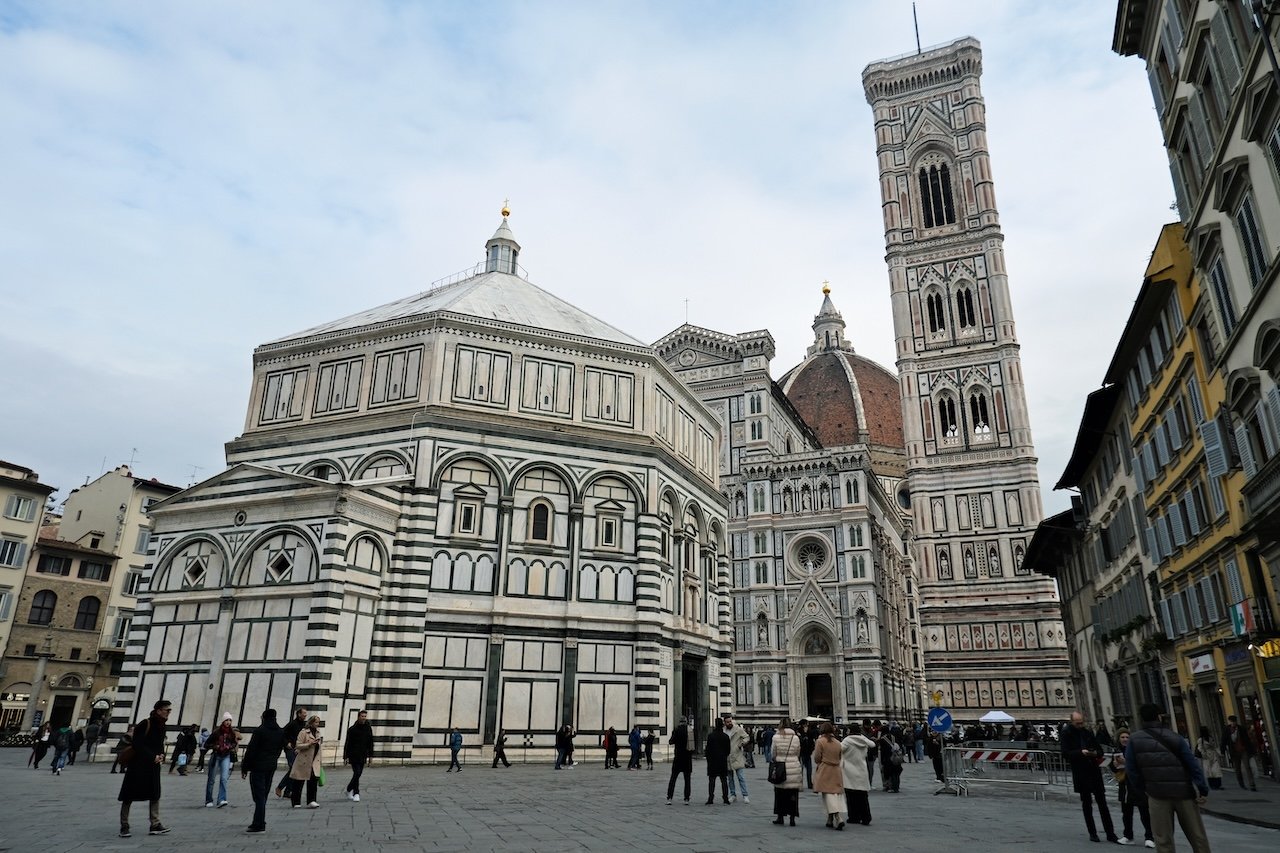 The Duomo complex lies in the center of the city and is a must-see on a trip to Florence.
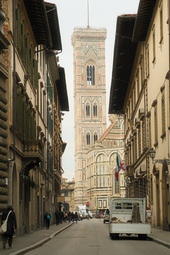
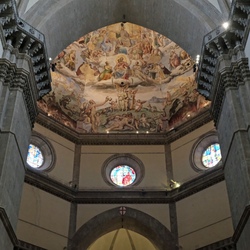
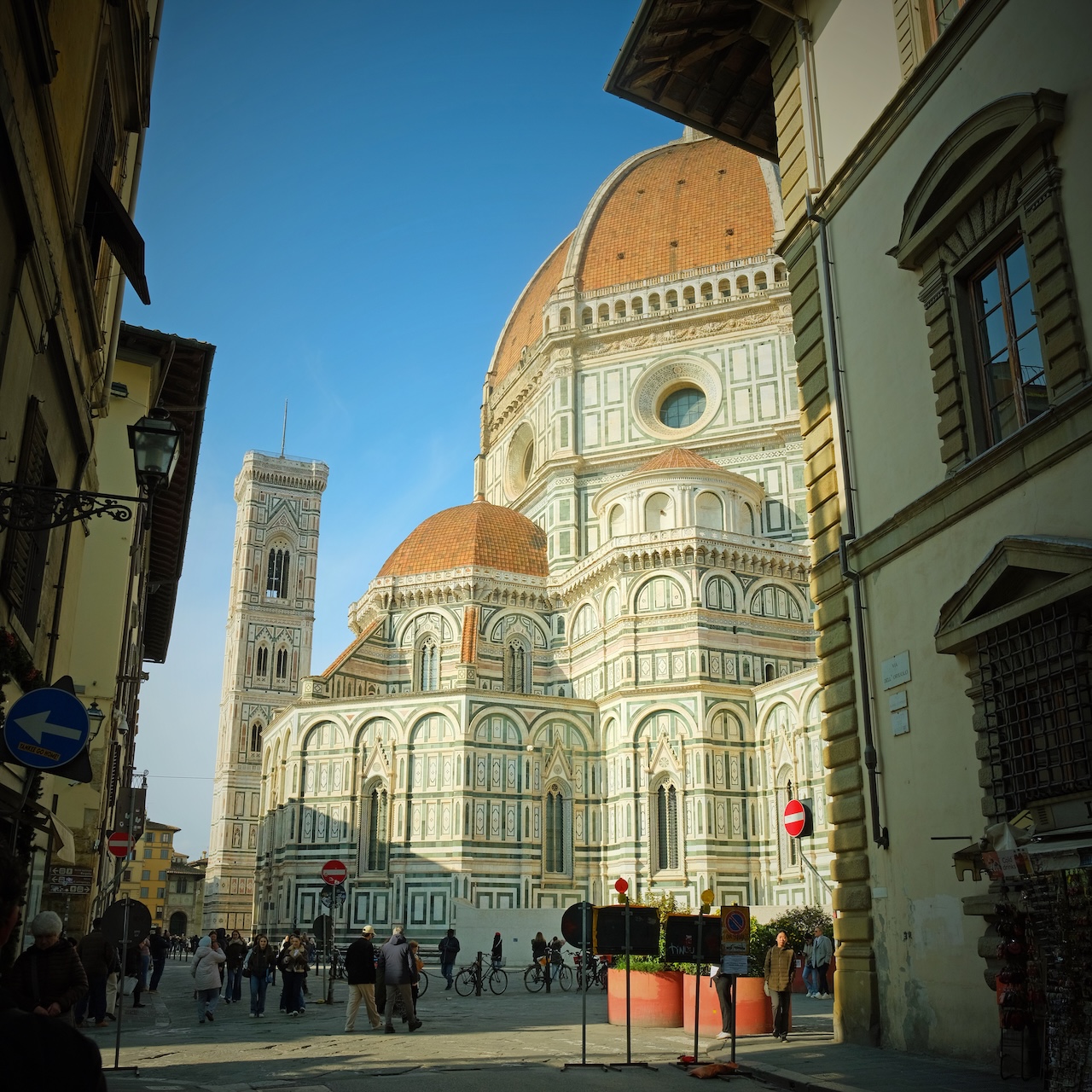
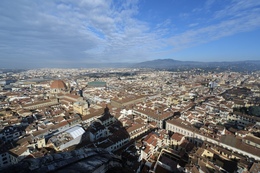
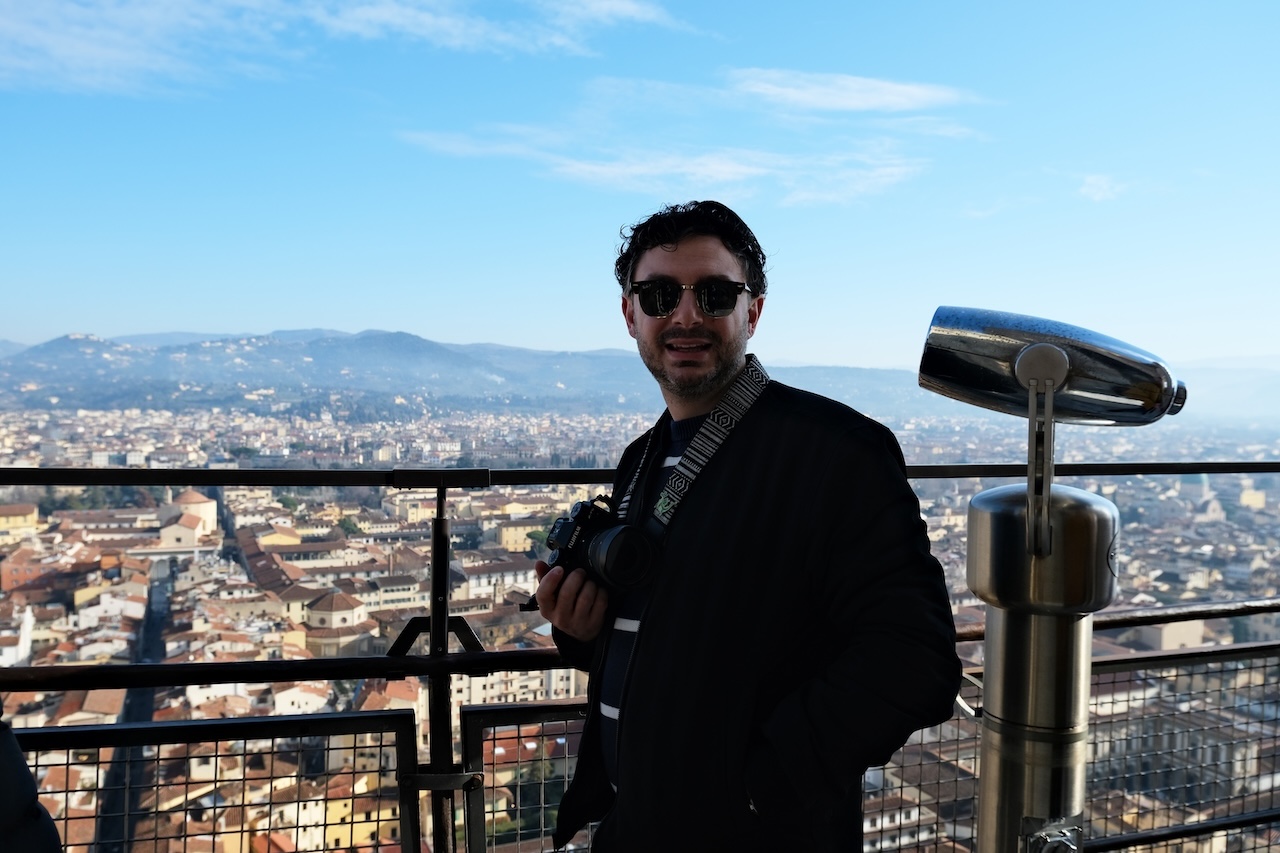
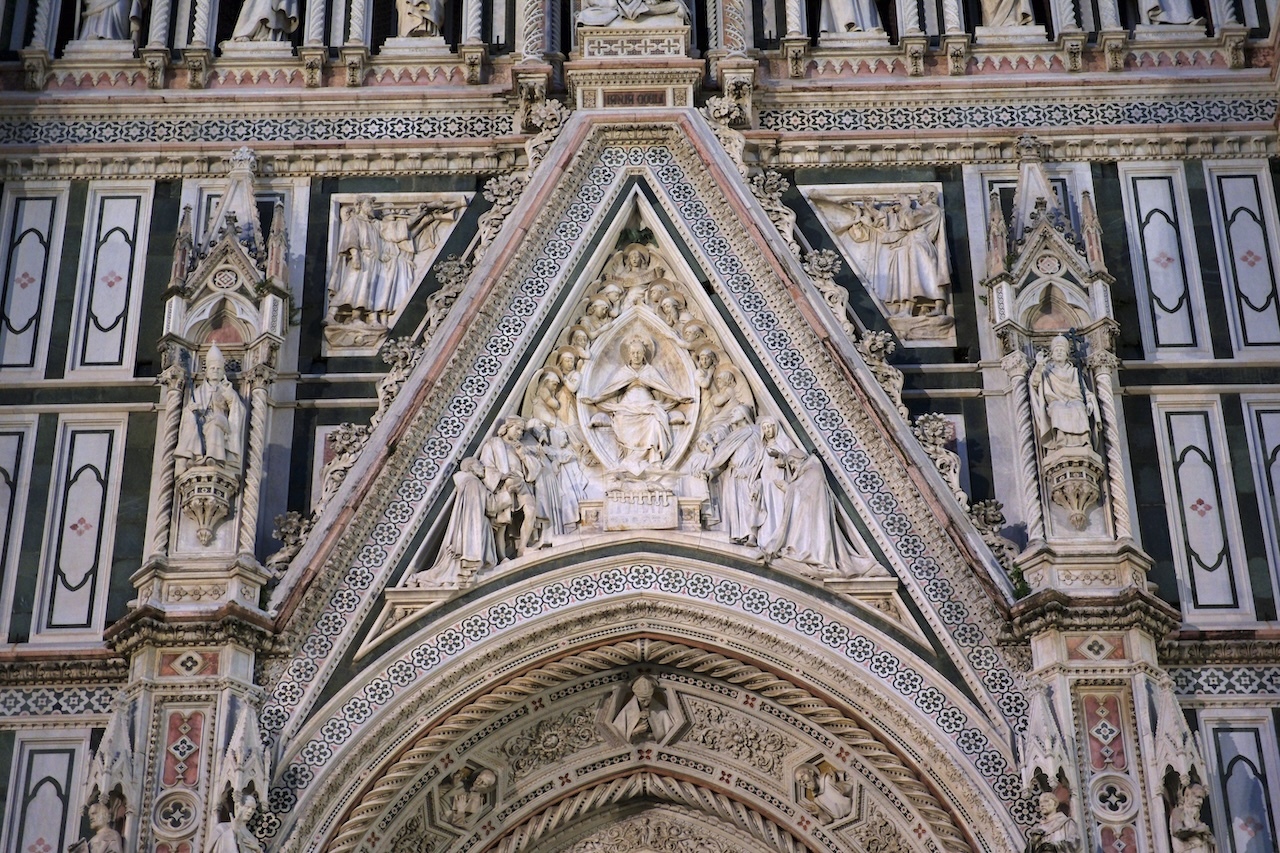
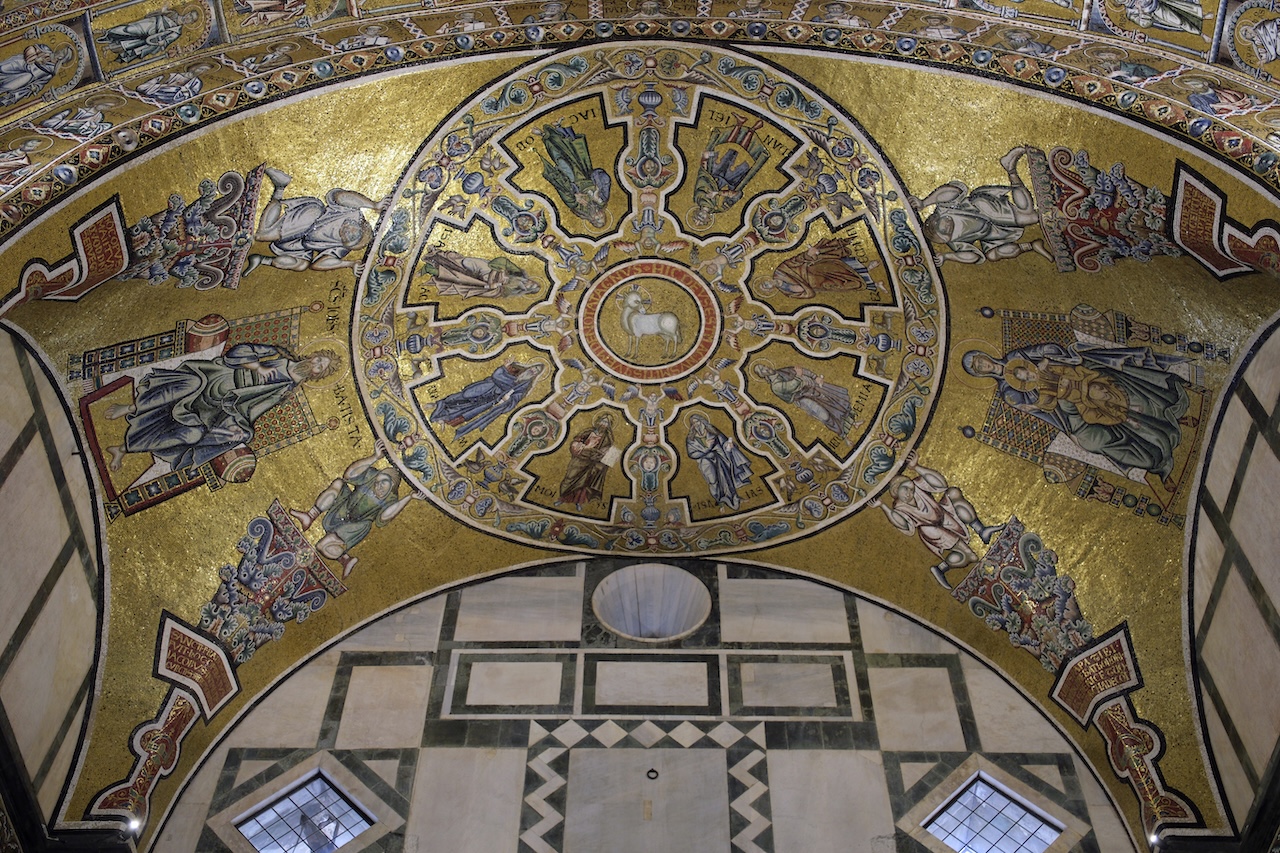 Snapshots from the Duomo, including views from the top of Brunelleschi's Dome, elaborate exterior marble details, and the gilded mosaic ceiling of the Baptistery.
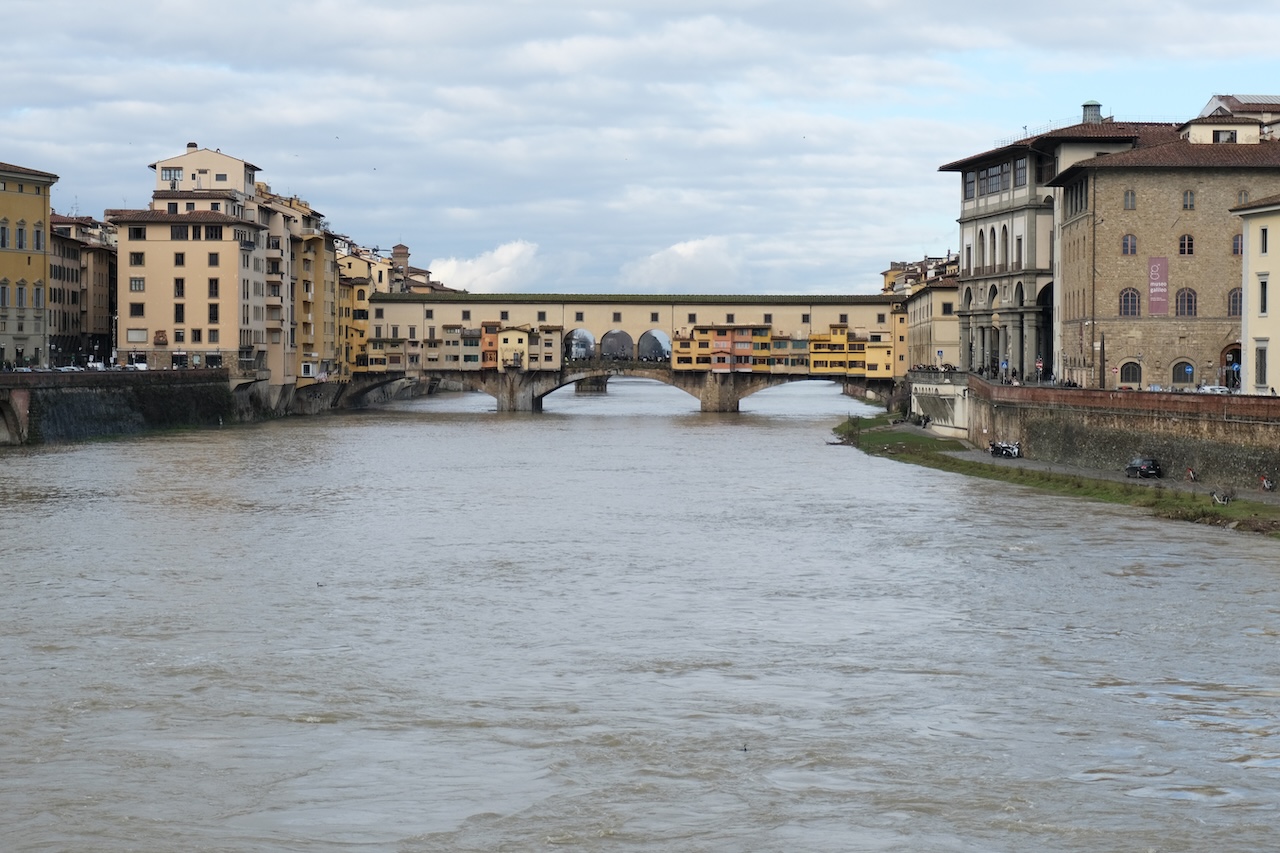 View of the Ponte Vecchio and Arno River.
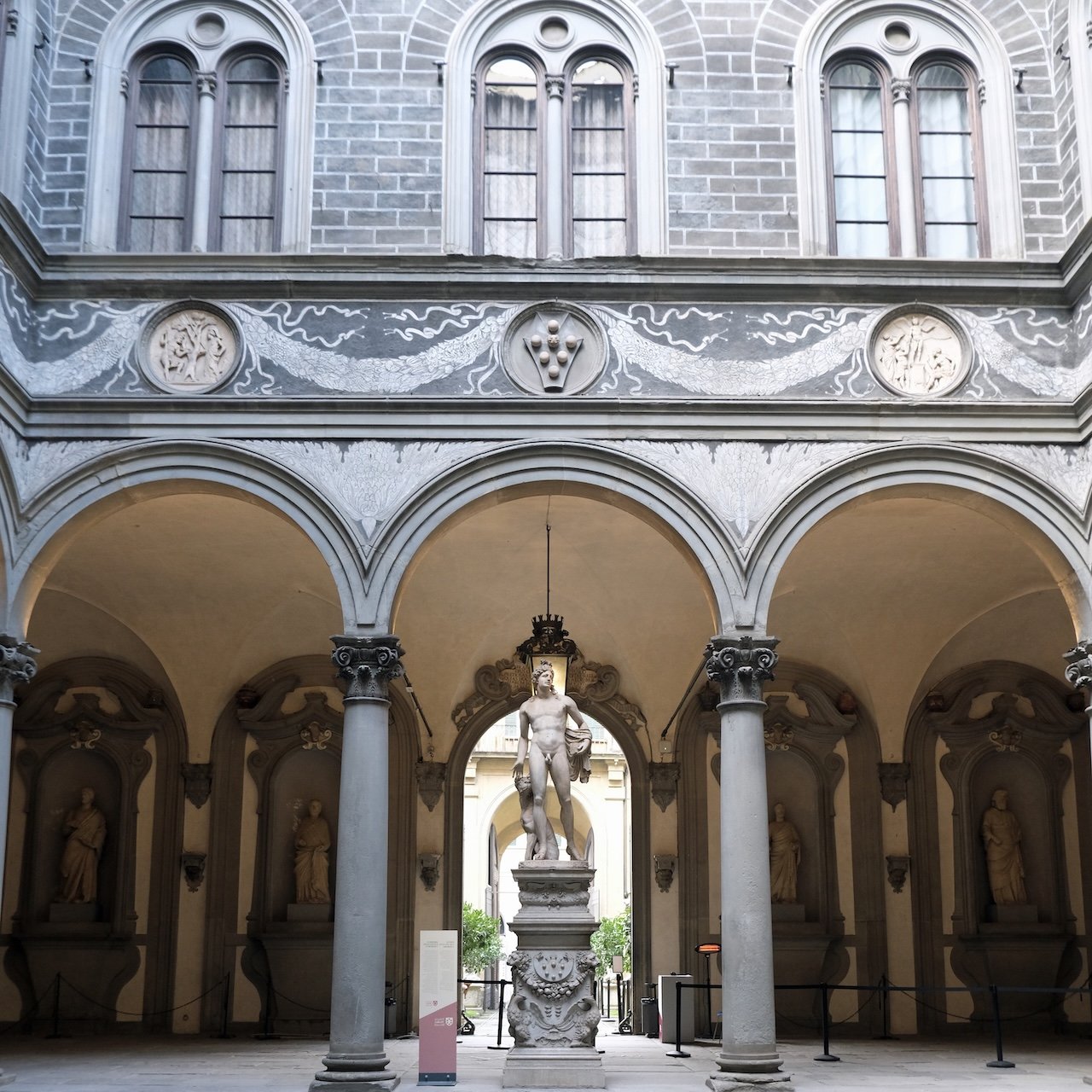 Interior courtyard of the Palazzo Medici Riccardi.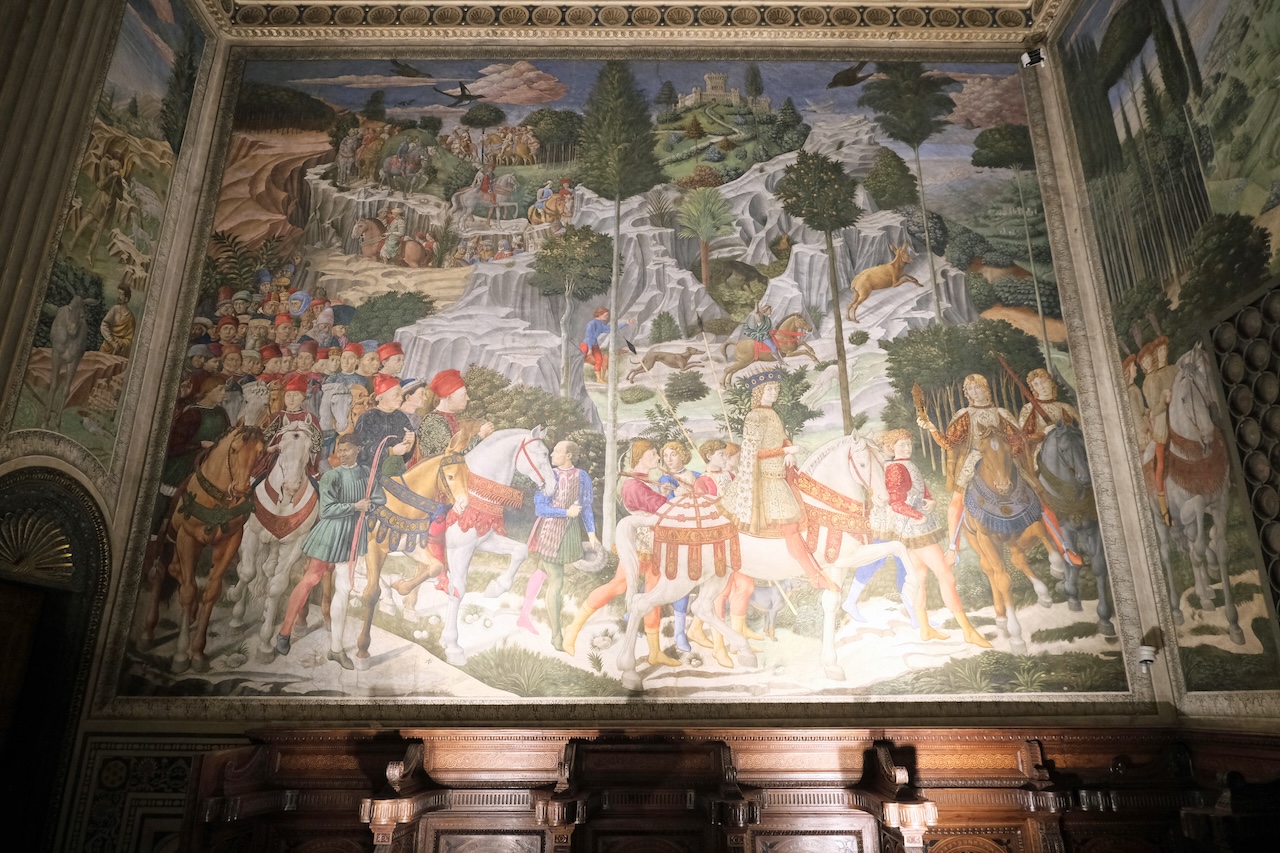
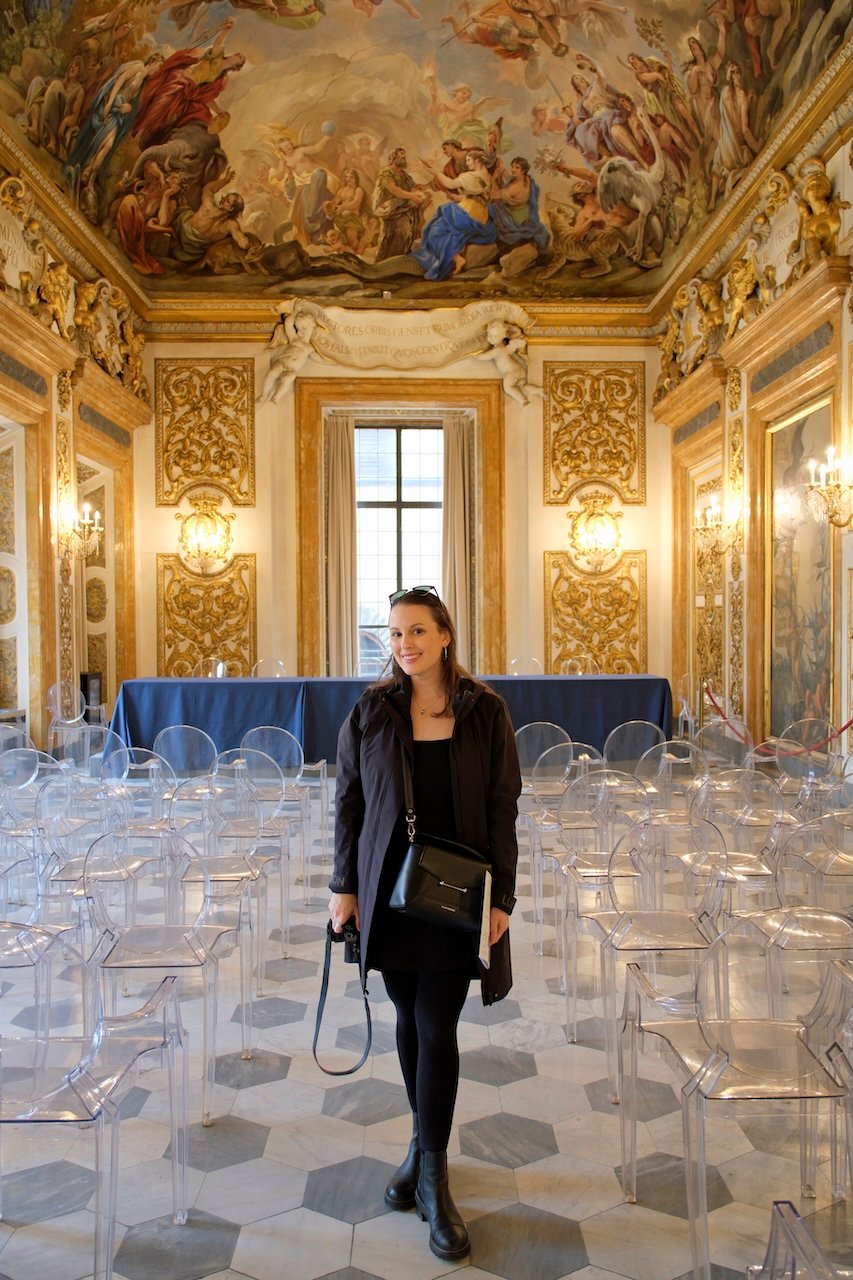 Little remains of the original Medici interior of Palazzo Medici Riccardi, with the exception of the Chapel of the Magi. Baroque elements were later added by the Riccardi family.

 Florence is home to a number of markets, including Mercato Centrale (left). For a more authentic experience, consider visiting the Mercato di Sant'Ambrogio (right) during your time in Florence.
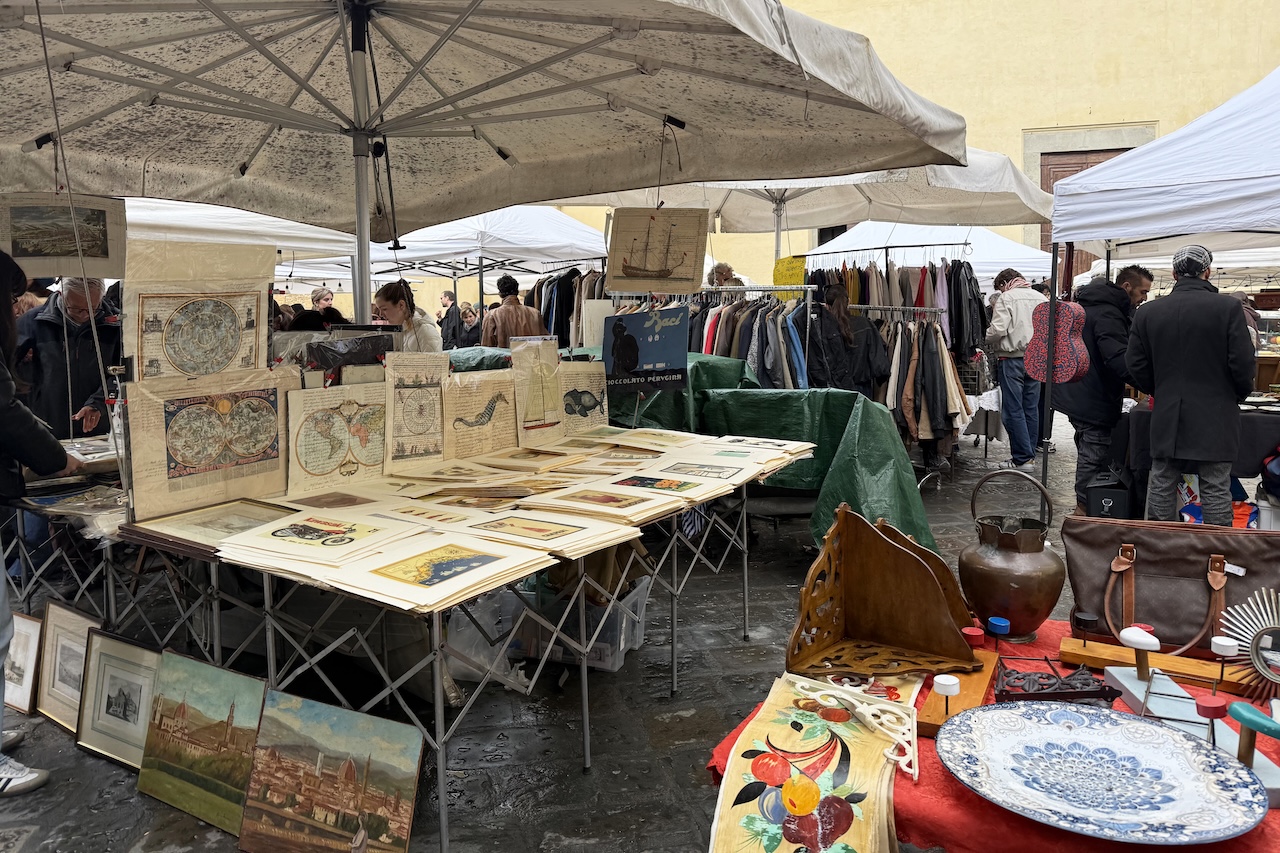 Assortment of goods for sale at the monthly antiques market in Piazza Santo Spirito.
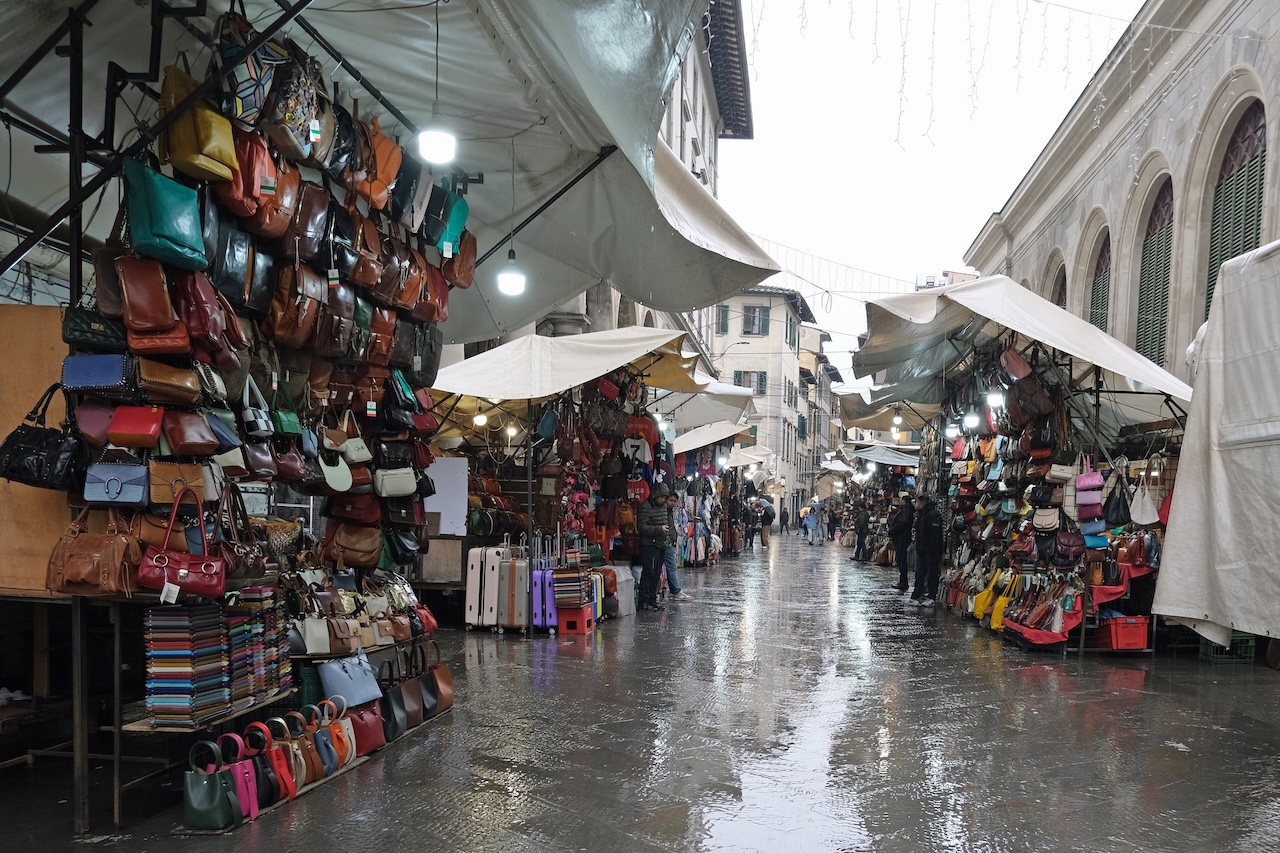
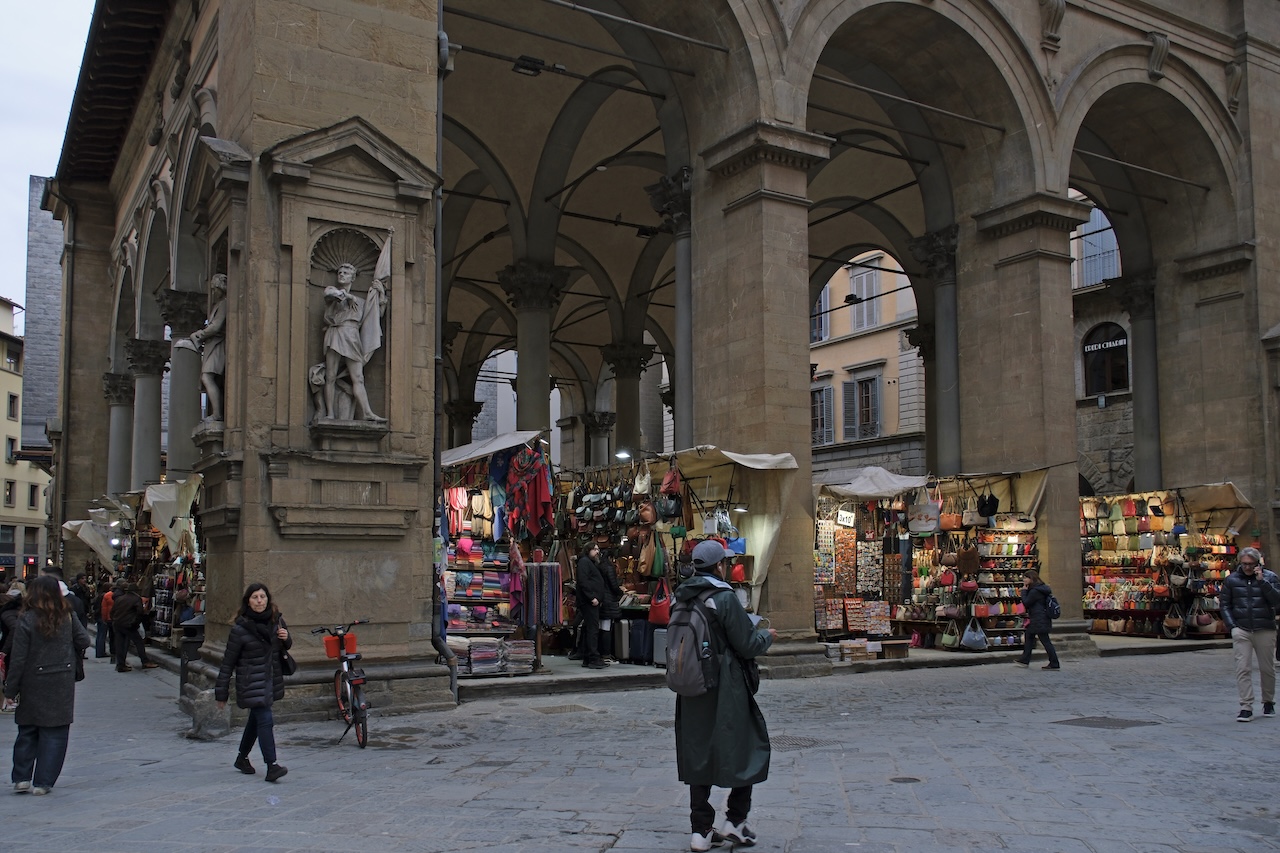
Skip the vendors surrounding Mercato di San Lorenzo and the Mercato Nuovo. Instead, consider purchasing authentic leather goods from a reputable boutique.
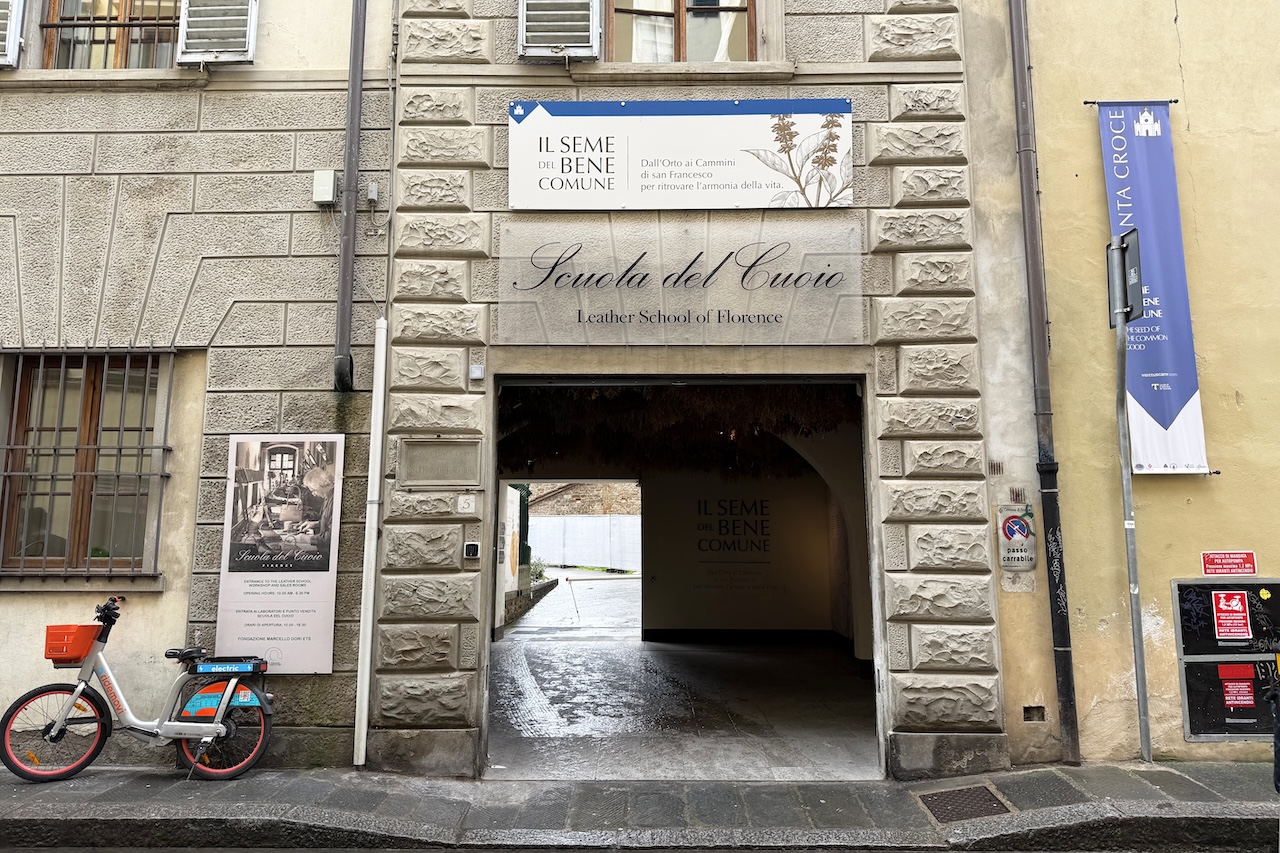

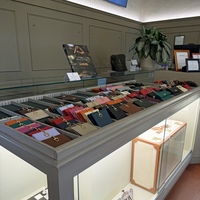


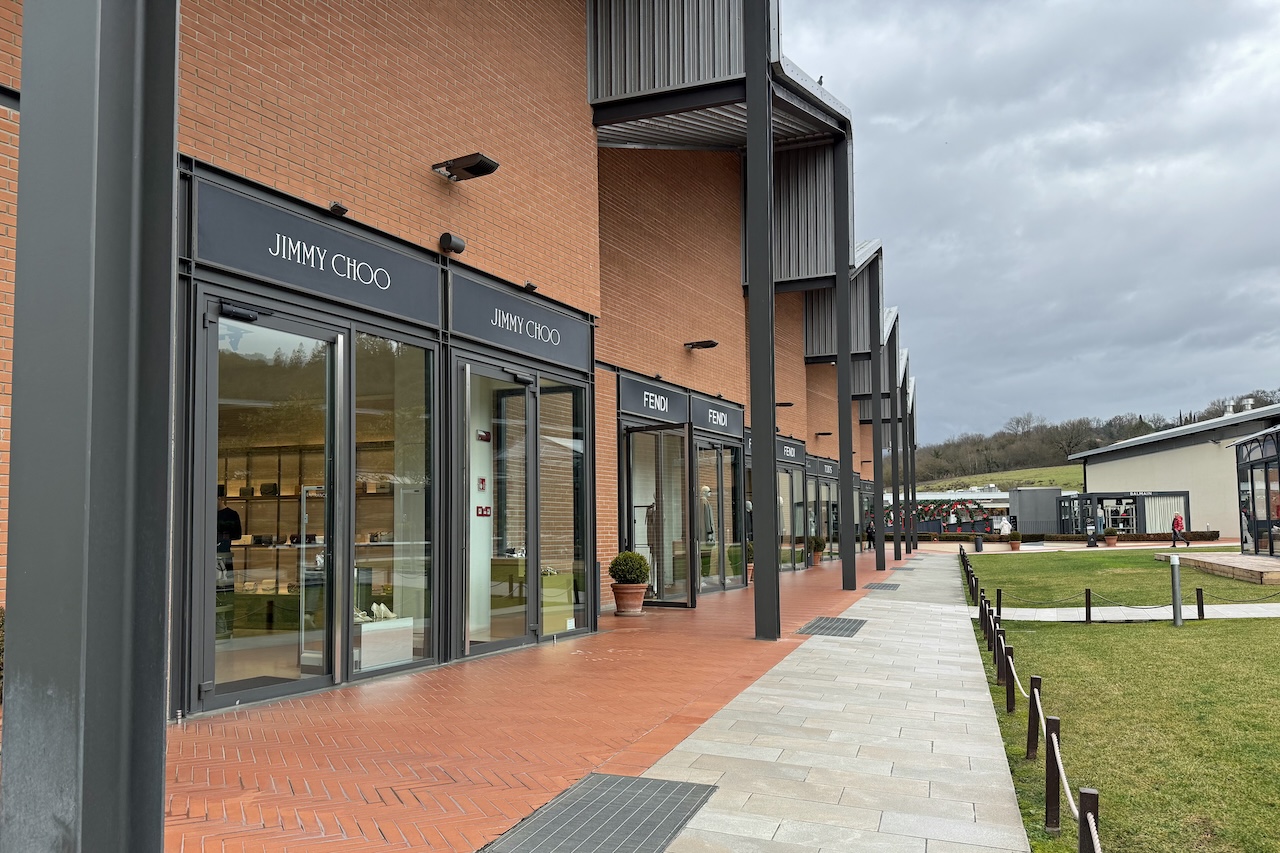
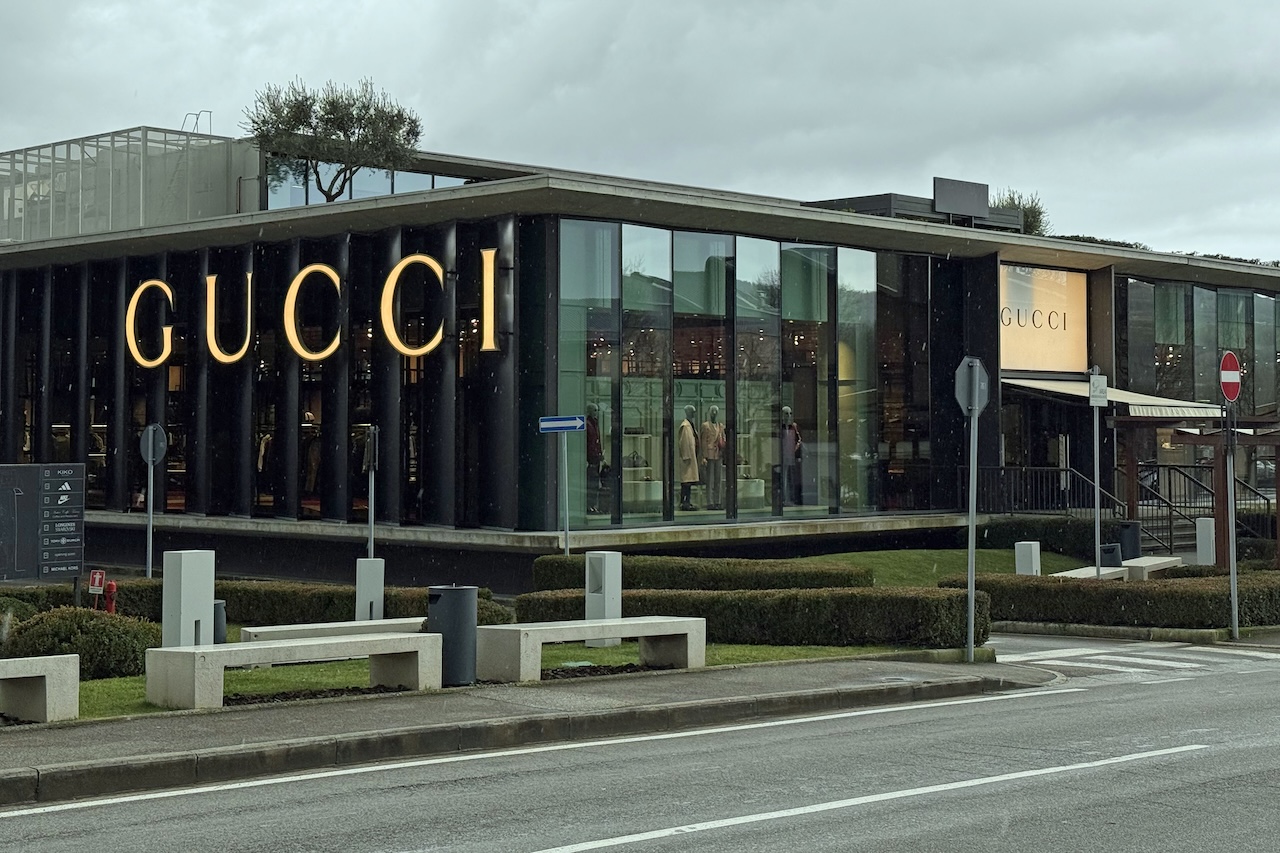
Florence has a centuries-old tradition of leatherworking and craftsmanship, making leather goods one of the most popular souvenirs to bring home. The city also has deep connections to Italian fashion, with both Gucci and Salvatore Ferragamo founded in Florence. Their flagship stores remain in the historic center today, alongside boutiques from many of Italy's biggest luxury brands.
However, we would be amiss to mention in this Florence travel blog that unfortunately, not everything marketed as "Florentine leather" is actually made in Florence, or even Italy.
Handmade Italian leather goods do not necessarily come cheap. Quality leather, skilled craftsmanship, and products actually made in Florence (or elsewhere in Italy) typically command higher prices than the bags, wallets, and jackets you will see piled onto market stalls. As a rule of thumb, if a price seems too good to be true, it probably is! A suspiciously inexpensive product marketed as "genuine Italian leather" may be made with lower-quality materials or manufactured outside of Italy.
The outdoor leather stalls surrounding Mercato di San Lorenzo and under the 16th-century loggia Mercato Nuovo are colorful, busy, and tempting to walk through, but we would not make these locations our first choice for purchasing a quality leather bag, jacket, belt, or wallet. These stalls cater heavily to tourists, and the sheer volume of nearly identical merchandise should be a clue that not everything being sold is handmade locally.
That does not mean that every product at these markets is poor quality. It simply means that you need to know what you are buying. Labels such as "Italian leather" can refer to the material rather than where the finished product was actually made.
An established shop or artisan should be able to tell you about the leather, where the product was produced, and the craftsmanship involved.
If you are planning to purchase leather goods in Florence, we recommend buying directly from an established shop or artisan workshop. There are a number of reputable leather shops throughout Florence, but these are the two that we personally shop at when we are in Florence.
Florence has played an important role in the heritage of Italian luxury houses. Gucci was founded here in 1921, while Salvatore Ferragamo opened in 1927. Both brands maintain prominent flagship stores in Florence today, making the city an especially fitting place to shop their collections.
Florence is also the birthplace of Panerai, the Italian luxury watchmaker founded here in 1860. The brand's historic boutique is on Piazza San Giovanni, directly across from the Duomo, and is worth a look if you have an interest in watches.
For a much larger concentration of luxury brands head outside the city to The Mall Firenze in Leccio. Located roughly an hour from the center of Florence, the open-air luxury outlet mall is home to boutiques from almost all of the major Italian fashion houses, as well as international designers with merchandise offered well below standard retail prices.
Getting to The Mall Firenze is straightforward, with dedicated bus service available between Florence and the outlet mall via Busitalia.


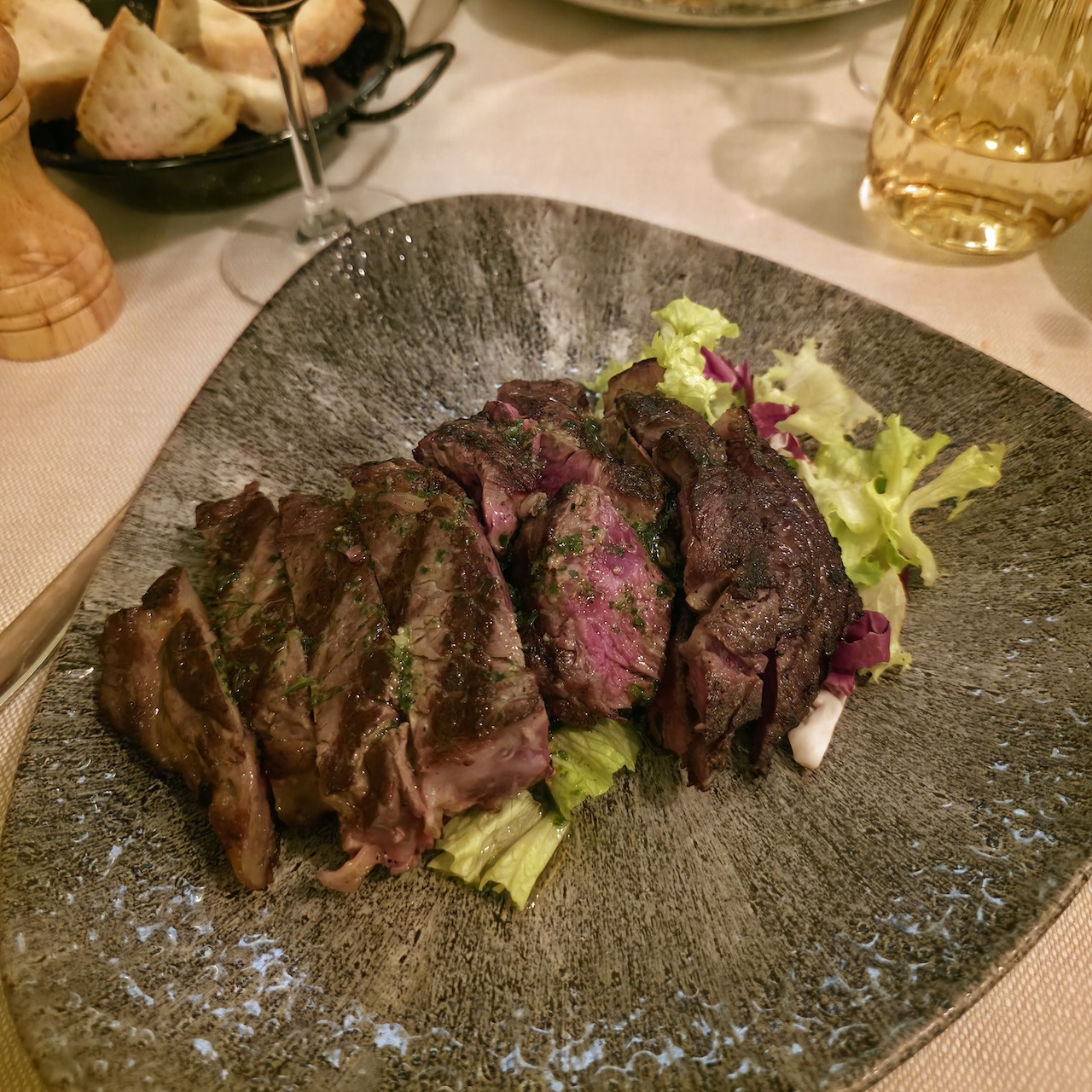
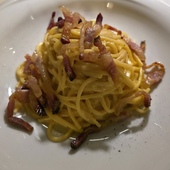


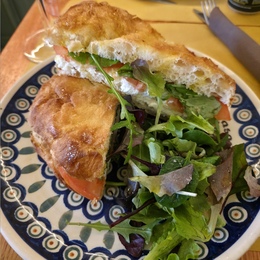
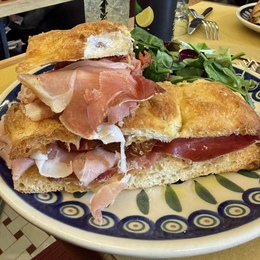
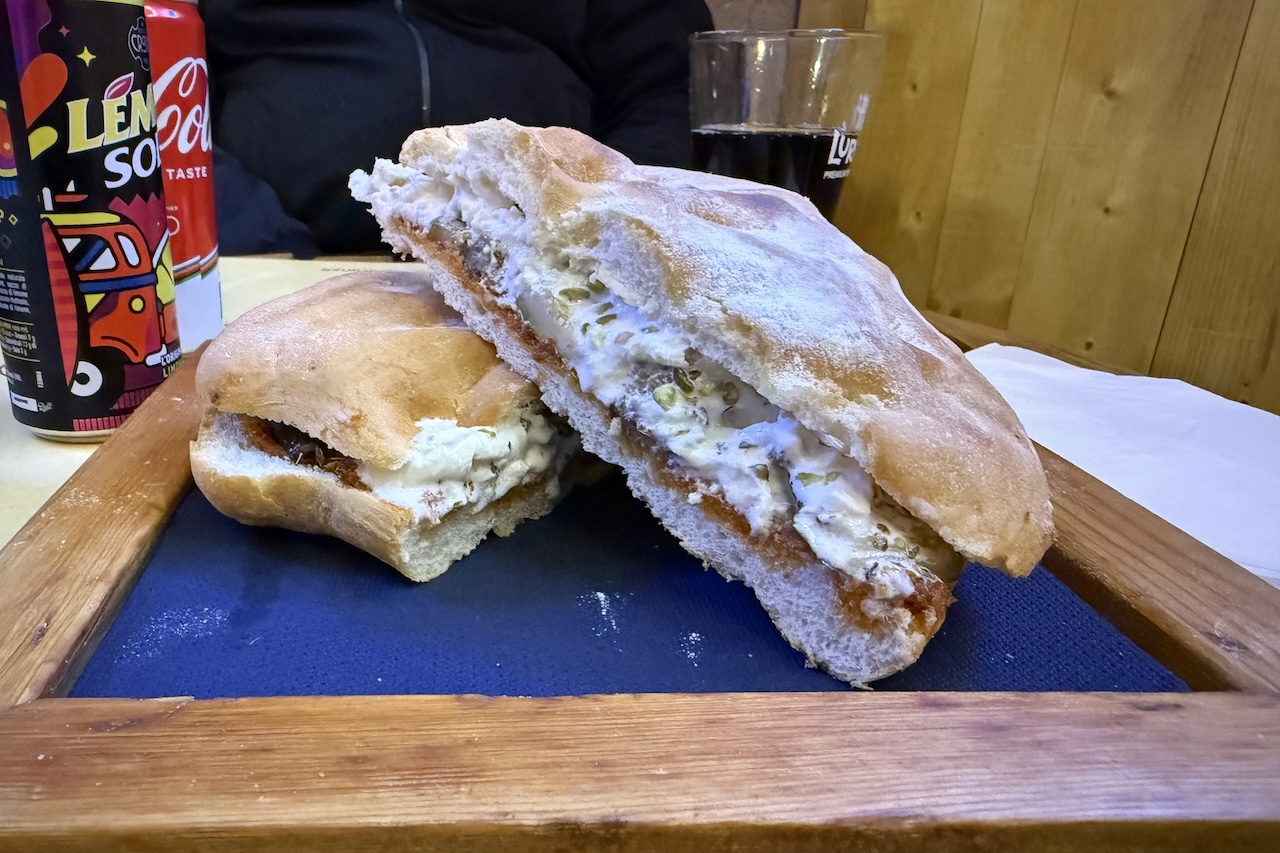
Eating well in Florence does not require chasing reservations or viral restaurants, and it definitely does not have to cost a fortune. Some of our favorite meals have come from places we found while walking around the city, especially once you move a few streets away from the busiest landmarks.
Tuscan cuisine is quite different from what you will find in Rome, with its own regional ingredients and specialities. Think: schiacciata for a quick lunch, bistecca alla Fiorentina, and hearty dishes like pappardelle al cinghiale (pasta with wild boar meat). However, you can still find plenty of other pasta, pizza, and other Italian dishes throughout the city.
We do read restaurant reviews, but rather than defaulting to platforms like Tripadvisor or TheFork, we tend to rely on Google Maps for restaurants in Florence. Looking at what is nearby, scrolling through recent photos, and skimming reviews has consistently led us to better meals and a more relaxed dining experience. With that in mind, here are some of the places we return to and consistently recommend in Florence.
Florence is known for its schiacciata, a Tuscan flatbread that makes the perfect base for sandwiches (or panini) piled with local meats, cheeses, vegetables, and spreads. Sandwich shops are everywhere in Florence, making them one of our favorite options for a quick and relatively inexpensive lunch between sightseeing. We have tried quite a few during our visits to Florence, but our favorites are listed below.

Choosing where to stay in Florence is relatively easy compared to larger European cities. The historic center is compact and walkable, and most of the city's major attractions are concentrated within a fairly small area.
For first-time visitors to Florence, we highly recommend staying in the city center near the Duomo. You will be within walking distance of nearly everything, which makes sightseeing especially convenient. That said, our favorite are to stay in Florence is the neighborhood of Santa Croce and Sant'Ambrogio. It is still close to Florence's main attractions, but the neighborhood feels noticeably more local and removed from the busiest streets immediately surrounding the Duomo.
Here are the areas we would consider when choosing where to stay in Florence.
If this is your first trip to Florence, staying near the Duomo is hard to beat. You will be right in the heart of the historic center, with the Duomo, Piazza della Signoria, Palazzo Vecchio, the Uffizi Galleries, Ponte Vecchio, and the Accademia Gallery all within walking distance.
The single biggest advantage of staying in this area is the convenience. Florence is already a walkable city, but staying here makes it particularly easy to return to your hotel during the day, head out early before the largest crowds arrive, or stay out late without worrying about public transportation.
Of course, that central location comes with tradeoffs. This is the busiest and most tourist-oriented part of Florence, and hotel rates can reflect that. Still, for a short visit, this is one of the best areas in the city.
Best for: First-time visitors, short stays, sightseeing, and travelers who want to be within walking distance of virtually everything.
Below are several hotel recommendations in City Center that balance both location and comfort.
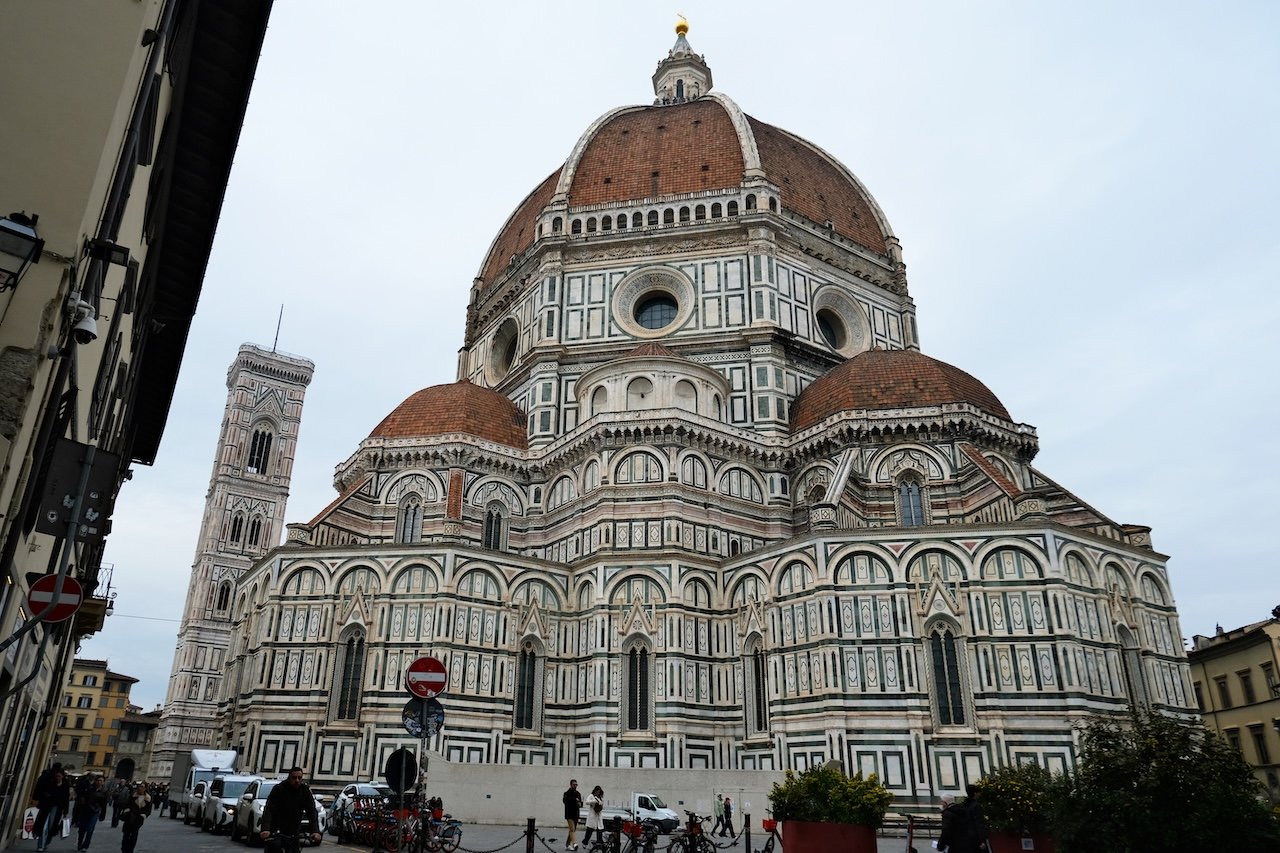
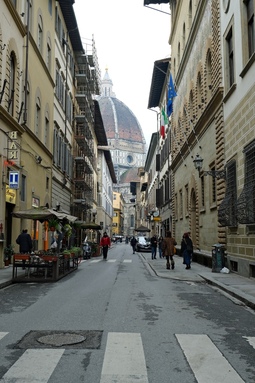
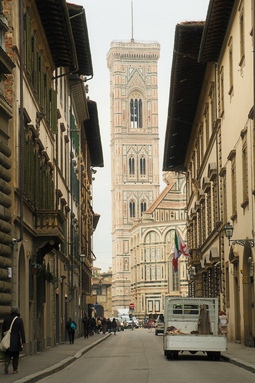
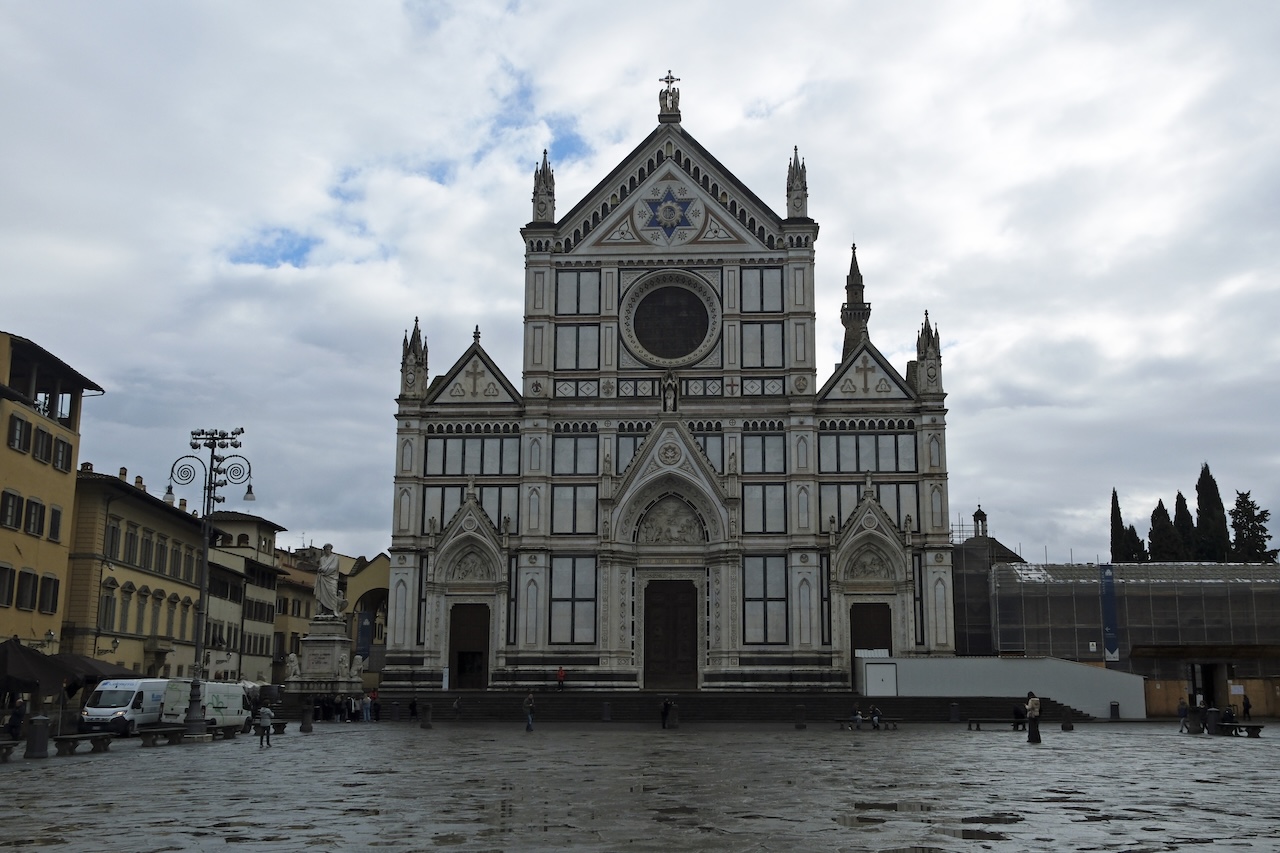
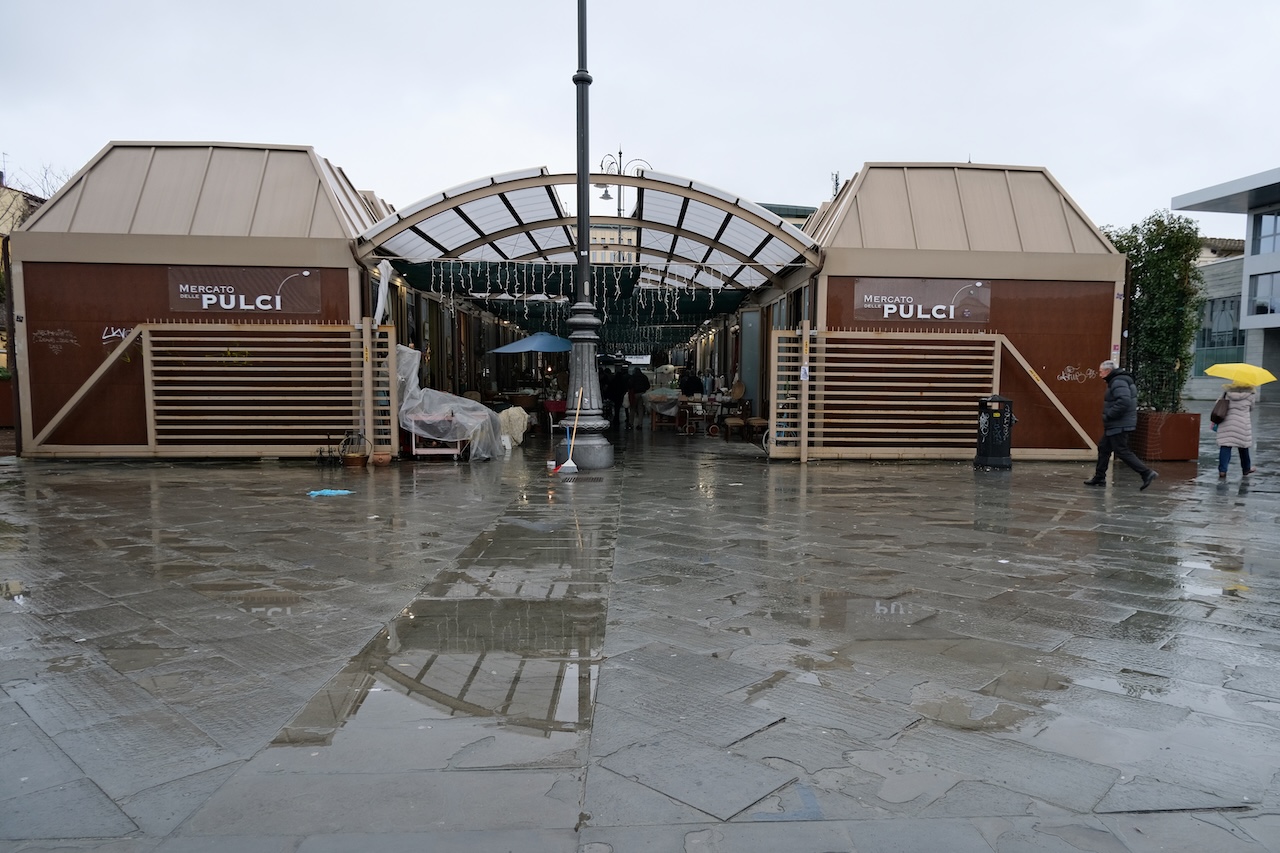
If you want to stay within a short walk to the best things to do in Florence, but prefer a more local atmosphere, Santa Croce and the neighboring Sant'Ambrogio is our pick.
The Santa Croce neighborhood is home to the Basilica of Santa Croce, our favorite church in Florence, while Sant'Ambrogio has one of the city's best local food markets. The neighborhood also has plenty of restaurants, cafés, bakeries, and small boutiques.
Staying in Santa Croce or Sant'Ambrogio leaves you with an approximately 10- to 15-minute walk to the Duomo and the Piazza della Signoria, so staying here does not necessarily sacrifice convenience.
Best for: Travelers who want a more local feel, repeat visitors, food lovers, and anyone who still wants to explore Florence on foot.
While we stayed in an Airbnb in the Santa Croce neighborhood on our last visit to Florence (which we did not love and would not recommend), below are some other hotels in the area that we would absolutely consider booking for our next visit!
The neighborhoods immediately north of the Duomo are another convenient option, particularly if museums and learning more about the Medici are high on your Florence itinerary.
San Lorenzo places you near the Basilica of San Lorenzo, the Medici Chapels, Mercato Centrale, and the San Lorenzo Market. Continue toward the San Marco neighborhood and you are close to the Accademia Gallery, home to Michelangelo's David, along with the Museo di San Marco.
This neighborhood is very central, with the Duomo easily reached on foot. However, accommodations here oftentimes provide more value than those immediately surrounding the cathedral. We have previously stayed in the San Marco neighborhood at IQ Hotel Firenze and would consider staying here again, although it is an approximately one-mile walk to Ponte Vecchio from this neighborhood.
Best for: Museum lovers, travelers interested in the Medici, and visitors who are looking for a central location without staying necessarily directly beside the Duomo.
These are all hotels we have stayed at previously and would consider staying at on our next trip to Florence in the San Lorenzo and San Marco neighborhood.
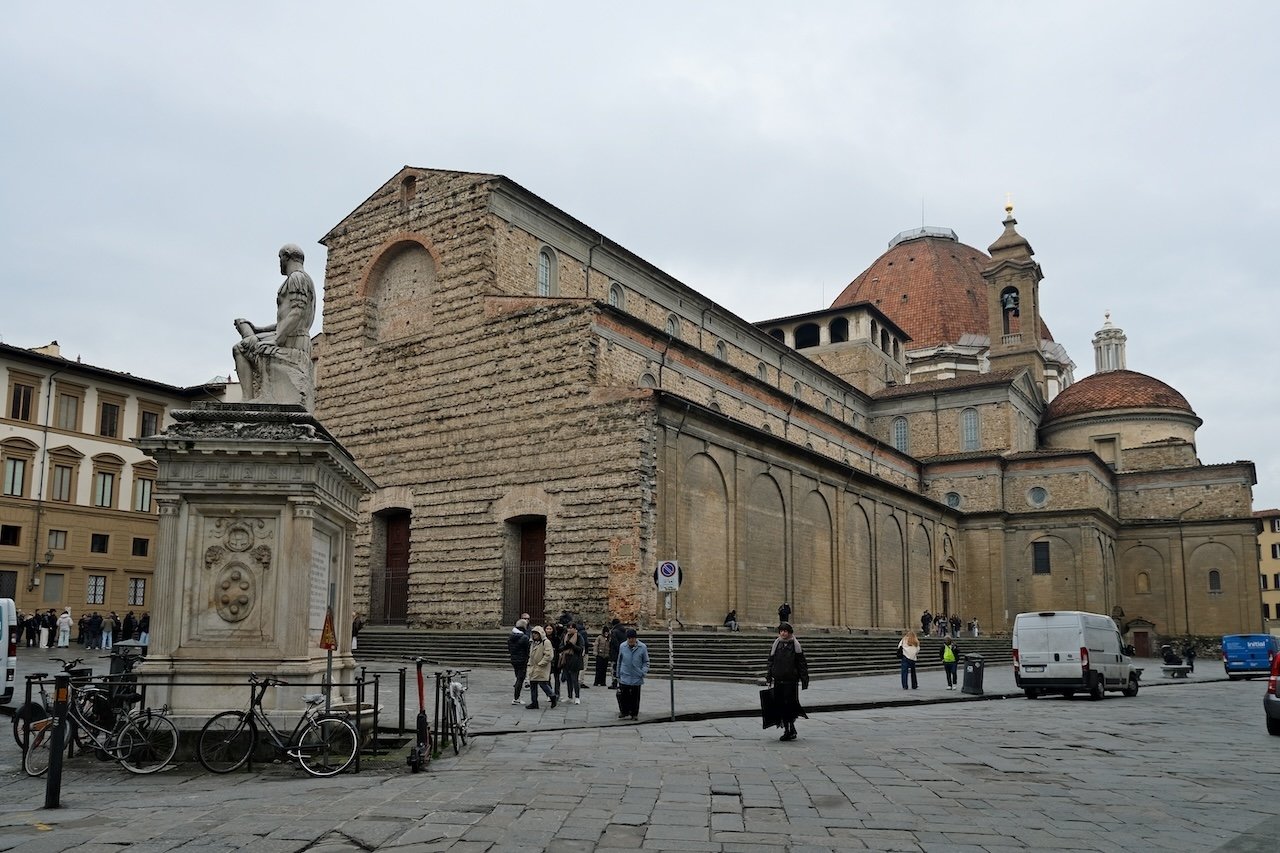
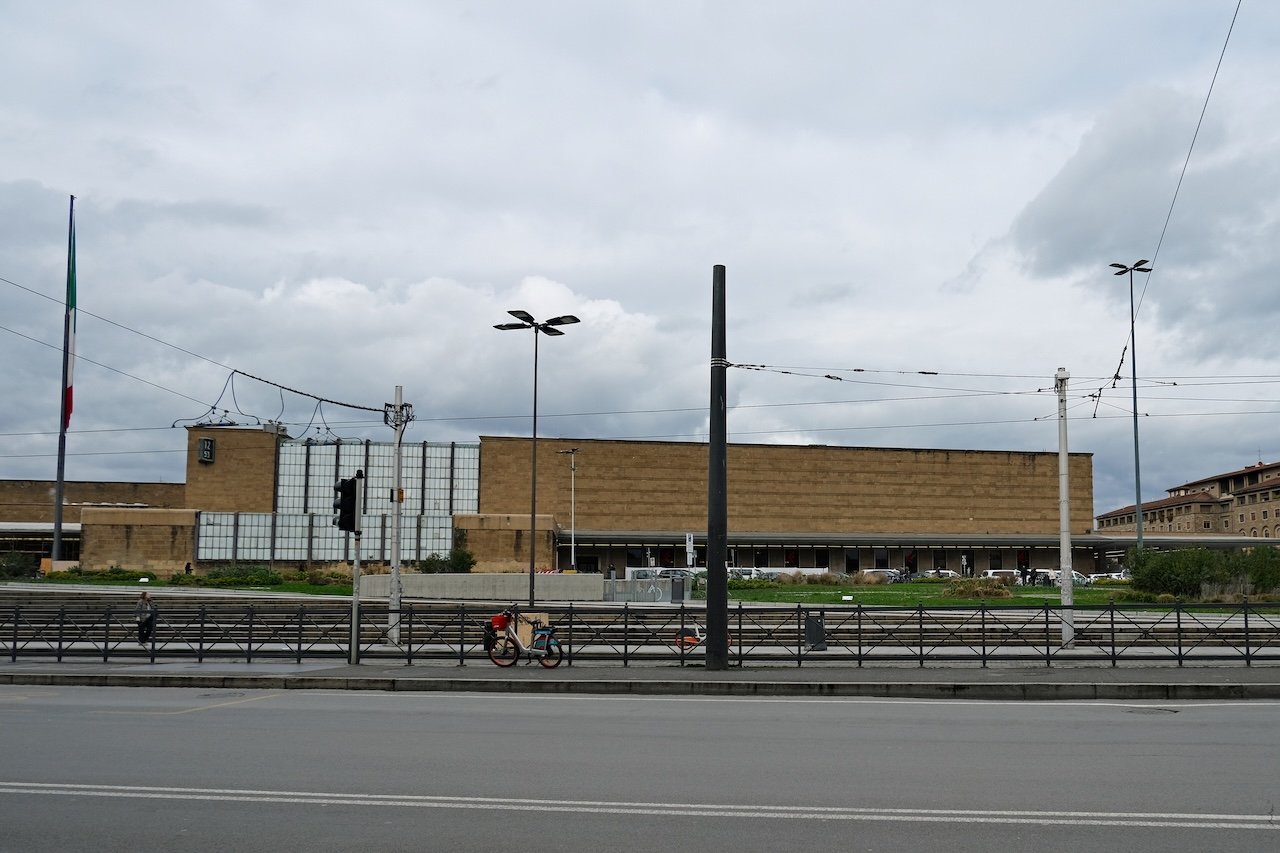
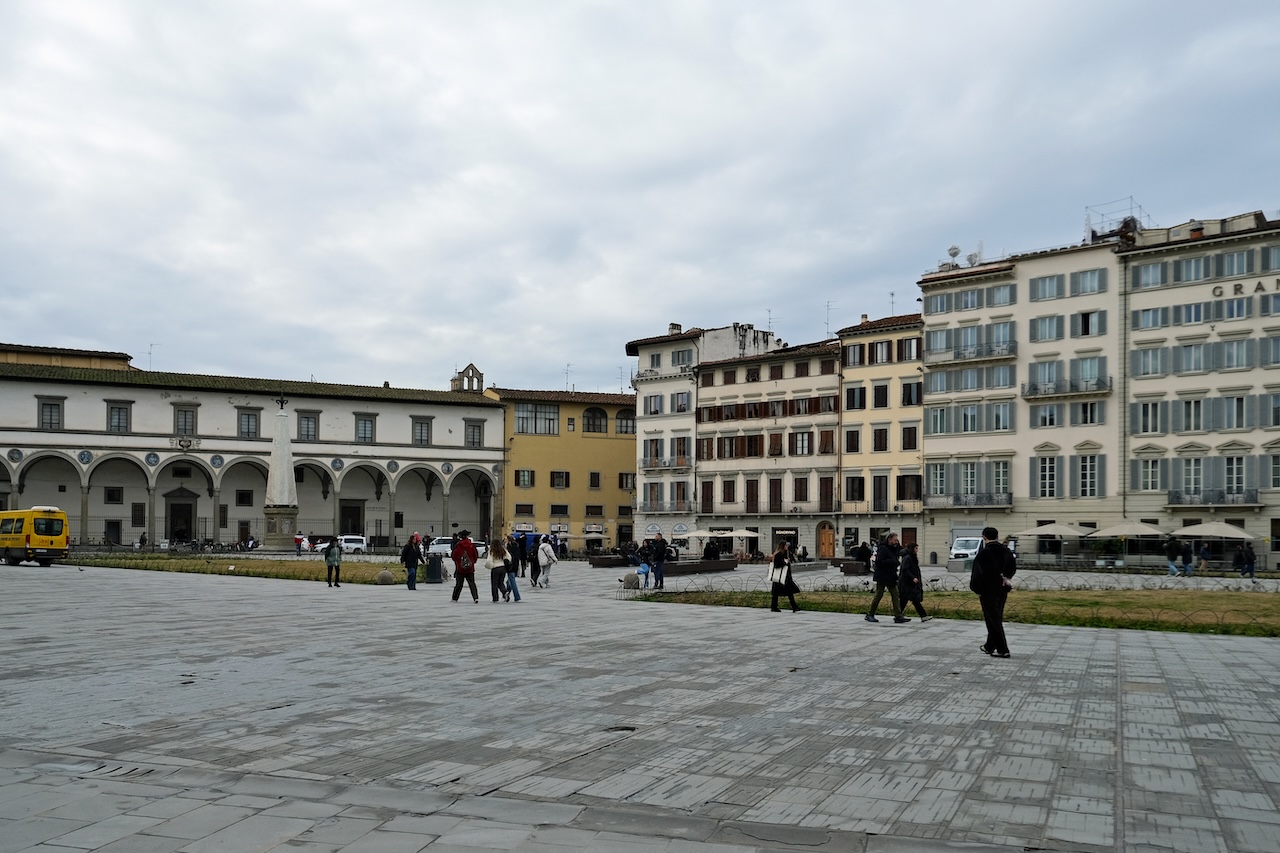
Santa Maria Novella is one of the most practical areas to stay in Florence, particularly if affordable hotel prices or easy transit connections are high priorities for your time in the city.
Florence's main train station, Firenze Santa Maria Novella (Firenze SMN), is located here, making the neighborhood especially convenient if you are arriving by train or planning day trips to destinations such as Siena, Pisa, or elsewhere in Tuscany. You are also within walking distance to the Basilica of Santa Maria Novella and roughly a 10- to 15-minute walk to the Duomo.
Hotels around the train station are frequently less expensive than comparable properties deep inside the historic center, making this a great area to check if you are visiting Florence on a budget.
Best for: Budget-conscious travelers, train travelers, and anyone planning day trips from Florence.
Near Firenze SMN, we recommend several budget-friendly hotel options that prioritize convenience and transit access, including:
Cross the Arno River and Florence is practically a different city. Oltrarno, which literally translates to "beyond the Arno," encompasses several neighborhoods south of the river and is a great option if you want to stay slightly removed from the busiest parts of the historic center.
This neighborhood is home to Palazzo Pitti, the Boboli Gardens, Basilica di Santo Spirito, boutiques, restaurants, and smaller neighborhood streets that are simply enjoyable to wander. Ponte Vecchio connects Oltrarno directly with the historic center, so many of Florence's must-see attractions are still within walking distance.
The tradeoff is that you may walk a little farther each day, depending on exactly where you stay. For a first trip to Florence focused heavily on museums and major landmarks, we still prefer the Duomo area for sheer convenience. However, for a longer stay, a return trip, or travelers who value atmosphere over convenience, Oltrarno is an excellent alternative.
Best for: Longer stays, repeat visitors, couples, food and shopping, and travelers who prefer a neighborhood atmosphere.
For travelers drawn to Oltrarno, we have included a selection of hotels here that are well-situated with great reviews.
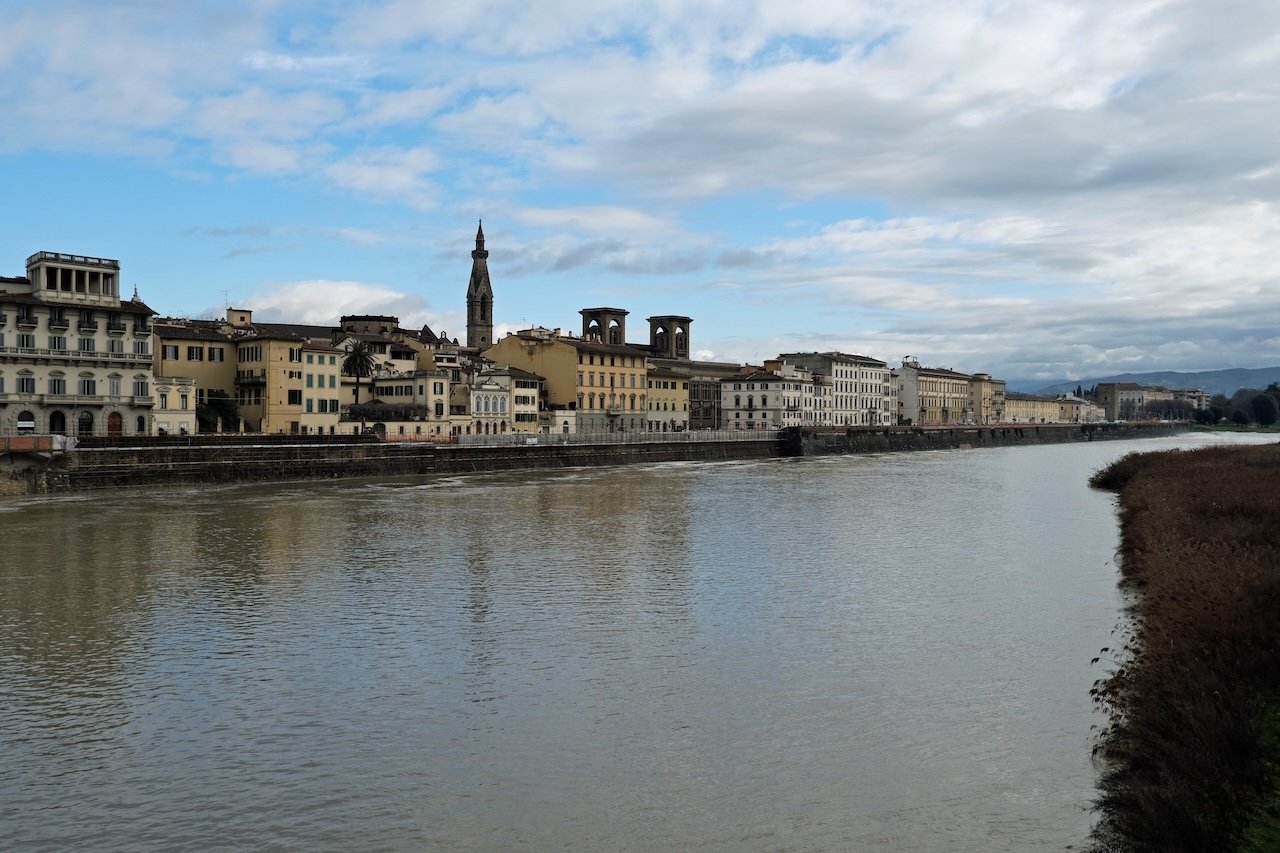
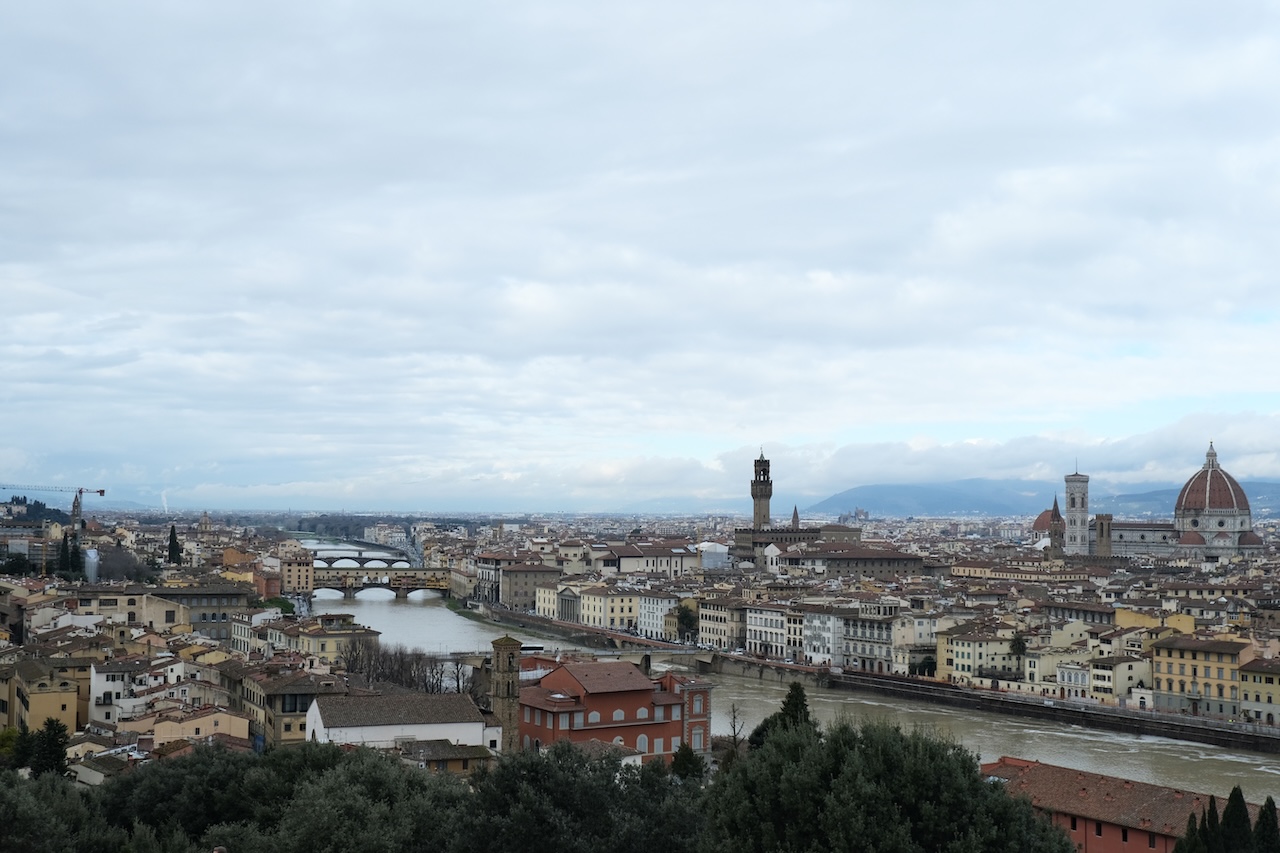
Throughout this Florence travel blog, we share our firsthand experiences exploring the city, including what we think is worth your time and what we would do differently. Before you finalize your Florence itinerary, these are some of our most important tips for planning your trip to Florence.
There really is no reliably quiet season in Florence anymore. The historic center is compact, its most famous attractions are concentrated in a relatively small area, and crowds are commonplace around the Duomo, Uffizi Galleries, Accademia Gallery, and Ponte Vecchio.
The biggest thing to know is that Florence is not a city where you can show up and expect to buy tickets at the door. Lines at ticket offices can be long, and during the peak tourist season (April through early November), timed entry slots often sell out well before your trip even begins.
Whenever possible, we recommend booking tickets online, in advance, especially for the city's most popular sites like the Uffizi Galleries, Accademia, and the Duomo complex (especially if you are interested in climbing to the top of Brunelleschi's dome).
In the event that official tickets are already sold out, do not panic! We have had some luck checking reputable third-party platforms like GetYourGuide, which can be a great option for guided tours to some of the top sites in Florence.
One of the simplest ways to experience Florence with fewer crowds is to begin your day early. The city’s major landmarks start to feel dramatically busier by late morning, once swarms of tour groups arrive.
Whenever possible, we recommend booking the first entry time slot of the day for sites like the Uffizi Galleries. Not only does it help you avoid the largest crowds, but the experience feels calmer and more enjoyable before large tour groups arrive.
If you can manage a few early mornings in Florence, you will be rewarded with a quieter, more breathable version of the city. Plus, mornings will typically offer you better light for photos, too!
Crowds in Florence do not just depend on the season. They also depend on the calendar. Weekends are always busier, but public holidays can bring an extra surge of visitors into the city. Late April and early May, in particular, can feel surprisingly packed due to national holidays like Liberation Day and Labor Day. A full listing of holidays observed in Florence, which may impact opening hours of popular attractions throughout the city and see increased crowds, include:
If you can avoid visiting Florence around these dates, you will be better off, trust us from experience. We learned the hard way after finding ourselves in Florence during the first week of May in 2023, right in the middle of the Liberation Day and Labor Day holiday stretch. Not to be dramatic, but the crowds that week were truly insufferable. The area around the Duomo and Uffizi Galleries felt packed from morning to night, and even simple sightseeing took more patience than usual.
That said, if your trip does fall near any of these dates, it is worth booking major attractions and hotels well in advance. Plan to arrive in Florence expecting heavy crowds throughout the city.
The biggest thing to know is that Florence is not a city where you can show up and expect to buy tickets at the door. Lines at ticket offices can be long, and during the peak tourist season (April through early November), timed entry slots often sell out well before your trip even begins.
Whenever possible, we recommend booking tickets online, in advance, especially for the city's most popular sites like the Uffizi Galleries, Accademia, and the Duomo complex (especially if you are interested in climbing to the top of Brunelleschi's dome).
In the event that official tickets are already sold out, do not panic! We have had some luck checking reputable third-party platforms like GetYourGuide, which can be a great option for guided tours to some of the top sites in Florence.
One of the simplest ways to experience Florence with fewer crowds is to begin your day early. The city’s major landmarks start to feel dramatically busier by late morning, once swarms of tour groups arrive.
Whenever possible, we recommend booking the first entry time slot of the day for sites like the Uffizi Galleries. Not only does it help you avoid the largest crowds, but the experience feels calmer and more enjoyable before large tour groups arrive.
If you can manage a few early mornings in Florence, you will be rewarded with a quieter, more breathable version of the city. Plus, mornings will typically offer you better light for photos, too!
Crowds in Florence do not just depend on the season. They also depend on the calendar. Weekends are always busier, but public holidays can bring an extra surge of visitors into the city. Late April and early May, in particular, can feel surprisingly packed due to national holidays like Liberation Day and Labor Day. A full listing of holidays observed in Florence, which may impact opening hours of popular attractions throughout the city and see increased crowds, include:
If you can avoid visiting Florence around these dates, you will be better off, trust us from experience. We learned the hard way after finding ourselves in Florence during the first week of May in 2023, right in the middle of the Liberation Day and Labor Day holiday stretch. Not to be dramatic, but the crowds that week were truly insufferable. The area around the Duomo and Uffizi Galleries felt packed from morning to night, and even simple sightseeing took more patience than usual.
That said, if your trip does fall near any of these dates, it is worth booking major attractions and hotels well in advance. Plan to arrive in Florence expecting heavy crowds throughout the city.
Absolutely! In fact, we prefer visiting Florence during the off-season. We have experienced the city in winter, spring, and summer, and winter is easily our favorite time to visit the city. From mid-November through the end of February, Florence is noticeably quieter. However, Florence is busy throughout the year, so do not expect to have the city to yourself. Winter crowds are generally more manageable, museum tickets are easier to secure, and walking through the city is considerably more enjoyable than during the busiest months of the year.
The tradeoff for smaller crowds, of course, is the weather. Winter in Florence typically features gray skies and a lot of rain. There is only a very small possibility of snow, but you will still need to dress accordingly because it can be very damp, especially in January and February.
To give you a realistic sense of what to expect in terms of the weather in Florence during the off-season:
| Month | Avg. High/Low (°F) | Avg. High/Low (°C) | Avg. No. Rainy Days |
| November | 60° / 42° | 16° / 6° | 14 |
| December | 54° / 39° | 12° / 4° | 12 |
| January | 55° / 43° | 13° / 6° | 13 |
| February | 57° / 43° | 14° / 6° | 11 |
One thing to plan for, though, is rain. November is typically the rainiest month with the city getting approximately 4.5 inches of rain during November. However, you will rarely experience an all-day downpour in Florence. From our experience, it typically rains on and off throughout the day, pretty lightly. We found that a small umbrella and a few waterproof layers make all the difference in staying dry and warm.
The tradeoff for smaller crowds, of course, is the weather. Winter in Florence typically features gray skies and a lot of rain. There is only a very small possibility of snow, but you will still need to dress accordingly because it can be very damp, especially in January and February.
To give you a realistic sense of what to expect in terms of the weather in Florence during the off-season:
| Month | Avg. High/Low (°F) | Avg. High/Low (°C) | Avg. No. Rainy Days |
| November | 60° / 42° | 16° / 6° | 14 |
| December | 54° / 39° | 12° / 4° | 12 |
| January | 55° / 43° | 13° / 6° | 13 |
| February | 57° / 43° | 14° / 6° | 11 |
One thing to plan for, though, is rain. November is typically the rainiest month with the city getting approximately 4.5 inches of rain during November. However, you will rarely experience an all-day downpour in Florence. From our experience, it typically rains on and off throughout the day, pretty lightly. We found that a small umbrella and a few waterproof layers make all the difference in staying dry and warm.
Yes! Florence is an extremely walkable city, and most visitors can explore the historic center almost entirely on foot. Many of the major attractions are concentrated within a relatively small area.
The Duomo, Piazza della Signoria, Uffizi Galleries, Ponte Vecchio, Accademia Gallery, Basilica of Santa Croce, the Medici Chapels, and the Bargello Museum are all within walking distance of one another.
Be sure to pack comfortable walking shoes. Florence's stone streets and small sidewalks can be hard on your feet after a day full of sightseeing, and you will likely walk a lot more than you expect.
The Duomo, Piazza della Signoria, Uffizi Galleries, Ponte Vecchio, Accademia Gallery, Basilica of Santa Croce, the Medici Chapels, and the Bargello Museum are all within walking distance of one another.
Be sure to pack comfortable walking shoes. Florence's stone streets and small sidewalks can be hard on your feet after a day full of sightseeing, and you will likely walk a lot more than you expect.
Most visitors staying in central Florence will rarely need to rely on public transportation. Walking is generally the easiest and most enjoyable way to get around the city.
If you book an accomodation near the Duomo, Santa Croce, San Lorenzo, or Santa Maria Novella, you should be able to reach all of the attractions covered in this Florence travel blog on foot.
If you are traveling with a lot of luggage, you may want to rely on a taxi to help you get from Firenze SMN or Florence Airport to your hotel. In Florence, you cannot flag down a moving taxi from the street, so the easiest way to get one is from a taxi stand. Taxi stands are available outside of the train station, at all transit hubs, and in large squares.
Alternatively, you can use Uber to book a black car service in Florence. Standard rideshare options like UberX are not available in Italy, so using Uber is typically a more expensive option than taking a taxi.
Taxi rides between Florence Airport and the city center have a standard fixed fare, plus luggage fees and/or night/holiday fare surcharges.
Florence has a network of trams (streetcars) and buses. The tram is a great option if you are traveling between Florence Airport and the city center, or to the Florence Villa Constanza Bus Station. Public buses are useful if you are looking to reach destinations in, and around the historic center, without walking.
For buses, the main public bus station is located next to Firenze SMN. However, bus stops are located throughout the city center. For more information on using public transportation in Florence, we recommend visiting the Visit Florence website.
One thing we really appreciate about Florence's public transportation is how easy it is to pay. There is no need to purchase tickets in advance since all buses and trams accept tap-to-pay (contactless payment) with:
If you book an accomodation near the Duomo, Santa Croce, San Lorenzo, or Santa Maria Novella, you should be able to reach all of the attractions covered in this Florence travel blog on foot.
If you are traveling with a lot of luggage, you may want to rely on a taxi to help you get from Firenze SMN or Florence Airport to your hotel. In Florence, you cannot flag down a moving taxi from the street, so the easiest way to get one is from a taxi stand. Taxi stands are available outside of the train station, at all transit hubs, and in large squares.
Alternatively, you can use Uber to book a black car service in Florence. Standard rideshare options like UberX are not available in Italy, so using Uber is typically a more expensive option than taking a taxi.
Taxi rides between Florence Airport and the city center have a standard fixed fare, plus luggage fees and/or night/holiday fare surcharges.
Florence has a network of trams (streetcars) and buses. The tram is a great option if you are traveling between Florence Airport and the city center, or to the Florence Villa Constanza Bus Station. Public buses are useful if you are looking to reach destinations in, and around the historic center, without walking.
For buses, the main public bus station is located next to Firenze SMN. However, bus stops are located throughout the city center. For more information on using public transportation in Florence, we recommend visiting the Visit Florence website.
One thing we really appreciate about Florence's public transportation is how easy it is to pay. There is no need to purchase tickets in advance since all buses and trams accept tap-to-pay (contactless payment) with:
No. You do not need a car to explore Florence, and we would actually recommend against renting one.
Much of central Florence falls within a Zona a Traffico Limitato (ZTL), where vehicle access is restricted. Parking can also be inconvenient and expensive compared to simply exploring Florence on foot.
A rental car is only useful if you plan to explore rural Tuscany independently. If you need a rental car to drive through Tuscany, consider picking up your rental car when you are leaving the city rather than keeping it while you are in the historic center.
Much of central Florence falls within a Zona a Traffico Limitato (ZTL), where vehicle access is restricted. Parking can also be inconvenient and expensive compared to simply exploring Florence on foot.
A rental car is only useful if you plan to explore rural Tuscany independently. If you need a rental car to drive through Tuscany, consider picking up your rental car when you are leaving the city rather than keeping it while you are in the historic center.
Resist the temptation to fill every hour of your Florence itinerary. Florence may be compact, but sightseeing here can still be tiring.
The Uffizi Galleries alone can consume a half-day, and stacking museums, churches, and palaces back-to-back is a surefire way to find yourself exhausted and in need of another vacation.
Instead, we recommend balancing major attractions with leisurely meals, casual sightseeing, shopping, walks through the city's picturesque piazzas, or simply stopping for a glass of wine (or a coffee).
If you have four or five days in Florence, we suggest booking no more than one or two big attractions per day, and using the rest of your time to really explore and enjoy the city.
The Uffizi Galleries alone can consume a half-day, and stacking museums, churches, and palaces back-to-back is a surefire way to find yourself exhausted and in need of another vacation.
Instead, we recommend balancing major attractions with leisurely meals, casual sightseeing, shopping, walks through the city's picturesque piazzas, or simply stopping for a glass of wine (or a coffee).
If you have four or five days in Florence, we suggest booking no more than one or two big attractions per day, and using the rest of your time to really explore and enjoy the city.
Florence is generally a safe city for tourists, and we have personally felt comfortable exploring the city during both the day and evening. As with other heavily visited European cities, petty theft and pickpocketing are still possible.
Be particularly mindful of your belongings in crowded areas, around major tourist attractions, on public transportation, and at the Firenze SMN train station. Keep wallets, phones, passports, and other valuables somewhere secure rather than in an easily accessible pocket or open bag.
You may also encounter people selling trinkets on the street or approaching tourists with supposedly "free" items. Another tactic we have encountered involves people setting down prints or artwork directly on busy sidewalks and then demanding payment if a tourist accidentally steps on or damages one.
The best approach in these situations is to usually keep walking and avoid engaging altogether. Do not accept anything handed to you, avoid making eye contact if someone is persistently trying to get your attention, and do not feel obligated to stop. If necessary, a firm "no" is usually enough to make your lack of interest clear.
These encounters can be annoying, but they should not discourage you from visiting Florence. Normal precautions and a little awareness can go a long way, and we have always felt comfortable exploring the city.
Be particularly mindful of your belongings in crowded areas, around major tourist attractions, on public transportation, and at the Firenze SMN train station. Keep wallets, phones, passports, and other valuables somewhere secure rather than in an easily accessible pocket or open bag.
You may also encounter people selling trinkets on the street or approaching tourists with supposedly "free" items. Another tactic we have encountered involves people setting down prints or artwork directly on busy sidewalks and then demanding payment if a tourist accidentally steps on or damages one.
The best approach in these situations is to usually keep walking and avoid engaging altogether. Do not accept anything handed to you, avoid making eye contact if someone is persistently trying to get your attention, and do not feel obligated to stop. If necessary, a firm "no" is usually enough to make your lack of interest clear.
These encounters can be annoying, but they should not discourage you from visiting Florence. Normal precautions and a little awareness can go a long way, and we have always felt comfortable exploring the city.
Yes, Florence is absolutely worth visiting! We love this city! We have returned multiple times, spent 16 days here on our most recent trip, and would happily return at the first opportunity. If you have even a passing interest in art, history, or architecture, we would argue that Florence is one of the greatest cities in the world to visit.
Nothing really prepares you for standing in front of Michelangelo's David for the first time. We have now seen it twice, and it has given us goosebumps on both visits. You know exactly what David looks like before you walk into the Accademia Gallery, but seeing a photograph or a replica is nothing like standing beneath the sculpture itself. The scale, anatomical detail, expression his face, and the realization that Michelangelo carved it from a single block of marble more than 500 years ago are difficult to fully appreciate until you are standing in front of it.
And yet, somehow, 500 years does not feel all that long ago in Florence.
That is one of the things we love most about this city. The Renaissance does not feel like a distant chapter in history. It feels remarkably close. This was not simply a city where Renaissance masterpieces ended up. Florence was where many of the ideas, techniques, and artistic innovations that defined the Renaissance were developed.
You can stand in front of Botticelli's The Birth of Venus, climb to the top of Brunelleschi's dome, visit the palaces of the Medici family, and walk through Piazza della Signoria, where David originally stood. Michelangelo, Leonardo da Vinci, Botticelli, Donatello, Brunelleschi, and others who shaped the Italian Renaissance walked these same streets, and so much of the Florence these visionaries knew still surrounds you today.
That very feeling is really what sets Florence and Rome apart. Rome unfolds across thousands of years of history, and much of its history feels truly ancient. When you stand inside of the Colosseum or walk through the Roman Forum, you are confronted by just how much time has passed. However, Florence's history feels more immediate. The Renaissance may have begun more than six centuries ago, but its art, architecture, and influence remain so concentrated in Florence's historic center that the distance between then and now feels much smaller than the dates suggest.
To be completely transparent, Florence is not without its drawbacks. The crowds can be frustrating, and there have certainly been moments when we have wished we could experience this city with far fewer people around us. Yet, the more time we spend here, the more we have learned that some of Florence's most rewarding experiences happen away from its busiest attractions. Places like the Bargello Museum, Medici Chapels, and the Basilica of Santa Croce have given us the space to slow down and reconnect with what makes Florence such an exceptional city: its art, its history, and the remarkable feeling that the Renaissance is still alive around you.
We also love that creativity and artistry in Florence did not end with the Renaissance. Artisans and craftspeople continue to work throughout the city, from leatherworkers and jewelers, to artists. Florence's artistic heritage is not something that exists exclusively behind museum doors.
Florence is a paradise for art and history lovers, but for us, it is one of those cities that always leaves more to discover. No matter how much time we spend here, we leave knowing that we will come back again.
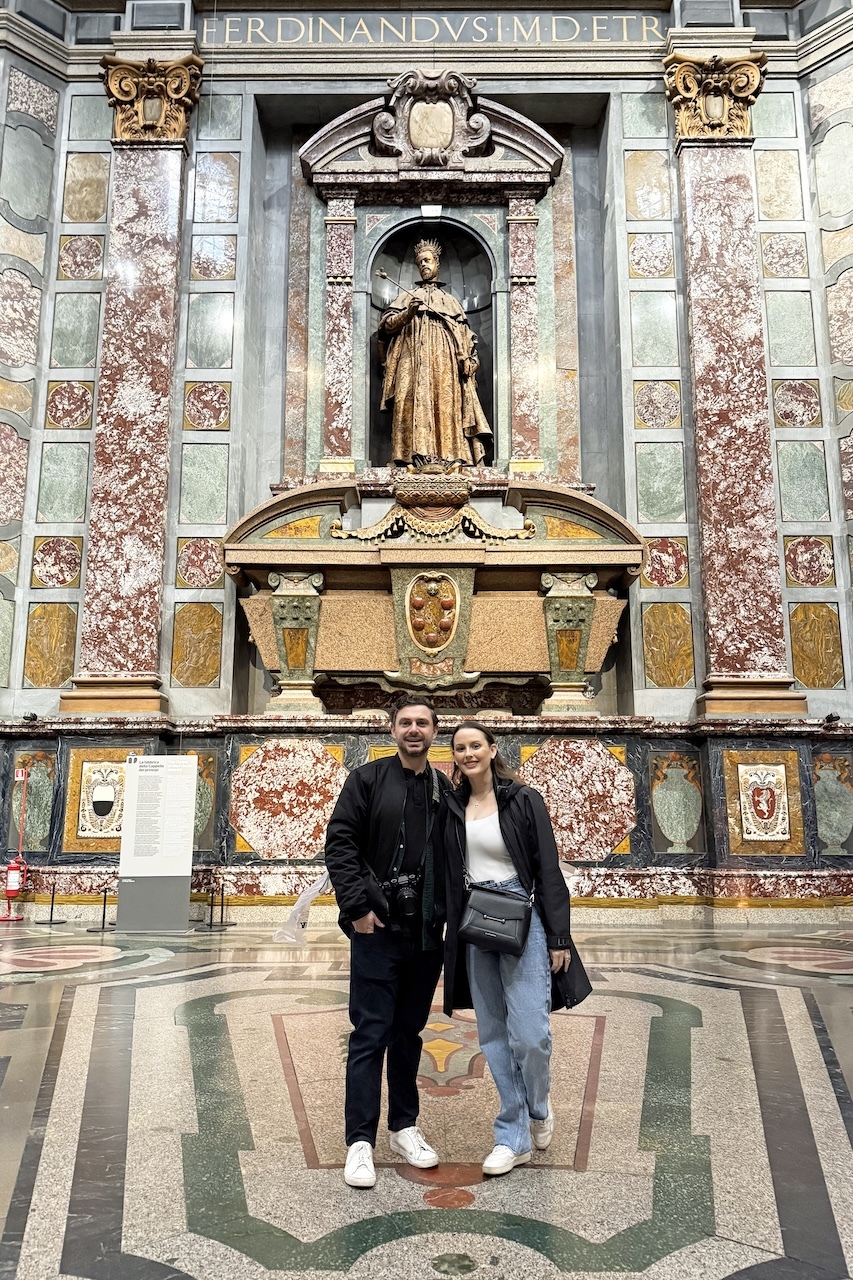
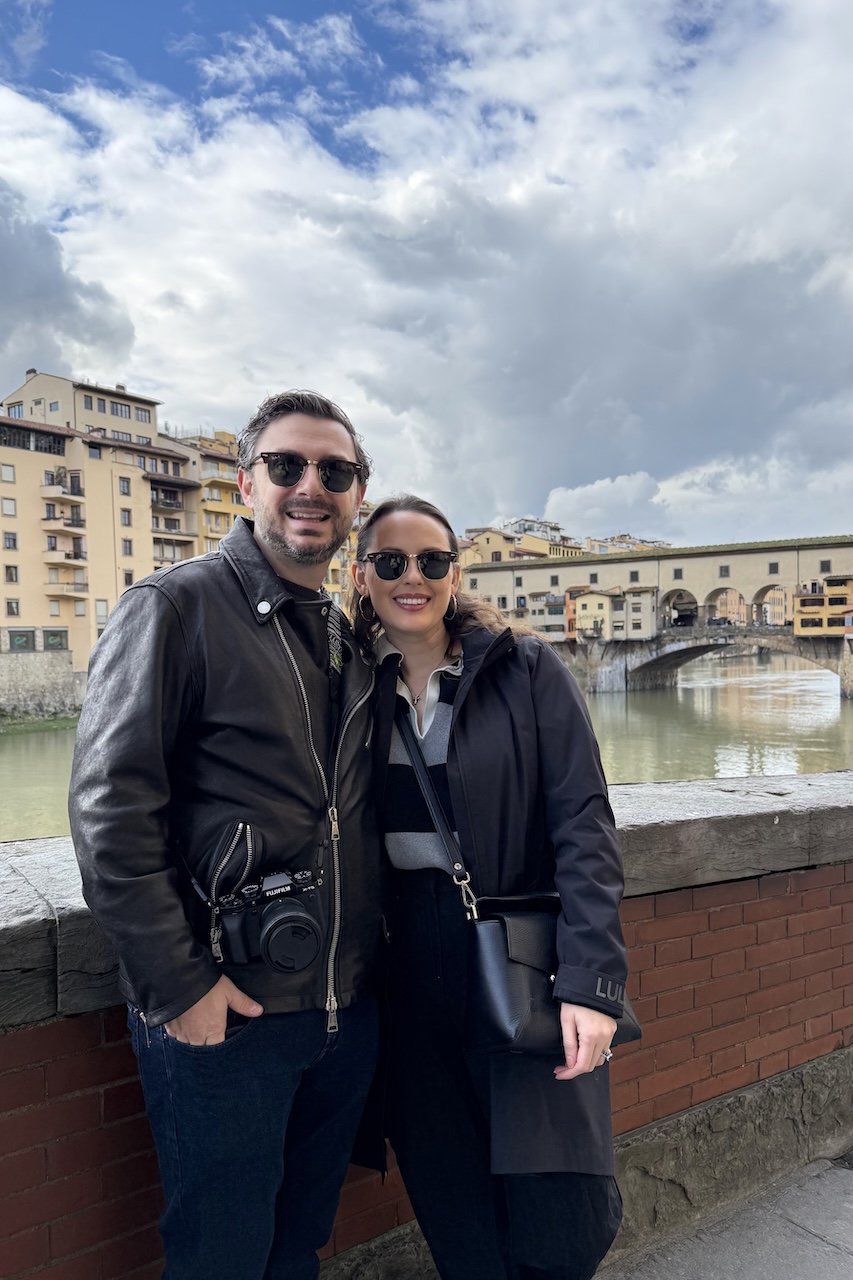
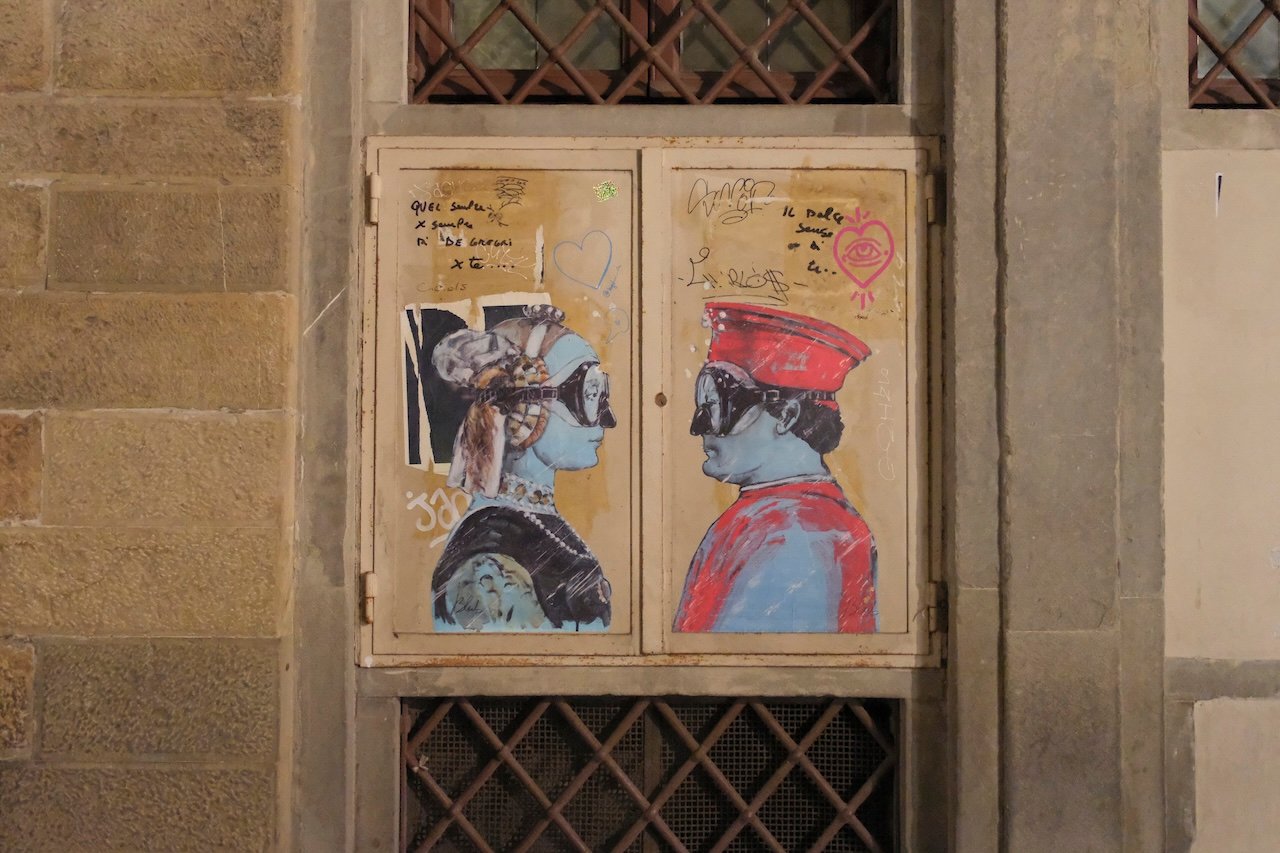
At Jetset Seeker, we value transparency. In addition to sharing our own firsthand experience, here are the resources we have personally used over the years to help plan our trips to Florence.