

33 min read.
There is a lot of upside to traveling during the off-season no matter the destination and January is truly one of the best times to visit Rome. With mild winter weather and smaller-than-average crowds, the winter months are easily the best time of year to experience all that the Eternal City has to offer. Brian and I have spent time in Rome in various seasons, but Rome in January is easily our favorite time to visit. The post-Christmas holiday rush has ended, hotel prices are lower than any other time of the year, and it is far easier to secure tickets to tours and attractions throughout Rome than during the busy spring and summer months.
We spent eight days in Rome in January 2026 before heading to Florence for an extended stay. Over the course of those eight days in Rome, we toured the city's top sights, visited a handful of hidden gems in Rome, and enjoyed plenty of leisurely meals. That January visit remains one of our favorite trips together, and our experiences in Rome form the foundation of this guide.
In this guide to visiting Rome in January, we will explore what you can expect from the weather, crowds, and things to do, with tips from our firsthand experience of spending time in Rome in winter. For more trip planning tips, things to do, our favorite restaurants in Rome, and more, be sure to check out our Rome Travel Blog. Still in the early stages of planning your trip to Rome in January? Our guide to where to stay in Rome on a budget has plenty of neighborhood and hotel suggestions at budget-friendly price points.
Table of Contents:
- Is January a Good Time to Visit Rome?
- Weather in Rome in January: What to Expect
- Best Things to Do in Rome in January
- Where to Stay in Rome in January
- Tips for Visiting Rome in January
- Our Verdict: Is Rome Worth Visiting in January?
Disclaimer: This blog post contains affiliate links. That means we may earn a small commission or receive compensation if you click on a link and make a purchase or take action - at no additional cost to you. These partnerships help support the content we create and maintain this website.
Is January a Good Time to Visit Rome?
Yes, absolutely! January is a great time to visit Rome if you are eager to explore the city with smaller crowds, lower hotel room rates, and mild winter weather. In fact, you can generally expect daytime highs in Rome in January to be in the mid-50s (55°F/13°C) which is ideal for sightseeing! Snow in Rome is incredibly rare in winter, with the last recorded snowfall in February 2018.
While the weather in Rome in January is mild, making it a great destination for travelers looking to escape the frigid Januaries common in North America, the drawbacks of visiting the city in January include shorter daylight hours, a higher chance of rain than in the summer months (although November is technically the rainiest month in Rome), and closures common during the first week in January between New Year's Day and the Epiphany (January 6th). In our experience, smaller crowds and easier access to tickets more than make up for those small tradeoffs. Rome’s best tours and attractions in January are much quieter than during the busy spring and summer months, giving you more space and time to appreciate the places you came to see.
In fact, after visiting Rome in January, February, April, and June, January is easily our favorite month to travel to the Eternal City.
Weather in Rome in January: What to Expect
Compared to many cities in the northern hemisphere, Rome has mild winters. While the weather is not tropical by any means, the city serves as a great escape for those looking to catch a short break from snow and below-freezing temperatures. You can generally expect daytime highs to be in the mid-50s (55°F/13°C), while overnight lows may drop into the upper-30s (37°F/3°C). You will likely still need to pack a mid-weight winter coat and warm clothes for your trip to Rome in January, but you can leave a bulky coat and snow gear at home.
The rainiest month in Rome is November, but January does see more frequent rain showers than you will encounter in the city in the spring and summer months. From our experience, the rain was never too heavy that it interrupted our sightseeing plans, but you may want to consider packing a small umbrella, waterproof shoes, and a rain jacket (or water-resistant coat). On days when it rains in Rome in winter, you will find that the temperatures may feel cooler and damper than the thermometer suggests.
While Rome’s winter days are shorter than its long summer days, you can still expect around 9.5 hours of daylight in January. We recommend planning your outdoor sightseeing earlier in the day to make the most of the available light.
A quick overview of what to expect for the weather in Rome in January is below.
Average Daytime High: 55°F (13°C)
Average Overnight Low: 37°F (3°C)
Average Number of Rainy Days: 7
Average Monthly Rainfall: 3.3 in. (8.3 cm)
Average Sunrise: 7:34 AM
Average Sunset: 5:05 PM
Best Things to Do in Rome in January
There are plenty of things to do in Rome year-round, however, if you are planning a visit to the Eternal City in January, you may want to consider planning in advance for a rainy day (or two), taking advantage of the smaller crowds, and simply enjoying all that the city has to offer.
Regardless of when you choose to visit Rome, the museums, ancient sites, and experiences detailed below are among our favorite things to do in the city, whether you are visiting Rome in January or during the busy summer months.
Spend Overcast & Rainy Winter Days in Rome's Museums
Is there anything better than spending a dreary, cold, or rainy day inside a museum? We don't think so! Chances are you will have at least one overcast and rainy day during your trip to Rome in January, so make the most of it and visit one (or more) of the city's incredible museums.
Rome has museums that cater to every interest, and while some are incredibly well-known (like the Vatican Museums), others are truly hidden gems. While it would be hard for us to pick our favorite museum in Rome, the four incredible museums in Rome listed below our top picks for you to visit on your next trip to the Eternal City.
Jetset Seeker Pro Tip: Tickets for the Vatican Museums and Borghese Gallery should be purchased in-advance of your visit. Tickets for the Capitoline Museum and Museo Nazionale Romano - Palazzo Massimo can be purchased on-site the day of your visit.
Vatican Museums (Musei Vaticani)
The Vatican Museums contain one of the most impressive art collections in the world, and, even after three visits, I feel like I have only seen a tiny fraction of the collection. While the Vatican Museums are almost always at the top of my must-visit list while in Rome, visiting in January provided an atmosphere that was calm and quiet. If you adore art, but hate crowds, visiting the Vatican Museums during winter when they are at their quietest should be enough of a reason to venture to Rome in January!
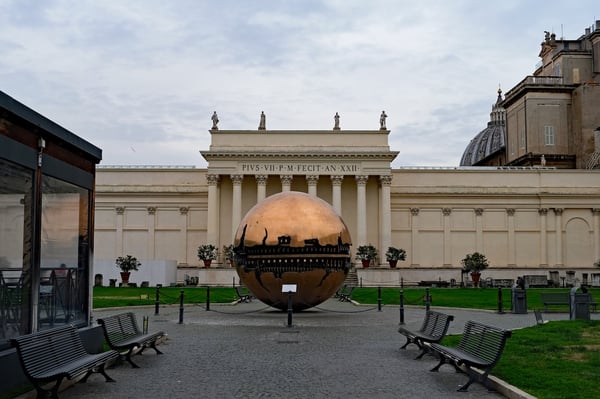
While the Vatican Museums are normally extremely crowded, on my last visit in January 2026, the museum halls were mostly empty for a change. It was wonderful to be able to actually enjoy the art and antiquities on display! In fact, there were periods that we were alone in galleries, with just the art and an occasional security guard making their rounds. There was no need to rush through exhibits to see the highlights before more tour groups descended or crowds that made seeing the collection difficult. Plus, as it rained outside, we were able to really take our time inside the museums.
The Vatican Museums are composed of 26 distinct museums and collections, with some 20,000 objects on display. As such, it would be nearly impossible for me to pick a single highlight from the Vatican Museums' collection, but the Raphael Rooms and the Sistine Chapel are among its most spectacular spaces.
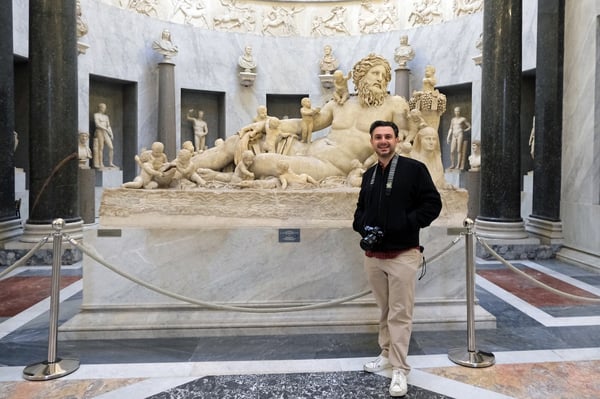
The Gregorian Egyptian Museum is often overlooked by visitors, yet its wonderfully curated collection of Egyptian antiquities is well worth your time. The Pio Clementino Museum is one of the most popular stops within the museum complex, featuring a number of sculptures from antiquity, including Laocoön and His Sons, discovered in Rome in 1506. Our favorite, however, is the New Wing (Braccio Nuovo), home to a famous sculpture of Emperor Augustus and Nile (pictured below), one of the coolest sculptures in the entire collection.
What to Know Before You Go: Vatican Museums
While we explored the galleries without a tour guide on our last trip to the Vatican Museums, if it is your first time in Rome or your first time visiting the Vatican, I highly recommend visiting on an organized tour of the Vatican Museums, Sistine Chapel, and St. Peter's Basilica. At a minimum, consider renting an audio guide. The museums are expansive and the collection can be overwhelming. You should plan to spend at least a half-day inside the Vatican Museums.
The Vatican Museums are closed on Sundays, with the exception of the last Sunday of the month when the museums are open from 9:00 AM to 2:00 PM. Admission on the last Sunday of the month is free for all visitors, but be prepared for the museum galleries to be extremely crowded.
Please be aware that there is a strictly-enforced dress code to visit the Vatican Museums. All visitors should dress modestly, with their shoulders and knees covered. Non-religious head coverings are prohibited. Photography is permitted throughout the Vatican Museums with the exception of the Sistine Chapel.

Capitoline Museums (Musei Capitolini)
Did you know that the Capitoline Museums in Rome is the oldest public museum in the world? Well, now you do! The museum opened its doors in 1734 and has been welcoming visitors ever since.
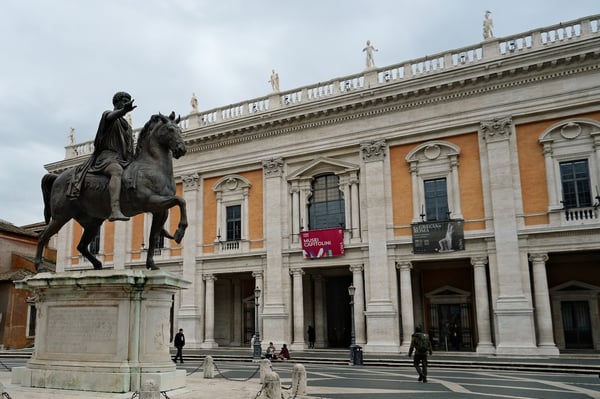
If you only have time to visit one museum in Rome, we would pick the Capitoline! Located atop Capitoline Hill, the main branch of the Capitoline Museums houses an incredible collection of Roman antiquities. While the collection is large, it is not as overwhelming as the Vatican Museums making it a great option for visitors looking to see more of Ancient Rome.
We have actually visited the Capitoline Museums twice, including on our last visit to Rome in 2026. It was a rainy, dreary day, so we opted to spend it here and it made for a lovely (and dry) afternoon!
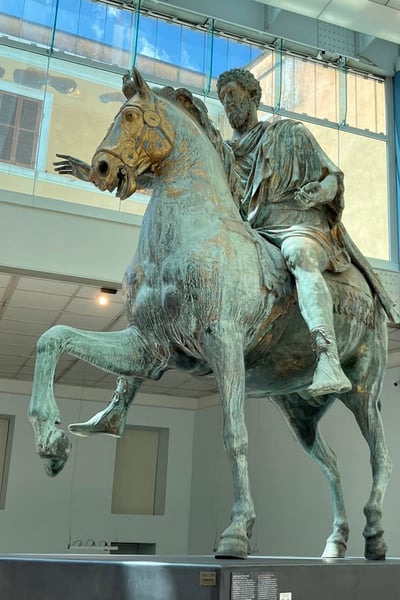
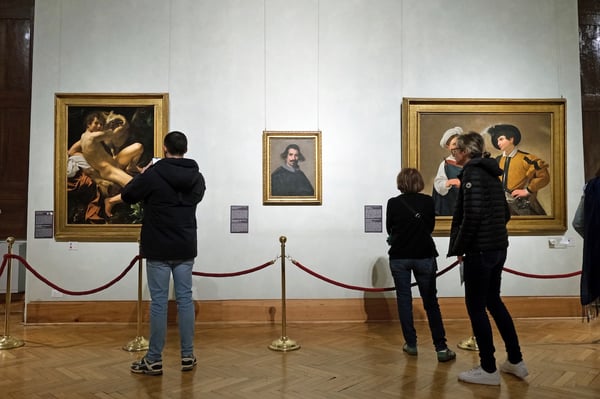
The main highlight of the collection is easily the original bronze Equestrian Statue of Marcus Aurelius (pictured above), a replica of which stands outside the museum's entrance. Additional bronzes from antiquity are also on display, including the Capitoline Wolf and fragments of the Colossal Bronze Statue of Constantine the Great. In addition to artifacts and antiquities from Ancient Rome, the museum has an art gallery with works by some of the masters of the Italian Renaissance, including Caravaggio and Titian.
What to Know Before You Go: Capitoline Museums
The Capitoline Museums also regularly hosts temporary exhibitions and we were lucky enough to time our last visit with their Cartier & Myths exhibit which was truly exceptional! Most temporary exhibitions at the Capitoline Museums require separate, paid admission, but some are included with your general admission to the museum. For more information, be sure to visit the official Capitoline Museums website.
The Capitoline Museum is open daily, including Mondays when many other museums in Rome are closed.
Museo Nazionale Romano - Palazzo Massimo
One of the best hidden gems in Rome, the Museo Nazionale Romano - Palazzo Massimo is akin to a national archaeological museum, with much of its collection unearthed in and around Rome. This branch of the National Roman Museum houses incredible examples of ancient Roman art, artifacts, coins, and sculptures and is centrally located, just steps from Rome Termini Station and the Basilica of St. Mary of the Angels & Martyrs.

For lovers of ancient history, the museum is a dream, with spacious, uncrowded galleries that let you take your time exploring the collection. The museum offers signage in both English and Italian, making it easy to learn about the collection as you explore. If you have visited Rome before and are ready to venture beyond the city's best-known sights, this museum is well worth adding to your Rome itinerary.
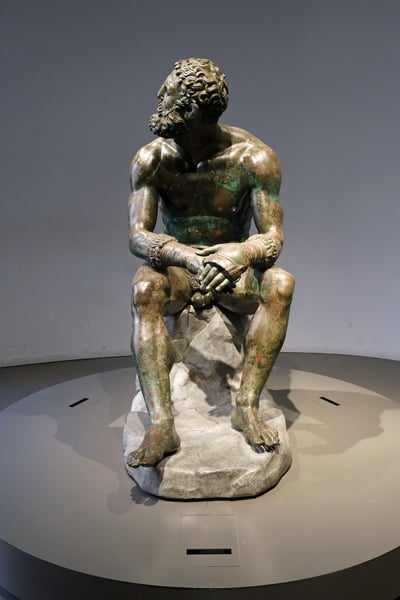
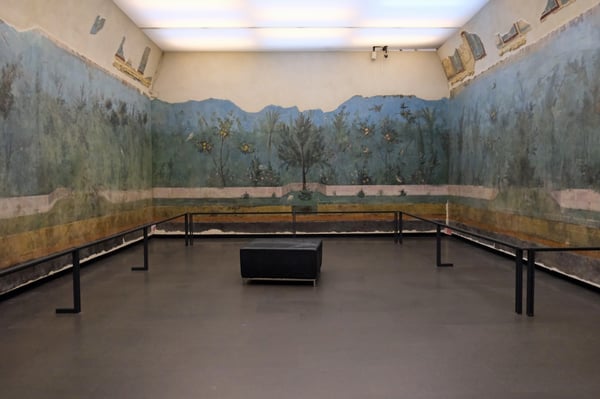
Among the highlights in the collection are the Hellenistic bronze sculptures of the Boxer at Rest and the Hellenistic Prince. I recommend spending some time really getting a good look at the Boxer at Rest (pictured above). The details are unnervingly realistic, especially the drops of blood created with red copper. Meanwhile, the rich frescoes from the Villa di Livia (pictured below), the home of the wife of Emperor Augustus, are among my favorites in the collection. The lush garden frescoes feel strikingly modern, with vivid colors and a design you could easily imagine finding on wallpaper today, despite being over 2,000 years old.
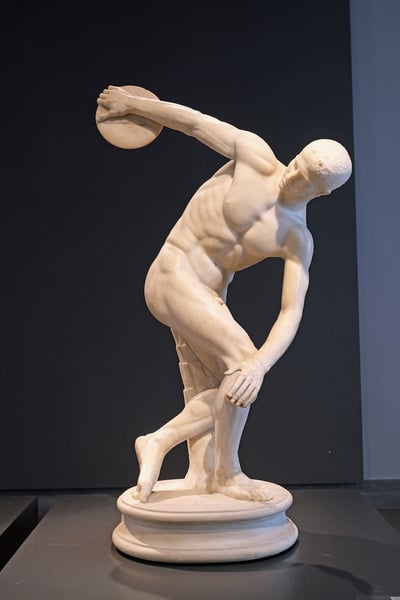
However, one of the most popular pieces in the collection is the marble sculpture Discus Thrower, which is a Roman copy of a Greek bronze sculpture that has been lost to history. While other sculptures of the same theme are in museum collections across Europe, this Discus Thrower, was the first to have been discovered in the late 18th century.
Before you leave, do not miss the opportunity to explore the mosaics, coins, and other artifacts on display throughout the museum. The intricate details of these pieces offer a fascinating glimpse into the craftsmanship and sophistication of ancient Roman society.
What to Know Before You Go: Museo Nazionale Romano - Palazzo Massimo
The Museo Nazionale Romano - Palazzo Massimo is closed on Mondays.
Your ticket to the Museo Nazionale Romano - Palazzo Massimo is also valid for other branches of the National Roman Museum, with the exception of the Crypta Balbi.
Borghese Gallery (Galleria Borghese)
Home to one of the greatest art collections in Rome, especially if you enjoy Renaissance and Baroque art, the Borghese Gallery is a wonderful museum to spend part of a dreary, cold day in Rome in January. The Borghese Gallery is housed inside the former Villa Borghese and surrounded by the large Villa Borghese Gardens, located around a 25-minute walk from the Spanish Steps (Piazza di Spagna).
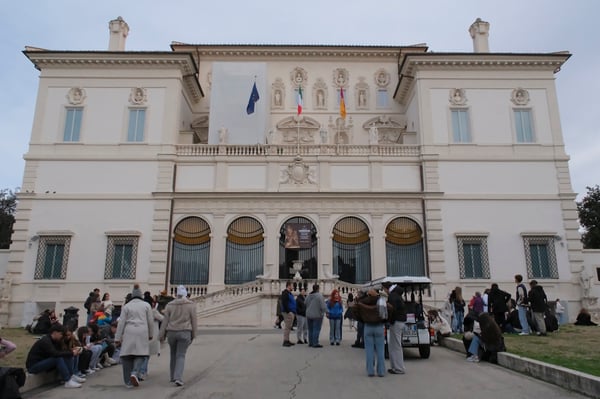
While you may not be able to enjoy the vast gardens surrounding the museum during your trip to Rome in January, there is plenty of art to see inside. The villa and its remarkable art collection originally belonged to Cardinal Scipione Borghese, a member of the wealthy Borghese family and nephew of Pope Paul V.
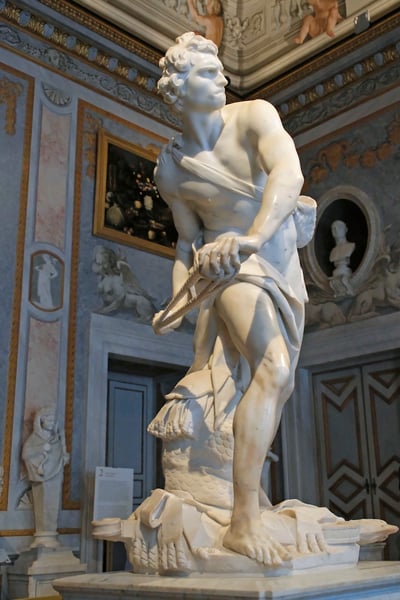
The villa and Borghese family's history is as equally interesting as the art collection. Cardinal Scipione Borghese was a patron of Gian Lorenzo Bernini and the museum has an impressive collection of his sculptures. Major works by Bernini are on display in the museum including David (pictured below), The Abduction of Proserpina, and Apollo and Daphne. Other highlights include, but are not limited to: Young Woman with a Unicorn by Raphael, Paolina Borghese Bonaparte as Venus Victrix by Antonio Canova, Boy with a Basket of Fruit by Caravaggio, and Saint John the Baptist Preaching by Paolo Veronese.
What to Know Before You Go: Borghese Gallery
The Borghese Gallery is closed on Mondays. Admission is timed and you have a strict, two-hour time limit to view the collection before you will be asked to leave. However, unlike the larger museums in Rome, you only need about 90 minutes to see the entirety of the collection at the Borghese Gallery.
Take Advantage of Smaller Crowds at Rome's Top Historic Sites
The biggest benefit of visiting Rome in January is easily the smaller crowds. While Rome is hardly a ghost town in January and the city still has its fair share of visitors, the crowds are much more manageable at the city's top historic sites than if you were to visit in the spring or summer months. We recommend taking advantage of the smaller crowds and securing tickets for many of the city's top historic sites during your visit to Rome in winter.
We recommend booking your tickets for all four of these ancient sites ahead of your visit to Rome, as entry is limited. Admission to the Colosseum includes general admission access to the Roman Forum and Palatine Hill. Please note that if you are interested in seeing the SUPER Sites (special access areas) of the Roman Forum and Palatine Hill, you will need to book a ticket that includes access to the SUPER Sites. The general admission 24H - Colosseum, Roman Forum, and Palatine ticket does not include access to the SUPER Sites.
Colosseum
Few ancient sites are as synonymous with Rome as the Colosseum (also known as the Flavian Amphitheater). The Colosseum is grand, imposing, and a must-visit during your time in the city. With construction beginning in 72 AD under Emperor Vespasian, the Colosseum was the largest Roman amphitheater ever constructed and once accommodated upwards of 80,000 spectators. While it stands today in ruin, there is still much to see inside.

One of the highlights of any visit to the Colosseum is seeing the Colosseum's floor and subterranean levels, something you cannot do by simply admiring the landmark from the outside. The labyrinth that lies under the arena's wooden floor is impressive with two levels of chambers, tunnels, and cages. Imagine Gladiators and wild animals waiting down here before stepping out in front of a crowd of 80,000 spectators!
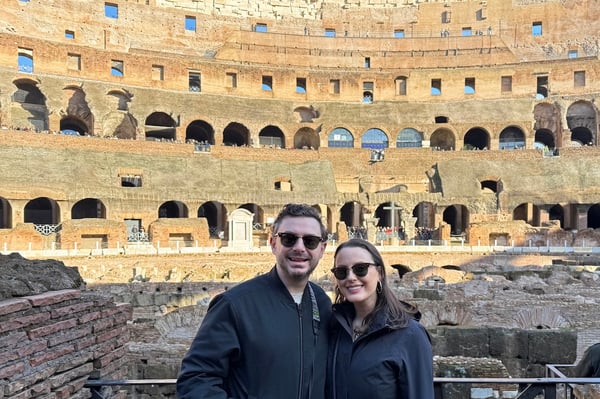
The Colosseum also has a small museum filled with some incredible artifacts from the ancient venue and a model of what the Colosseum would have looked like in its heyday. The museum is located on the second level and included with standard admission. The smaller crowds that you will encounter in Rome in January make it easy to take your time exploring the on-site museum, walking through the two levels, and digesting the sheer size of the arena.
I have struggled to get tickets to the Colosseum before on a prior visit to Rome, and tickets can still sell out even in the quiet winter months. In the event that you are unable to secure tickets for the Colosseum through the official Parco Archeologico del Colosseo website, you can likely still book a guided tour which includes admission to the ancient site through a third-party provider, like GetYourGuide.
Roman Forum & Palatine Hill
While chilly outdoor temperatures may normally make you think twice about visiting the Roman Forum and Palatine Hill, I'm here to actually encourage it! While these historic sites are never completely overrun with tourists thanks to their sheer size, especially on Palatine Hill, it is really nice to visit when the sun is not ablaze. Trust me, I got very sunburnt here during my first visit to Rome in June 2013!
Since these two, adjacent historic sites are largely outdoors and have little shade, it can be unbearable to visit them during the warm spring and summer months. Instead, dress accordingly, and enjoy the cooler temperatures (and smaller crowds) as you explore.
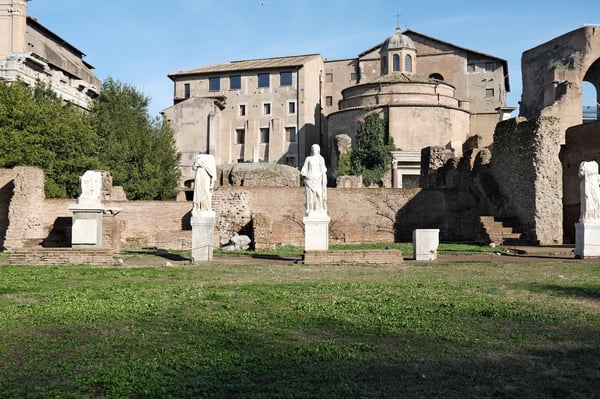
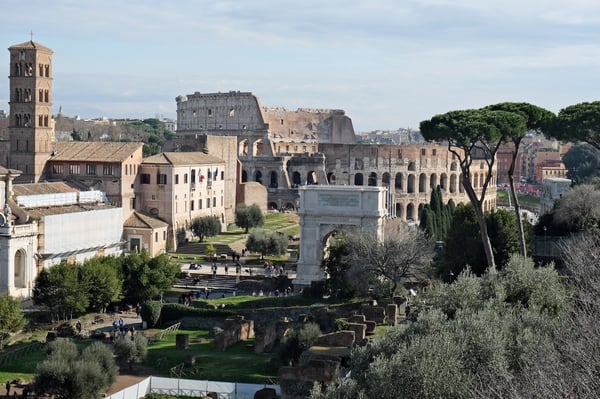
While you can spend plenty of time wandering these adjoining ancient sites, there are some highlights you should look out for as you explore. Some of the highlights in the Roman Forum include the Arch of Titus, the Curia Julia, the Basilica of Maxentius, the House of the Vestal Virgins (pictured below), and the Temple of Julius Caesar.
Palatine Hill is the birthplace of the city and where the emperors built their grand palatial residences. Most visitors will find plenty to explore in the Roman Forum alone, while the limited signage and sheer size of Palatine Hill can make its ruins harder to appreciate without a tour guide. However, we do recommend heading up to Palatine Hill for incredible views of the Roman Forum. The best views are from the Palatine Hill Terraces, near the Farnese Gardens.
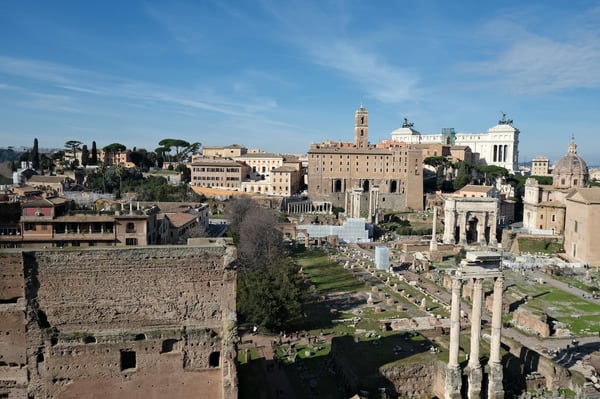
The best way to see the Roman Forum and Palatine Hill is with a tour guide. While tour guides are not available to book through the official Parco Archeologico del Colosseo website, you can find highly-rated tours through our partners, GetYourGuide and Viator. Having a guide will provide necessary context, point out significant ruins, and help you navigate the Forum and Palatine Hill.
Alternatively, if you are traveling to Rome on a budget, Rick Steves' Europe has a great (and free) audio guide available for the Roman Forum. Just remember to bring a pair of headphones!
Domus Aurea
As easily one of the most remarkable historic sites in Rome, Emperor Nero's Golden House, or Domus Aurea, is a difficult attraction to secure tickets for at any point in the year. In order to protect the fragility of the ancient ruins and accommodate ongoing archaeological work, access is limited to small-group guided tours from Friday through Sunday, only.
In our opinion, there is no better place in the city to take advantage of the smaller-than-usual crowds in Rome in January than at the Domus Aurea! While we had been eager to visit the Domus Aurea on a prior trip to Rome, we were finally able to book tickets for a tour in English ahead of our visit in January 2026.
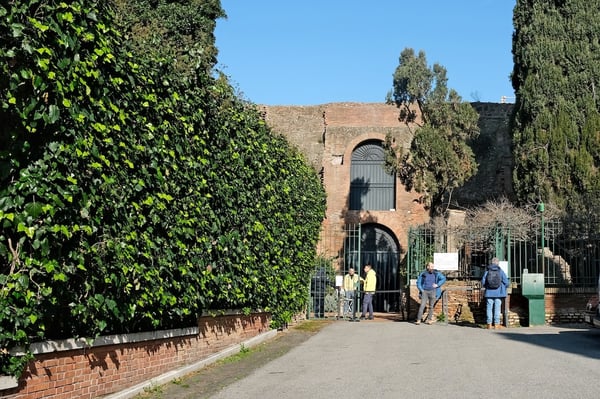
Stepping inside the Domus Aurea offers a firsthand glimpse into the lavish lifestyle of the emperors of Ancient Rome and the sophisticated engineering that made it possible. The Domus Aurea was built between 64-68 AD, after the Great Fire of Rome, on land that Emperor Nero seized from Rome's citizens in the aftermath of the destructive fire.
After Emperor Nero's death in 68 AD, his successors opted to return the land back to the public, building the Baths of Trajan, Baths of Titus, and the Colosseum. The Domus Aurea was stripped of its marble and the palace was filled with earth. Ironically, it was this effort to erase Emperor Nero and his extravagant Golden House, that preserved it.
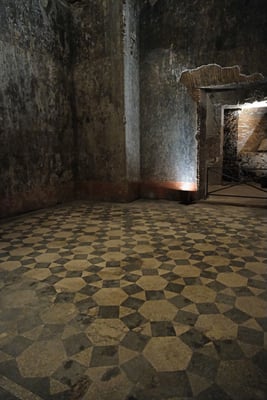
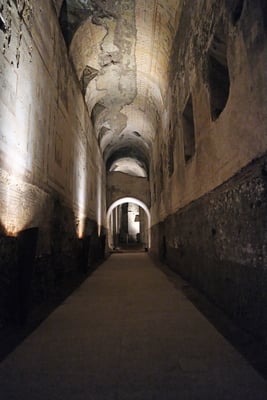
The Domus Aurea was rediscovered in the late 15th century and early Italian Renaissance artists began studying the art in the house. In fact, the Renaissance decorative style known as "grotesque" owes its name to the rediscovery of the Domus Aurea. Its buried rooms resembled underground caves, or grottos, inspiring the name for the elaborate decorative motifs that Renaissance artists admired and began incorporating into their own work.
Seeing the Domus Aurea in person is remarkable, and knowledgeable tour guides (with the help of virtual reality headsets) bring its former grandeur to life, helping you see these spaces as they looked in Nero's time.
If you run into difficulties securing tickets for the Domus Aurea through the official Parco Archeologico del Colosseo website, tickets are also available through third-party providers, including our partner, GetYourGuide.
Trajan's Market (Mercati di Traiano)
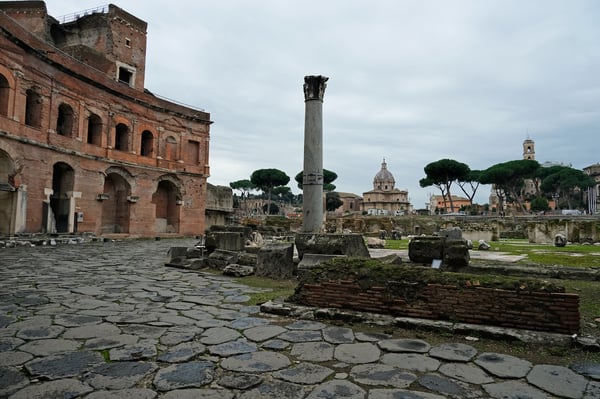
Often overlooked but well worth visiting, Trajan's Market and the Museum of the Imperial Fora (Museo dei Fori Imperiali) are a great addition to any Rome itinerary. Unlike the Colosseum, Trajan's Market is rarely overcrowded, but visiting during the winter months, allows you to take advantage of the even-smaller-than-usual crowds and cool weather to really enjoy your time exploring the ruins.
Trajan's Market is often described as the world's first shopping mall. Dating to the early 2nd century AD, during the reign of Emperor Trajan, the multi-level complex once housed shops, offices, and public spaces. We have enjoyed our visits to Trajan's Market because the site feels more manageable and digestible than the sprawling Roman Forum. The on-site Museum of the Imperial Fora is another highlight, displaying artifacts unearthed within the complex and at nearby ancient sites.
There is little signage at Trajan's Market, outside of the museum, so if you do visit during your trip to Rome in January, we highly recommend getting an audio guide after you arrive from the ticket office. Alternatively, guided tours of Trajan's Market are available through third-party providers, including GetYourGuide.
Explore Rome's Historic Neighborhoods & Picturesque Piazzas
One of the best things to do in Rome in January, particularly on a sunny day, is to wander the city streets. Whether you choose to explore specific neighborhoods, seek out sculptures in various piazzas, or explore more of the historic center, the options for sightseeing in Rome are endless. I personally love to just wander and see where my feet take me, popping into various shops and churches as I go. However, if you are looking for more specific suggestions as to where you should walk and explore during your time in Rome in January, consider the following spots.
- Piazza Navona: Piazza Navona has been on the tourist map of Rome for a long time and with good reason since it is easily the most beautiful public square in the city. Piazza Navona occupies the site of the former Stadium of Domitian (also known as the Circus Agonalis), a stadium constructed for athletic competitions in the 1st century AD. The piazza maintains the oblong shape of the former stadium, but is now one of the best examples of Baroque Roman architecture of the 17th century. The piazza has three large fountains that are all worth seeing: the Fountain of the Moor (Fontana del Moro), Fountain of Neptune (Fontana de 'Calderari), and the incredible Fountain of Four Rivers (Fontana dei Quattro Fiumi) designed by Gian Lorenzo Bernini in the center.
- Piazza del Popolo: Piazza del Popolo is not as frequently visited by tourists as Piazza Navona, the Trevi Fountain, or the Spanish Steps, but it is certainly a worthwhile piazza to explore if time permits! Famous for its "twin churches" of Santa Maria in Montesanto and Santa Maria dei Miracoli, the large Egyptian obelisk in the center of the square, and the Porta del Popolo (city gates), the Piazza del Popolo in its current form dates to the early 19th century. Just a short walk from the Borghese Gardens, Piazza del Popolo is a great starting point for a leisurely stroll through the surrounding neighborhood before exploring the gardens.
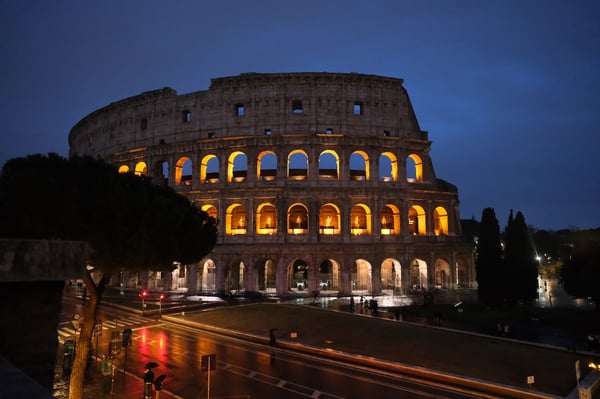
- Monti: While a lot of people might say the fewer number of daylight hours in Rome in January is a downside to visiting the city during the winter months, I actually think it provides a great opportunity to explore neighborhoods after sunset! While you are bound to find yourself in Monti at some point during your time in Rome (it is home to Trajan's Market and Colosseum afterall), I highly recommend returning here again in the evening. These landmarks are beautifully illuminated at night and the tourist crowds have almost always dissipated by the time it gets dark. So, take the opportunity to make a dinner reservation in the neighborhood, then enjoy a nice walk through the neighborhood or even along the Via dei Fori Imperiali for some evening sightseeing.
- Trastevere: As one of the most picturesque neighborhoods in Rome, Trastevere is a great option for visitors looking to spend some time outside of the historic center of the city. Located across the Tiber River from the Colosseum, Trastevere is beautiful. With small winding streets, boutiques, cute cafés, bars, and restaurants, few neighborhoods in Rome feel as authentic as Trastevere. While Trastevere still draws its fair share of visitors, it remains one of my favorite places in Rome for dinner, with time to wander its winding streets before or after a meal. While in Trastevere, be sure to check out the Basilica of St. Mary of Trastevere, a beautiful basilica dating back to the 4th century.

Discover Beautiful Churches in Rome
No visit to Rome is complete without visiting some of the city's incredible churches! Whether you plan to venture to St. Peter's Basilica in the Vatican or stop by smaller, local parishes to see incredible works of art, holy relics, or stunning architecture, visiting the churches in Rome is one of my favorite things to do on any visit to the Eternal City.
Rome is home to over 900 churches and, amazingly enough, they are free to visit! (Admission to crypts, museums, and other areas may require paid admission. However, admission to the majority of churches themselves is free.) If it is your first trip to Rome, I highly recommend taking a trip to see St. Peter's Basilica. As the largest church in the world, no matter your religion, it is a must-visit! The art, architecture, and sheer size of the basilica is hard to grasp through photos alone.

If you are looking to check out some less-frequented churches in Rome, consider visiting one of my favorites.
- Papal Basilica of St. Mary Major: As one of the four Papal Basilicas in Rome, the Papal Basilica of St. Mary Major is one of the easiest to visit. Located a few blocks from Rome Termini Station, the Papal Basilica of St. Mary Major dates to fifth century and is the oldest church in Rome dedicated to the Virgin Mary. Inside, you can admire beautiful fifth-century mosaics and visit the tomb of Pope Francis, who was laid to rest here in 2025.
- Basilica of St. Mary of the Angels & Martyrs (Santa Maria degli Angeli e dei Martiri): Imagine converting the ruins of an ancient Roman public bath complex into a Catholic church. Seems like an odd combination, no? Well it is exactly what Michelangelo Buonarroti designed for the Basilica of St. Mary of the Angels & Martyrs in 1563, at the age of 86. The basilica is located within the ruins of the Baths of Diocletian, the largest bath complex ever constructed in Ancient Rome, just steps from Rome Termini Station. Michelangelo opted to embrace the soaring columns and ceilings of the ancient baths in his design for the basilica. The result is a beautiful juxtaposition of Roman engineering that has stood for nearly 1,800 years and the decorative flourishes of the Renaissance that come together to create a dramatic atmosphere for a house of worship. If you are interested in exploring more of the Baths of Diocletian, part of the complex is open to the public as part of the Museo Nazionale Romano.
- Basilica of St. Peter in Chains (San Pietro in Vincoli): Michelangelo Buonarroti is typically associated with the Sistine Chapel and St. Peter's Basilica at the Vatican when it comes to Rome, but one of his greatest masterpieces can be found a short walk from the Colosseum at the Basilica of St. Peter in Chains. Here, to the right of the main altar, sits his larger-than-life sculpture of Moses. Sculpted for the tomb of Pope Julius II, which was never completed, the sculpture of Moses with horns is one of Michelangelo's best works. Unlike the crowds that gather in front of Michelangelo's Pietà in St. Peter's Basilica or David in the Accademia Gallery in Florence, there are seldom other visitors inside of St. Peter in Chains, giving you plenty of time and space to admire a Renaissance masterpiece. The basilica also houses the chains believed to have bound St. Peter during his imprisonments in Jerusalem and Rome. You can see them beneath the main altar.
- Basilica of St. Mary above Minerva (Santa Maria sopra Minerva): Just steps from the Pantheon, the Basilica of St. Mary above Minera is one of the only remaining Gothic church interiors in Rome and home to the tomb of St. Catherine of Siena. Michelangelo's Christ the Redeemer is also on display to the left of the main altar. Most visitors stop for a photo of Bernini's famed Elephant and Obelisk sculpture outside of the basilica without ever venturing indoors!

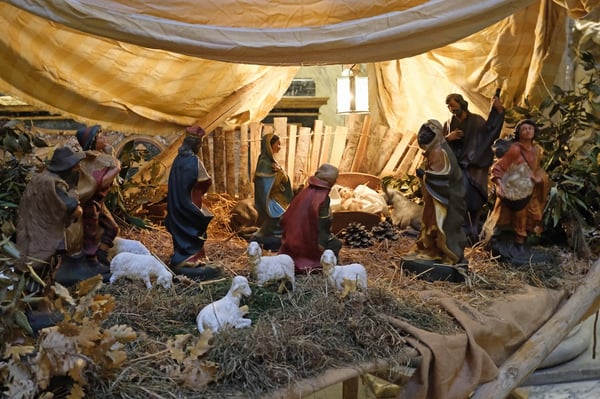
One added benefit of visiting many of the churches in Rome in January is that their elaborate nativity scenes are still on display! Italy is especially known for its elaborate nativity scenes. These traditional displays go far beyond a simple manger scene, and many churches in Rome have large versions featuring hundreds of individual pieces. While you are visiting Rome in January, be sure to take a moment to appreciate the intricate details as you explore the city's churches.
Looking for Another Rainy Day Activity in Rome? Visit the Pantheon!
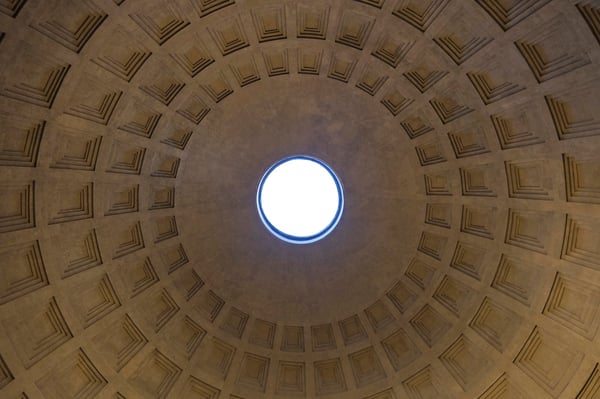
I would be remiss to mention that one of the best things to do in Rome in January on a rainy day is to visit the Pantheon! This former Roman-temple-turned-church features the world's largest unreinforced concrete dome and is approximately 1,900 years old! Amazingly enough, the oculus in the center of the dome, which lets light into the Pantheon, is simply an opening in the dome without any glass. So, when it rains in Rome, it rains inside the Pantheon. Seeing it rain inside the Pantheon is a unique experience and a great way to spend a rainy day in Rome in January!
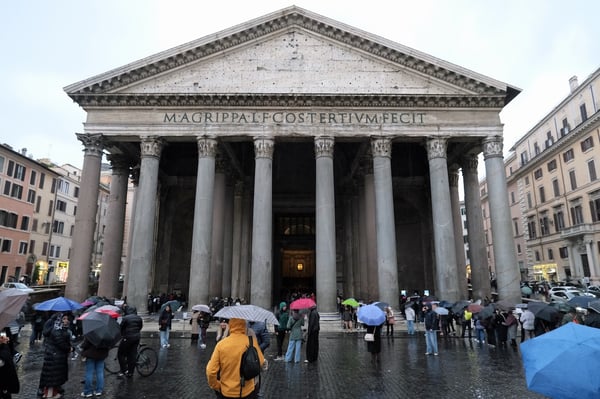
Unlike the other churches in Rome, admission to the Pantheon requires a paid ticket. While tickets can be purchased online via the official Ministero della Cultura website, we have had mixed success getting payments to process with an American credit card. What has worked more reliably for us is buying tickets on-site.
Jetset Seeker Pro Tip: If you need to purchase tickets on-site for the Pantheon, bring cash. The ticket office line for cash payments almost always has a shorter line than the credit card line, and it can save you a surprising amount of time waiting in line.
Enjoy Traditional Roman Cuisine
No trip to Rome would be complete without enjoying traditional Roman cuisine! While I could fill an entire, separate blog with what (and where) to eat in Rome, I promise to keep this section brief.
When in Rome, I always make a point to eat three things no matter what time of year I visit:
- Spaghetti alla Carbonara - A traditional Roman pasta dish that is made by combining eggs, Pecorino Romano cheese, pepper, guanciale (similar to pancetta), and water with freshly made pasta.
- Cacio e Pepe - Another traditional Roman pasta dish that is made with black pepper and Pecorino Romano cheese. Think of it as a sophisticated (and better) version of macaroni and cheese.
- Pizza al Taglio - Pizza baked in large, rectangular trays and sold by the weight of the slice. My favorite type is any that incorporates zucchini flowers (fiori di zucca).
Winter in Rome is a great opportunity to enjoy the classics, as well as seasonal specialties! In Rome in January, expect to see mulled wine (vin brulé), suppli (rice balls, similar to arancini), seasonal vegetables like artichokes, and warm soups like minestrone on menus throughout the city.
You will also find street vendors selling roasted chestnuts (caldarroste) throughout the city, filling the air with one of my favorite winter aromas.
For more suggestions about where and what to eat in Rome, be sure to check out our Rome Travel Blog.

Where to Stay in Rome in January
One of the greatest perks of visiting Rome in January is the decreased cost of accommodations throughout the city, making the winter months the best time to visit Rome if you are traveling on a budget. By and large, my suggestions as to where to stay in Rome on a budget still apply in January, even as hotel rooms across the city are more affordable than during the peak of summer travel.
No matter the season, I still recommend two neighborhoods more than any other as to where to stay in Rome: Monti and Termini. Both neighborhoods are centrally located, close to public transportation, and away from the crowds of the Historic Center (Centro Storico).

Monti: Best Overall Neighborhood for Value & Location
Monti is home to the Domus Aurea, Colosseum, Trajan's Market, Basilica of St. Peter in Chains, and the Papal Basilica of St. Mary Major, among other historic sites. Filled with ancient history, eateries, shops, and tourist attractions, while still offering a quieter stay than what you will find in the Centro Storico, Monti is the best overall neighborhood for value and location in Rome.
Unlike Termini (more on this neighborhood in a moment), Monti is picturesque and unequivocally Roman. It feels old, historic, and cultured. Its central location makes you walking distance to many of the city's top attractions, while simultaneously near metro stations and bus stops to help you reach places elsewhere in the city.

While Termini feels like a transportation hub (which it is), Monti feels like a true neighborhood. A place where you could really live. I spent a little over a week in a vacation rental in Monti, only a few blocks from the Colosseum, on my trip to Rome in January 2026 and loved every second of it.
Monti is still a busy neighborhood and can be inundated with tourists around the Colosseum, even in Rome in January. However, quiet parts of the neighborhood exist, as do busier streets. If you are looking for a quieter stay, check a map and pick an accommodation a few blocks off one of the main roads. On the other hand, if you are looking for convenience, consider staying on Via Cavour, one of the main thoroughfares in Rome that runs through Monti.
Termini: Best Budget Area for Convenience & Public Transportation
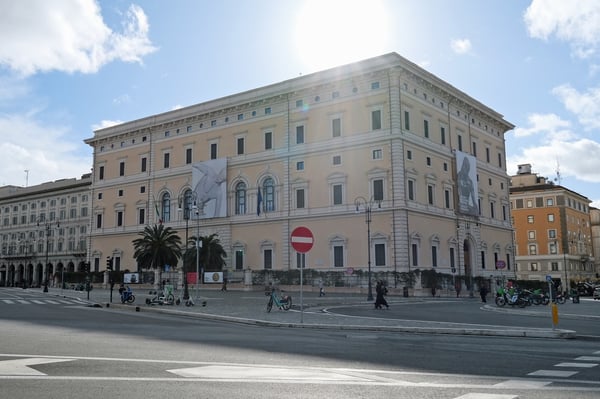
Termini is not the most picturesque or charming neighborhood in Rome, not by a long shot. However, it is easily the most convenient. If you are arriving in (or departing) Rome by train, planning day trips from Rome, or if you like to prioritize staying near public transportation, then Termini is your best bet! The neighborhood is anchored by Rome Termini Station, the city's main train station, while still being walking distance to the Colosseum and many areas of the Centro Storico.
Termini is home to tourist attractions, too, including the Museo Nazionale Romano - Palazzo Massimo and the Basilica of St. Mary of the Angels & Martyrs. The area offers plenty of restaurants and a wide range of hotels, from international chains to boutique properties.
I personally love the Termini neighborhood because of the convenience of it being a transportation hub and it is my go-to neighborhood for short stays in Rome (especially if it is for three nights or less).
The Termini neighborhood may look a little rough around the edges, but it is a generally safe neighborhood for tourists in Rome. As always, just remember to be mindful of pickpockets at (and around) Rome Termini Station, on public transportation, and in crowded piazzas throughout the city.
My Hotel Suggestions for Rome in January
I personally stayed at UNA Hotels Decò Roma in Termini and Petra Apartments in Monti on my last visit to Rome in January 2026, and I would stay at both places again! Other hotels that I recommend in Rome are listed below. Each of these accommodations are rated at least three-stars and have consistently good reviews, so you can book your stay in Rome with confidence!
Hotels in Monti:
- Duca d'Alba Hotel
- Hotel Raffaello, Sure Hotel Collection by Best Western
- Monti Palace Hotel
- The Fifteen Keys Hotel
- Hotel Colosseum
Hotels in Termini:
Tips for Visiting Rome in January
Before you jet off to Rome, here are a few practical tips to help you make the most of your winter visit to the Eternal City.
- Pack Layers: You can expect cool mornings and evenings in Rome in January, which may require warmer clothing than during the day. I recommend packing clothing that can be layered, so you can more easily adjust to the temperature fluctuations throughout the day. This can take the form of outerwear, scarves, base layers, cardigans, or whatever else you might have to help you stay warm in the mornings and evenings, while adjusting to the warmer afternoons.
- Bring a Small Umbrella: At least one rainy day is likely to be in store for your time in Rome in January, so you will want to pack a small, travel-size umbrella. A raincoat and waterproof shoes are also nice to have during your time in Rome in January; however, if you do not have room in your luggage for extras, a small umbrella should do the trick. Rarely, will you experience an all-day downpour, but having an umbrella will help you get around and stay dry.
- Book Tickets for Popular Attractions in Advance: While Rome is far less busy in January than at other times of the year, you are still going to want to book tickets for the Vatican Museums, the Colosseum, Roman Forum, and other popular attractions in advance of your visit. Typically anywhere from two to four weeks in advance of your visit to Rome is sufficient for booking tickets, especially if you are looking to visit sites with limited access like the Domus Aurea. We recommend booking tickets for Rome’s attractions directly through their official websites whenever possible. If tickets are sold out, you would prefer a guided tour, or you find the official booking process difficult to navigate (not every website has the best English translations), a reliable third-party provider like GetYourGuide or Viator is a good alternative.
- Leave Time to Walk Around & Explore: Some of my favorite memories in Rome have come from leisurely wandering its picturesque streets and piazzas. This is also how I have stumbled across some incredible restaurants, shops, and churches throughout the city. Save some time in your Rome itinerary to really see the city, walk without rushing, and enjoy all that Rome has to offer.
Our Verdict: Is Rome Worth Visiting in January?
Yes, Rome is absolutely worth visiting in January! January is actually our favorite time of year to visit Rome. While the winter weather may be a drawback for many prospective visitors, we will gladly take the chance of rain and cool temperatures for smaller crowds, less expensive accommodations, and the ease of obtaining tickets for the best attractions in Rome without having to plan too far in advance. Plus, it is nice not sweating as you spend time sightseeing!
With a little planning and the right winter layers, you can enjoy everything the Eternal City has to offer, at a quieter, more leisurely pace that makes January such a rewarding time to visit!
Are you still in the initial planning stages of your trip to Rome in January? Be sure to check out our Rome Travel Blog for more things to do in Rome, our favorite places to eat, and what is really worth your time in the Eternal City.

